Pushing to the Front
BY ORISON SWETT MARDEN VOLUME II
"The world makes way for the determined man.'
PUBLISHED BY
The Success Company's
Branch Offices
| PETERSBURG, N.Y. | TOLEDO | DANVILLE |
| OKLAHOMA CITY | SAN JOSE |
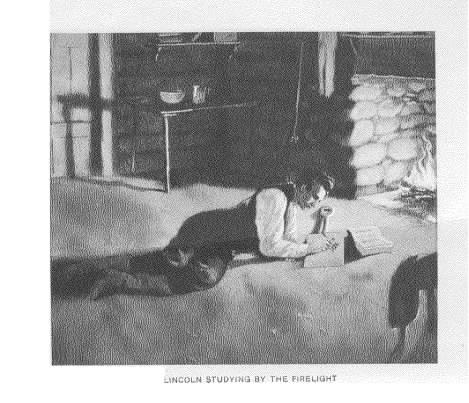
COPYRIGHT, 1911
BY ORISON SWETT MARSDEN
| CONTENTS | ||
| VOLUME II | ||
| Chapter | PAGE | |
| XXXIII. | PUBLICSPEAKING.............................................................. | 411 |
| XXXIV. | THE TRIUMPHS OF THE COMMON VIRTUES......................... | 424 |
| XXXV. | GETTING AROUSED............................................................ | 433 |
| XXXVI. | THE MAN WITH AN IDEA..................................................... | 439 |
| XXXVII. | DARE................................................................................ | 452 |
| XXXVIII. | THE WILL AND THE WAY..................................................... | 471 |
| XXXIX. | ONE UNWAVERING AIM..................................................... | 485 |
| XL. | WORK AND WAIT.............................................................. | 500 |
| XLI. | THE MIGHT of LITTLE THINGS............................................. | 513 |
| XLII. | THE SALARY YOU DO NOT FIND IN YOUR PAY ENVELOPE....... | 525 |
| XLIII. | EXPECT GREAT THINGS of YOURSELF................................... | 540 |
| XLIV. | THE NEXT TIME YOU THINK YOU ARE A FAILURE................... | 553 |
| XLV. | STAND FOR SOMETHING................................................... | 564 |
| XLVI. | NATURE'S LITTLE BILL........................................................ | 573 |
| XLVII. | HABIT - THE SERVANT, - THE MASTER.................................. | 589 |
| XLVIII. | THE CIGARETTE................................................................. | 601 |
| XLIX. | THE POWER OF PURITY...................................................... | 617 |
| L. | THE HABIT OF HAPPINESS................................................. | 634 |
| LI. | PUT BEAUTY INTO YOUR LIFE............................................. | 647 |
| LII. | EDUCATION BY ABSORPTION............................................ | 661 |
| LIII | THE POWER of SUGGESTION ............................................ | 670 |
| LIV. | THE CURSE OF WORRY...................................................... | 682 |
| LV. | TAKE A PLEASANT THOUGHT TO BED WITH YOU................. | 690 |
| LVI. | THE CONQUEST OF POVERTY ............................................ | 698 |
| LVII. | A NEW WAY of BRINGING up CHILDREN............................. | 707 |
| LVIII. | THE HOME AS A SCHOOL OF GOOD MANNERS.................. | 722 |
| LIX. | MOTHER......................................................................... | 725 |
| LX. | WHY SO MANY MARRIED WOMEN DETERIORATE.. ............. | 739 |
| LXI. | THRIFT............................................................................ | 753 |
| LXII. | A COLLEGE EDUCATION AT HOME..................................... | 765 |
| LXIII. | DISCRIMINATION IN READING.......................................... | 780 |
| LXIV. | READING A SPUR TO AMBITION........................................ | 789 |
| LXV. | WHY SOME SUCCEED AND OTHERS FAIL............................ | 802 |
| LXVI. | RICH WITHOUT MONEY.................................................... | 816 |
CHAPTER XXXIII
SELF-IMPROVEMENT THROUGH PUBLIC SPEAKING
It does not matter whether you want to be a public speaker or not, everybody should have such complete control of himself, should be so self-centered and self posed that he can get up in any audience, no matter how large or formidable, and express his thoughts clearly and distinctly.
Self-expression in some manner is the only means of developing mental power. It may be in music; it may be on canvas; it may be through oratory; it may come through selling goods or writing a book; but it must come through self-expression.
Self-expression in any legitimate form tends to call out what is in a man, his resourcefulness, inventiveness; but no other form of self-expression develops a man so thoroughly and so effectively, and so quickly unfolds all of his powers, as expression before an audience.
It is doubtful whether anyone can reach the highest standard of culture without studying the art of expression, especially public vocal expression. In all ages oratory has been regarded as the highest expression of human achievement. Young people, no matter what they intend to be, whether blacksmith or farmer, merchant or physician, should make it a study.
Nothing else will call out what is in a man so quickly and so effectively as the constant effort to do his best in speaking before an audience. When one under takes to think on his feet and speak extemporaneously before the public, the power and the skill of the entire man are put to a severe test.
411
412 PUSHING TO THE FRONT
The writer has the advantage of being able to wait for his moods. He can write when he feels like it; and he knows that he can burn his manuscript again and again if it does not suit him. There are not a thousand eyes upon him. He does not have a great audience criticizing every sentence, weighing every thought. He does not have to step upon the scales of every listener's judgment to be weighed, as does the orator. A man may write as listlessly as he pleases, use much or little of his brain or energy, just as he chooses or feels like doing. No one is watching him. His pride and vanity are not touched, and what he writes may never be seen by anyone. Then, there is always a chance for revision. In conversation, we do not feel that so much depends upon our words; only a few persons hear them, and perhaps no one will ever think of them again. In music, whether vocal or instrumental, what one gives out is only partially one's own; the rest is the composer's.
Yet anyone who lays any claim to culture, should train himself to think on his feet, so that he can at a moment's notice rise and express himself intelligently. The occasions for little speaking are increasing enormously. A great many questions which used to be settled in the office are now discussed and settled at dinners. All sorts of business deals are now carried through at dinners. There was never before any such demand for dinner oratory as today.
We know men who have, by the dint of hard work and persistent grit, lifted themselves into positions of prominence, and yet they are not able to stand on their feet in public, even to make a few remarks, or scarcely to put a motion without trembling like an aspen leaf.
PUBLIC SPEAKING 413
They had plenty of opportunities when they were young, at school, in debating clubs to get rid of their self-consciousness and to acquire ease and facility in public speaking, but they always shrank from every opportunity, because they were timid, or felt that somebody else could handle the debate or questions better. There are plenty of business men today who would give a great deal of money if they could only go back and improve the early opportunities for learning to think and speak on their feet which they threw away. Now they have money, they have position, but they are nobodies when called upon to speak in public. All they can do is to look foolish, blush, stammer out an apology and sit down.
Some time ago I was at a public meeting when a man who stands very high in the community, who is king in his specialty, was called upon to give his opinion upon the matter under consideration, and he got up and trembled and stammered and could scarcely say his soul was his own. He could not even make a decent appearance. He had power and a great deal of experience, but there he stood, as helpless as a child, and he felt cheap, mortified, embarrassed, and probably would have given anything if he had early in life trained himself to get himself in hand so that he could think on his feet and say with power and effectiveness that which he knew.
At the very meeting where this strong man who had the respect and confidence of everybody who knew him, and who made such a miserable failure of his attempt to give his opinion upon an important public matter on which he was well posted, being so confused and self-conscious and " stage struck " that he could say scarcely anything, a shallow-brained business man, in the same city, who hadn't a hundredth part of the other man's practical power in affairs, got up and made a brilliant speech, and strangers no doubt thought that he was much the stronger man. He had simply cultivated the ability to say his best thing on his feet, and the other man had not, and was placed at a tremendous disadvantage.
414 PUSHING TO THE FRONT
A very brilliant young man in New York who has climbed to a responsible position in a very short time, tells me that he has been surprised on several occasions when he has been called upon to speak at banquets, or on other public occasions, at the new discoveries he has made of himself of power which he never before dreamed he possessed, and he now regrets more than anything else that he has allowed so many opportunities for calling himself out to go by in the past.
The effort to express one's ideas in lucid, clean-cut, concise, telling English tends to make one's everyday language choicer, and more direct, and improves one's diction generally. In this and other ways speechmaking develops mental power and character. This explains the rapidity with which a young man develops in school or college when he begins to take part in public debates or in debating societies.
Every man, says Lord Chesterfield, may choose good words instead of bad ones and speak properly instead of improperly; he may have grace in his motions and gestures, and may be a very agreeable instead of disagreeable speaker if he will take care and pains. It is a matter of painstaking and preparation. There is everything in learning what you wish to know. Your vocal culture, manner, and mental furnishing, are to be made a matter for thought and careful training.
Nothing will tire an audience more quickly than monotony, everything expressed on the same dead level. There must be variety; the human mind tires very quickly without it. This is especially true of a monotonous tone. It is a great art to be able to raise and lower the voice with sweet flowing cadences which please the ear.
PUBLIC SPEAKING 415
Gladstone said, " Ninety-nine men in every hundred never rise above mediocrity because the training of the voice is entirely neglected and considered of no importance."
It was indeed said of a certain Duke of Devonshire that he was the only English statesman who ever took a nap during the progress of his own speech. He was a perfect genius for dry uninteresting oratory, moving forward with a monotonous droning, and pausing now and then as if refreshing himself by slumber. In thinking on one's feet before an audience, one must think quickly, vigorously, effectively. At the same time he must speak effectively through a properly modulated voice, with proper facial and bodily expression and gesture. This requires practise in early life.
In youth the would-be orator must cultivate robust health, since force, enthusiasm, conviction, will-power are greatly affected by physical condition. One, too, must cultivate bodily posture, and have good habits at easy command. What would have been the result of Webster's reply to Hayne, the greatest oratorical effort ever made on this continent, if he had sat down in the Senate and put his feet on his desk? Think of a great singer like Nordica attempting to electrify an audience while lounging on a sofa or sitting in a slouchy position.
An early training for effective speaking will make one careful to secure a good vocabulary by good reading and a dictionary. One must know words.
There is no class of people put to such a severe test of showing what is in them as public speakers; no other men who run such a risk of exposing their weak spots, or making fools of themselves in the estimation of others, as do orators. Public speaking-thinking on one's feet-is a powerful educator except to the thick-skinned man, the man who has no sensitiveness, or who does not care for what others think of him.
416 PUSHING TO THE FRONT
Nothing else so thoroughly discloses a man's weaknesses or shows up his limitations of thought, his poverty of speech, his narrow vocabulary. Nothing else is such a touchstone of the character and the extent of one's reading, the carefulness or carelessness of his observation.
Close, compact statement must be had. Learn to stop when you get through. Do not keep stringing out conversation or argument after you have made your point. You only weaken your case and prejudice people against you for your lack of tact, good judgment, or sense of proportion. Do not neutralize all the good impression you have made by talking on and on long after you have made your point.
The attempt to become a good public speaker is a great awakener of all the mental faculties. The sense of power that comes from holding attention, stirring the emotions or convincing the reason of an audience, gives self-confidence, assurance, self=reliance, arouses ambition, and tends to make one more effective in every particular. One's manhood, character, learning, judgment of his opinions - all things that go to make him what he is - are being unrolled like a panorama. Every mental faculty is quickened, every power of thought and expression spurred. Thoughts rush for utterance, words press for choice. The speaker summons all his reserves of education, of experience, of natural or acquired ability, and masses all his forces in the endeavor to capture the approval and applause of the audience.
Such an effort takes hold of the entire nature, beads the brow, fires the eye, flushes the cheek, and sends the blood surging through the veins. Dormant impulses are stirred, half-forgotten memories revived, the imagination quickened to see figures and similes that would never come to calm thought.
PUBLIC SPEAKING 417
This forced awakening of the whole personality has effects reaching much further than the oratorical occasion. The effort to marshal all one's reserves in a logical and orderly manner, to bring to the front all the power one possesses, leaves these reserves permanently better in hand, more readily in reach.
The Debating Club is the nursery of orators. No matter how far you have to go to attend it, or how much trouble it is, or how difficult it is to get the time, the drill you will get by it is the turning point. Lincoln, Wilson, Webster, Choate, Clay, and Patrick Henry got their training in the old-fashioned Debating Society.
Do not think that because you do not know anything about parliamentary law that you should not accept the presidency of your club or debating society. This is just the place to learn, and when you have accepted the position you can post yourself on the rules, and the chances are that you will never know the rules until you are thrust into the chair where you will be obliged to give rulings. Join just as many young people's organizations - especially self improvement organizations - as you can, and force yourself to speak every time you get a chance. If the chance does not come to you, make it. Jump to your feet and say something upon every question that is up for discussion. Do not be afraid to rise to put a motion or to second it or give your opinion upon it. Do not wait until you are better prepared. You never will be.
Every time you rise to your feet will increase your confidence, and after awhile you will form the habit of speaking until it will be as easy as anything else, and there is no one thing which will develop young people so rapidly and effectively as the debating clubs and discussions of all sorts. A vast number of our public men have owed their advance more to the old fashioned debating societies than anything else.
418 PUSHING TO THE FRONT
Here they learned confidence, self-reliance; they discovered themselves. It was here they learned not to be afraid of themselves, to express their opinions with force and independence. Nothing will call a young man out more than the struggle in a debate to hold his own. It is strong, vigorous exercise for the mind as wrestling is for the body.
Do not remain way back on the back seat. Go up front. Do not be afraid to show yourself. This shrinking into a corner and getting out of sight and avoiding publicity is fatal to self-confidence.
It is so easy and seductive, especially for boys and girls in school or college, to shrink from the public debates or speaking, on the ground that they are not quite well enough educated at present. They want to wait until they can use a little better grammar, until they have read more history and more literature, until they have gained a little more culture and ease of manner.
The way to acquire grace, ease, facility, the way to get poise and balance so that you will not feel disturbed in public gatherings, is to get the experience. Do the thing so many times that it will become second nature to you. If you have an invitation to speak, no matter how much you may shrink from it, or how timid or shy you may be, resolve that you will not let this opportunity for self-enlargement slip by you.
We know of a young man who has a great deal of natural ability for public speaking, and yet he is so timid that he always shrinks from accepting invitations to speak at banquets or in public because he is so afraid that he has not had experience enough. He lacks confidence in himself. He is so proud, and so afraid that he will make some slip which will mortify him, that he has waited and waited and waited until now he is discouraged and thinks that he will never be able to do anything in public speaking at all.
PUBLIC SPEAKING 419
He would give anything in the world if he had only accepted all of the invitations he has had, because then he would have profited by experience. It would have been a thousand times better for him to have made a mistake, or even to have broken down entirely a few times, than to have missed the scores of opportunities which would undoubtedly have made a strong public speaker of him.
What is technically called " stage fright " is very common. A college boy recited an address " to the conscript fathers." His professor asked, - " Is that the way Caesar would have spoken it?" "Yes," he replied, " if Caesar had been scared half to death, and as nervous as a cat."
An almost fatal timidity seizes on an inexperienced person, when he knows that all eyes are watching him, that everybody in his audience is trying to measure and weigh him, studying him, scrutinizing him to see how much there is in him; what he stands for, and making up their minds whether he measures more or less than they expected.
Some are constitutionally sensitive, and so afraid of being gazed at that they don't dare to open their mouths, even when a question in which they are deeply interested and on which they have strong views is being discussed. At debating clubs, meetings of literary societies, or gatherings of any kind, they sit dumb, longing, yet fearing to speak. The sound of their own voices, if they should get on their feet to make a motion or to speak in a public gathering, would paralyze them. The mere thought of asserting themselves, of putting forward their views or opinions on any subject as being worthy of attention, or as valuable as those of their companions, makes them blush and shrink more into themselves.
420 PUSHING TO THE FRONT
This timidity is often, however, not so much the fear of one's audience, as the fear lest one can make no suitable expression of his thought. The hardest thing for the public speaker to overcome is self-consciousness. Those terrible eyes which pierce him through and through, which are measuring him, criticizing him, are very difficult to get out of one's consciousness.
But no orator can make a great impression until he gets rid of himself, until he can absolutely annihilate his self-consciousness, forget himself in his speech. While he is wondering what kind of an impression he is making, what people think of him, his power is crippled, and his speech to that extent will be mechanical, wooden.
Even a partial failure on the platform has good results, for it often arouses a determination to conquer the next time, which never leaves one. Demosthenes' heroic efforts, and Disraeli's " The time will come when you will hear me," are historic examples.
It is not the speech, but the man behind the speech, that wins a way to the front.
One man carries weight because he is himself the embodiment of power,' he is himself convinced of what he says. There is nothing of the negative, the doubtful, the uncertain in his nature. He not only knows a thing, but he knows that he knows it. His opinion carries with it the entire weight of his being. The whole man gives consent to his judgment. He himself is in his conviction, in his act.
One of the most entrancing speakers I have ever listened to - a man to hear whom people would go long distances and stand for hours to get admission to the hall where he spoke - never was able to get the confidence of his audience because he lacked character. People liked to be swayed by his eloquence. There was a great charm in the cadences of his perfect sentences. But somehow they could not believe what he said.
PUBLIC SPEAKING 421
The orator must be sincere. The public is very quick to see through shams. If the audience sees mud at the bottom of your eye, that you are not honest yourself, that you are acting, they will not take any stock in you.
It is not enough to say a pleasing thing, an interesting thing, the orator must be able to convince; and to convince others he must have strong convictions.
Great speeches have become the beacon lights of history. Those who are prepared acquire a worldwide influence when the fit occasion comes.
Very few people ever rise to their greatest possibilities or ever know their entire power unless confronted by some great occasion. We are as much amazed as others are when, in some great emergency, we out do ourselves. Somehow the power that stands behind us in the silence, in the depths of our natures, comes to our relief, intensifies our faculties a thousand fold and enables us to do things which before we thought impossible.
It would be difficult to estimate the great part which practical drill in oratory may play in one's life. Great occasions, when nations have been in peril, have developed and brought out some of the greatest orators of the world. Cicero, Mirabeau, Patrick Henry, Webster, and John Bright might all be called to witness to this fact.
The occasion had much to do with the greatest speech delivered in the United States Senate - Webster's reply to Hayne. Webster had no time for immediate preparation, but the occasion brought all the reserves in this giant, and he towered so far above his opponent that Hayne looked like a pygmy in comparison.
The pen has discovered many a genius, but the process is slower and less effective than the great occasion that discovers the orator. Every crisis calls out ability, previously undeveloped, and perhaps unexpected.
422 PUSHING TO THE FRONT
No orator living was ever great enough to give out the same power and force and magnetism to an empty hall, to empty seats, that he could give to an audience capable of being fired by his theme.
In the presence of the audience lies a fascination, an indefinable magnetism that stimulates all the mental faculties, and acts as a tonic and vitalizer. An orator can say before an audience what he could not possibly say before he went on the platform, just as we can often say to a friend in animated conversation things which we could not possibly say when alone. As when two chemicals are united, a new substance is formed from the combination, which did not exist in either alone, he feels surging through his brain the combined force of his audience, which he calls inspiration, a mighty power which did not exist in his own personality.
Actors tell us that there is an indescribable inspiration which comes from the orchestra, the footlights, the audience, which it is impossible to feel at a cold mechanical rehearsal. There is something in a great sea of expectant faces which awakens the ambition and arouses the reserve of power which can never be felt except before an audience. The power was there just the same before, but it was not aroused.
In the presence of the orator, the audience is absolutely in his power to do as he will. They laugh or cry as he pleases, or rise and fall at his bidding, until he releases them from the magic spell.
What is oratory but to stir the blood of all hearers, to so arouse their emotions that they can not control themselves a moment longer without taking the action to which they are impelled?
" His words are laws " may be well said of the statesmen whose orations sway the world. What art is greater than that of changing the minds of men?
PUBLIC SPEAKING 423
Wendell Phillips so played upon the emotions, so changed the convictions of Southerners who hated him, but who were curious to listen to his oratory, that, for the time being he almost persuaded them that they were in the wrong. I have seen him when it seemed to me that he was almost godlike in his power. With the ease of a master he swayed his audience. Some who hated him in the slavery days were there, and they could not resist cheering him. He warped their own judgment and for the time took away their prejudice.
When James Russell Lowell was a student, said Wetmore Story, he and Story went to Faneuil Hall to hear Webster. They meant to hoot him for his remaining in Tyler's cabinet. It would be easy, they reasoned, to get the three thousand people to join them. When he begun, Lowell turned pale, and Story livid. His great eyes, they thought, were fixed on them. His opening words changed their scorn to admiration, and their contempt to approbation.
" He gave us a glimpse into the Holy of Holies," said another student, in relating his experience in listening to a great preacher.
Is not oratory a fine art? The well-spring of eloquence, when up-gushing as the very water of life, quenches the thirst of myriads of men, like the smitten rock of the wilderness reviving the life of desert wanderers.
CHAPTER XXXIV
THE TRIUMPHS OF THE COMMON VIRTUES
The talent of success is nothing more than doing what you can do well, and doing well whatever you do, without a thought of fame. - LONGFELLOW
It is not a question of what a man knows but what use he can make of what he knows.-J. G. HOLLAND.
Seest thou a man diligent in business? He shall stand before kings.-SOLOMON.
The most encouraging truth that can be impressed upon the mind of youth is this: " What man has done man may do." Men of great achievements are not to be set on pedestals and reverenced as exceptions to the average of humanity. Instead, these great men are to be considered as setting a standard of success for the emulation of every aspiring youth. Their example shows what can be accomplished by the practise of the common virtues,-diligence, patience, thrift, self-denial, determination, industry, and persistence.
We can best appreciate the uplifting power of these simple virtues which all may cultivate and exercise, by taking some concrete example of great success which has been achieved by patient plodding toward a definite goal. No more illustrious example of success won by the exercise of common virtues can be offered than Abraham Lincoln, rail-splitter and president.
Probably Lincoln has been the hero of more American boys during the last two generations than any other American character. Young people look upon him as a marvelous being, raised up for a divine purpose; and yet, if we analyze his character, we find it made up of the humblest virtues, the commonest qualities; the poorest boys and girls, who look upon him as a demigod, possess these qualities.
424
TRIUMPHS OF COMMON VIRTUES 425
The strong thing about Lincoln was his manliness, his straightforward, downright honesty. You could depend upon him. He was ambitious to make the most of himself. He wanted to know something, to be somebody, to lift his head up from his humble environment and be of some account in the world. He simply wanted to better his condition.
It is true that he had a divine hunger for growth, a passion for a larger and completer life than that of those about him; but there is no evidence of any great genius, any marvelous powers. He was a simple man, never straining after effect.
His simplicity was his chief charm. Everybody who knew him felt that he was a man, a large-hearted, generous friend, always ready to help everybody and everything out of their troubles, whether it was a pig stuck in the mire, a poor widow in trouble, or a farmer who needed advice. He had a helpful mind, open, frank, transparent. He never covered up anything, never had secrets. The door of his heart was always open so that anyone could read his inmost thoughts.
The ability to do hard work, and to stick to it, is the right hand of genius and the best substitute for it, - in fact, that is genius.
If young people were to represent Lincoln's total success by one hundred, they would probably expect to find some brilliant faculty which would rank at least fifty per cent of the total. But I think that the verdict of history has given his honesty of purpose, his purity and unselfishness of motive as his highest attributes, and certainly these qualities are within the reach of the poorest boy and the humblest girl in America.
426 PUSHING TO THE FRONT
Suppose we rank his honesty, his integrity twenty per cent of the total, his dogged persistence, his ability for hard work ten per cent, his passion for wholeness, for completeness, for doing everything to a finish ten more, his aspiration, his longing for growth, his yearning for fulness of life ten more. The reader can see that it would be easy to make up the hundred per cent, without finding any one quality which could be called genius; that the total of his character would be made up of the sum of the commonest qualities, the most ordinary virtues within the reach of the poorest youth in the land. There is no one quality in his entire make-up so overpowering, so commanding that it could be ranked as genius.
What an inestimable blessing to the world, what an encouragement, an inspiration to poor boys and poor girls that his great achievement can be accounted for by the triumph in his character of those qualities which are beyond the reach of money, of family, of influence, but that are within the reach of the poorest and the humblest.
In a speech to the people in Colorado Mountains, Roosevelt said: " You think that my success is quite foreign to anything you can achieve. Let me assure you that the big prizes I have won are largely accidental. If I have succeeded, it is only as anyone of you can succeed, merely because I have tried to do my duty as I saw it in my home and in my business, and as a citizen.
" If when I die the ones who know me best believe that I was a thoughtful, helpful husband, a loving, wise and painstaking father, a generous, kindly neighbor and an honest citizen, that will be a far more real honor, and will prove my life to have been more successful than the fact that I have ever been president of the United States.
TRIUMPHS OF COMMON VIR TUES 427
Had a few events over which no one had control been other than they were it is quite possible I might never have held the high office I now occupy, but no train of events could accidentally make me a noble character or a faithful member of my home and community. Therefore each of you has the same chance to succeed in true success as I have had, and if my success in the end proves to have been as great as that achieved by many of the humblest of you I shall be fortunate."
McKinley did not start with great mental ability. There was nothing very surprising or startling in his career. He was not a great genius, not notable as a scholar. He did not stand very high in school; he was not a great lawyer; he did not make a great record in Congress; but he had a good, level head. He had the best substitute for genius - the ability for hard work and persistence. He knew how to keep plodding, how to hang on, and he knew that the only way to show what he was made of in Congress was to stick to one thing, and he made a specialty of the tariff, following the advice of a statesman friend.
The biographies of the giants of the race are often discouraging to the average poor boy, because the moment he gets the impression that the character he is reading about was a genius, the effect is largely lost upon himself, because he knows that he is not a genius, and he says to himself, " This is very interesting reading, but I can never do those things." But when he reads the life of McKinley he does not see any reason why he could not do the same things himself, because there were no great jumps, no great leaps and bounds in his life from particular ability or special opportunity. He had no very brilliant talents, but he averaged well. He had good common sense and was a hard worker. He had tact and diplomacy and made the most of every opportunity.
Nothing can keep from success the man who has iron in his blood and is determined that he will succeed.
428 PUSHING TO THE FRONT
When he is confronted by barriers he leaps over them, tunnels through them, or makes a way around them. Obstacles only serve to stiffen his backbone, increase his determination, sharpen his wits and develop his innate resources. The record of human achievement is full of the truth. "There is no difficulty to him who wills."
" All the performances of human art, at which we look with praise and wonder," says Johnson, " are instances of the resistless force of perseverance."
It has been well said that from the same materials one man builds palaces, another hovels; one warehouses, another villas. Bricks and mortar are mortar and bricks until the architect makes them something else.
The boulder which was an obstacle in the path of the weak becomes a stepping-stone in the pathway of the resolute. The difficulties which dishearten one man only stiffen the sinews of another, who looks on them as a sort of mental spring-board by which to vault across the gulf of failure to the sure, solid ground of full success.
One of the greatest generals on the Confederate side in the Civil War, " Stonewall " Jackson, was noted for his slowness. With this he possessed great application and dogged determination. If he under took a task, he never let go till he had it done. So, when he went to West Point, his habitual class response was that he was too busy getting the lesson of a few days back to look at the one of the day. He kept up this steady gait, and, from the least promising " plebe," came out seventeenth in a class of seventy, distancing fifty-three who started with better attainments and better minds. His classmates used to say that, if the course was ten years instead of four, he would come out first.
TRIUMPHS OF COMMON VIRTUES 429
The world always stands aside for the determined man. You will find no royal road to your triumph. There is no open door to the Temple of Success.
One of the commonest of common virtues is perseverance, yet it has been the open sesame of more fast locked doors of opportunity than have brilliant tributes. Every man and woman can exercise this virtue of perseverance, can refuse to stop short of the goal of ambition, can decline to turn aside in search of pleasures that do but hinder progress.
The romance of perseverance under especial difficulty is one of the most fascinating subjects in history. Tenacity of purpose has been characteristic of all characters who have left their mark on the world. Perseverance, it has been said, is the statesman's brain, the warrior's sword, the inventor's secret, the scholar's " open sesame."
Persistency is to talent what steam is to the engine. It is the driving force by which the machine accomplishes the work for which it was intended. A great deal of persistency, with a very little talent, can be counted on to go farther than a great deal of talent without persistency.
You cannot keep a determined man from success. Take away his money, and he makes spurs of his poverty to urge him on. Lock him up in a dungeon, and he writes the immortal " Pilgrim's Progress."
Stick to a thing and carry it through in all its completeness and proportion, and you will become a hero. You will think better of yourself; others will exalt you.
Thoroughness is another of the common virtues which all may cultivate. The man who puts his best into every task will leave far behind the man who lets a job go with the comment " That's good enough." Nothing is good enough unless it reflects our best.
430 PUSHING TO THE FRONT
Daniel Webster had no remarkable traits of character in his boyhood. He was sent to Phillips Exeter Academy in New Hampshire, and stayed there only a short time when a neighbor found him crying on his way home, and asked the reason. Daniel said he despaired of ever making a scholar. He said the boys made fun of him, for always being at the foot of the class, and that he had decided to give up and go home. The friend said he ought to go back, and see what hard study would do. He went back, applied himself to his studies with determination to win, and it was not long before he silenced those who had ridiculed him, by reaching the head of the class, and remaining there.
Fidelity to duty has been a distinguishing virtue in men who have risen to positions of authority and command. It has been observed that the dispatches of Napoleon rang with the word glory. Wellington's dispatches centered around the common word duty.
Nowadays people seem unwilling to tread the rough path of duty and by patience and steadfast perseverance step into the ranks of those the country delights to honor.
Every little while I get letters from young men who say, if they were positively sure that they could be a Webster in law, they would devote all their energies to study, fling their whole lives into their work; or if they could be an Edison in invention, or a great leader in medicine, or a merchant prince like Wanamaker or Marshall Field, they could work with enthusiasm and zeal and power and concentration. They would be willing to make any sacrifice, to undergo any hardship in order to achieve what these men have achieved. But many of them say they do not feel that they have the marvelous ability, the great genius, the tremendous talent exhibited by those leaders, and so they are not willing to make the great exertion.
TRIUMPHS OF COMMON VIRTUES 431
They do not realize that success is not necessarily doing some great thing, that it is not making a tremendous strain to do something great; but that it is just honestly, earnestly living the everyday simple life. It is by the exercise of the common everyday virtues; it is by trying to do everything one does to a complete finish; it is by trying to be scrupulously honest in every transaction; it is by always ringing true in our friendships, by holding a helpful, accommodating attitude toward those about us; by trying to be the best possible citizen, a good, accommodating, helpful neighbor, a kind, encouraging father; it is by all these simple things that we attain success.
There is no great secret about success. It is just a natural persistent exercise of the commonest everyday qualities.
We have seen people in the country in the summer time trampling down the daisies and the beautiful violets, the lovely wild flowers in their efforts to get a branch of showy flowers off a large tree, which, perhaps, would not compare in beauty and delicacy and loveliness to the things they trampled under their feet in trying to procure it.
Oh, how many exquisite experiences, delightful possible joys we trample under our feet in straining after something great, in trying to do some marvelous thing that will attract attention and get our names in the papers! We trample down the finer emotions, we spoil many of the most delicious things in life in our scrambling and greed to grasp something which is unusual, something showy that we can wave before the world in order to get its applause.
In straining for effect, in the struggle to do something great and wonderful, we miss the little successes, the sum of which would make our lives sublime; and often, after all this straining and struggling for the larger, for the grander things, we miss them, and then we discover to our horror what we have missed on the way up - what sweetness, what beauty, what loveliness, what a lot of common, homely, cheering things we have lost in the useless struggle.
432 PUSHING TO THE FRONT
Great scientists tell us that the reason why the secrets of nature have been hidden from the world so long is because we are not simple enough in our methods of reasoning; that investigators are always looking for unusual phenomena, for something complicated; that the principles of nature's secrets are so extremely simple that men overlook them in their efforts to see and solve the more intricate problems.
It is most unfortunate that so many young people get the impression that success consists in doing some marvelous thing, that there must be some genius born in the man who achieves it, else he could not do such remarkable things.
CHAPTER XXXV
GETTING AROUSED
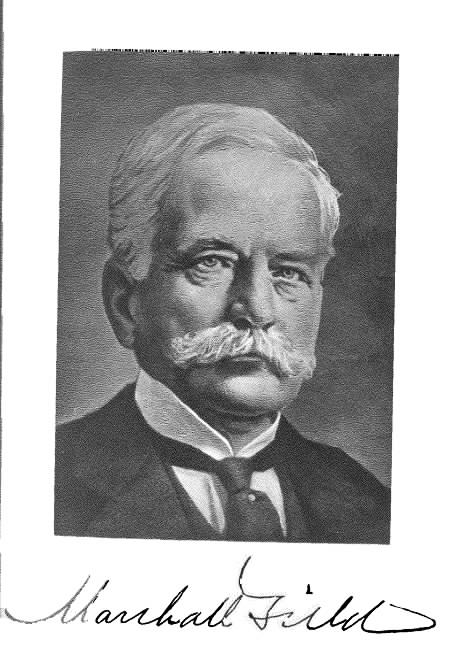
How's the boy gittin' on, Davis? " asked Farmer John Field, as he watched his son, Marshall, waiting upon a customer. "Well, John, you and I are old friends," replied Deacon Davis, as he took an apple from a barrel and handed it to Marshall's father as a peace offering; " we are old friends, and I don't want to hurt your feelin's; but I'm a blunt man, and air goin' to tell you the truth. Marshall is a good, steady boy, all right, but he wouldn't make a merchant if he stayed in my store a thousand years. He weren't cut out for a merchant. Take him back to the farm, John, and teach him how to milk cows! "
If Marshall Field had remained as clerk in Deacon Davis's store in Pittsfield, Massachusetts, where he got his first position, he could never have become one of the world's merchant princes. But when he went to Chicago and saw the marvelous examples around him of poor boys who had won success, it aroused his ambition and fired him with the determination to be a great merchant himself. "If others can do such wonderful things," he asked himself, " why cannot I ? "
Of course, there was the making of a great merchant in Mr. Field from the start; but circumstances, an ambition-arousing environment, had a great deal to do with stimulating his latent energy and bringing out his reserve force. It is doubtful if he would have climbed so rapidly in any other place than Chicago. In 1856, when young Field went there, this marvelous city was just starting on its unparalleled career.
433
434 PUSHING TO THE FRONT
It had then only about eighty-five thousand inhabitants. A few years before it had been a mere Indian trading village. But the city grew by leaps and bounds, and always beat the predictions of its most sanguine inhabitants. Success was in the air. Everybody felt that there were great possibilities there.
Many people seem to think that ambition is a quality born within us; that it is not susceptible to improvement; that it is something thrust upon us which will take care of itself. But it is a passion that responds very quickly to cultivation, and it requires constant care and education, just as the faculty for music or art does, or it will atrophy.
If we do not try to realize our ambition, it will not keep sharp and defined. Our faculties become dull and soon lose their power if they are not exercised. How can we expect our ambition to remain fresh and vigorous through years of inactivity, indolence, or indifference? If we constantly allow opportunities to slip by us without making any attempt to grasp them, our inclination will grow duller and weaker.
" What I most need," as Emerson says, " is somebody to make me do what I can." To do what I can, that is my problem; not what a Napoleon or a Lincoln could do, but what I can do. It makes all the difference in the world to me whether I bring out the best thing in me or the worst, - whether I utilize ten, fifteen, twenty-five, or ninety per cent 'of my ability.
Everywhere we see people who have reached middle life or later without being aroused. They have developed only a small percentage of their success possibilities. They are still in a dormant state. The best thing in them lies so deep that it has never been awakened. When we meet these people we feel conscious that they have a great deal of latent power that has never been exercised. Great possibilities of usefulness and of achievement are, all unconsciously, going to waste within them.
GETTING AROUSED 435
Some time ago there appeared in the newspapers an account of a girl who had reached the age of fifteen years, and yet had only attained the mental development of a small child. Only a few things interested her. She was dreamy, inactive, and indifferent to everything around her most of the time until, one day, while listening to a hand organ on the street, she suddenly awakened to full consciousness. She came to herself; her faculties were aroused, and in a few days she leaped forward years in her development. Almost in a day she passed from childhood to budding womanhood. Most of us have an enormous amount of power, of latent force, slumbering within us, as it slumbered in this girl, which could do marvels if we would only awaken it.
The judge of the municipal court in a flourishing western city, one of the most highly esteemed jurists in his state, was in middle life, before his latent power was aroused, an illiterate blacksmith. He is now sixty, the owner of the finest library in his city, with the reputation of being its best-read man, and one whose highest endeavor is to help his fellow man. What caused the revolution in his life? The hearing of a single lecture on the value of education. This was what stirred the slumbering power within him, awakened his ambition, and set his feet in the path of self-development.
I have known several men who never realized their possibilities until they reached middle life. Then they were suddenly aroused, as if from a long sleep, by reading some inspiring, stimulating book, by listening to a sermon or a lecture, or by meeting some friend, someone with high ideals, who understood, believed in, and encouraged them.
436 PUSHING TO THE FRONT
It will make all the difference in the world to you whether you are with people who are watching for ability in you, people who believe in, encourage, and praise you, or whether you are with those who are forever breaking your idols, blasting your hopes, and throwing cold water on your aspirations.
The chief probation officer of the children's court in New York, in his report for 1905, says: " Removing a boy or girl from improper environment is the first step in his or her reclamation." The New York Society for the Prevention of Cruelty to Children, after thirty years of investigation of cases involving the social and moral welfare of over half a million of children, has also come to the conclusion that environment is stronger than heredity.
Even the strongest of us are not beyond the reach of our environment. No matter how independent, strong-willed, and determined our nature, we are constantly being modified by our surroundings. Take the best-born child, with the greatest inherited advantages, and let it be reared by savages, and how many of its inherited tendencies will remain?
If brought up from infancy in a barbarous, brutal atmosphere, it will, of course, become brutal. The story is told of a wellborn child who, being lost or abandoned as an infant, was suckled by a wolf with her own young ones, and who actually took on all the characteristics of the wolf, -walked on all fours, howled like a wolf, and ate like one.
It does not take much to determine the lives of most of us. We naturally follow the examples about us, and, as a rule, we rise or fall according to the strongest current in which we live. The poet's " I am a part of all that I have met " is not a mere poetic flight of fancy; it is an absolute truth. Everything-every sermon or lecture or conversation you have heard, every person who has touched your life-has left an impress upon your character, and you are never quite the same person after the association or experience.
GETTING AROUSED 437
You are a little different, modified somewhat from what you were before, - just as Beecher was never the same man after reading Ruskin.
Some years ago a party of Russian workmen were sent to this country by a Russian firm of shipbuilders, in order that they might acquire American methods and catch the American spirit. Within six months the Russians had become almost the equals of the American artisans among whom they worked. They had developed ambition, individuality, personal initiative, and a marked degree of excellence in their work.
A year after their return to their own country, the deadening, non-progressive atmosphere about them had done its work. The men had lost the desire to improve; they were again plodders, with no goal beyond the day's work. The ambition aroused by stimulating environment had sunk to sleep again.
Our Indian schools sometimes publish, side by side, photographs of the Indian youths as they come from the reservation and as they look when they are graduated, - well dressed, intelligent, with the fire of ambition in their eyes. We predict great things for them; but the majority of those who go back to their tribes, after struggling awhile to keep up their new standards, gradually drop back to their old manner of living. There are, of course, many notable exceptions, but these are strong characters, able to resist the downward-dragging tendencies about them.
If you interview the great army of failures, you will find that multitudes have failed because they never got into a stimulating, encouraging environment, because their ambition was never aroused, or because they were not strong enough to rally under depressing, discouraging, or vicious surroundings. Most of the people we find in prisons and poor-houses are pitiable examples of the influence of an environment which appealed to the worst instead of to the best in them.
438 PUSHING TO THE FRONT
Whatever you do in life, make any sacrifice necessary to keep in an ambition-arousing atmosphere, an environment that will stimulate you to self-development. Keep close to people who understand you, who believe in you, who will help you to discover yourself and encourage you to make the most of yourself. This may make all the difference to you between a grand success and a mediocre existence. Stick to those who are trying to do something and to be somebody in the world, - people of high aims, lofty ambition. Keep close to those who are dead-in-earnest. Ambition is contagious. You will catch the spirit that dominates in your environment. The success of those about you who are trying to climb upward will encourage and stimulate you to struggle harder if you have not done quite so well yourself.
There is a great power in a battery of individuals who are struggling for the achievement of high aims, a great magnetic force which will help you to attract the object of your ambition. It is very stimulating to be with people whose aspirations run parallel with your own. If you lack energy, if you are naturally lazy, indolent, or inclined to take it easy, you will be urged forward by the constant prodding of the more ambitious.
CHAPTER XXXVI
THE MAN WITH AN IDEA
He who wishes to fulfil his mission must be a man of one idea, that is, of one great overmastering purpose, over shadowing all his aims, and guiding and controlling his entire life. - BATE.
A healthful hunger for a great idea is the beauty and blessedness of life.-,JEAN INGELOW.
A profound conviction raises a man above the feeling of ridicule. - J. STUART MILL.
Ideas go booming through the world louder than cannon. Thoughts are mightier than armies. Principles have achieved more victories than horsemen or chariots. - W.M. PAXTON.
" What are you bothering yourselves with a knitting machine for? " asked Ari Davis, of Boston, a manufacturer of instruments; " why don't you make a sewing-machine? " His advice had been sought by a rich man and an inventor who had reached their wits' ends in the vain attempt to produce a device for knitting woolen goods. "I wish I could, but it can't be done." " Oh, yes it can," said Davis; " I can make one myself."
" Well," the capitalist replied, " you do it, and I'll insure you an independent fortune." The words of Davis were uttered in a spirit of jest, but the novel idea found lodgment in the mind of one of the workmen who stood by, a mere youth of twenty, who was thought not capable of a serious idea.
But Elias Howe was not so rattle-headed as he seemed, and the more he reflected, the more desirable such a machine appeared to him.
439
440 PUSHING TO THE FRONT
Four years passed, and with a wife and three children to support in a great city on a salary of nine dollars a week, the lighthearted boy had become a thoughtful, plodding man. The thought of the sewing-machine haunted him night and day, and he finally resolved to produce one.
After months wasted in the effort to work a needle pointed at both ends, with the eye in the middle, that should pass up and down through the cloth, suddenly the thought flashed through his mind that another stitch must be possible, and with almost insane devotion he worked night and day, until he had made a rough model of wood and wire that convinced him of ultimate success. In his mind's eye he saw his idea, but his own funds and those of his father, who had aided him more or less, were insufficient to embody it in a working machine. But help came from an old schoolmate, George Fisher, a coal and wood merchant of Cambridge. He agreed to board Elias and his family and furnish five hundred dollars, for which he was to have one-half of the patent, if the machine proved to be worth patenting. In May, 1845, the machine was completed, and in July Elias Howe sewed all the seams of two suits of woolen clothes, one for Mr. Fisher and the other for himself. The sewing outlasted the cloth.
This machine, which is still preserved, will sew three hundred stitches a minute, and is considered more nearly perfect than any other prominent invention at its first trial. There is not one of the millions of sewing-machines now in use that does not contain some of the essential principles of this first attempt.
When it was decided to try and elevate Chicago out of the mud by raising its immense blocks up to grade, the young son of a poor mechanic, named George M. Pullman, appeared on the scene, and put in a bid for the great undertaking, and the contract was awarded to him.
THE MAN WITH AN IDEA 441
He not only raised the blocks, but did it in such a way that business within them was scarcely interrupted. All this time he was revolving in his mind his pet project of building a "sleeping car" which would be adopted on all railroads. He fitted up two old cars on the Chicago and Alton road with berths, and soon found they would be in demand. He then went to work on the principle that the more luxurious his cars were, the greater would be the demand for them. After spending three years in Colorado gold mines, he returned and built two cars which cost $18,ooo each. Everybody laughed at " Pullman's folly." But Pullman believed that whatever relieved the tediousness of long trips would meet with speedy approval, and he had faith enough in his idea to risk his all in it.
Pullman was a great believer in the commercial value of beauty. The wonderful town which he built and which bears his name, as well as his magnificent cars, is an example of his belief in this principle. He counts it a good investment to surround his employees with comforts and beauty and good sanitary conditions, and so the town of Pullman is a model of cleanliness, order, and comfort.
It has ever been the man with an idea, which he puts into practical effect, who has changed the face of Christendom. The germ idea of the steam engine can be seen in the writings of the Greek philosophers, but it was not developed until more than two thousand years later.
It was an English blacksmith, Newcomen, with no opportunities, who in the seventeenth century conceived the idea of moving a piston by the elastic force of steam; but his engine consumed thirty pounds of coal in producing one horse power. The perfection of the modern engine is largely due to James Watt, a poor, uneducated Scotch boy, who at fifteen walked the streets of London in a vain search for work.
442 PUSHING TO THE FRONT
A professor in the Glasgow University gave him the use of a room to work in, and while waiting for jobs he experimented with old vials for steam reservoirs and hollow canes for pipes, for he could not bear to waste a moment. He improved Newcomen's engine by cutting off the steam after the piston had completed a quarter or a third of its stroke, and letting the steam already in the chamber expand and drive the piston the remaining distance. This saved nearly three-fourths of the steam. Watt suffered from pinching poverty and hardships which would have disheartened ordinary men; but he was terribly in earnest, and his brave wife Margaret begged him not to mind her inconvenience, nor be discouraged. - " If the engine will not work," she wrote him while struggling in London, " something else will. Never despair."
" I had gone to take a walk," said Watt, " on a fine Sabbath afternoon, and had passed the old washing house, thinking upon the engine at the time, when the idea came into my head that, as steam is an elastic body, it would rush into a vacuum, and if a communication were made between the cylinder and an exhausted vessel, it would rush into it, and might be there condensed without cooling the cylinder." The idea was simple, but in it lay the germ of the first steam engine of much practical value. Sir James Mackintosh places this poor Scotch boy who began with only an idea " at the head of all inventors in all ages and all nations."
See George Stephenson, working in the coal pits for sixpence a day, patching the clothes and mending the boots of his fellow-workmen at night, to earn a little money to attend a night school, giving the first money he ever earned, $150, to his blind father to pay his debts. People say he is crazy; his " roaring steam engine will set the house on fire with its sparks "; " smoke will pollute the air carriage makers and coachmen will starve for want of work."
THE MAN WITH AN IDEA 443
For three days the committee of the House of Commons plies questions to him. This was one of them: " If a cow get on the track of the engine traveling ten miles an hour, will it not be an awkward situation?" "Yes, very awkward, indeed, for the cow," replied Stephenson. A government inspector said that if a locomotive ever went ten miles an hour, he would undertake to eat a stewed engine for breakfast.
" What can be more palpably absurd and ridiculous than the prospect held out of locomotives traveling twice as fast as horses? " asked a writer in the English " Quarterly Review " for March, 1825. " We should as soon expect the people of Woolwich to suffer themselves to be fired off upon one of Congreve's rockets as to trust themselves to the mercy of such a machine, going at such a rate. We trust that Parliament will, in all the railways it may grant, limit the speed to eight or nine miles an hour, which we entirely agree with Mr. Sylvester is as great as can be ventured upon." This article referred to Stephenson's proposition to use his newly invented locomotive instead of horses on the Liverpool and Manchester Railroad, then in process of construction.
The company decided to lay the matter before two leading English engineers, who reported that steam would be desirable only when used in stationary engines one and a half miles apart, drawing the cars by means of ropes and pulleys. But Stephenson persuaded them to test his idea by offering a prize of about twenty-five hundred dollars for the best locomotive produced at a trial to take place October 6, 1829.
On the eventful day, thousands of spectators assembled to watch the competition of four engines, the " Novelty," the " Rocket," the " Perseverance," and the " Sanspareil."
444 PUSHING TO THE FRONT
The " Perseverance " could make but six miles an hour, and so was ruled out, as the conditions called for at least ten. The " Sanspareil " made an average of fourteen miles an hour, but as it burst a water-pipe it lost its chance. The " Novelty " did splendidly, but also burst a pipe, and was crowded out, leaving the " Rocket " to carry off the honors with an average speed of fifteen miles an hour, the highest rate attained being twenty-nine. This was Stephenson's locomotive, and so fully vindicated his theory that the idea of stationary engines on a railroad was completely exploded. He had picked up the fixed engines which the genius of Watt had devised, and set them on wheels to draw men and merchandise, against the most direful predictions of the foremost engineers of his day.
In all the records of invention there is no more sad or affecting story than that of John Fitch. Poor he was in many senses, poor in appearance, poor in spirit. He was born poor, lived poor, and died poor. If there ever was a true inventor, this man was one. He was one of those eager souls that would coin their own flesh to carry their point. He only uttered the obvious truth when he said one day, in a crisis of his invention, that if he could get one hundred pounds by cutting off one of his legs he would gladly give it to the knife.
He tried in vain both in this country and in France to get money to build his steamboat. He would say: " You and I will not live to see the day, but the time will come when the steamboat will be preferred to all other modes of conveyance, when steamboats will ascend the Western rivers from New Orleans to Wheeling, and when steamboats will cross the ocean. Johnny Fitch will be forgotten, but other men will carry out his ideas and grow rich and great upon them."
THE MAN WITH AN IDEA 445
Poor, ragged, forlorn, jeered at, pitied as a madman, discouraged by the great, refused by the rich, he kept on till, in 1790, he had the first vessel on the Delaware that ever answered the purpose of a steamboat. It ran six miles an hour against the tide, and eight miles with it.
At noon, on Friday, August 4, 1807, a crowd of curious people might have been seen along the wharves of the Hudson River. They had gathered to witness what they considered a ridiculous failure of a " crank " who proposed to take a party of people up the Hudson River to Albany in what he called a steam vessel named the Clermont.
Did anybody ever hear of such a ridiculous idea as navigating against the current up the Hudson in a vessel without sails? "The thing will `bust,' " says one; " it will burn up," says another, and " they will all be drowned," exclaims a third, as he sees vast columns of black smoke shoot up with showers of brilliant sparks. Nobody present, in all probability, ever heard of a boat going by steam. It was the opinion of everybody that the man who had fooled away his money and his time on the Clermont was little better than an idiot, and ought to be in an insane asylum. But the passengers go on board, the plank is pulled in, and the steam is turned on. The walking beam moves slowly up and down, and the Clermont floats out into the river. " It can never go up stream," the spectators persist. But it did go up stream, and the boy, who in his youth said there is nothing impossible, had scored a great triumph, and had given to the world the first steamboat that had any practical value.
Notwithstanding that Fulton had rendered such great service to humanity, a service which has revolutionized the commerce of the world, he was looked upon by many as a public enemy. Critics and cynics turned up their noses when Fulton was mentioned.
446 PUSHING TO THE FRONT
The severity of the world's censure, ridicule, and detraction has usually been in proportion to the benefit the victim has conferred upon mankind.
As the Clermont burned pine wood, dense columns of fire and smoke belched forth from her smoke-stack while she glided triumphantly up the river, and the inhabitants along the banks were utterly unable to account for the spectacle. They rushed to the shore amazed to see a boat " on fire " go against the stream so rapidly with neither oars nor sails. The noise of her great paddle-wheels increased the wonder. Sailors forsook their vessels, and fishermen rowed home as fast as possible to get out of the way of the fire monster. The Indians were as much frightened as their predecessors were when the first ship approached their hunting-ground on Manhattan Island. The owners of sailing vessels were jealous of the Clermont, and tried to run her down. Others whose interests were affected denied Fulton's claim to the invention and brought suits against him.
But the success of the Clermont soon led to the construction of other steam ships all over the country. The government employed Fulton to aid in building a powerful steam frigate, which was called Fulton the First. He also built a diving boat for the government for the discharge of torpedoes. By this time his fame had spread all over the civilized world, and when he died, in 1815, newspapers were marked with black lines; the legislature of New York wore badges of mourning; and minute guns were fired as the long funeral procession passed to old Trinity churchyard. Very few private persons were ever honored with such a burial.
True, Dr. Lardner had " proved " to scientific men that a steamship could not cross the Atlantic, but in 1819 the Savannah from New York' appeared off the coast of Ireland under sail and steam, having made this " impossible " passage.
THE MAN WITH AN IDEA 447
Those on shore thought that a fire had broken out below the decks, and a king's cutter was sent to her relief. Although the voyage was made without accident, it was nearly twenty years before it was admitted that steam navigation could be made a commercial success in ocean traffic.
As Junius Smith impatiently paced the deck of a vessel sailing from an English port to New York, on a rough and tedious voyage in 1832, he said to himself, "Why not cross the ocean regularly in steamships? " In New York and in London a deaf ear was turned to any such nonsense. Smith's first encouragement came from George Grote, the historian and banker, who said the idea was practicable; but it was the same old story, -he would risk no money in it. At length Isaac Selby, a prominent business man of London, agreed to build a steamship of two thousand tons, the British Queen. An unexpected delay in fitting the engines led the projectors to charter the Sirius, a river steamer of seven hundred tons, and send her to New York. Learning of this, other parties started from Bristol four days later in the Great Western, and both vessels arrived at New York the same day. Soon after Smith made the round trip between London and New York in thirty-two days.
What a sublime picture of determination and patience was that of Charles Goodyear, of New Haven, buried in poverty and struggling with hardships for eleven long years, to make India rubber of practical use! See him in prison for debt; pawning his clothes and his wife's jewelry to get a little money to keep his children (who were obliged to gather sticks in the field for fire) from starving. Watch his sublime courage and devotion to his idea, when he had no money to bury a dead child and when his other five were near starvation; when his neighbors were harshly criticizing him for his neglect of his family and calling him insane.
448 PUSHING TO THE FRONT
But, behold his vulcanized rubber; the result of that heroic struggle, applied to over five hundred uses by 1oo,ooo employees.
What a pathetic picture was that of Palissy, plodding on through want and woe to rediscover the lost art of enameling pottery; building his furnaces with bricks carried on his back, seeing his six children die of neglect, probably of starvation, his wife in rags and despair over her husband's " folly "; despised by his neighbors for neglecting his family, worn to a skeleton himself, giving his clothes to his hired man because he could not pay him in money, hoping always, failing steadily, until at last his great work was accomplished, and he reaped his reward.
German unity was the idea engraven upon Bismarck's heart. What cared this herculean despot for the Diet chosen year after year simply to vote down every measure he proposed? He was indifferent to all opposition. He simply defied and sent home every Diet which opposed him. He could play the game alone. To make Germany the greatest power in Europe, to make William of Prussia a greater potentate than Napoleon or Alexander, was his all-absorbing purpose. It mattered not what stood in his way, whether people, Diet, or nation; all must bend to his mighty will. Germany must hold the deciding voice in the Areopagus of the world. He rode roughshod over everybody and everything that stood in his way, defiant of opposition, imperious, irrepressible!
See the great Dante in exile, condemned to be burnt alive on false charges of embezzlement. Look at his starved features, gaunt form, melancholy, a poor wanderer; but he never gave up his idea; he poured out his very soul into his immortal poem, ever believing that right would at last triumph.
Columbus was exposed to continual scoffs and indignities, being ridiculed as a mere dreamer and stigmatized as an adventurer.
THE MAN WITH AN IDEA 449
The very children, it is said, pointed to their foreheads as he passed, being taught to regard him as a kind of madman.
An American was once invited to dine with Oken, the famous German naturalist. To his surprise, they had neither meats nor dessert, but only baked potatoes. Oken was too great a man to apologize for their simple fare. His wife explained, however, that her husband's income was very small, and that they preferred to live simply in order that he might obtain books and instruments for his scientific researches.
Before the discovery of ether it often took a week, in some cases a month, to recover from the enormous dose, sometimes five hundred drops of laudanum, given to a patient to deaden the pain during a surgical operation. Young Dr. Morton believed that there must be some means provided by Nature to relieve human suffering during these terrible operations; but what could he do? He was not a chemist; he did not know the properties of chemical substances; he was not liberally educated.
Dr. Morton did not resort to books, however, nor did he go to scientific men for advice, but immediately began to experiment with well-known substances. He tried intoxicants even to the point of intoxication, but as soon as the instruments were applied the patient would revive. He kept on experimenting with narcotics in this manner until at last he found what he sought in ether.
What a grand idea Bishop Vincent worked out for the young world in the Chautauqua Circle, Dr. Clark in his world-wide Christian Endeavor movement, the Methodist Church in the Epworth League, Edward Everett Hale in his little bands of King's Daughters and Ten Times One is Ten! Here is Clara Barton who has created the Red Cross Society, which is loved by all nations. She noticed in our Civil War that the Confederates were shelling the hospital.
450 PUSHING TO THE FRONT
She thought it the last touch of cruelty to fight what couldn't fight back, and she determined to have the barbarous custom stopped. Of course the world laughed at this poor unaided woman. But her idea has been adopted by all nations; and the enemy that aims a shot at the tent or building over which flies the white flag with the red cross has lost his last claim to human consideration.
In all ages those who have advanced the cause of humanity have been men and women " possessed," in the opinion of their neighbors. Noah in building the ark, Moses in espousing the cause of the Israelites, or Christ in living and dying to save a fallen race, incurred the pity and scorn of the rich and highly educated, in common with all great benefactors. Yet in every age and in every clime men and women have been willing to incur poverty, hardship, toil, ridicule, persecution, or even death, if thereby they might shed light or comfort upon the path which all must walk from the cradle to the grave. In fact it is doubtful whether a man can perform very great service to mankind who is not permeated with a great purpose-with an overmastering idea.
Beecher had to fight every step of the way to his triumph through obstacles which would have appalled all but the greatest characters. Oftentimes in these great battles for principle and struggles for truth, he stood almost alone fighting popular prejudice, narrowness, and bigotry, uncharitableness and envy even in his own church. But he never hesitated nor wavered when he once saw his duty. There was no shillyshallying, no hunting for a middle ground between right and wrong, no compromise on principles. He hewed close to the chalk line and held his line plumb to truth. He never pandered for public favor nor sought applause. Duty and truth were his goal, and he went straight to his mark.
THE MAN WITH AN IDEA 451
Other churches did not agree with him nor his, but he was too broad for hatred, too charitable for revenge, and too magnanimous for envy.
What tale of the " Arabian Nights " equals in fascination the story of such lives as those of Franklin, of Morse, Goodyear, Howe, Edison, Bell, Beecher, Gough, Mrs. Harriet Beecher Stowe, Amos Lawrence, George Peabody, McCormick, Hoe, and scores of others, each representing some great idea embodied in earnest action, and resulting in an improvement of the physical, mental, and moral condition of those around them?
There are plenty of ideas left in the world yet. Everything has not been invented. All good things have not been done. There are thousands of abuses to rectify, and each one challenges the independent soul, armed with a new idea.
"But how shall I get ideas?" Keep your wits open! Observe! Study! But above all, Think! and when a noble image is indelibly impressed upon the mind - Act!
CHAPTER XXXVII
DARE
The Spartans did not inquire how many the enemy are, but where they are. - Agis II .
What's brave, what's noble, let's do it after the high Roman fashion, and make death proud to take us. - SHAKESPEARE.
Let me die facing the enemy. - BAYARD.
Who conquers me, shall find a stubborn foe. - Byron.
No great deed is done by falterers who ask for certainty. - GEORGE ELIOT.
Fortune befriends the bold. - DRYDEN.
To stand with a smile upon your face against a stake from which you cannot get away - that, no doubt, is heroic. But the true glory is resignation to the inevitable. To stand unchained, with perfect liberty to go away, held only by the higher claims of duty, and let the fire creep up to the heart,-- this is heroism. - F. W. ROBERTSON.
"STEADY, men! Every man must die where he stands!" said Colin Campbell to the Ninety-third Highlanders at Balaklava, as an overwhelming force of Russian cavalry came sweeping down. " Ay, ay, Sir Colin ! we'll do that! " was the response from men, many of whom had to keep their word by thus obeying.
" Bring back the colors," shouted a captain at the battle of the Alma, when an ensign maintained his ground in front, although the men were retreating. "No," cried the ensign, "bring up the men to the colors."
452
DARE 453
" To dare, and again to dare, and without end to dare," was Danton's noble defiance to the enemies o£France. " The Commons of France have resolved to deliberate," said Mirabeau to De Breze, who brought an order from the king for them to disperse, June 23, 1789. " We have heard the intentions that have been attributed to the king; and you, sir, who cannot be recognized as his organ in the National Assembly, you, who have neither place, voice, nor right to speak, - you are not the person to bring to us a message of his Go, say to those who sent you that we are here by the power of the people, and that we will not be driven hence, save by the power of the bayonet."
When the assembled senate of Rome begged Regulus not to return to Carthage to fulfil an illegal promise, he calmly replied : "Have you resolved to dishonor me ? Torture and death are awaiting me, but what are these to the shame of an infamous act, or the wounds of a guilty mind? Slave as I am to Carthage, I still have the spirit of a Roman. I have sworn to return. It is my duty. Let the gods take care of the rest."
The courage which Cranmer had shown since the accession of Mary gave way the moment his final doom was announced. The moral cowardice which had displayed itself in his miserable compliance with the lust and despotism of Henry VIII displayed itself again in six successive recantations by which he hoped to purchase pardon. But pardon was impossible; and Cranmer's strangely mingled nature found a power in its very weakness when he was brought into the church of St. Mary at Oxford on the 21st of March, to repeat his recantation on the way to the stake. " Now," ended his address to the hushed congregation before him, - " now I come to the great thing that troubleth my conscience more than any other thing that ever I said or did in my life, and that is the setting abroad of writings contrary to the truth; which here I now renounce and refuse as things written by a hand contrary to the truth which I thought in my heart, and written for fear of death, to save my life, if it might be.
454 PUSHING TO THE FRONT
And, forasmuch as my hand offended in writing contrary to my heart, my hand therefore shall be the first punished; for if I come to the fire it shall be the first burned." " This was the hand that wrote it," he again exclaimed at the stake, " therefore it shall suffer first punishment "; and holding it steadily in the flame, " he never stirred nor cried till life was gone."
A woman's piercing shriek suddenly startled a party of surveyors at dinner in a forest of northern Virginia on a calm, sunny day in 1750. The cries were repeated in quick succession, and the men sprang through the undergrowth to learn their cause. " Oh, sir," exclaimed the woman as she caught sight of a youth of eighteen, but a man in stature and bearing; " you will surely do something for me! Make these friends release me. My boy, - my poor boy is drowning, and they will not let me go! " "It would be madness; she will jump into the river," said one of the men who was holding her; "and the rapids would dash her to pieces in a moment!" Throwing off his coat, the youth sprang to the edge of the bank, scanned for a moment the rocks and whirling currents, and then, at sight of part of the boy's dress, plunged into the roaring rapids. "Thank God, he will save my child!" cried the mother, and all rushed to the brink of the precipice; " there he is! Oh, my boy, my darling boy! How could I leave you? "
But all eyes were bent upon the youth struggling with strong heart and hope amid the dizzy sweep of the whirling currents far below. Now it seemed as if he would be dashed against a projecting rock, over which the water flew in foam, and anon a whirlpool would drag him in, from whose grasp escape would seem impossible. Twice the boy went out of sight, but he had reappeared the second time, although terribly near the most dangerous part of the river.
DARE 455
The rush of waters here was tremendous, and no one had ever dared to approach it, even in a canoe, lest he should be dashed to pieces. The youth redoubled his exertions. Three times he was about to grasp the child, when some stronger eddy would toss it from him. One final effort he makes; the child is held aloft by his strong right arm; but a cry of horror bursts from the lips of every spectator as boy and man shoot over the falls and vanish in the seething waters below.
" There they are! " shouted the mother a moment later, in a delirium of joy. " See! they are safe! Great God, I thank Thee ! " And sure enough, they emerged unharmed from the boiling vortex, and in a few minutes reached a low place in the bank and were drawn up by their friends, the boy senseless, but still alive, and the youth almost exhausted. " God will give you a reward," solemnly spoke the grateful woman. " He will do great things for you in return for this day's work, and the blessings of thousands besides mine will attend you." The youth was George Washington.
" Your Grace has not the organ of animal courage largely developed," said a phrenologist, who was examining Wellington's head. " You are right," replied the Iron Duke, "and but for my sense of duty I should have retreated in my first fight." That first fight, on an Indian field, was one of the most terrible on record.
When General Jackson was a judge and was holding court in a small settlement, a border ruffian, a murderer and desperado, came into the courtroom with brutal violence and interrupted the court. The judge ordered him to be arrested. The officer did not dare to approach him. " Call a posse," said the judge," and arrest him." But they also shrank in fear from the ruffian.
456 PUSHING TO THE FRONT
" Call me, then," said Jackson; " this court is adjourned for five minutes." He left the bench, walked straight up to the man, and with his eagle eye actually cowed the ruffian, who dropped his weapons, afterwards saying, " There was something in his eye I could not resist."
One of the last official acts of President Carnot, of France, was the sending of a medal of the French Legion of Honor to a little American girl who lives in Indiana. While a train on the Pan Handle Railroad, having on board several distinguished Frenchmen, was bound to Chicago and the World's Fair, Jennie Carey, who was then ten years old, discovered that a trestle was on fire, and that if the train, which was nearly due, entered it a dreadful wreck would take place. Thereupon she ran out upon the track to a place where she could be seen from some little distance. Then she took off her red flannel skirt and, when the train came in view, waved it back and forth across the track. It was seen, and the train stopped. On board of it were seven hundred people, many of whom must have suffered death but for Jennie's courage and presence of mind. When they returned to France, the Frenchmen brought the occurrence to the notice of President Carnot, and the result was the sending of the medal of this famous French society, the purpose of which is the honoring of bravery and merit, wherever they may be found.
It was the heroic devotion of an Indian girl that saved the life of Captain John Smith, when the powerful King Powhatan had decreed his death. Ill could the struggling colony spare him at that time.
On May 10, 1796, Napoleon carried the bridge at Lodi, in the face of the Austrian batteries. Fourteen cannon-some accounts say thirty-were trained upon the French end of the structure. Behind them were six thousand troops. Napoleon massed four thousand grenadiers at the head of the bridge, with a battalion of three hundred carbineers in front.
DARE 457
At the tap of the drum the foremost assailants wheeled from the cover of the street wall under a terrible hail of grape and canister, and attempted to pass the gateway to the bridge. The front ranks went down like stalks of grain before a reaper; the column staggered and reeled backward, and the valiant grenadiers were appalled by the task before them. Without a word or a look of reproach, Napoleon placed himself at their head, and his aides and generals rushed to his side. Forward again, this time over heaps of dead that choked the passage, and a quick run, counted by seconds only, carried the column across two hundred yards of clear space, scarcely a shot from the Austrians taking effect beyond the point where the platoons wheeled for the first leap. So sudden and so miraculous was it all that the Austrian artillerists abandoned their guns instantly, and instead of rushing to the front and meeting the French onslaught, their supports fled in a panic. This Napoleon had counted on in making the bold attack. The contrast between Napoleon's slight figure and the massive grenadiers suggested the nickname " Little Corporal."
When Stephen of Colonna fell into the hands of base assailants, they asked him in derision, " Where is now your fortress? " " Here," was his bold reply, placing his hand upon his heart.
After the Mexican War General McClellan was employed as a topographical engineer in surveying the Pacific coast. From his headquarters at Vancouver he had gone on an exploring expedition with two companions, a soldier and a servant, when one evening he received word that the chiefs of the Columbia River tribes desired to confer with him. From the messenger's manner he suspected that the Indians meant mischief, and so he warned his companions that they must be ready to leave camp at a moment's notice.
458 PUSHING TO THE FRONT
Mounting his horse, he rode boldly into the Indian village. About thirty chiefs were holding council. McClellan was led into the circle, and placed at the right hand of Saltese. He was familiar with the Chinook jargon, and could understand every word spoken in the council. Saltese made known the grievance of the tribes. Two Indians had been captured by a party of white pioneers and hanged for theft. Retaliation for this outrage seemed imperative.
The chiefs pondered long, but had little to say. McClellan had been on friendly terms with them, and was not responsible for the forest executions, but still, he was a white man, and the chiefs had vowed vengeance against the race. The council was prolonged for hours before sentence was passed, and then Saltese, in the name of the head men of the tribes, decreed that McClellan should immediately be put to death.
McClellan said nothing. He had known that argument and pleas for justice or mercy would be of no avail. He sat motionless, apparently indifferent to his fate. By his listlessness he had thrown his captors off their guard. When the sentence was passed he acted like a flash. Flinging his left arm around the neck of Saltese, he whipped out his revolver and held it close to the chief's temple." Revoke that sentence, or I shall kill you this instant! " he cried, with his fingers clicking the trigger. " I revoke it!" exclaimed Saltese, fairly livid from fear." I must have your word that I can leave this council in safety." "You have the word of Saltese," was the quick response.
McClellan knew how sacred was the pledge which he had received. The revolver was lowered. Saltese was released from the embrace of the strong arm. McClellan strode out of the tent with his revolver in his hand. Not a hand was raised against him.
DARE 459
He mounted his horse and rode to his camp, where his two followers were ready to spring into the saddle and to escape from the villages. He owed his life to his quickness of perception, his courage, and to his accurate knowledge of Indian character.
In 1856, Rufus Choate spoke to an audience of nearly five thousand in Lowell, Mass., in favor of the candidacy of James Buchanan for the presidency. The floor of the great hall began to sink, settling more and more as he proceeded with his address, until a sound of cracking timber below would have precipitated a stampede with fatal results but for the coolness of B. F. Butler, who presided. Telling the people to remain quiet, he said that he would see if there were any cause for alarm. He found the supports of the floor in so bad a condition that the slightest applause would be likely to bury the audience in the ruins of the building. Returning rather leisurely to the platform, he whispered to Choate as he passed, " We shall all be in "---------" in five minutes "; then he told the crowd that there was no immediate danger if they would slowly disperse. The post of danger, he added, was on the platform, which was most weakly supported, therefore he and those with him would be the last to leave. No doubt many lives were saved by his coolness.
Many distinguished foreign and American statesmen were present at a fashionable dinner party where wine was freely poured, but Schuyler Colfax, then vice president of the United States, declined to drink from a proffered cup. " Colfax dares not drink," sneered a Senator who had already taken too much. " You are right," said the Vice-President, " I dare not." When Grant was in Houston many years ago, he was given a rousing reception. Naturally hospitable, and naturally inclined to like a man of Grant's makeup, the Houstonites determined to go beyond any other Southern city in the way of a banquet and other manifestations of their good-will and hospitality.
460 PUSHING TO THE FRONT
They made lavish preparations for the dinner, the committee taking great pains to have the finest wines that could be procured for the table that night. When the time came to serve the wine, the headwaiter went first to Grant. Without a word the general quietly turned down all the glasses at his plate. This movement was a great surprise to the Texans, but they were equal to the occasion. Without a single word being spoken, every man along the line of the long tables turned his glasses down, and there was not a drop of wine taken that night.
Two French officers at Waterloo were advancing to charge a greatly superior force. One, observing that the other showed signs of fear, said, " Sir, I believe you are frightened." " Yes, I am," was the reply, " and if you were half as much frightened, you would run away." "That's a brave man," said Wellington, when he saw a soldier turn pale as he marched against a battery; " he knows his danger, and faces it."
" There are many cardinals and bishops at Worms." said a friend to Luther, " and they will burn your body to ashes as they did that of John Huss." Luther replied: " Although they should make a fire that should reach from Worms to Wittenberg, and that should flame up to heaven, in the Lord's name I would pass through it and appear before them." He said to an other: " I would enter Worms though there were as many devils there as there are tiles upon the roofs of the houses." Another man said to him: "Duke George will surely arrest you." He replied: " It is my duty to go, and I will go, though it rain Duke Georges for nine days together."
A Western paper recently invited the surviving Union and Confederate officers to give an account of the bravest act observed by each during the Civil War.
DARE 461
Colonel Thomas Wentworth Higginson said that at a dinner at Beaufort, S. C., where wine flowed freely and ribald jests were bandied, Dr. Miner, a slight, boyish fellow who did not drink, was told that he could not go until he had drunk a toast, told a story, or sung a song. He replied: " I cannot sing, but I will give a toast, although I must drink it in water. It is `Our Mothers."' The men were so affected and ashamed that they took him by the hand and thanked him for displaying such admirable moral courage.
It takes courage for a young man to stand firmly erect while others are bowing and fawning for praise and power. It takes courage to wear threadbare clothes while your comrades dress in broadcloth. It takes courage to remain in honest poverty when others grow rich by fraud. It takes courage to say " No " squarely when those around you say " Yes." It takes courage to do your duty in silence and obscurity while others prosper and grow famous although neglecting sacred obligations. It takes courage to unmask your true self, to show your blemishes to a condemning world, and to pass for what you really are. It takes courage and pluck to be outvoted, beaten, laughed at, scoffed, ridiculed, derided, misunderstood, misjudged, to stand alone with all the world against you, but:
" They are slaves who dare not be In the right with two or three."
"An honest man is not the worse because a dog barks at him."
"We live ridiculously for fear of being thought ridiculous."
"'Tis he is the coward who proves false to his vows, To his manhood, his honor, for a laugh or a sneer."
The youth who starts out by being afraid to speak what he thinks will usually end by being afraid to think what he wishes.
461 PUSHING TO THE FRONT
How we shrink from an act of our own! We live as others live. Custom or fashion, or your doctor or minister, dictates, and they in turn dare not depart from their schools. Dress, living, servants, carriages, everything must conform, or we are ostracized. Who dares conduct his household or business affairs in his own way, and snap his fingers at Dame Grundy ?
It takes courage for a public man not to bend the knee to popular prejudice. It takes courage to refuse to follow custom when it is injurious to his health and morals. How much easier for a politician to prevaricate and dodge an issue than to stand squarely on his feet like a man!
As the strongest man has a weakness somewhere, so the greatest hero is a coward somewhere. Peter was courageous enough to draw his sword to defend his Master, but he could not stand the ridicule and the finger of scorn of the maidens in the high priest's hall, and he actually denied even the acquaintance of the Master he had declared he would die for.
Don't be like Uriah Heep, begging everybody's pardon for taking the liberty of being in the world. There is nothing attractive in timidity, nothing lovable in fear. Both are deformities and are repulsive. Manly courage is always dignified and graceful.
Bruno, condemned to be burned alive in Rome, said to his judge: "You are more afraid to pronounce my sentence than I am to receive it." Anne Askew, racked until her bones were dislocated, never flinched, but looked her tormentor calmly in the face and refused to adjure her faith.
" I should have thought fear would have kept you from going so far," said a relative who found the little boy Nelson wandering a long distance from home. "Fear?" said the future admiral, " I don't know him."
DARE 463
To think a thing is impossible is to make it so." Courage is victory, timidity's defeat."
That simple shepherd-lad, David, fresh from his flocks, marching unattended and unarmed, save with his shepherd's staff and sling, to confront the colossal Goliath with his massive armor, is the sublimest audacity the world has ever seen.
" Dent, I wish you would get down and see what is the matter with that leg there," said Grant, when he and Colonel Dent were riding through the thickest of a fire that had become so concentrated and murderous that his troops had all been driven back. " I guess looking after your horse's legs can wait," said Dent; " it is simply murder for us to sit here." " All right," said Grant; " if you don't want to see to it, I will." He dismounted, untwisted a piece of telegraph wire which had begun to cut the horse's leg, examined it deliberately, and climbed into his saddle. " Dent," said he, " when you've got a horse that you think a great deal of, you should never take any chances with him. If that wire had been left there for a little time longer he would have gone dead lame, and would perhaps have been ruined for life."
Wellington said that at Waterloo the hottest of the battle raged round a farmhouse, with an orchard surrounded by a thick hedge, which was so important a point in the British position that orders were given to hold it at any hazard or sacrifice. At last the powder and ball ran short and the hedges took fire, surrounding the orchard with a wall of flame. A messenger had been sent for ammunition, and soon two loaded wagons came galloping toward the farmhouse. " The driver of the first wagon, with the reckless daring of an English boy, spurred his struggling and terrified horses through the burning heap; but the flames rose fiercely round, and caught the powder, which exploded in an instant, sending wagon, horses, and rider in fragments into the air.
464 PUSHING TO THE FRONT
For a instant the driver of the second wagon paused, appalled by his comrade's fate; the next, observing that the flames, beaten back for the moment by the explosion, afforded him one desperate chance, sent his horses at the smoldering breach and, amid the deafening cheers of the garrison, landed his terrible cargo safely within. Behind him the flames closed up, and raged more fiercely than ever."
At the battle of Friedland a cannonball came over the heads of the French soldiers, and a young soldier instinctively dodged. Napoleon looked at him and smilingly said: " My friend, if that ball were destined for you, though you were to burrow a hundred feet under ground it would be sure to find you there."
When the mine in front of Petersburg was finished the fuse was lighted and the Union troops were drawn up ready to charge the enemy's works as soon as the explosion should make a breach. But, seconds, minutes, and tens of minutes passed, without a sound from the mine, and the suspense became painful. Lieutenant Doughty and Sergeant Rees volunteered to examine the fuse. Through the long subterranean galleries they hurried in silence, not knowing but that they were advancing to a horrible death. They found the defect, fired the train anew, and soon a terrible upheaval of earth gave the signal to march to victory.
At the battle of Copenhagen, as Nelson walked the deck slippery with blood and covered with the dead, he said: " This is warm work, and this day may be the last to any of us in a moment. But, mark me, I would not be elsewhere for thousands." At the battle of Trafalgar, when he was shot and was being carried below, he covered his face, that those fighting might not know their chief had fallen.
DARE 465
In a skirmish at Salamanca, while the enemy's guns were pouring shot into his regiment, Sir William Napier's men became disobedient. He at once ordered a halt, and flogged four of the ringleaders under fire. The men yielded at once, and then marched three miles under a heavy cannonade as coolly as if it were a review.
Execute your resolutions immediately. Thoughts are but dreams until their effects be tried. Does competition trouble you? work away; what is your competitor but a man? Conquer your place in the world, for all things serve a brave soul. Combat difficulty manfully; sustain misfortune bravely; endure poverty nobly; encounter disappointment courageously. The influence of the brave man is contagious and creates an epidemic of noble zeal in all about him. Every day sends to the grave obscure men who have only remained in obscurity because their timidity has prevented them from making a first effort; and who, if they could have been induced to begin, would in all probability have gone great lengths in the career of usefulness and fame.
"No great deed is done," says George Eliot, " by falterers who ask for certainty." After the great inward struggle was over, and he had determined to remain loyal to his principles, Thomas More walked cheerfully to the block. His wife called him a fool for staying in a dark, damp, filthy prison when he might have his liberty by merely renouncing his doctrines, as some of the bishops had done. But Thomas More preferred death to dishonor. His daughter showed the power of love to drive away fear. She remained true to her father when all others, even her mother, had forsaken him. After his head had been cut off and exhibited on a pole on London Bridge, the poor girl begged it of the authorities, and requested that it be buried in the coffin with her. Her request was granted, for her death soon occurred.
466 PUSHING TO THE FRONT
When Sir Walter Raleigh came to the scaffold he was very faint, and began his speech to the crowd by saying that during the last two days he had been visited by two ague fits. " If, therefore, you perceive any weakness in me, I beseech you ascribe it to my sickness rather than to myself." He took the ax and kissed the blade, and said to the sheriff: "'Tis a sharp medicine, but a sound cure for all diseases."
Don't waste time dreaming of obstacles you may never encounter, or in crossing bridges you have not reached. To half will and to hang forever in the balance is to lose your grip on life.
Abraham Lincoln's boyhood was one long struggle with poverty, with little education, and no influential friends. When at last he had begun the practice of law, it required no little courage to cast his fortune with the weaker side in politics, and thus imperil what small reputation he had gained. Only the most sublime moral courage could have sustained him as President to hold his ground against hostile criticism and a long train of disaster; to issue the Emancipation Proclamation, to support Grant and Stanton against the clamor of the politicians and the press.
Lincoln never shrank from espousing an unpopular cause when he believed it to be right. At the time when it almost cost a young lawyer his bread and butter to defend the fugitive slave, and when other lawyers had refused, Lincoln would always plead the cause of the unfortunate whenever an opportunity presented. " Go to Lincoln," people would say, when these hounded fugitives were seeking protection.; " he's not afraid of any cause, if it's right."
"Then to side with Truth is noble when we share her wretched crust,
Ere her cause bring fame and profit, and 'tis prosperous to be just
Then it is the brave man chooses, while the coward stands aside,
Doubting in his abject spirit, till his Lord is crucified. " - LowELL.
DARE 467
As Salmon P. Chase left the court room after an impassioned plea for the runaway slave girl Matilda, a man looked at him in surprise and said: "There goes a fine young fellow who has just ruined himself." But in thus ruining himself Chase had taken the first important step in a career in which he became Governor of Ohio, United States Senator from Ohio, Secretary of the United States Treasury, and Chief Justice of the United States Supreme Court.
At the trial of William Penn for having spoken at a Quaker meeting, the recorder, not satisfied with the first verdict, said to the jury: "We will have a verdict by the help of God, or you shall starve for it." "You are Englishmen," said Penn; " mind your privileges, give not away your right." At last the jury, after two days and two nights without food, returned a verdict of " Not guilty." The recorder fined them forty marks apiece for their independence.
What cared Christ for the jeers of the crowd? The palsied hand moved, the blind saw, the leper was made whole, the dead spake, despite the ridicule and scoffs of the spectators.
What cared Wendell Phillips for rotten eggs, derisive scorn, and hisses? In him "at last the scornful world had met its match." Were Beecher and Gough to be silenced by the rude English mobs that came to extinguish them? No! they held their ground and compelled unwilling thousands to hear and to heed. Did Anna Dickinson leave the platform when the pistol bullets of the Molly Maguires flew about her head? She silenced those pistols by her courage and her arguments.
What the world wants is a Knox, who dares to preach on with a musket leveled at his head; a Garrison, who is not afraid of a jail, or a mob, or a scaffold erected in front of his door.
468 PUSHING TO THE FRONT
When General Butler was sent with nine thousand men to quell the New York riots, he arrived in advance of his troops, and found the streets thronged with an angry mob, which had already hanged several men to lamp posts. Without waiting for his men, Butler went to the place where the crowd was most dense, overturned an ash barrel, stood upon it, and began
"Delegates from Five Points, fiends from hell, you have murdered your superiors," and the bloodstained crowd quailed before the courageous words of a single man in a city which Mayor Fernando Wood could not restrain with the aid of police and militia. " Our enemies are before us," exclaimed the Spartans at Thermopylae. "And we are before them." was the cool reply of Leonidas. " Deliver your arms," came the message from Xerxes. " Come and take them," was the answer Leonidas sent back. A Persian soldier said: "You will not be able to see the sun for flying javelins and arrows." " Then we will fight in the shade," replied a Lacedemonian. What wonder that a handful of such men checked the march of the greatest host that ever trod the earth.
" It is impossible," said a staff officer, when Napoleon gave directions for a daring plan. " Impossible! " thundered the great commander, "impossible is the adjective of fools! " The courageous man is an example to the intrepid. His influence is magnetic. Men follow him, even to the death.
Men who have dared have moved the world, often before reaching the prime of life. It is astonishing what daring to begin and perseverance have enabled even youths to achieve. Alexander, who ascended the throne at twenty, had conquered the known world before dying at thirty-three. Julius Caesar captured eight hundred cities, conquered three hundred nations, defeated three million men, became a great orator and one of the greatest statesmen known, and still was a young man.
DARE 469
Washington was appointed adjutant general at nineteen, was sent at twenty-one as an ambassador to treat with the French, and won his first battle as a colonel at twenty-two. Lafayette was made general of the whole French Army at twenty.
Charlemagne was master of France and Germany at thirty. Galileo was but eighteen when he saw the principle of the pendulum in the swing lamp in the cathedral at Pisa. Peel was in Parliament at twenty-one. Gladstone was in Parliament before he was twenty-two, and at twenty-four he was Lord of the Treasury. Elizabeth Barrett Browning was proficient in Greek and Latin at twelve; De Quincey at eleven. Robert Browning wrote at eleven poetry of no mean order. Cowley, who sleeps in Westminster Abbey, published a volume of poems at fifteen. Luther was but twentynine when he nailed his famous thesis to the door of the bishop and defied the pope.
Nelson was a lieutenant in the British Navy before he was twenty. He was but forty-seven when he received his death wound at Trafalgar. At thirty-six, Cortez was the conqueror of Mexico; at thirty-two, Clive had established the British power in India. Hannibal, the greatest of military commanders, was only thirty when, at Cannae, he dealt an almost annihilating blow at the republic of Rome, and Napoleon was only twenty-seven when, on the plains of Italy, he out-generaled and defeated, one after another, the veteran marshals of Austria.
Equal courage and resolution are often shown by men who have passed the allotted limit of life. Victor Hugo and Wellington were both in their prime after they had reached the age of threescore years and ten. Gladstone ruled England with a strong hand at eighty-four, and was a marvel of literary and scholarly ability.
Shakespeare says: "He is not worthy of the honeycomb that shuns the hive because the bees have stings."
470 PUSHING TO THE FRONT
"The brave man is not he who feels no fear,
For that were stupid and irrational;
But he whose noble soul its fear. subdues
And bravely dares the danger nature shrinks from."
Many a bright youth has accomplished nothing of worth to himself or the world simply because he did not dare to commence things.
Begin! Begin! Begin!!!
"Whatever people may think of you, do that which you believe to be right. Be alike indifferent to censure or praise." - PYTHAGORAS.
"I dare to do all that may become a man
Who dares do more is none." - SHAKESPEARE.
"For man's great actions are performed in minor struggles. There are obstinate and unknown braves who defend themselves inch by inch in the shadows against the fatal invasion of want and turpitude. There are noble and mysterious triumphs which no eye sees, no renown rewards, and no flourish of trumpets salutes. Life, misfortune, isolation, abandonment, and poverty are battlefields which have their heroes." - VICTOR Hugo.
"Quit yourselves like men." - i SAMUEL iv. g.
CHAPTER XXXVIII
THE WILL AND THE WAY
"I will find a way or make one."
Nothing is impossible to the man who can will.-MIRABEAU.
"The iron will of one stout heart shall make a thousand quail: A feeble dwarf, dauntlessly resolved, will turn the tide of battle, And rally to a nobler strife the giants that had fled." - TUPPER.
"In the lexicon of youth which fate reserves for a bright manhood there is no such word as fail." - BULWER.
"When a firm and decisive spirit is recognized, it is curious to see how the space clears around a man and leaves him room and freedom." - JOHN FOSTER.
As well can the Prince of Orange pluck the stars from the sky, as bring the ocean to the wall of Leyden for your relief," was the derisive shout of the Spanish soldiers when told that the Dutch fleet would raise that terrible four months' siege of 1574. But from the parched lips of William, tossing on his bed of fever at Rotterdam, had issued the command: " Break down the dikes: give Holland back to ocean!" and the people had replied: " Better a drowned land than a lost land." They began to demolish dike after dike of the strong lines, ranged one within another for fifteen miles to their city of the interior. It was an enormous task; the garrison was starving; and the besiegers laughed in scorn at the slow progress of the puny insects who sought to rule the waves of the sea. But ever, as of old, Heaven aids those who help themselves. On the first and second of October a violent equinoctial gale rolled the ocean inland, and swept the fleet on the rising waters almost to the camp of the Spaniards.
471
472 PUSHING TO THE FRONT
The next morning the garrison sallied out to attack their enemies, but the besiegers had fled in terror under cover of the darkness. The next day the wind changed, and a counter tempest brushed the water, with the fleet upon it, from the surface of Holland. The outer dikes were replaced at once, leaving the North Sea within its old bounds. When the flowers bloomed the following spring, a joyous procession marched through the streets to found the University of Leyden, in commemoration of the wonderful deliverance of the city.
At a dinner party given in 1837, at the residence of Chancellor Kent, in New York City, some of the most distinguished men in the country were invited, and among them was a young and rather melancholy and reticent Frenchman. Professor Morse was also one of the guests, and during the evening he drew the attention of Mr. Gallatin, then a prominent statesman, to the stranger, observing that his forehead indicated a great intellect. " Yes," replied Mr. Gallatin, touching his own forehead with his finger, "there is a great deal in that head of his: but he has a strange fancy. Can you believe it? He has the idea that he will one day be the Emperor of France. Can you conceive anything more absurd than that? "
It did seem absurd, for this reserved Frenchman was then a poor adventurer, an exile, from his country, without fortune or powerful connections, and yet, fourteen years later, his idea became a fact, - his dream of becoming Napoleon III. was realized. True, before he accomplished his purpose there were long, dreary years of imprisonment, exile, disaster, and patient labor and hope, but he gained his ambition at last. He was not scrupulous as to the means employed to accomplish his ends, yet he is a remarkable example of what pluck and energy can do.
THE WILL AND THE WAY 473
When Mr. Ingram, publisher of the "Illustrated London News," began life as a newsdealer at Nottingham, England, he walked ten miles to deliver a single paper rather than disappoint a customer. Does any one wonder that such a youth succeeded? Once he rose at two o'clock in the morning and walked to London to get some papers because there was no post to bring them. He determined that his customers should not be disappointed. This is the kind of will that finds a way.
There is scarcely anything in all biography grander than the saying of young Henry Fawcett, Gladstone's last Postmaster General, to his grief-stricken father, who had put out both his eyes by bird shot during a game hunt: "Never mind, father, blindness shall not interfere with my success in life." One of the most pathetic sights in London streets, long afterward, was Henry Fawcett, M. P., led everywhere by a faithful daughter, who acted as amanuensis as well as guide to her plucky father. Think of a young man, scarcely on the threshold of active life, suddenly losing the sight of both eyes and yet by mere pluck and almost incomprehensible tenacity of purpose, lifting himself into eminence in any direction, to say nothing of becoming one of the foremost men in a country noted for its great men!
The courageous daughter who was eyes to her father was herself a marvelous example of pluck and determination. For the first time in the history of Oxford College, which reaches back centuries, she succeeded in winning the post which had only been gained before by great men, such as Gladstone, the post of senior wrangler. This achievement had had no parallel in history up to that date, and attracted the attention of the whole civilized world.
474 PUSHING TO THE FRONT
Not only had no woman ever held this position before, but with few exceptions it had only been held by men who in after life became highly distinguished.
" Circumstances," says Milton, " have rarely favored famous men. They have fought their way to triumph through all sorts of opposing obstacles."
The true way to conquer circumstances is to be a greater circumstance yourself. Yet, while desiring to impress in the most forcible manner possible the fact that will-power is necessary to success, and that, other things being equal, the greater the will-power, the grander and more complete the success, we can not indorse the theory that there is nothing in circumstances or environments, or that any man, simply because he has an indomitable will, may become a Bonaparte, a Pitt, a Webster, a Beecher, a Lincoln. We must temper determination with discretion, and support it with knowledge and common sense, or it will only lead us to run our heads against posts. We must not expect to overcome a stubborn fact merely by a stubborn will. We only have the right to assume that we can do anything within the limit of our utmost faculty, strength, and endurance. Obstacles permanently insurmountable bar our progress in some directions, but in any direction we may reasonably hope and attempt to go we shall find that, as a rule, they are either not insurmountable or else not permanent. The strong-willed, intelligent, persistent man will find or make a way where, in the nature of things, a way can be found or made.
Every schoolboy knows that circumstances do give clients to lawyers and patients to physicians; place ordinary clergymen in extraordinary pulpits; place sons of the rich at the head of immense corporations and large houses, when they have very ordinary ability and scarcely any experience, while poor young men with unusual ability, good education, good character,
THE WILL AND THE WAY 475
and large experience, often have to fight their way for years to obtain even very mediocre situations; that there are thousands of young men of superior ability, both in the city and in the country, who seem to be compelled by circumstances to remain in very ordinary positions for small pay, when others about them are raised by money or family influence into desirable places. In other words, we all know that the best men do not always get the best places; circumstances do have a great deal to do with our position, our salaries, our station in life.
Every one knows that there is not always a way where there is a will; that labor does not always conquer all things; that there are things impossible even to him that wills, however strongly; that one can not always make anything of himself he chooses; that there are limitations in our very natures which no amount of will-power or industry can overcome.
But while it is true that the will-power can not perform miracles, yet that it is almost omnipotent, and can perform wonders, all history goes to prove. As Shakespeare says:
Men at some time are masters of their fates: The fault, dear Brutus, is not in our stars, But in ourselves, that we are underlings.
Show me a man who according to popular prejudice is a victim of bad luck, and I will show you one who has some unfortunate crooked twist of temperament that invites disaster. He is ill-tempered, conceited, or trifling; lacks character, enthusiasm, or some other requisite for success.
Disraeli said that man is not the creature of circumstances, but that circumstances are the creatures of men.
Believe in the power of will, which annihilates the sickly, sentimental doctrine of fatalism, - you must, but can't, you ought, but it is impossible.
476 PUSHING TO THE FRONT
Give me the man who faces what he must,
"Who breaks his birth's invidious bar,
And grasps the skirts of happy chance,
And breasts the blows of circumstance,
And grapples with his evil star."
The indomitable will, the inflexible purpose, will find a way or make one. There is always room for a man of force.
" He who has a firm will," says Goethe, " molds the world to himself."
" People do not lack strength," says Victor Hugo, " they lack will."
" He who resolves upon any great end, by that very resolution has scaled the great barriers to it, and he who seizes the grand idea of self-cultivation, and solemnly resolves upon it, will find that idea, that resolution, burning like fire within him, and ever putting him upon his own improvement. He will find it removing difficulties, searching out, or making means; giving courage for despondency, and strength for weakness."
Nearly all great men, those who have towered high above their fellows, have been remarkable above all things else for their energy of will. Of Julius Caesar it was said by a contemporary that it was his activity and giant determination, rather than his military skill, that won his victories. The youth who starts out in life determined to make the most of his eyes and let nothing escape him which he can possibly use for his own advancement; who keeps his ears open for every sound that can help him on his way, who keeps his hands open that he may clutch every opportunity, who is ever on the alert for everything which can help him to get on in the world, who seizes every experience in life and grinds it up into paint for his great life's picture, who keeps his heart open that he may catch every noble impulse, and everything which may inspire him, - that youth will be sure to make his life successful; there are no "ifs" or "ands" about it. If he has his health, nothing can keep him from final success.
THE WILL AND THE WAY 477
No tyranny of circumstances can permanently imprison a determined will. The world always stands aside for the determined man.
"The general of a large army may be defeated," said Confucius, " but you can not defeat the determined mind of a peasant."
The poor, deaf pauper, Kitto, who made shoes in the almshouse, and who became the greatest of Biblical scfiolars, wrote in his journal, on the threshold of manhood: " I am not myself a believer in impossibilities: I think that all the fine stories about natural ability, etc., are mere rigmarole, and that every man may, according to his opportunities and industry, render himself almost anything he wishes to become."
Lincoln is probably the most remarkable example on the pages of history, showing the possibilities of our country. From the poverty in which he was born, through the rowdyism of a frontier town, the discouragement of early bankruptcy, and the fluctuations of popular politics, he rose to the championship of union and freedom..
Lincoln's will made his way. When his friends nominated him as a candidate for the legislature, his enemies made fun of him. When making his campaign speeches he wore a mixed jean coat so short that he could not sit down on it, flax and tow-linen trousers, straw hat, and pot-metal boots. He had nothing in the world but character and friends.
When his friends suggested law to him, he laughed at the idea of his being a lawyer. He said he had not brains enough. He read law barefoot under the trees, his neighbors said, and he sometimes slept on the counter in the store where he worked.
478 PUSHING TO THE FRONT
He had to borrow money to buy a suit of clothes to make a respectable appearance in the legislature, and walked to take his seat at Vandalia, - one hundred miles.
See Thurlow Weed, defying poverty and wading through the snow two miles, with rags for shoes, to borrow a book to read before the sap-bush fire. See Locke, living on bread and water in a Dutch garret. See Heyne, sleeping many a night on a barn floor with only a book for his pillow. See Samuel Drew, tightening his apron string " in lieu of a dinner." History is full of such examples. He who will pay the price for victory need never fear final defeat.
Paris was in the hands of a mob, the authorities were panic-stricken, for they did not dare to trust their underlings. In came a man who said, " I know a young officer who has the courage and ability to quell this mob." " Send for him; send for him; send for him," said they. Napoleon was sent for, came, subjugated the mob, subjugated the authorities, ruled France and then conquered Europe.
Success in life is dependent largely upon the willpower, and whatever weakens or impairs it diminishes success. The will can be educated. That which most easily becomes a habit in us is the will. Learn, then, to will decisively and strongly; thus fix your floating life, and leave it no longer to be carried hither and thither, like a withered leaf, by every wind that blows. " It is not talent that men lack, it is the will to labor; it is the purpose."
It was the insatiable thirst for knowledge which held to his task, through poverty and discouragement, John Leyden, a Scotch shepherd's son. Barefoot and alone, he walked six or eight miles daily to learn to read, which was all the schooling he had. His desire for an education defied the extremest poverty, and no obstacle could turn him from his purpose.
THE WILL AND THE WAY 479
He was rich when he discovered a little bookstore, and his thirsty soul would drink in the precious treasures from its priceless volumes for hours, perfectly oblivious of the scanty meal of bread and water which awaited him at his lowly lodging. Nothing could discourage him from trying to improve himself by study. It seemed to him that an opportunity to get at books and lectures was all that any man could need. Before he was nineteen, this poor shepherd boy with no chance had astonished the professors of Edinburgh by his knowledge of Greek and Latin.
Hearing that a surgeon's assistant in the Civil Service was wanted, although he knew nothing whatever of medicine, he determined to apply for it. There were only six months before the place was to be filled, but nothing would daunt him, and he took his degree with honor. Walter Scott, who thought this one of the most remarkable illustrations of perseverance, helped to fit him out, and he sailed for India.
Webster was very poor even after he entered Dartmouth College. A friend sent him a recipe for greasing his boots. Webster wrote and thanked him, and added: "But my boots needs other doctoring, for they not only admit water, but even peas and gravelstones." Yet he became one of the greatest men in the world. Sydney Smith said: " Webster was a living lie, because no man on earth could be as great as he looked." Carlyle said of him: " One would incline at sight to back him against the world."
What seemed to be luck followed Stephen Girard all his life. No matter what he did, it always seemed to others to turn to his account.
Being a foreigner, unable to speak English, short, stout, and with a repulsive face, blind in one eye, it was hard for him to get a start. But he was not the man to give up. He had begun as a cabin boy at thirteen, and for nine years sailed between Bordeaux and the French West Indies. He improved every leisure minute at sea, mastering the art of navigation.
480 PUSHING TO THE FRONT
At the age of eight he had first discovered that he was blind in one eye. His father, evidently thinking that he would never amount to anything, would not help him to an education beyond that of mere reading and writing, but sent his younger brothers to college. The discovery of his blindness, the neglect of his father, and the chagrin of his brothers' advancement soured his whole life.
When he began business for himself in Philadelphia, there seemed to be nothing he would not do for money. He bought and sold anything, from groceries to old junk; he bottled wine and cider, from which he made a good profit. Everything he touched prospered.
He left nothing to chance. His plans and schemes were worked out with mathematical care. His letters written to his captains in foreign ports, laying out their routes and giving detailed instructions, are models of foresight and systematic planning. He never left anything of importance to others. He was rigidly accurate in his instructions, and would not allow the slightest departure from them. He used to say that while his captains might save him money by deviating from instructions once, yet they would cause loss in ninety-nine other cases.
He never lost a ship, and many times that which brought financial ruin to many others, as the War of 1812, only increased his wealth. Everybody, especially his jealous brother merchants, attributed his great success to his luck. While undoubtedly he was fortunate in happening to be at the right place at the right time, yet he was precision, method, accuracy, energy itself. What seemed luck with him was only good judgment and promptness in seizing opportunities, and the greatest care and zeal in improving them to their utmost possibilities.
THE WILL AND THE WAY 481
The mathematician tells you that if you throw the dice, there are thirty chances to one against your turning up a particular number, and a hundred to one against your repeating the same throw three times in succession: and so on in an augmenting ratio.
Many a young man who has read the story of John Wanamaker's romantic career has gained very little inspiration or help from it toward his own elevation and advancement, for he, looks upon it as the result of good luck, chance, or fate. " What a lucky fellow," he says to himself as he reads; "what a bonanza he fell into! " But a careful analysis of Wanamaker's life only enforces the same lesson taught by the analysis of most great lives, namely, that a good mother, a good constitution, the habit of hard work, indomitable energy, determination which knows no defeat, decision which never wavers, a concentration which never scatters its forces, courage which never falters, self-mastery which can say No, and stick to it, strict integrity and downright honesty, a cheerful disposition, unbounded enthusiasm in one's calling, and a high aim and noble purpose insure a very large measure of success.
Youth should be taught that there is something in circumstances; that there is such a thing as a poor pedestrian happening to find no obstruction in his way, and reaching the goal when a better walker finds the drawbridge up, the street blockaded, and so fails to win the race; that wealth often does place unworthy sons in high positions; that family influence does gain a lawyer clients, a physician patients, an ordinary scholar a good professorship; but that, on the other hand, position, clients, patients, professorships, managers' and superintendents' positions do not necessarily constitute success. He should be taught that in the long run, as a rule, the best man does win the best place, and that persistent merit does succeed.
482 PUSHING TO THE FRONT
There is about as much chance of idleness and incapacity winning real success or a high position in life, as there would be in producing a " Paradise Lost " by shaking up promiscuously the separate words of Webster's Dictionary, and letting them fall at random on the floor. Fortune smiles upon those who roll up their sleeves and put their shoulders to the wheel; upon men who are not afraid of dreary, dry, irksome drudgery, men of nerve and grit who do not turn aside for dirt and detail..
The youth should be taught that " he alone is great, who, by a life heroic, conquers fate "; that " diligence is the mother of good luck "; that nine times out of ten what we call luck or fate is but a mere bugbear of the indolent, the languid, the purposeless, the careless, the indifferent; that, as a rule, the man who fails does not see or seize his opportunity. Opportunity is coy, is swift, is gone, before the slow, the unobservant, the indolent, or the careless can seize her:
"In idle wishes fools supinely stay:
Be there a will and wisdom finds a way."
It has been well said that the very reputation of being strong-willed, plucky, and indefatigable is of priceless value. It often cows enemies and dispels at the start opposition to one's undertakings which would otherwise be formidable. It is astonishing what men who have come to their senses late in 'life have accomplished by a sudden resolution.
Arkwright was fifty years of age when he began to learn English grammar and improve his writing and spelling. Benjamin Franklin was past fifty before he began the study of science and philosophy. Milton, in his blindness, was past the age of fifty when he sat down to complete his world-known epic, and Scott at fifty-five took up his pen to redeem a liability of $600,000.
THE WILL AND THE WAY 483
" Yet I am learning," said Michael Angelo, when threescore years and ten were past, and he had long attained the highest triumphs of his art.
Even brains are second in importance to will. The vacillating man is always pushed aside in the race of life. It is only the weak and vacillating who halt before adverse circumstances and obstacles. A man with an iron will, with a determination that nothing shall check his career, is sure, if he has perseverance and grit, to succeed. We may not find time for what we would like, but what we long for and strive for with all our strength, we usually approximate, if we do not fully reach.
I wish it were possible to show the youth of America the great part that the will might play in their success in life and in their happiness as well. The achievements of will-power are simply beyond computation. Scarcely anything in reason seems impossible to the man who can will strong enough and long enough.
How often we see this illustrated in the case of a young woman who suddenly becomes conscious that she is plain and unattractive; who, by prodigious exercise of her will and untiring industry, resolves to redeem herself from obscurity and commonness; and who not only makes up for her deficiencies, but elevates herself into a prominence and importance which mere personal attractions could never have given her! Charlotte Cushman, without a charm of form or face, climbed to the very top of her profession. How many young men, stung by consciousness of physical deformity or mental deficiencies, have, by a strong, persistent exercise of will-power, raised themselves from mediocrity and placed themselves high above those who scorned them! History is full of examples of men and women who have redeemed themselves from disgrace, poverty, and misfortune by the firm resolution of an iron will.
484 PUSHING TO THE FRONT
The consciousness of being looked upon as inferior, as incapable of accomplishing what others accomplish; the sensitiveness at being considered a dunce in school, has stung many a youth into a determination which has elevated him far above those who laughed at him, as in the case of Newton, of Adam Clark, of Sheridan, Wellington, Goldsmith, Dr. Chalmers, Curran, Disraeli and hundreds of others.
It is men like Mirabeau, who " trample upon impossibilities "; like Napoleon, who do not wait for opportunities, but make them; like Grant, who has only " unconditional surrender " for the enemy, who change the very front of the world. " I can't, it is impossible," said a foiled lieutenant to Alexander. " Be gone," shouted the conquering Macedonian, " there is nothing impossible to him who will try."
Were I called upon to express in a word the secret of so many failures among those who started out in life with high hopes, I should say unhesitatingly, they lacked will-power. They could not half will. What is a man without a will? He is like an engine without steam, a mere sport of chance, to be tossed about hither and thither, always at the mercy of those who have wills. I should call the strength of will the test of a young man's possibilities. Can he will strong enough, and hold whatever he undertakes with an iron grip? It is the iron grip that takes the strong hold on life. "The truest wisdom," said Napoleon, "is a resolute determination." An iron will without principle might produce a Napoleon; but with character it would make a Wellington or a Grant, untarnished by ambition or avarice.
"The undivided will 'Tis that compels the elements and wrings A human music from the indifferent air."
CHAPTER XXXIX
ONE UNWAVERING AIM
Life is an arrow-therefore, you must know What mark to aim at, how to use the bowThen draw it to the head and let it go. - HENRY VAN DYKE.
The important thing in life is to have a great aim, and to possess the aptitude and perseverance to attain it. - G0ETHE.
" A double-minded man is unstable in all his ways."
Let every one ascertain his special business and calling, and then stick to it if,he would be successful. - FRANKLIN.
" WHY do you lead such a solitary life? " asked a friend of Michael Angelo. " Art is a jealous mistress," replied the artist; " she requires the whole man." During his labors at the Sistine Chapel, according to Disraeli, he refused to meet any one, even at his own house.
" This day we sailed westward, which was our course," were the simple but grand words which Columbus wrote in his journal day after day. Hope might rise and fall, terror and dismay might seize upon the crew at the mysterious variations of the compass, but Columbus, unappalled, pushed due west and nightly added to his record the above words.
"Cut, an inch deeper," said a member of the Old Guard to the surgeon probing his wound, " and you will find the Emperor," - meaning his heart. By the marvelous power of concentrated purpose Napoleon had left his name on the very stones of the capital, had burned it indelibly into the heart of every Frenchman, and had left it written in living letters all over Europe.
485
486 PUSHING TO THE FRONT
France today has not shaken off the spell of that name. In the fair city on the Seine the mystic " N " confronts you everywhere.
Oh, the power of a great purpose to work miracles It has changed the face of the world. Napoleon knew that there were plenty of great men in France, but they did not know the might of the unwavering aim by which he was changing the destinies of Europe. He saw that what was called the " balance of power " was only an idle dream; that, unless some master-mind could be found which was a match for events, the millions would rule in anarchy. His iron will grasped the situation; and like William Pitt, he did not loiter around balancing the probabilities of failure or success, or dally with his purpose. There was no turning to the right nor to the left; no dreaming away time, nor building air-castles; but one look and purpose, forward, upward and onward, straight to his goal. His great success in war was due largely to his definiteness of aim. He always hit the bull's-eye. He was like a great burning-glass, concentrating the rays of the sun upon a single spot; he burned a hole wherever he went. After finding the weak place in the enemy's ranks, he would mass his men and hurl them like an avalanche upon the critical point, crowding volley upon volley, charge upon charge, till he made a breach. What a lesson of the power concentration there is in this man's life
To succeed today a man must concentrate all the faculties of his mind upon one unwavering aim, and have a tenacity of purpose which means death or victory. Every other inclination which tempts him from his aim must be suppressed.
A man may starve on a dozen half-learned trades or occupations; he may grow rich and famous upon one trade thoroughly mastered, even though it be the humblest.
ONE UNWAVERING AIM 487
Even Gladstone, with his ponderous yet active brain, said he could not do two things at once; he threw his entire strength upon whatever he did. The intensest energy characterized everything he undertook, even his recreation. If such concentration of energy is necessary for the success of a Gladstone, what can we common mortals hope to accomplish by " scatteration "?
All great men have been noted for their power of concentration which makes them oblivious of everything outside their aim. Victor Hugo wrote his " Notre Dame " during the revolution of 1830, while the bullets were whistling across his garden. He shut himself up in one room, locking his clothes up in another, lest they should tempt him to go out into the street, and spent most of that winter wrapped in a big gray comforter, pouring his very life into his work.
Abraham Lincoln possessed such power of concentration that he could repeat quite correctly a sermon to which he had listened in his boyhood.
A New York sportsman, in answer to an advertisement, sent twenty-five cents for a sure receipt to prevent a shotgun from scattering, and received the following: " Dear Sir: To keep a gun from scattering put in but a single shot."
It is the men who do one thing in this world who come to the front. Who is the favorite actor? It is a Jefferson, who devotes a lifetime to a " Rip Van Winkle," a Booth, an Irving, a Kean, who plays one character until he can play it better than any other man living, and not the shallow players who impersonate all parts. The great man is the one who never steps outside of his specialty or dissipates his individuality. It is an Edison, a Morse, a Bell, a Howe, a Stephenson, a Watt. It is an Adam Smith, spending ten years on the " Wealth of Nations."
488 PUSHING TO THE FRONT
It is a Gibbon, giving twenty years to his " Decline and Fall of the Roman Empire." It is a Hume, writing thirteen hours a day on his " History of England." It is a Webster, spending thirty-six years on his dictionary. It is a Bancroft, working twenty-six years on his "History of the United States." It is a Field, crossing the ocean fifty times to lay a cable, while the world ridicules. It is a Newton, writing his " Chronology of Ancient Nations " sixteen times.
A one-talent man who decides upon a definite object accomplishes more than a ten-talent man who scatters his energies and never knows exactly what he will do. The weakest living creature, by concentrating his powers upon one thing, can accomplish something; the strongest, by dispersing his over many, may fail to accomplish anything.
A great purpose is cumulative; and, like a great magnet, it attracts all that is kindred along the stream of life.
A Yankee can splice a rope in many different ways; an English sailor only knows one way, but that is the best one. It is the one-sided man, the sharp-eyed man, the man of single and intense purpose, the man of one idea, who cuts his way through obstacles and forges to the front. The time has gone forever when a Bacon can span universal knowledge; or when, absorbing all the knowledge of the times, a Dante can sustain arguments against fourteen disputants in the University of Paris, and conquer in them all. The day when a man can successfully drive a dozen callings abreast is a thing of the past. Concentration is the keynote of the century.
Scientists estimate that there is energy enough in less than fifty acres of sunshine to run all the machinery in the world, if it could be concentrated. But the sun might blaze out upon the earth forever without setting anything on fire; although these rays focused by a burning-glass would melt solid granite, or even change a diamond into vapor.
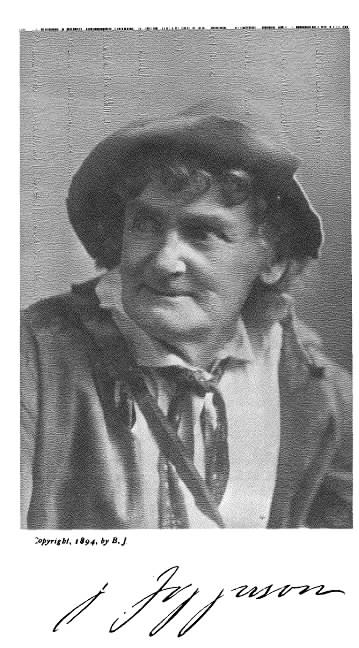
ONE UNWAVERING AIM 489
There are plenty of men who have ability enough; the rays of their faculties, taken separately, are all right, but they are powerless to collect them, to bring them all to bear upon a single spot. Versatile men, universal geniuses, are usually weak, because they have no power to concentrate their talents upon one point, and this makes all the difference between success and failure.
Chiseled upon the tomb of a disappointed, heartbroken king, Joseph II of Austria, in the Royal Cemetery at Vienna, a traveler tells us, is this epitaph " Here lies a monarch who, with the best of intentions, never carried out a single plan."
Sir James Mackintosh was a man of remarkable ability. He excited in every one who knew him the greatest expectations. Many watched his career with much interest, expecting that he would dazzle the world; but there was no purpose in his life. He had intermittent attacks of enthusiasm for doing great things, but his zeal all evaporated before he could decide what to do. This fatal defect in his character kept him balancing between conflicting motives; and his whole life was almost thrown away. He lacked power to choose one object and persevere with a single aim, sacrificing every interfering inclination. He, for instance, vacillated for weeks trying to determine whether to use " usefulness " or " utility " in a composition.
One talent utilized in a single direction will do infinitely more than ten talents scattered. A thimbleful of powder behind a ball in a rifle will do more execution than a carload of powder unconfined. The rifle barrel is the purpose that gives direct aim to the powder, which otherwise, no matter how good it might be, would be powerless.
490 PUSHING TO THE FRONT
The poorest scholar in school or college often, in practical life, far outstrips the class leader or senior wrangler, simply because what little ability he has he employs for a definite object, while the other, depending upon his general ability and brilliant prospects, never concentrates his powers.
It is fashionable to ridicule the man of one idea, but the men who have changed the front of the world have been men of a single aim. No man can make his mark on this age of specialties who is not a man of one idea, one supreme air, one master passion. The man who would make himself felt on this bustling planet, who would make a breach in the compact conservatism of our civilization, must play all his guns on one point. A wavering aim, a faltering purpose, has no place in the twentieth century.
" Mental shiftlessness " is the cause of many a failure. The world is full of unsuccessful men who spend their lives letting empty buckets down into empty wells.
" Mr. A. often laughs at me," said a young American chemist, " because I have but one idea. He talks about everything, aims to excel in many things; but I have learned that, if I ever wish to make a breach, I must play my guns continually upon one point." This great chemist, when an obscure schoolmaster, used to study by the light of a pine knot in a log cabin. Not many years later he was performing experiments in electro-magnetism before English earls, and subsequently he was at the head of one of the largest scientific institutes of this country. He was the late Professor Henry, of the Smithsonian Institution, Washington.
We should guard against a talent which we can not hope to practise in perfection, says Goethe. Improve it as we may, we shall always, in the end, when the merit of the matter has become apparent to us, painfully lament the loss of time and strength devoted to such botching.
ONE UNWAVERING AIM 491
An old proverb says: " The master of one trade will support a wife and seven children, and the master of seven will not support himself."
It is the single aim that wins. Men with monopolizing ambitions rarely live in history. They do not focus their powers long enough to burn their names indelibly into the roll of honor. Edward Everett, even with his magnificent powers, disappointed the expectations of his friends. He spread himself over the whole field of knowledge and elegant culture; but the mention of the name of Everett does not call up any one great achievement as does that of names like Garrison and Phillips. Voltaire called the Frenchman La Harpe an oven which was always heating, but which never cooked anything. Hartley Coleridge was splendidly endowed with talent, but there was one fatal lack in his character - he had no definite purpose, and his life was a failure. Unstable as water, he could not excel. Southey, the uncle of Coleridge, says of him: " Coleridge has two left hands." He was so morbidly shy from living alone in his dreamland that he could not open a letter without trembling. He would often rally from his purposeless life, and resolve to redeem himself from the oblivion he saw staring him in the face; but, like Sir James Mackintosh, he remained a man of promise merely to the end of his life.
The man who succeeds has a program. He fires his course and adheres to it. He lays his plans and executes them. He goes straight to his goal. He is not pushed this way and that every time a difficulty is thrown in his path; if he can not get over it he goes through it. Constant and steady use of the faculties under a central purpose gives strength and power, while the use of faculties without an aim or end only weakens them. The mind must be focused on a definite end, or, like machinery without a balance-wheel, it will rack itself to pieces.
492 PUSHING TO THE FRONT
This age of concentration calls, not for educated men merely, not for talented men, not for geniuses, not for jacks-of-all-trades, but for men who are trained to do one thing as well as it can be done. Napoleon could go through the drill of his soldiers better than any one of his men.
Stick to your aim. The constant changing of one's occupation is fatal to all success. After a young man has spent five or six years in a dry goods store, he concludes that he would rather sell groceries, thereby throwing away five years of valuable experience which will be of very little use to him in the grocery business; and so he spends a large part of his life drifting around from one kind of employment to another, learning part of each but all of none, forgetting that experience is worth more to him than money and that the years devoted to learning his trade or occupation are the most valuable. Half-learned trades, no matter if a man has twenty, will never give him a good living, much less a competency, while wealth is absolutely out of the question.
How many young men fail to reach the point of efficiency in one line of work before they get discouraged and venture into something else! How easy to see the thorns in one's own profession or vocation, and only the roses in that of another! A young man in business, for instance, seeing a physician riding about town in his carriage, visiting his patients, imagines that a doctor must have an easy, ideal life, and wonders that he himself should have embarked in an occupation so full of disagreeable drudgery and hardships. He does not know of the years of dry, tedious study which the physician has consumed, the months and perhaps years of waiting for patients, the dry detail of anatomy, the endless names of drugs and technical terms.
ONE UNWAVERING AIM 493
There is a sense of great power in a vocation after a man has reached the point of efficiency in it, the point of productiveness, the point where his skill begins to tell and brings in returns.
Up to this point of efficiency, while he is learning his trade, the time seems to have been almost thrown away. But he has been storing up a vast reserve of knowledge of detail, laying foundations, forming his acquaintances, gaining his reputation for truthfulness, trustworthiness, and integrity, and in establishing his credit. When he reaches this point of efficiency, all the knowledge and skill, character, influence, and credit thus gained come to his aid, and he soon finds that in what seemed almost thrown away lies the secret of his prosperity. The credit he established as a clerk, the confidence, the integrity, the friendships formed, he finds equal to a large capital when he starts out for himself and takes the highway to fortune; while the young man who half learned several trades, got discouraged and stopped just short of the point of efficiency, just this side of success, is a failure because he didn't go far enough; he did not press on to the point at which his acquisition would have been profitable.
In spite of the fact that nearly all very successful men have made a life-work of one thing, we see on every hand hundreds of young men and women flitting about from occupation to occupation, trade to trade, in one thing today and another tomorrow, - just as though they could go from one thing to another by turning a switch, as though they could run as well on another track as on the one they have left, regardless of the fact that no two careers have the same gage, that every man builds his own road upon which another man's engine can not run either with speed or safety. This fickleness, this disposition to shift about from one occupation to another, seems to be peculiar to American life, so much so that, when a young man meets a friend whom he has not seen for some time, the commonest question to ask is, "What are you doing now?" showing the improbability or uncertainty that he is doing today what he was doing when they last met.
494 PUSHING TO THE FRONT
Some people think that if they " keep everlastingly at it " they will succeed, but this is not always so. Working without a plan is as foolish as going to sea without a compass.
A ship which has broken its rudder in mid-ocean may " keep everlastingly at it," may keep on a full head of steam, driving about all the time, but it never arrives anywhere, it never reaches any port unless by accident; and if it does find a haven, its cargo may not be suited to the people, the climate, or conditions. The ship must be directed to a definite port, for which its cargo is adapted, and where there is a demand for it, and it must aim steadily for that port through sun shine and storm, through tempest and fog.
So a man who would succeed must not drift about rudderless on the ocean of life. He must not only steer straight toward his destined port when the ocean is smooth, when the currents and winds serve, but he must keep his course in the very teeth of the wind and the tempest, and even when enveloped in the fogs of disappointment and mists of opposition. Atlantic liners do not stop for fogs or storms; they plow straight through the rough seas with only one thing in view, their destined port, and no matter what the weather is, no matter what obstacles they encounter, their arrival in port can be predicted to within a few hours.
On the prairies of South America there grows a flower that always inclines in the same direction. If a traveler loses his way and has neither compass nor chart, by turning to this flower he will find a guide on which he can implicitly rely; for no matter how the rains descend or the winds blow, its leaves point to the north.
ONE UNWAVERING AIM 495
So there are many men whose purposes are so well known, whose aims are so constant, that no matter what difficulties they may encounter, or what opposition they may meet, you can tell almost to a certainty where they will come out. They may be delayed by head winds and counter currents, but they will always head for the port and will steer straight towards the harbor. You know to a certainty that whatever else they may lose, they will not lose their compass or rudder.
Whatever may happen to a man of this stamp, even though his sails may be swept away and his mast stripped to the deck, though he may be wrecked by the storms of life, the needle of his compass will still point to the North Star of his hope. Whatever comes, his life will not be purposeless. Even a wreck that makes its port is a greater success than a full-rigged ship with all its sails flying, with every mast and every rope intact, which merely drifts along into an accidental harbor.
To fix a wandering life and give it direction is not an easy task, but a life which has no definite aim is sure to be frittered away in empty and purposeless dreams. " Listless triflers," " busy idlers," " purposeless busy-bodies," are seen everywhere. A healthy, definite purpose is a remedy for a thousand ills which attend aimless lives. Discontent and dissatisfaction flee before a definite purpose. What we do begrudgingly without a purpose becomes a delight with one, and no work is well done nor healthily done which is not enthusiastically done.
Mere energy is not enough; it must be concentrated on some steady, unwavering aim. What is more common than " unsuccessful geniuses," or failures with "commanding talents"? Indeed, the term " unrewarded genius " has become a proverb. Every town has unsuccessful educated and talented men.
496 PUSHING TO THE FRONT
But education is of no value, talent is worthless, unless it can do something, achieve something. Men who can do something at everything and a very little at anything are not wanted in this age.
What this age wants is young men and women who can do one thing without losing their identity or individuality, or becoming narrow, cramped, or dwarfed. Nothing can take the place of an all-absorbing purpose; education can not, genius can not, talent can not, industry can not, will-power can not. The purposeless life must ever be a failure. What good are powers, faculties, unless we can use them for a purpose? What good would a chest of tools do a carpenter unless he could use them? A college education, a head full of knowledge, are worth little to the men who cannot use them to some definite end.
The man without a purpose never leaves his mark upon the world. He has no individuality; he is absorbed in the mass, lost in the crowd, weak, wavering, and incompetent.
" Consider, my lord," said Rowland Hill to the Prime Minister of England, " that a letter to Ireland and the answer back would cost thousands upon thousands of my affectionate countrymen more than a fifth of their week's wages. If you shut the post-office to them, which you do now, you shut out warm hearts and generous affections from home, kindred, and friends." The lad learned that it cost to carry a letter from London to Edinburgh, four hundred and four miles, one eighteenth of a cent, while the government charged for a simple folded sheet of paper twenty-eight cents, and twice as much if there was the smallest inclosure. Against the opposition and contempt of the post-office department he at length carried his point, and on January 10, 1840 penny postage was established throughout Great Britain. Mr. Hill was chosen to introduce the system, at a salary of fifteen hundred pounds a year.
ONE UNWAVERING AIM 497
His success was most encouraging, but at the end of two years a Tory minister dismissed him without paying for his services, as agreed. The public was indignant, and at once contributed sixty-five thousand dollars; and, at the request of Queen Victoria, Parliament voted him one hundred thousand dollars cash, together with ten thousand dollars a year for life.
It is a great purpose which gives meaning to life; it unifies all our powers, binds them together in one cable and makes strong and united what was weak, separated, scattered.
" Smatterers " are weak and superficial. Of what use is a man who knows a little of everything and not much of anything? It is the momentum of constantly repeated acts that tells the story. " Let thine eyes look straight before thee. Ponder the path of thy feet and let all thy ways be established. Turn not to the right hand nor to the left."
One great secret of St. Paul's power lay in his strong purpose. Nothing could daunt, nothing intimidate him. The Roman Emperor could not muzzle him, the dungeon could not appall him, no prison suppress him, obstacles could not discourage him. "This one thing I do " was written all over his work. The quenchless zeal of his mighty purpose burned its way down through the centuries, and its contagion will never cease to fire the hearts of men.
" Try and come home somebody," said his mother to Gambetta as she sent him off to Paris to school. Poverty pinched this lad hard in his little garret study and his clothes were shabby, but what of that? He had made up his mind to get on in the world. For years he was chained to his desk and worked like a hero. At last his opportunity came. Jules Favre was to plead a great cause on a certain day; but, being ill, he chose this young man, absolutely unknown, rough and uncouth, to take his place.
498 PUSHING TO THE FRONT
For many years Gambetta had been preparing for such an opportunity, and he was equal to it. He made one of the greatest speeches that up to that time had ever been made in France. That night all the papers in Paris were sounding the praises of this ragged, uncouth Bohemian, and soon all France recognized him as the Republican leader. This sudden rise was not due to luck or accident. He had been steadfastly working and fighting his way up against oppositions and poverty for just such an occasion. Had he not been equal to it, it would only have made him ridiculous. What a stride; yesterday, poor and unknown, living in a garret; today, deputy-elect, in the city of Marseilles, and the great Republican leader
When Louis Napoleon had been defeated at Sedan and had delivered his sword to William of Prussia, and when the Prussian army was marching on Paris, the brave Gambetta went out of the besieged city in a balloon barely grazed by the Prussian guns, landed in Amiens, and by almost superhuman skill raised three armies of 800,000 men, provided for their maintenance, and directed- their military operations. A German officer said: " This colossal energy is the most remarkable event of modern history, and will carry down Gambetta's name to remote posterity."
This youth who was poring over his books in an attic while other youths were promenading the Champs Elysees, although but thirty-two years old, was now virtually dictator of France, and the greatest orator in the Republic. What a striking example of the great reserve of personal power, which, even in dissolute lives, is sometimes called out by a great emergency or sudden sorrow, and ever after leads the life to victory! When Gambetta found that his first speech had electrified all France, his great reserve rushed to the front; he was suddenly weaned from dissipation, and resolved to make his mark in the world.
ONE UNWAVERING AIM 499
Nor did he lose his head in his quick leap into fame. He still lived in the upper room in the musty Latin Quarter, and remained a poor man, without stain of dishonor, though he might easily have made himself a millionaire. When he died the " Figaro " said, " The Republic has lost its greatest man." American boys should study this great man, for he loved our country, and took our Republic as the pattern for France.
There is no grander sight in the world than that of a young man fired with a great purpose, dominated by one unwavering aim. He is bound to win; the world stands to one side and lets him pass; it always makes way for the man with a will in him. He does not have one-half the opposition to overcome that the undecided, purposeless man has who, like driftwood, runs against all sorts of snags to which he must yield simply because he has no momentum to force them out of his way. What a sublime spectacle it is to see a youth going straight to his goal, cutting his way through difficulties, and surmounting obstacles which dishearten others, as though they were but steppingstones! Defeat, like a gymnasium, only gives him new power; opposition only doubles his exertions; dangers only increase his courage. No matter what comes to him, sickness, poverty, disaster, he never turns his eye from his goal.
"Duos qui sequitur lepores, neutrum capit."
CHAPTER XL
WORK AND WAIT
What we do upon some great occasion will probably depend on what we already are; and what we are will be the result of previous years of self-discipline. - H. P. LIDDON.
I consider a human soul without education like marble in a quarry, which shows none of its inherent beauties until the skill of the polisher sketches out the colors, makes the surface shine, and discovers every ornamental cloud, spot, and vein that runs throughout the body of it. - ADDISON.
Use your gifts faithfully, and they shall be enlarged; practise what you know, and you shall attain to higher knowledge. - ARNOLD.
Haste trips up its own heels, fetters and stops itself. - SENECA.
The more you know, the more you can save yourself and that which belongs to you, and do more work with less effort. - CHARLES KINGSLEY.
" I was a mere cipher in that vast sea of human enterprise," said Henry Bessemer, speaking of his arrival in London in 1831. Although but eighteen years old, and without an acquaintance in the city, he soon made work for himself by inventing a process of copying bas-reliefs on cardboard. His method was so simple that one could learn in ten minutes how to make a die from an embossed stamp for a penny. Having ascertained later that in this way the raised stamps on all official papers in England could easily be forged, he set to work and invented a perforated stamp which could not be forged nor removed from a document. At the public stamp office he was told by the chief that the government was losing £100,000 a year through the custom of removing stamps from old parchments and using them again.
500
WORK AND WAIT 501
The chief also fully appreciated the new danger of easy counterfeiting. So he offered Bessemer a definite sum for his process of perforation, or an office for life at eight hundred pounds a year. Bessemer chose the office, and hastened to tell the good news to a young woman with whom he had agreed to share his fortune. In explaining his invention, he told how it would prevent any one from taking a valuable stamp from a document a hundred years old and using it a second time.
" Yes," said his betrothed, " I understand that; but, surely, if all stamps had a date put upon them they could not at a future time be used without detection." This was a very short speech, and of no special importance if we omit a single word of four letters; but, like the schoolboy's pins which saved the lives of thousands of people annually by not getting swallowed, that little word, by keeping out of the ponderous minds of the British revenue officers, had for a long period saved the government the burden of caring for an additional income of £100,000 a year. And the same little word, if published in its connection, would render Bessemer's perforation device of far less value than a last year's bird's nest. He felt proud of the young woman's ingenuity, and promptly suggested the improvement at the stamp office.
As a result his system of perforation was abandoned and he was deprived of his promised office, the government coolly making use from that day to this, without compensation, of the idea conveyed by that little insignificant word. So Bessemer's financial prospects were not very encouraging; but, realizing that the best capital a young man can have is a capital wife, he at once entered into a partnership which placed at his command the combined ideas of two very level heads.
502 PUSHING TO THE FRONT
The result, after years of thought and experiment, was the Bessemer process of making steel cheaply, which has revolutionized the iron industry throughout the world. His method consists simply in forcing hot air from below into several tons of melted pig-iron, so as to produce intense combustion; and then adding enough spiegel-eisen (looking-glass iron), an ore rich in carbon, to change the whole mass to steel.
He discovered this simple process only after trying in vain much more difficult and expensive methods. "All things come round to him who will but wait."
The great lack of the age is want of thoroughness. How seldom you find a young man or woman who is willing to take time to prepare for his life work! A little education is all they want, a little smattering of books, and then they are ready for business.
" Can't wait " is characteristic of the century, and is written on everything; on commerce, on schools, on society, on churches. Can't wait for a high school, seminary, or college. The boy can't wait to become a youth, nor the youth a man. Youth rush into business with no great reserve of education or drill; of course they do poor, feverish work, and break down in middle life, and many die of old age in the forties.
Everybody is in a hurry. Buildings are rushed up so quickly that they will not stand, and everything is made " to sell."
Not long ago a professor in one of our universities had a letter from a young woman in the West, asking him if he did not think she could teach elocution if she could come to the university and take twelve lessons. Our young people of today are not willing to lay broad, deep foundations. The weary years in preparatory school and college dishearten them. They only want a " smattering" of an education.
WORK AND WAIT 503
But as Pope says,- -
A little learning is a dangerous thing;
Drink deep, or taste not the Pierian spring:
There shallow draughts intoxicate the brain,
And drinking largely sobers us again.
The shifts to cover up ignorance, and " the constant trembling lest some blunder should expose one's emptiness," are pitiable. Short cuts and abridged methods are the demand of the hour. But the way to shorten the road to success is to take plenty of time to lay in your reserve power. Hard work, a definite aim, and faithfulness will shorten the way. Don't risk a life's superstructure upon a day's foundation.
Patience is Nature's motto. She works ages to bring a flower to perfection. What will she not do for the greatest of her creation? Ages and aeons are nothing to her; out of them she has been carving her great statue, a perfect man.
Johnson said a man must turn over half a library to write one book. When an authoress told Wordsworth she had spent six hours on a poem, he replied that he would have spent six weeks. Think of Bishop Hall spending thirty years on one of his works! Owens was working on the " Commentary to the Epistle to the Hebrews " for twenty years. Moore spent several weeks on one of his musical stanzas which reads as if it were a dash of genius.
Carlyle wrote with the utmost difficulty and never executed a page of his great histories till he had consulted every known authority, so that every sentence is the quintessence of many books, the product of many hours of drudging research in the great libraries. Today, " Sartor Resartus " is everywhere. You can get it for a mere trifle at almost any bookseller's, and hundreds of thousands of copies are scattered over the world. But when Carlyle brought it to London in 1851, it was refused almost contemptuously by three prominent publishers.
504 PUSHING TO THE FRONT
At length he managed to get it into " Fraser's Magazine," the editor of which conveyed to the author the pleasing information that his work had been received with "unqualified disapprobation."
Henry Ward Beecher sent half a dozen articles to the publisher of a religious paper to pay for his subscription, but they were respectfully declined. The publishers of the " Atlantic Monthly " returned Miss Alcott's manuscript, suggesting that she had better stick to teaching. One of the leading magazines ridiculed Tennyson's first poems, and consigned the young poet to temporary oblivion. Only one of Ralph Waldo Emerson's books had a remunerative sale. Washington Irving was nearly seventy years old before the income from his books paid the expenses of his household.
In some respects it is very unfortunate that the old system of binding boys out to a trade has been abandoned. Today very few boys learn any trade. They pick up what they know, as they go along, just as a student crams for a particular examination, just to " get through," without any effort to see how much he may learn on any subject.
Think of an American youth spending ten years with Da Vinci on the model of an equestrian statue that he might master the anatomy of the horse! Most young American artists would expect, in a quarter of that time, to sculpture an Apollo Belvidere.
A rich man asked Howard Burnett to do a little something for his album. Burnett complied and Charged a thousand francs. "But it took you only five minutes," objected the rich man. "Yes, but it took me thirty years to learn how to do it in five minutes."
WORK AND WAIT 505
What the age wants is men who have the nerve and the grit to work and wait, whether the world applaud or hiss; a Mirabeau, who can struggle on for forty years before he has a chance to show the world his vast reserve, destined to shake an empire; a Farragut, a Von Moltke, who have the persistence to work and wait for half a century for their first great opportunities; a Grant, fighting on in heroic silence, when denounced by his brother generals and politicians everywhere; a Michael Angelo, working seven long years decorating the Sistine Chapel with his matchless " Creation " and the " Last judgment," refusing all remuneration therefore, lest his pencil might catch the taint of avarice; a Thurlow Weed, walking two miles through the snow with rags tied around his feet for shoes, to borrow the history of the French Revolution, and eagerly devouring it before the sap-bush fire; a Milton, elaborating " Paradise Lost " in a world he could not see; a Thackeray, struggling on cheerfully after his " Vanity Fair " was refused by a dozen publishers; a Balzac, toiling and waiting in a lonely garret; men whom neither poverty, debt, nor hunger could discourage or intimidate; not daunted by privations, not hindered by discouragements. It wants men who can work and wait.
When a young lawyer Daniel Webster once looked in vain through all the law libraries near him, and then ordered at an expense of fifty dollars the necessary books, to obtain authorities and precedents in a case in which his client was a poor blacksmith. He won his case, but, on account of the poverty of his client, only charged fifteen dollars, thus losing heavily on the books bought, to say nothing of his time.
Years after, as he was passing through New York City, he was consulted by Aaron Burr on an important but puzzling case then pending before the Supreme Court. He saw in a moment that it was just like the blacksmith's case, an intricate question of title, which he had solved so thoroughly that it was to him now as simple as the multiplication table.
506 PUSHING TO THE FRONT
Going back to the time of Charles II he gave the law and precedents involved with such readiness and accuracy of sequence that Burr asked in great surprise if he had been consulted before in the case. " Most certainly not," he replied, " I never heard of your case till this evening." " Very well," said Burr," proceed "; and, when he had finished, Webster received a fee that paid him liberally for all the time and trouble he had spent for his early client.
Albert Bierstadt first crossed the Rocky Mountains with a band of pioneers in 1859, making sketches for the paintings of Western scenes for which he had become famous. As he followed the trail to Pike's Peak, he gazed in wonder upon the enormous herds of buffaloes which dotted the plains as far as the eye could reach, and thought of the time when they would have disappeared before the march of civilization. The thought haunted him and found its final embodiment in "The Last of the Buffaloes" in 1890 To perfect this great work he had spent twenty years.
Everything which endures, which will stand the test of time, must have a deep, solid foundation. In Rome the foundation is often the most expensive part of an edifice, so deep must they dig to build on the living rock.
Fifty feet of Bunker Hill Monument is under ground; unseen and unappreciated by those who tread about that historic shaft, but it is this foundation, apparently thrown away, which enables it to stand upright, true to the plumb-line through all the tempests that lash its granite sides. A large part of every successful life must be spent in laying foundation stones underground. Success is the child of drudgery and perseverance and depends upon " knowing how long it takes to succeed."
Endurance is a much better test of character than any one act of heroism, however noble.
WORK AND WAIT 507
The pianist Thalberg said he never ventured to perform one of his celebrated pieces in public until he had played it at least fifteen hundred times. He laid no claim whatever to genius; he said it was all a question of hard work. The accomplishments of such industry, such perseverance, would put to shame many a man who claims genius.
Before Edmund Kean would consent to appear in that character which he acted with such consummate skill, The Gentleman Villain, he practised constantly before a glass, studying expression for a year and a half. When he appeared upon the stage, Byron, who went with Moore to see him, said he never looked upon so fearful and wicked a face. As the great actor went on to delineate the terrible consequences of sin, Byron fainted.
" For years I was in my place of business by sunrise," said a wealthy banker who had begun without a dollar; "and often I did not leave it for fifteen or eighteen hours."
Patience, it is said, changes the mulberry leaf to satin. The giant oak on the hillside was detained months or years in its upward growth while its root took a great turn around some rock, in order to gain a hold by which the tree was anchored to withstand the storms of centuries. Da Vinci spent four years on the head of Mona Lisa, perhaps the most beautiful ever painted, but he left therein an artistic thought for all time.
Said Captain Bingham : "You can have no idea of the wonderful machine that the German army is and how well it is prepared for war. A chart is made out which shows just what must be done in the case of wars with the different nations, and every officer's place in the scheme is laid out beforehand. There is a schedule of trains which will supersede all other schedules the moment war is declared, and this is so arranged that the commander of the army here could telegraph to any officer to take such a train and go to such a place at a moment's notice."
508 PUSHING TO THE FRONT
A learned clergyman was thus accosted by an illiterate preacher who despised education: " Sir, you have been to college, I presume?" "Yes, sir," was the reply. "I am thankful," said the former, " that the Lord opened my mouth without any learning." " A similar event," retorted the clergyman, " happened in Balaam's time."
A young man just graduated told the President of Trinity College that he had completed his education, and had come to say good by. " Indeed," said the President, " I have just begun my education."
Many an extraordinary man has been made out of a very ordinary boy; but in order to accomplish this we must begin with him while he is young. It is simply astonishing what training will do for a rough, uncouth, and even dull lad, if he has good material in him, and comes under the tutelage of a skilled educator before his habits become fixed or confirmed.
Even a few weeks' or months' drill of the rawest and roughest recruits in the late Civil War so straightened and dignified stooping and uncouth soldiers, and made them manly, erect, and courteous in their bearing, that their own friends scarcely knew them. If this change is so marked in the youth who has grown to maturity, what a miracle is possible in the lad who is taken early and put under a course of drill and systematic training, both physical, mental, and moral! How often a man who is in the penitentiary, in the poorhouse, or among the tramps, or living out a miserable existence in the slums of our cities, rough, slovenly, has slumbering within the rags possibilities which would have developed him into a magnificent man, an ornament to the human race instead of a foul blot and ugly scar, had he only been fortunate enough early in life to have enjoyed the benefits of efficient and systematic training
WORK AND WAIT 509
Laziness begins in cobwebs and ends in iron chains. Edison described his repeated efforts to make the phonograph reproduce an aspirated sound, and added " From eighteen to twenty hours a day for the last seven months I have worked on this single word `specia.' I said into the phonograph ` specia, specia, specia,' but the instrument responded ` pecia, pecia, pecia.' It was enough to drive one mad. But I held firm, and I have succeeded."
The road to distinction must be paved with years of self-denial and hard work. Horace Mann, the great author of the common school system of Massachusetts, was a remarkable example of that pluck and patience which can work and wait. His only inheritance was poverty and hard work. But he had an unquenchable thirst for knowledge and a determination to get on in the world. He braided straw to earn money to buy books for which his soul thirsted.
Gladstone was bound to win. Although he had spent many years of preparation for his life work, in spite of the consciousness of marvelous natural endowments which would have been deemed sufficient by many young men, and notwithstanding he had gained the coveted prize of a seat in Parliament, yet he decided to make himself master of the situation; and amid all his public and private duties, he not only spent eleven terms more in the study of the law, but also studied Greek constantly and read every well written book or paper he could obtain, so determined was he that his life should be rounded out to its fullest measure, and that his mind should have broad and liberal culture.
510 PUSHING TO THE FRONT
Ole Bull said: " If I practise one day, I can see the result; if I practise two days, my friends can see it; if I practise three days, the great public can see it." The habit of seizing every bit of knowledge, no matter how insignificant it may seem at, the time, every opportunity, every occasion, and grinding them all up into experience, can not be overestimated. You will find use for all of it. Webster once repeated with effect an anecdote which he had heard fourteen years before, and which he had not thought of in the meantime. It exactly fitted the occasion. "It is an ill mason that rejects any stone."
Webster was once urged to speak on a subject of great importance, but refused, saying he was very busy and had no time to master the subject. " But," replied his friend, " a very few words from you would do much to awaken public attention to it. "Webster replied, " If there be so much weight in my words, it is because I do not allow myself to speak on any subject until my mind is imbued with it." On one occasion Webster made a remarkable speech before the Phi Beta Kappa Society at Harvard, when a book was presented to him; but after he had gone, his " impromptu " speech, carefully written out, was found in the book which he had forgotten to take away.
Demosthenes was once asked to speak on a great and sudden emergency, but replied, " I am not prepared." In fact, it was thought by many that Demosthenes did not possess any genius whatever, because he never allowed himself to speak on any subject without thorough preparation. In any meeting or assembly, when called upon, he would never rise, even to make remarks, it was said, without previously preparing himself.
Alexander Hamilton said, " Men give me credit for genius. All the genius I have lies just in this: when I have a subject in hand I study it profoundly. Day and night it is before me.
WORK AND WAIT 511
I explore it in all its bearings. My mind becomes pervaded with it. Then the effort which I make the people are pleased to call the fruit of genius; it is the fruit of labor and thought." The law of labor is equally binding on genius and mediocrity.
Nelaton, the great surgeon, said that if he had four minutes in which to perform an operation on which a life depended, he would take one minute to consider how best to do it.
" Many men," says Longfellow, " do not allow their principles to take root, but pull them up every now and then, as children do flowers they have planted, to see if they are growing." We must not only work, but also wait.
" The spruce young spark," says Sizer, " who thinks chiefly of his mustache and boots and shiny hat, of getting along nicely and easily during the day, and talking about the theater, 'the opera, or a fast horse, ridiculing the faithful young fellow who came to learn the business and make a man of himself because he will not join in wasting his time in dissipation, will see the day, if his useless life is not earlier blasted by vicious indulgences, when he will be glad to accept a situation from the fellow-clerk whom he now ridicules and affects to despise, when the latter shall stand in the firm, dispensing benefits and acquiring fortune."
" I have been watching the careers of young men by the thousand in this busy city of New York for over thirty years," said Dr. Cuyler, "and I find that the chief difference between the successful and the failures lies in the single element of staying power. Permanent success is oftener won by holding on than by sudden dash, however brilliant. The easily discouraged, who are pushed back by a straw, are all the time dropping to the rear - to perish or to be carried along on the stretcher of charity.
512 PUSHING TO THE FRONT
They who understand and practise Abraham Lincoln's homely, maxim of `pegging away' have achieved the solidest success."
The Duke of Wellington became so discouraged because he did not advance in the army that he applied for a much inferior position in the customs department, but was refused. Napoleon had applied for every vacant position for seven years before he was recognized, but meanwhile he studied with all his might, supplementing what was considered a thorough military education by researches and reflections which in later years enabled him easily to teach the art of war to veterans who had never dreamed of his novel combinations.
Reserves which carry us through great emergencies are the result of long working and long waiting. Dr. Collyer declares that reserves mean to a man also achievement, - " the power to do the grandest thing possible to your nature when you feel you must, or some precious thing will be lost, - to do well always, but best in the crisis on which all things turn; to stand the strain of a long fight, and still find you have something left, and so to never know you are beaten, because you never are beaten."
He only is independent in action who has been earnest and thorough in preparation and self-culture. "Not for school, but for life, we learn"; and our habits - of promptness, earnestness, and thoroughness, or of tardiness, fickleness, and superficiality - are the things acquired most readily and longest retained.
To vary the language of another, the three great essentials to success in mental and physical labor are Practice, Patience, and Perseverance, but the greatest of these is Perseverance.
" Let us, then, be up and doing,
With a heart for any fate;
Still achieving, still pursuing,
Learn to labor and to wait."
CHAPTER XLI
THE MIGHT OF LITTLE THINGS
Think naught a trifle, though it small appear; Small sands the mountain, moments make the year, And trifles, life - YOUNG.
It is but the littleness of man that sees no greatness in trifles. WENDELL PHILLIPS.
He that despiseth small things shall fall by little and little. ECCLESIASTICUS.
The creation of a thousand forests is in one acorn. - EMERSON.
Men are led by trifles. - NAPOLEON.
" A pebble on the streamlet scant
Has turned the course of many a river."
" The bad thing about a little sin is that it won't stay little."
"ARLETTA'S pretty feet, glistening in the brook, made her the mother of William the Conqueror," says Palgrave's " History of Normandy and England." " Had she not thus fascinated Duke Robert, the Liberal, of Normandy, Harold would not have fallen at Hastings, no Anglo-Norman dynasty could have arisen, no British Empire."
We may tell which way the wind blew before the Deluge by marking the ripple and cupping of the rain in the petrified sand now preserved forever. We tell the very path by which gigantic creatures, whom man never saw, walked to the river's edge to find their food.
It was little Greece that rolled back the overflowing tide of Asiatic luxury and despotism, giving instead to Europe and America models of the highest political freedom yet attained, and germs of limitless mental growth.
513
514 PUSHING TO THE FRONT
A different result at Plataea would have delayed the progress of the human race more than ten centuries.
Among the lofty Alps, it is said, the guides sometimes demand absolute silence, lest the vibration of the voice bring down an avalanche.
The power of observation in the American Indian would put many an educated man to shame. Returning home, an Indian discovered that his venison, which had been hanging up to dry, had been stolen. After careful observation he started to track the thief through the woods. Meeting a man on the route, he asked him if he had seen a little, old, white man, with a short gun, and with a small bobtailed dog. The man told him he had met such a man, but was surprised to find that the Indian had not even seen the one he described, and asked him how he could give such a minute description of the man he had never seen. " I knew the thief was a little man," said the Indian, " because he rolled up a stone to stand on in order to reach the venison; I knew he was an old man by his short steps; I knew he was a white man by his turning out his toes in walking, which an Indian never does; I knew he had a short gun by the mark it left on the tree where he had stood it up; I knew the dog was small by his tracks and short steps, and that he had a bob-tail by the mark it left in the dust where he sat."
Two drops of rain, falling side by side, were separated a few inches by a gentle breeze. Striking on opposite sides of the roof of a court-house in Wisconsin, one rolled southward through the Rock River and the Mississippi to the Gulf of Mexico; while the other entered successively the Fox River, Green Bay, Lake Michigan, the Straits of Mackinaw, Lake Huron, St. Clair River, Lake St. Clair, Detroit River, Lake Erie, Niagara River, Lake Ontario, the St. Lawrence River, and finally reached the Gulf of St. Lawrence.
THE MIGHT OF LITTLE THINGS 515
How slight the influence of the breeze, yet such was the formation of the continent that a trifling cause was multiplied almost beyond the power of figures to express its momentous effect upon the destinies of these companion raindrops. Who can calculate the future of the smallest trifle when a mud crack swells to an Amazon and the stealing of a penny may end on the scaffold? The act of a moment may cause a life's regret. A trigger may be pulled in an instant, but the soul returns never.
A spark falling upon some combustibles led to the invention of gunpowder. A few bits of seaweed and driftwood, floating on the waves, enabled Columbus to stay a mutiny of his sailors which threatened to prevent the discovery of a new world. There are moments in history which balance years of ordinary life. Dana could interest a class for hours on a grain of sand; and from a single bone, such as no one had ever seen before. Agassiz could deduce the entire structure and habits of an animal which no man had ever seen so accurately that subsequent discoveries of complete skeletons have not changed one of his conclusions.
A cricket once saved a military expedition from destruction. The commanding officer and hundreds of his men were going to South America on a great ship, and, through the carelessness of the watch, they would have been dashed upon a ledge of rock had it not been for a cricket which a soldier had brought on board. When the little insect scented the land, it broke its long silence by a shrill note, and thus warned them of their danger.
By gnawing through a dike, even a rat may drown a nation. A little boy in Holland saw water trickling from a small hole near the bottom of a dike. He realized that the leak would rapidly become larger if the water were not checked, so he held his hand over the hole for hours on a dark and dismal night until he could attract the attention of passers-by.
516 PUSHING TO THE FRONT
His name is still held in grateful remembrance in Holland. The beetling chalk cliffs of England were built by rhizopods, too small to be clearly seen without the aid of a magnifying-glass.
What was so unlikely as that throwing an empty wine-flask in the fire should furnish the first notion of a locomotive, or that the sickness of an Italian chemist's wife and her absurd craving for reptiles for food should begin the electric telegraph. Madame Galvani noticed the contraction of the muscles of a skinned frog which was accidentally touched at the moment her husband took a spark from an electrical machine. She gave the hint which led to the discovery of galvanic electricity, now so useful in the arts and in transmitting vocal or written language.
"The fate of a nation," says Gladstone, " has often depended upon the good or bad digestion of a fine dinner."
A stamp act to raise £60,000 produced the American Revolution, a war that cost England £100,000,000. A war between France and England, costing more than a hundred thousand lives, grew out of a quarrel as to which of two vessels should first be served with water. The quarrel of two Indian boys over a grasshopper led to the " Grasshopper War." What mighty contests rise from trivial things!
A young man once went to India to seek his fortune, but, finding no opening, he went to his room, loaded his pistol, put the muzzle to his head, and pulled the trigger. But it did not go off. He went to the window to point it in another direction and try it again, resolved that if the weapon went off he would regard it as a Providence that he was spared. He pulled the trigger and it went off the first time. Trembling with excitement he resolved to hold his life sacred, to make the most of it, and never again to cheapen it.
THE MIGHT OF LITTLE THINGS 517
This young man became General Robert Clive, who, with but a handful of European soldiers, secured to the East India Company and afterwards to Great Britain a great and rich country with two hundred millions of people. The cackling of a goose aroused the sentinels and saved Rome from the Gauls, and the pain from a thistle warned a Scottish army of the approach of the Danes.
Henry Ward Beecher came within one vote of being elected superintendent of a railway. If he had had that vote America would probably have lost its greatest preacher. What a little thing fixes destiny. Trifles light as air often suggest to the thinking mind ideas which have revolutionized the world.
A famous ruby was offered to the English government. The report of the crown jeweler was that it was the finest he had ever seen or heard of, but that one of the " facets " was slightly fractured. That invisible fracture reduced the value of the ruby thousands of dollars, and it was rejected from the regalia of England. It was a little thing for the janitor to leave a lamp swinging in the cathedral at Pisa, but in that steady swaying motion the boy Galileo saw the pendulum,.and conceived the idea of thus measuring time.
" I was singing to the mouthpiece of a telephone," said Edison, " when the vibrations of my voice caused a fine steel point to pierce one of my fingers held just behind it. That set me to thinking. If I could record the motions of the point and send it over the same surface afterward, I saw no reason why the thing would not talk. I determined to make a machine that would work accurately, and gave my assistants the necessary instructions, telling them what I had discovered. That's the whole story. The phonograph is the result of the pricking of a finger."
518 PUSHING TO THE FRONT
It was a little thing for a cow to kick over a lantern left in a shanty, but it laid Chicago in ashes, and rendered homeless a hundred thousand people.
Some little weakness, some self-indulgence, a quick temper, want of decision, are little things, you say, when placed beside great abilities, but they have wrecked many a career. The Parliament of Great Britain, the Congress of the United States, and representative governments all over the world have come from King John signing the Magna Charta.
Bentham says, " The turn of a sentence has decided many a friendship, and, for aught we know, the fate of many a kingdom." Perhaps you turned a cold shoulder but once, and made but one stinging remark, yet it may have cost you a friend forever.
The sight of a stranded cuttlefish led Cuvier to an investigation which made him one of the greatest natural historians in the world. The web of a spider suggested to Captain Brown the idea of a suspension bridge.
A missing marriage certificate kept the hod-carrier of Hugh Miller from establishing his claim to the Earldom of Crawford. The masons would call out, " John, Yearl of Crawford, bring us anither hod o' lime."
The absence of a comma in a bill which passed through Congress years ago cost our government a million dollars. A single misspelled word prevented a deserving young man from obtaining a situation as instructor in a New England college.
" I cannot see that you have made any progress since my last visit," said a gentleman to Michael Angelo. " But," said the sculptor, " I have retouched this part, polished that, softened that feature, brought out that muscle, given some expression to this lip, more energy to that limb, etc." "But they are trifles!" exclaimed the visitor.
THE MIGHT OF LITTLE THINGS 519
"It may be so," replied the great artist, " but trifles make perfection, and perfection is no trifle." That infinite patience which made Michael Angelo spend a week in bringing out a muscle in a statue with more vital fidelity to truth, or Gerhard Dow a day in giving the right effect to a dewdrop on a cabbage leaf, makes all the difference between success and failure.
The cry of the infant Moses attracted the attention of Pharoah's daughter, and gave the Jews a lawgiver. A bird alighting on the bough of a tree at the mouth of the cave where Mahomet lay hid turned aside his pursuers, and gave a prophet to many nations. A flight of birds probably prevented Columbus from discovering this continent. When 'he was growing anxious, Martin Alonzo Pinzon persuaded him to follow a flight of parrots toward the southwest; for to the Spanish seamen of that day it was good luck to follow in the wake of a flock of birds when on a voyage of discovery. But for his change of course Columbus would have reached the coast of Florida. " Never," wrote Humboldt, " had the flight of birds more important consequences."
The children of a spectacle-maker placed two or more pairs of the spectacles before each other in play, and told their father that distant objects looked larger. From this hint came the telescope.
Every day is a little life; and our whole life but a day repeated. Those that dare lose a day are dangerously prodigal; those that dare misspend it, desperate. What is the happiness of your life made up of ? Little courtesies, little kindnesses, pleasant words, genial smiles, a friendly letter, good wishes, and good deeds. One in a million - once in a lifetime - may do a heroic action.
Napoleon was a master of trifles. To details which his inferior officers thought too microscopic for their notice he gave the most exhaustive consideration. Nothing was too small for his attention.
520 PUSHING TO THE FRONT
He must know all about the provisions, the horse fodder, the biscuits, the camp kettles, the shoes. When the bugle sounded for the march to battle, every officer had his orders as to the exact route which he should follow, the exact day he was to arrive at a certain station, and the exact hour he was to leave, and they were all to reach the point of destination at a precise moment. It is said that nothing could be more perfectly planned than his memorable march which led to the victory of Austerlitz, and which sealed the fate of Europe for many years. - He would often charge his absent officers to send him perfectly accurate returns, even to the smallest detail. "When they are sent to me, I give up every occupation in order to read them in detail, and to observe the difference between one monthly return and another. No young girl enjoys her novel as much as I do these returns." Napoleon left nothing to chance, nothing to contingency, so far as he could possibly avoid it. Everything was planned to a nicety before he attempted to execute it.
Wellington, too, was "great in little things." He knew no such things as trifles. While other generals trusted to subordinates, he gave his personal attention to the minutest detail. The history of many a failure could be written in three words, " Lack of detail." How many a lawyer has failed from the lack of details in deeds and important papers, the lack of little words which seemed like surplusage, and which involved his clients in litigation, and often great losses! How many wills are contested from the carelessness of lawyers in the omission or shading of words, or ambiguous use of language!
Not even Helen of Troy, it is said, was beautiful enough to spare the tip of her nose; and if Cleopatra's had been an inch shorter Mark Antony might never have become infatuated with her wonderful charms, and the blemish would have changed the history of the world.
THE MIGHT OF LITTLE THINGS 521
Anne Boleyn's fascinating smile split the great Church of Rome in twain, and gave a nation an altered destiny. Napoleon, who feared not to attack the proudest monarchs in their capitols, shrank from the political influence of one independent woman in private life, Madame de Stael.
Cromwell was about to sail for America when a law was passed prohibiting emigration. At that time he was a profligate, having squandered all his property. But when he found that he could not leave England he reformed his life. Had he not been detained, who can tell what the history of Great Britain would have been?
From the careful and persistent accumulation of innumerable facts, each trivial in itself, but in the aggregate forming a mass of evidence, a Darwin extracts his law of evolution, and a Linnaeus constructs the science of botany. A pan of water and two thermometers were the tools by which Dr. Black discovered latent heat; and a prism, a lens, and a sheet of pasteboard enabled Newton to unfold the composition of light and the origin of colors. An eminent foreign savant called on Dr. Wollaston, and asked to be shown over those laboratories of his in which science had been enriched by so many great discoveries, when the doctor took him into a little study, and, pointing to an old tea tray on the table, on which stood a few watch glasses, test papers, a small balance, and a blow-pipe, said, " There is my laboratory." A burnt stick and a barn door served Wilkie in lieu of pencil and paper. A single potato, carried to England by Sir Walter Raleigh in the sixteenth century, has multiplied into food for millions, driving famine from Ireland again and again.
It seemed a small thing to drive William Brewster, John Robinson, and the poor people of Austerfield and Scrooy into perpetual exile, but as Pilgrims they became the founders of a mighty people.
522 PUSHING TO THE FRONT
A few immortal sentences from Garrison and Phillips, a few poems from Lowell and Whittier, and the leaven is at work which will not cease its action until the whipping-post and bodily servitude are abolished forever.
"For want of a nail the shoe was lost,
For want of a shoe the horse was lost;
For want of a horse the rider was lost, and all,"
says Poor Richard, " for want of a horseshoe nail."
A single remark dropped by an unknown person in the street led to the successful story of " The Breadwinners." hymn chanted by the barefooted friars in the temple of Jupiter at Rome led to the famous " Decline and Fall of the Roman Empire."
"Words are things" says Byron, "and a small drop of ink, falling like dew upon a thought, produces that which makes thousands, perhaps millions, think."
"I give these books for the founding of a college in this colony "; such were the words of ten ministers who in the year 1700 assembled at the village of Branford, a few miles east of New Haven. Each of the worthy fathers deposited a few books upon the table around which they were sitting; such was the founding of Yale College.
Great men are noted for their attention to trifles. Goethe once asked a monarch to excuse him, during an interview, while he went to an adjoining room to jot down a stray thought. Hogarth would make sketches of rare faces and characteristics upon his fingernails upon the streets. Indeed, to a truly great mind there are no little things. Trifles light as air suggest to the keen observer the solution of mighty problems. Bits of glass arranged to amuse children led to the discovery of the kaleidoscope.
THE MIGHT OF LITTLE THINGS 523
Goodyear discovered how to vulcanize rubber by forgetting, until it became red hot, a skillet containing a compound which he had before considered worthless. A shipworm boring a piece of wood suggested to Sir Isambard Brunel the idea of a tunnel under the Thames at London. Tracks of extinct animals in the old red sandstone led Hugh Miller on and on until he became the greatest geologist of his time. Sir Walter Scott once saw a shepherd boy plodding sturdily along, and asked him to ride. This boy was George Kemp, who became so enthusiastic in his study of sculpture that he walked fifty miles and back to see a beautiful statue. He did not forget the kindness of Sir Walter, and, when the latter died, threw his soul into the design of the magnificent monument erected in Edinburgh to the memory of the author of " Waverley."
A poor boy applied for a situation at a bank in Paris, but was refused. As he left the door, he picked up a pin. The bank president saw this, called the boy back, and gave him a situation from which he rose until he became the greatest banker of Paris, - Laffitte.
A Massachusetts soldier in the Civil War observed a bird hulling rice, and shot it; taking its bill for a model, he invented a hulling machine which has revolutionized the rice business.
The eye is a perpetual camera imprinting upon the sensitive mental plates and packing away in the brain for future use every face, every tree, every plant, flower, hill, stream, mountain, every scene upon the street, in fact, everything which comes within its range. There is a phonograph in our natures which catches, however thoughtless and transient, every syllable we utter, and registers forever the slightest enunciation, and renders it immortal. These notes may appear a thousand years hence, reproduced in our descendants, in all their beautiful or terrible detail.
524 PUSHING TO THE FRONT
" Least of all seeds, greatest of all harvests," seems to be one of the great laws of nature. All life comes from microscopic beginnings. In nature there is nothing small. The microscope reveals as great a world below as the telescope above. All of nature's laws govern the smallest atoms, and a single drop of water is a miniature ocean.
The strength of a chain lies in its weakest link, however large and strong all the others may be. We are all inclined to be proud of our strong points, while we are sensitive and neglectful of our weaknesses. Yet it is our greatest weakness which measures our real strength.
A soldier who escapes the bullets of a thousand battles may die from the scratch of a pin, and many a ship has survived the shocks of icebergs and the storms of ocean only to founder in a smooth sea from holes made by tiny insects.
Small things become great when a great soul sees them. A single noble or heroic act of one man has sometimes elevated a nation. Many an honorable career has resulted from a kind word spoken in season or the warm grasp of a friendly hand.
It is the little rift within the lute
That by and by will make the music mute,
And, ever widening, slowly silence all. - Tennyson.
" It was only a glad 'good-morning,' As she passed along the way,
But it spread the morning's glory Over the livelong day."
" Only a thought in passing - a smile, or encouraging word, Has lifted many a burden no other gift could have stirred."
CHAPTER XLII
THE SALARY YOU DO NOT FIND IN YOUR PAY ENVELOPE
The quality which you put into your work will determine the quality of your life. The habit of insisting upon the best of which you are capable, of always demanding of yourself the highest, never accepting the lowest or second best, no matter how small your remuneration, will make all the difference to you between failure and success.
"If the laborer gets no more than the wages his employer offers him, he is cheated; he cheats himself." A boy or a man who works simply for his salary, and is actuated by no higher motive, is dishonest, and the one whom he most defrauds is himself. He is cheating himself, in the quality of his daily work, of that which all the after years, try as he may, can never give him back.
If I were allowed but one utterance on this subject, so vital to every young man starting on the journey of life, I would say: "Don't think too much of the amount of salary your employer gives you at the start. Think, rather, of the possible salary you can give yourself, in increasing your skill, in expanding your experience, in enlarging and ennobling yourself." A man's or a boy's work is material with which to build character and manhood. It is life's school for practical training of the faculties, stretching the mind, and strengthening and developing the intellect, not a mere mill for grinding out a salary of dollars and cents.
525
526 PUSHING TO THE FRONT
Bismarck was said to have really founded the German Empire where working for a small salary as secretary to the German legation in Russia; for in that position he absorbed the secrets of strategy and diplomacy which later were used so effectively for his country. He worked so assiduously, so efficiently, that Germany prized his services more than those of the ambassador himself. If Bismarck had earned only his salary, he might have remained a perpetual clerk, and Germany a tangle of petty states.
I have never known an employee to rise rapidly, or even to get beyond mediocrity, whose pay envelope was his goal, who could not see infinitely more in his work than what he found in the envelope on Saturday night. That is necessity; but the larger part of the real pay of a real man's work is outside of the pay envelope.
One part of this outside salary is the opportunity of the employee to absorb the secrets of his employer's success, and to learn from his mistakes, while he is being paid for learning his trade or profession. The other part, and the best of all, is the opportunity for growth, for development, for mental expansion; the opportunity to become a larger, broader, more efficient man.
The opportunity for growth in a disciplinary institution, where the practical faculties, the executive faculties, are brought into systematic, vigorous exercise at a definite time and for a definite number of hours, is an advantage beyond computation. There is no estimating the value of such training. It is the opportunity, my employee friend, that will help you to make a large man of yourself, which, perhaps, you could not possibly do without being employed in some kind of an institution which has the motive, the machinery, the patronage to give you the disciplining and training you need to bring out your strongest qualities.
SALARY NOT IN THE ENVELOPE 527
And instead of paying for the opportunity of unfolding and developing from a green, ignorant boy into a strong, level-headed, efficient man, you are paid!
The youth who is always haggling over the question of how many dollars and cents he will sell his services for, little realizes how he is cheating himself by not looking at the larger salary he can pay himself in increasing his skill, in expanding his experience, and in making himself a better, stronger, more useful man.
The few dollars he finds in his pay envelope are to this larger salary as the chips which fly from the sculptor's chisel are to the angel which he is trying to call out of the marble.
You can draw from the faithfulness of your work, from the grand spirit which you bring to it, the high purpose which emanates from you in its performance, a recompense so munificent that what your employer pays you will seem insignificant beside it. He pays you in dollars; you pay yourself in valuable experience, in fine training, in increased efficiency, in splendid discipline, in self-expression, in character building.
Then, too, the ideal employer gives those who work for him a great deal that is not found in the pay envelope. He gives them encouragement, sympathy. He inspires them with the possibility of doing something higher, better.
How small and narrow and really blind to his own interests must be the youth who can weigh a question of salary against all those privileges he receives in exchange for the meager services he is able to render his employer.
Do not fear that your employer will not recognize your merit and advance you as rapidly as you deserve. If he is looking for efficient employees, - and what employer is not? - it will be to his own interest to do so, just as soon as it is profitable.
528 PUSHING TO THE FRONT
W. Bourke Cockran, himself a remarkable example of success, says " The man who brings to his occupation a loyal desire to do his best is certain to succeed. By doing the thing at hand surpassingly well, he shows that it would be profitable to employ him in some higher form of occupation, and, when there is profit in his promotion, he is pretty sure to secure it."
Do you think that kings of business like Andrew Carnegie, John Wanamaker, Robert C. Ogden, and other lesser powers in the commercial world would have attained their present commanding success had they hesitated and haggled about a dollar or two of salary when they began their life-work? If they had, they would now probably be working on comparatively small salaries for other people. It was not salary, but opportunity, that each wanted, - a chance to show what was in him, to absorb the secrets of the business. They were satisfied with a dollar or two apiece a week, hardly enough to live on, while they were learning the lessons that made them what they, are today. No, the boys who rise in the world are not those who, at the start, split hairs about salaries.
Often we see bright boys who have worked, perhaps for years, on small salaries, suddenly jumping, as if by magic, into high and responsible positions. Why? Simply because, while their employers were paying them but a few dollars a week, they were paying themselves vastly more in the fine quality of their work, in the enthusiasm, determination, and high purpose they brought to their tasks, and in increased insight into business methods.
Colonel Robert C. Clowry, president of the Western Union Telegraph Company, worked without pay as a messenger boy for months for experience, which he regarded as worth infinitely more than salary - and scores of our most successful men have cheerfully done the same thing.
SALARY NOT IN THE ENVELOPE 529
A millionaire merchant of New York told me the story of his rise. " I walked from my home in New England to New York," he said, " where I secured a place to sweep out a store for three dollars and a half a week. At the end of a year, I accepted an offer from the firm to remain for five years at a salary of seven dollars and a half a week. Long before this time had expired, however, I had a proposition from another large concern in New York to act as its foreign representative at a salary of three thousand dollars a year. I told the manager that I was then under contract, but that, when my time should be completed, I should be glad to talk with him in regard to his proposition."
When his contract was nearly up, he was called into the office of the head of the house, and a new contract with him for a term of years at three thousand dollars a year was proposed. The young man told his employers that the manager of another house had offered him that amount a year or more before, but that he did not accept it because he wouldn't break his contract. They told him they would think the matter over and see what they could do for him. Incredible as it may seem, they notified him, a little later, that they were prepared to enter into a ten-year contract with him at ten thousand dollars a year; and the contract was closed. He told me that he and his wife lived on eight dollars a week in New York, during a large part of this time, and that, by saving and investments, they laid up $117,000. At the end of his contract, he was taken into the firm as a partner, and became a millionaire.
Suppose that this boy had listened to his associates, who probably said to him, many times: "What a fool you are, George, to work here overtime to do the things which others neglect! Why should you stay here nights and help pack goods, and all that sort of thing, when it is not expected of you?"
530 PUSHING TO THE FRONT
Would he then have risen above them, leaving them in the ranks of perpetual employees? No, but the boy who walked one hundred miles to New York to get a job saw in every opportunity a great occasion, for he could not tell when fate might be taking his measure for a larger place. The very first time he swept out the store, he felt within him the ability to become a great merchant, and he determined that he would be. He felt that the opportunity was the salary. The chance actually to do with his own hands the thing which he wanted to learn; to see the way in which princely merchants do business; to watch their methods; to absorb their processes; to make their secrets his own, - this was his salary, compared with which the three dollars and fifty cents looked contemptible. He put himself into training, always looking out for the main chance. He never allowed anything of importance to escape his attention. When he was not working, he was watching others, studying methods, and asking questions of everybody he came in contact with in the store, so eager was he to learn how everything was done. He told me that he did not go out of New York City for twelve years; that he preferred to study the store, and to absorb every bit of knowledge that he could, for he was bound some day to be a partner or to have a store of his own.
It is not difficult to see a proprietor in the boy who sweeps the store or waits on customers - if the qualities that make a proprietor are in him - by watching him work for a single day. You can tell by the spirit which he brings to his task whether there is in him the capacity for growth, expansion, enlargement; an ambition to rise, to be somebody, or an inclination to shirk, to do as little as possible for the largest amount of salary.
When you get a job, just think of yourself as actually starting out in business for yourself, as really working for yourself. Get as much salary as you can, but remember that that is a very small part of the consideration.
SALARY NOT IN THE ENVELOPE 531
You have actually gotten an opportunity to get right into the very heart of the great activities of a large concern, to get close to men who do things; an opportunity to absorb knowledge and valuable secrets on every hand; an opportunity to drink in, through your eyes and your ears, knowledge wherever you go in the establishment, knowledge that will be invaluable to you in the future.
Every hint and every suggestion which you can pick up, every bit of knowledge you can absorb, you should regard as a part of your future capital which will be worth more than money capital when you start out for yourself. Just make up your mind that you are going to be a sponge in that institution and absorb every particle of information and knowledge possible.
Resolve that you will call upon all of your resourcefulness, your inventiveness, your ingenuity, to devise new and better ways of doing things; that you will be progressive, up-to-date; that you will enter into your work with a spirit of enthusiasm and a zest which know no bounds, and you will be surprised to see how quickly you will attract the attention of those above you.
This striving for excellence will make you grow. It will call out your resources, call out the best thing in you. The constant stretching of the mind over problems which interest you, which are to mean everything to you in the future, will help you expand into a broader, larger, more effective man.
If you work with this spirit, you will form a like habit of accuracy, of close observation; a habit of reading human nature; a habit of adjusting means to ends; a habit of thoroughness, of system; a habit of putting your best into everything you do, which means the ultimate attainment of your maximum efficiency.
532 PUSHING TO THE FRONT
In other words, if you give your best to your employer, the best possible comes back to you in skill, training, shrewdness, acumen, and power.
Your employer may pinch you on salary, but he can not close your eyes and ears; he can not shut off your perceptive faculties; he can not keep you from absorbing the secrets of his business which may have been purchased by him at an enormous cost of toil and sacrifice and even of several failures.
On the other hand, it is impossible for you to rob your employer by clipping your hours, shirking your work, by carelessness or indifference, without robbing yourself of infinitely more, of capital which is worth vastly more than money capital - the chance to make a man of yourself, the chance to have a clean record behind you instead of a smirched one.
If you think you are being kept back, if you are working for too small a salary, if favoritism puts some one into a position above you which you have justly earned, never mind, no one can rob you of your greatest reward, the skill, the efficiency, the power you have gained, the consciousness of doing your level best, of giving the best thing in you to your employer, all of which advantages you will carry with you to your next position, whatever it may be.
Don't say to yourself, "I am not paid for doing this extra work; I do not get enough salary, anyway, and it is perfectly right for me to shirk when my employer is not in sight or to clip my hours when I can," for this means a loss of self-respect. You will never again have the same confidence in your ability to succeed; you will always be conscious that you have done a little, mean thing, and no amount of juggling with yourself can induce that inward monitor which says " right " to the well-done thing and "wrong " to the botched work, to alter its verdict in your favor. There is something within you that you cannot bribe; a divine sense of justice and right that can not be blindfolded.
SALARY NOT IN THE ENVELOPE 533
Nothing will ever compensate you for the loss of faith in yourself. You may still succeed when others have lost confidence in you, but never when you have lost confidence in yourself. If you do not respect yourself; if you do not believe .in yourself, your career is at an end so far as its upward tendency is concerned.
Then again, an employee's reputation is his capital. In the absence of money capital, his reputation means everything. It not only follows him around from one employer to another, but it also follows him when he goes into business for himself, and is always either helping or hindering him, according to its nature.
Contrast the condition of a young man starting out for himself who has looked upon his position as a sacred trust, a great opportunity, backed, buttressed, and supported by a splendid past, an untarnished reputation - a reputation for being a dead-in-earnest hard worker, square, loyal, and true to his employer's interests - with that of another young man of equal ability starting out for himself, who has done just as little work for his salary as possible, and who has gone on the principle that the more he could get out of an employer - the more salary he could get with less effort - the shrewder, smarter man he was.
The very reputation of the first young man is splendid credit. He is backed up by the good opinion of everybody that knows him. People are afraid of the other: they can not trust him. He beat his employer, why should not he beat others? Everybody knows that he has not been honest at heart with his employer, not loyal or true. He must work all the harder to overcome the handicap of a bad reputation, a smirched record.
534 PUSHING TO THE FRONT
In other words, he is starting out in life with a heavy handicap, which, if it does not drag him down to failure, will make his burden infinitely greater, and success, even a purely commercial success, so much the harder to attain.
There is nothing like a good, solid, substantial reputation, a clean record, an untarnished past. It sticks to us through life, and is always helping us. We find it waiting at the bank when we try to borrow money, or at the jobber's when we ask for credit. It is always backing us up and helping us in all sorts of ways.
Young men are sometimes surprised at their rapid advancement. They can not understand it, because they do not realize the tremendous power of a clean name, of a good reputation which is backing them.
I know a young man who came to New York, got a position in a publishing house at fifteen dollars a week, and worked five years before he received thirty-five dollars a week. The other employees and his friends called him a fool for staying at the office after hours and taking work home nights and holidays, for such a small salary; but he told them that the opportunity was what he was after, not the salary.
His work attracted the attention of a publisher who offered him sixty dollars a week, and very soon advanced him to seventy-five; but he carried with him to the new position the same habits of painstaking, hard work, never thinking of the salary, but regarding the opportunity as everything.
Employees sometimes think that they get no credit for trying to do more than they are paid for; but here is an instance of a young man who attracted the attention of others even outside of the firm he worked for, just because he was trying. to earn a great deal more than he was paid for doing. The result was, that in less than two years from the time he was-receiving sixty dollars a week, he went to a third large publishing house at ten thousand dollars a year, and also with an interest in the business.
SALARY NOT IN THE ENVELOPE 535
The salary is of very little importance to you in comparison with the reputation for integrity and efficiency you have left behind you and the experience you have gained while earning the salary. These are the great things.
In olden times boys had to give years of their time in order to learn a trade, and often would pay their employer for the opportunity. English boys used to think it was a great opportunity to be able to get into a good concern, with a chance to work without salary for years in order to learn their business or trade. Now the boy is paid for learning his trade.
Many employees may not think it is so very bad to clip their hours, to shirk at every opportunity, to sneak away and hide during business hours, to loiter when out on business for their employer, to go to their work in the morning all used up from dissipation; but often when they try to get another place their reputation has gone before them, and they are not wanted.
Others excuse themselves for poor work on the ground that their employer does not appreciate their services and is mean to them. A youth might just as well excuse himself for his boorish manners and ungentlemanly conduct on the ground that other people were mean and ungentlemanly to him.
My young friends, you have nothing to do with your employer's character or his method of doing things. You may not be able to make him do what is right, but you can do right yourself. You may not be able to make him a gentleman, but you can be one yourself; and you can not afford to ruin yourself and your whole future just because your employer is not what he ought to be. No matter how mean and stingy he may be, your opportunity for the time is with him, and it rests with you whether you will use it or abuse it, whether you will make of it a stepping-stone or a stumblingblock.
536 PUSHING TO THE FRONT
The fact is that your present position, your way of doing your work, is the key that will unlock the door above you. Slighted work, botched work, will never make a key to unlock the door to anything but failure and disgrace.
There is nothing else so valuable to you as an opportunity to build a name for yourself. Your reputation is the foundation for your future success, and if you slip rotten hours, and slighted, botched work into the foundation, your superstructure will topple. The foundation must be clean, solid, and firm.
The quality which you put into your work will determine the quality of your life. The habit of insisting upon the best of which you are capable, of always demanding of yourself the highest, never accepting the lowest or second best, no matter how small your remuneration, will make all the difference to you between mediocrity or failure, and success. If you bring to your work the spirit of an artist instead of an artisan, a burning zeal, an absorbing enthusiasm, these will take the drudgery out of it and make it a delight.
Take no chances of marring your reputation by the picayune and unworthy endeavor "to get square " with a stingy or mean employer. Never mind what kind of a man he is, resolve that you will approach your task in the spirit of a master, that whether he is a man of high ideals or not, you will be one. Remember that you are a sculptor and that every act is a chisel blow upon life's marble block. You can not afford to strike false blows which may mar the angel that sleeps in the stone. Whether it is beautiful or hideous, divine or brutal, the image you evolve from the block must stand as an expression of yourself, of your ideals.
SALARY NOT IN THE ENVELOPE 537
Those who do not care how they do their work, if they can only get through with it and get their salary for it, pay very dearly for their trifling; they cut very sorry figures in life. Regard your work as a great life school for the broadening, deepening, rounding into symmetry, harmony, beauty, of your God-given faculties, which are uncut diamonds sacredly intrusted to you for the polishing and bringing out of their hidden wealth and beauty. Look upon it as a man-builder, a character-builder, and not as a mere living-getter. Regard the living-getting, money-making part of your career as a mere incidental as compared with the man-making part of it.
The smallest people in the world are those who work for salary alone. The little money you get in your pay envelope is a pretty small, low motive for which to work; It may be necessary to secure your bread and butter, but you have something infinitely higher to satisfy than that; that is, your sense of the right; the demand in you to do your level best, to be a man, to do the square thing, the fair thing. These should speak so loud in you that the mere bread and-butter question will be insignificant in comparison.
Many young employees, just because they do not get quite as much salary as they think they should, deliberately throw away all of the other, larger, grander remuneration possible for them outside of their pay envelope, for the sake of " getting square " with their employer. They deliberately adopt a shirking, do-as-little-as-possible policy, and instead of getting this larger, more important salary, which they can pay themselves, they prefer the consequent arrested development, and become small, narrow, inefficient, rutty men and women, with nothing large or magnanimous, nothing broad, noble, progressive in their nature. Their leadership 'faculties, their initiative, their planning ability, their ingenuity and resourcefulness, inventiveness, and all the qualities which make the leader, the large, full, complete man, remain undeveloped.
538 PUSHING TO THE FRONT
While trying to "get square" with their employer, by giving him pinched service, they blight their own growth, strangle their own prospects, and go through life half men instead of full men-small, narrow, weak men, instead of the strong, grand, complete men they might be.
I have known employees actually to work harder in scheming, shirking, trying to keep from working hard in the performance of their duties, than they would have worked if they had tried to do their best, and had given the largest, the most liberal service possible to their employers. The hardest work in the world is that which is grudgingly done.
Start out with a tacit understanding with yourself that you will be a man, that you will express in your work the highest thing in you, the best thing in you. You can not afford to debase or demoralize yourself by bringing out your mean side, the lowest and most despicable thing in you.
Never mind whether your employer appreciates the high quality of your work or not, or thinks more of you for your conscientiousness, you will certainly think more of yourself after getting the approval of that still small voice within you which says " right " to the noble act. The effort always to do your best will enlarge your capacity for doing things, and will encourage you to push ahead toward larger triumphs.
Everywhere we see people who are haunted by the ghosts of half-finished jobs, the dishonest work done away back in their youth. These covered-up defects are always coming back to humiliate them later, to trip them up, and to bar their progress. The great failure army is full of people who have tried to get square with their employers for the small salary and lack of appreciation.
SALARY NOT IN THE ENVELOPE 539
No one can respect himself or have that sublime faith in himself which makes for high achievement while he puts half-hearted, mean service into his work. The man who has not learned to fling his whole soul into his task, who has not learned the secret of taking the drudgery out of his work by putting the best of himself into it, has not learned the first principles of success or happiness. Let other people do the poor jobs, the botched work, if they will. Keep your standard up. It is a lofty ideal that redeems the life from the curse of commonness and imparts a touch of nobility to the personality.
No matter how small your salary, or how unappreciative your employer, bring the entire man to your task; be all there; fling your life into it with all the energy and enthusiasm you can muster. Poor work injures your employer a little, but it may ruin you. Be proud of your work and go to it every morning superbly equipped; go to it in the spirit of a master, of a conqueror. Determine to do your level best and never to demoralize yourself by doing your second best.
Conduct yourself in such a way that you can always look yourself in the face without wincing; then you will have a courage born of conviction, of personal nobility and integrity which have never been tarnished.
What your employer thinks of you, what the world thinks of you, is not half as important as what you think of yourself. Others are with you comparatively little through life. You have to live with yourself day and night through your whole existence, and you can not afford to tie that divine thing in you to a scoundrel.
CHAPTER XLIII
EXPECT GREAT THINGS OF YOURSELF
"Why," asked Mirabeau, "should we call ourselves men, unless it be to succeed in everything everywhere? " Nothing else will so nerve you to accomplish great things as to believe in your own greatness, in your own marvelous possibilities. Count that man an enemy who shakes your faith in yourself, in your ability to do the thing you have set your heart upon doing, for when your confidence is gone, your power is gone. Your achievement will never rise higher than your self-faith. It would be as reasonable for Napoleon to have expected to get his army over the Alps by sitting down and declaring that the undertaking was too great for him, as for you to hope to achieve anything significant in life while harboring grave doubts and fears as to your ability.
The miracles of civilization have been performed by men and women of great self-confidence, who had unwavering faith in their power to accomplish the tasks they undertook. The race would have been centuries behind what it is today had it not been for their grit, their determination, their persistence in finding and making real the thing they believed in and which the world often denounced as chimerical or impossible.
There is no law by which you can achieve success in anything without expecting it, demanding it, assuming it. There must be a strong, firm self-faith first, or the thing will never come.
540
EXPECT GREAT THINGS 541
There is no room for chance in God's world of system and supreme order. Everything must have not only a cause, but a sufficient cause-a cause as large as the result. A stream can not rise higher than its source. A great success must have a great source in expectation, in self-confidence, and in persistent endeavor to attain it. No matter how great the ability, how large the genius, or how splendid the education, the achievement will never rise higher than the confidence. He can who thinks he can, and he can't who thinks he. can't This is an inexorable, indisputable law.
It does not matter what other people think of you, of your plans, or of your aims. No matter if they call you a visionary, a crank, or a dreamer; you must believe in yourself. You forsake yourself when you lose your confidence. Never allow anybody or any misfortune to shake your belief in yourself. You may lose your property, your health, your reputation, other people's confidence, even; but there is always hope for you so long as you keep a firm faith in yourself. If you never lose that, but keep pushing on, the world will, sooner or later, make way for you.
A soldier once took a message to Napoleon in such great haste that the horse he rode dropped dead before he delivered the paper. Napoleon dictated his answer and, handing it to the messenger, ordered him to mount his own horse and deliver it with all possible speed.
The messenger looked at the magnificent animal, with its superb trappings, and said, " Nay, General, but this is too gorgeous, too magnificent for a common soldier."
Napoleon said, "Nothing is too good or too magnificent for a French soldier."
The world is full of people like this poor French soldier, who think that what others have is too good for them; that it does not fit their humble condition that they are not expected to have as good things as those who are " more favored."
542 PUSHING TO THE FRONT
They do not realize how they weaken themselves by this mental attitude of self-depreciation or self-effacement. They do not claim enough, expect enough, or demand enough of or for themselves.
You will never become a giant if you only make a pygmy's claim for yourself; if you only expect small things of yourself. There is no law which can cause a pygmy's thinking to produce a giant. The statue follows the model. The model is the inward vision.
Most people have been educated to think that it was not intended they should have the best there is in the world; that the good and the beautiful things of life were not designed for them, but were reserved for those especially favored by fortune. They have grown up under this conviction of their inferiority, and of course they will be inferior until they claim superiority as their birthright. A vast number of men and women who are really capable of doing great things, do small things, live mediocre lives, because they do not expect or demand enough of themselves. They do not know how to call out their best.
One reason why the human race as a whole has not measured up to its possibilities, to its promise; one reason why we see everywhere splendid ability doing the work of mediocrity; is because people do not think half enough of themselves. We do not realize our divinity; that we are a part o f the great causation principle o f the universe.
We do not think highly enough of our superb birthright, nor comprehend to what heights of sublimity we were intended and expected to rise, nor to what extent we can really be masters of ourselves. We fail to see that we can control our own destiny; make ourselves do whatever is possible; make ourselves become whatever we long to be.
EXPECT GREAT THINGS 543
"If we choose to be no more than clods of clay," says Marie Corelli, " then we shall be used as clods of clay for braver feet to tread on."
The persistent thought that you are not as good as others, that you are a weak, ineffective being, will lower your whole standard of life and paralyze your ability' A man who is self-reliant, positive, optimistic, and undertakes his work with the assurance of success, magnetizes conditions. He draws to himself the literal fulfilment of the promise, " For unto every one that hath shall be given, and he shall have abundance." There is everything in assuming the part we wish to play, and playing it royally. If you are ambitious to do big things, you must make a large program for yourself, and assume the part it demands.
There is something in the atmosphere of the man who has a large and true estimate of himself, who believes that he is going to win out; something in his very appearance that wins half the battle before a blow is struck. Things get out of the way of the vigorous, affirmative man, which are always tripping the self depreciating, negative man.
We often hear it said of a man, " Everything he undertakes succeeds," or " Everything he touches turns to gold." By the force of his character and the creative power of his thought, such a man wrings success from the most adverse circumstances. Confidence begets confidence. A man who carries in his very presence an air of victory, radiates assurance, and imparts to others confidence that he can do the thing he attempts. As time goes on, he is reinforced not only by the power of his own thought, but also by that of all who know him. His friends and acquaintances affirm and reaffirm his ability to succeed, and make each successive triumph easier of achievement than its predecessor.
544 PUSHING TO THE FRONT
His self-poise, assurance, confidence, and ability increase in a direct ratio to the number of his achievements. As the savage Indian thought that the power of every enemy, he conquered entered into himself, so in reality does every conquest in war, in peaceful industry, in commerce, in invention, in science, or in art add to the conqueror's power to do the next thing.
Set the mind toward the thing you would accomplish so resolutely, so definitely, and with such vigorous determination, and put so much grit into your resolution, that nothing on earth can turn you from your purpose until you attain it. This very assertion of superiority, the assumption of power, the affirmation of belief in yourself, the mental attitude that claims success as an inalienable birthright, will strengthen the whole man and give power to a combination of faculties which doubt, fear, and a lack of confidence undermine.
Confidence is the Napoleon of the mental army. It doubles and trebles the power of all the other faculties. The whole mental army waits until confidence leads the way. Even a race-horse can not win the prize after it has once lost confidence in itself. Courage, born of self-confidence, is the prod which brings out the last ounce of reserve force.
The reason why so many men fail is because they do not commit themselves with a determination to win at any cost. They do not have that superb confidence in themselves which never looks back; which burns all bridges behind it. There is just uncertainty enough as to whether they will succeed to take the edge off their effort, and it is just this little difference between doing pretty well and flinging all oneself, all his power, into his career, that makes the difference between mediocrity and a grand achievement.
EXPECT GREAT THINGS 545
If you doubt your ability to do what you set out to do; if you think that others are better fitted to do it than you; if you fear to let yourself out and take chances; if 'you lack boldness; if you have a timid, shrinking nature; if the negatives preponderate in your vocabulary; if you think that you lack positiveness, initiative, aggressiveness, ability; you can never win anything very great until you change your whole mental attitude and learn to have great faith in yourself. Fear, doubt, and timidity must be turned out of your mind.
Your own mental picture of yourself is a good measure of yourself and your possibilities. If there is no out-reach to your mind, no spirit of daring, no firm self-faith, you will never accomplish much.
A man's confidence measures the height of his possibilities. A stream can not rise higher than its fountainhead.
Power is largely a question o f strong, vigorous, perpetual thinking along the line o f the ambition, parallel with the aim - the great life purpose. Here is where power originates.
The deed must first live in the thought or it will never be a reality; and a strong, vigorous concept of the thing we want to do is a tremendous initial step. A thought that is timidly born will be timidly executed. There must be vigor of conception or an indifferent execution.
All the greatest achievements in the world began in longing - in dreamings and hopings which for a time were nursed in despair, with no light in sight. This longing kept the courage up and made self-sacrifice easier until the thing dreamed of -the mental vision - was realized.
"According to your faith be it unto you." Our faith is a very good measure of what we get out of life. The man of weak faith gets little; the man of mighty faith gets much.
546 PUSHING TO THE FRONT
The very intensity of your confidence in your ability to do the thing you attempt is definitely related to the degree of your achievement.
If we were to analyze the marvelous successes of many of our self-made men, we should find that when they first started out in active life they held the confident, vigorous, persistent thought of and belief in their ability to accomplish what they had undertaken. Their mental attitude was set so stubbornly toward their goal that the doubts and fears which dog and hinder and frighten the man who holds a low estimate of himself, who asks, demands, and expects but little, of or for himself, got out of their path, and the world made way for them.
We are very apt to think of men who have been unusually successful in any line as greatly favored by fortune; and we try to account for it in all sorts of ways but the right one. The fact is that their success represents their expectations of themselves - the sum of their creative, positive, habitual thinking. It is their mental attitude outpictured and made tangible in their environment. They have wrought - created what they have and what they are out of their constructive thought and their unquenchable faith in themselves.
We must not only believe we can succeed, but we must believe it with all our hearts.
We must have a positive conviction that we can attain success. No lukewarm energy or indifferent ambition ever accomplished anything. There must be vigor in our expectation, in our faith, in our determination, in our endeavor. We must resolve with the energy that does things.
Not only must the desire for the thing we long for be kept uppermost, but there must be strongly concentrated intensity of effort to attain our object.
EXPECT GREAT THINGS 547
As it is the fierceness of the heat that melts the iron ore and makes it possible to weld it or mold it into shape; as it is the intensity of the electrical force that dissolves the diamond - the hardest known substance; so it is the concentrated aim, the invincible purpose, that wins success. Nothing was ever accomplished by a half-hearted desire.
Many people make a very poor showing in life, because there is no vim, no vigor in their efforts. Their resolutions are spineless; there is no backbone in their endeavor - no grit in their ambition.
One must have that determination which never looks back and which knows no defeat; that resolution which burns all bridges behind it and is willing to risk everything upon the effort. When a man ceases to believe in himself - gives up the fight - you can not do much for him except to try to restore what he has lost his self-faith - and to get out of his head the idea that there is a fate which tosses him hither and thither, a mysterious destiny which decides things whether he will or not. You can not do much with him until he comprehends that he is bigger than any fate; that he has within himself a power mightier than any force outside of him.
One reason why the careers of most of us are so pinched and narrow, is because we do not have a large faith in ourselves and in our power to accomplish. We are held back by too much caution. We are timid about venturing. We are not bold enough.
Whatever we long for, yearn for, struggle for, and hold persistently in the mind, we tend to become just in exact proportion to the intensity and persistence of the thought. We think ourselves into smallness, into inferiority by thinking downward. We ought to think upward, then we would reach the heights where superiority dwells.
548 PUSHING TO THE FRONT
The man whose mind is set firmly toward achievement does not appropriate success, he is success. Self-confidence is not egotism. It is knowledge, and it comes from the consciousness of possessing the ability requisite for what one undertakes. Civilization today rests upon self-confidence.
A firm self-faith helps a man to project himself with a force that is almost irresistible. A balancer, a doubter, has no projectile power. If he starts at all, he moves with uncertainty. There is no vigor in his initiative, no positiveness in his energy. There is a great difference between a man who thinks that " perhaps " he can do, or who " will try " to do a thing, and a man who " knows " he can do it, who is "bound" to do it; who feels within himself a pulsating power, an irresistible force, equal to any emergency.
This difference between uncertainty and certainty, between vacillation and decision, between the man who wavers and the man who decides things, between " I hope to " and " I can," between " I'll try " and " I will " - this little difference measures the distance between weakness and power, between mediocrity and excellence, between commonness and superiority. The man who does things must be able to project himself with a mighty force, to fling the whole weight of his being into his work, ever gathering momentum against the obstacles which confront him; every issue must be met wholly, unhesitatingly. He can not do this with a wavering, doubting, unstable mind.
The fact that a man believes implicitly that he can do what may seem impossible or very difficult to others, shows that there is something within him that makes him equal to the work he has undertaken. Faith unites man with the Infinite, and no one can accomplish great things in life unless he works in oneness with the Infinite.
EXPECT GREAT THINGS 549
When a man lives so near to the Supreme that the divine Presence is felt all the time, then he is in a position to express power.
There is nothing which will multiply one's ability like self-faith. It can make a one-talent man a success, while a ten-talent man without it would fail. Faith walks on the mountain tops, hence its superior vision. It sees what is invisible to those who follow in the valleys.
It was the sustaining power of a mighty self-faith that enabled Columbus to bear the jeers and imputations of the Spanish cabinet; that sustained him when his sailors were in mutiny and he was at their mercy in a little vessel on an unknown sea; that enabled him to hold steadily to his purpose, entering in his diary day after day - "This day we sailed west, which was our course."
It was this self-faith which gave courage and determination to Fulton to attempt his first trip up the Hudson in the Clermont, before thousands of his fellow citizens, who had gathered to howl and jeer at his expected failure. He believed he could do the thing he attempted though the whole world was against him.
What miracles self-confidence has wrought! What impossible deeds it has helped to perform! It took Dewey past cannons, torpedoes, and mines to victory at Manila Bay; it carried Farragut, lashed to the rigging, past the defenses of the enemy in Mobile Bay; it led Nelson and Grant to victory; it has been the great tonic in the world of invention, discovery, and art; it has won a thousand triumphs in war and science which were deemed impossible by doubters and the faint-hearted.
Self-faith has been the miracle-worker of the ages. It has enabled the inventor and the discoverer to go on and on amidst troubles and trials which otherwise would have utterly disheartened them.
550 PUSHING TO THE FRONT
It has held innumerable heroes to their tasks until the glorious deeds were accomplished.
The only inferiority in us is what we put into ourselves. If only we better understood our divinity we should all have this larger faith which is the distinction of the brave soul. We think ourselves into smallness. Were we to think upward we should reach the heights where superiority dwells.
Perhaps there is no other one thing which keeps so many people back as their low estimate of themselves. They are more handicapped by their limiting thought, by their foolish convictions of inefficiency, than by almost anything else, for there is no power in the universe that can help a man do a thing when he thinks he can not do it. Self-faith must lead the way. You can not go beyond the limits you set for yourself.
It is one of the most difficult things to a mortal to really believe in his own bigness, in his own grandeur; to believe that his yearnings and hungerings and aspirations for higher, nobler things have any basis in reality or any real, ultimate end. But they are, in fact, the signs of ability to match them, of power to make them real. They are the stirrings of the divinity within us; the call to something better, to go higher.
No man gets very far in the world or expresses great power until self-faith is born in him; until he catches a glimpse of his higher, nobler self; until he realizes that his ambition, his aspiration, are proofs of his ability to reach the ideal which haunts him. The Creator would not have mocked us with the yearning for infinite achievement without giving us the ability and the opportunity for realizing it, any more than he would have mocked the wild birds with an instinct to fly south in the winter without giving them a sunny South to match the instinct.
The cause o f whatever comes to you in life is within you. There is where it is created.
EXPECT GREAT THINGS 551
The thing you long for and work for comes to you because your thought has created it; because there is something inside you that attracts it. It comes because there is an affinity within you for it. Your own comes to you; is always seeking you.
Whenever you see a person who has been unusually successful in any field, remember that he has usually thought himself into his position; his mental attitude and energy have created it; what he stands for in his community has come from his attitude toward life, toward his fellow men, toward his vocation, toward himself. Above all else, it is the outcome of his self-faith, of his inward vision of himself; the result of his estimate of his powers and possibilities. The men who have done the great things in the world have been profound believers in themselves.
If I could give the young people of America but one word of advice, it would be this-" Believe in yourself with all your might." That is, believe that your destiny is inside of you, that there is a power within you which, if awakened, aroused, developed, and matched with honest effort, will not only make a noble man or woman of you, but will also make you successful and happy.
All through the Bible we find emphasized the miracle-working power of faith. Faith in himself indicates that a man has a glimpse of forces within him which either annihilate the obstacles in the way, or make them seem insignificant in comparison with his ability to overcome them.
Faith opens the door that enables us to look into the soul's limitless possibilities and reveals such powers there, such unconquerable forces, that we are not only encouraged to go on, but feel a great consciousness of added power because we have touched omnipotence, and gotten a glimpse of the great source of things.
552 PUSHING TO THE FRONT
Faith is that something within us which does not guess, but knows. It knows because it sees what our coarser selves, our animal natures can not see. It is the prophet within us, the divine messenger appointed to accompany man through life to guide and direct and encourage him. It gives him a glimpse of his possibilities to keep him from losing heart, from quitting his upward life struggle.
Our faith knows because it sees what we can not see. It sees resources, powers, potencies which our doubts and fears veil from us. Faith is assured, is never afraid, because it sees the way out; sees the solution of its problem. It has dipped in the realms of our finer life our higher and diviner kingdom. All things are possible to him who has faith, because faith sees, recognizes the power that means accomplishment. If we had faith in God and in ourselves we could remove all mountains of difficulty, and our lives would be one triumphal march to the goal of our ambition.
If we had faith enough we could cure all our ills and accomplish the maximum of our possibilities. Faith never fails; it is a miracle worker. It looks beyond all boundaries, transcends all limitations, penetrates all obstacles and sees the goal.
It is doubt and fear, timidity and cowardice, that hold us down and keep us in mediocrity - doing petty things when we are capable of sublime deeds. If we had faith enough we should travel Godward infinitely faster than we do.
The time will come when every human being will have unbounded faith and will live the life triumphant. Then there will be no poverty in the world, no failures, and the discords of life will all vanish.
CHAPTER XLIV
THE NEXT TIME YOU THINK YOU ARE A FAILURE
If you made a botch of last year, if you feel that it was a failure, that you floundered and blundered and did a lot of foolish things; if you were gullible, made imprudent investments, wasted your time and money, don't drag these ghosts along with you to handicap you and destroy your happiness all through the future. Haven't you wasted enough energy worrying over what can not be helped? Don't let these things sap any more of your vitality, waste any more of your time or destroy any more of your happiness.
There is only one thing to do with bitter experiences, blunders and unfortunate mistakes, or with memories that worry us and which kill our efficiency, and that is to forget them, bury them!
Today is a good time to "leave the low-vaulted past," to drop the yesterdays, to forget bitter memories. Resolve that you will close the door on everything in the past that pains and can not help you. Free yourself from everything which handicaps you, keeps you back and makes you unhappy. Throw away all useless baggage, drop everything that is a drag, that hinders your progress.
Enter upon tomorrow with a clean slate and a free mind. Don't be mortgaged to the past, and never look back. There is no use in castigating yourself for not having done better.
Form a habit of expelling from your mind thoughts or suggestions which call up unpleasant subjects or bitter memories, and which have a bad influence upon you.
553
554 PUSHING TO THE FRONT
Every one ought to make it a life-rule to wipe out from his memory everything that has been unpleasant, unfortunate. We ought to-forget everything that has kept us back, has made us suffer, has been disagreeable, and never allow the hideous pictures of distressing conditions to enter our minds again. There is only one thing to do with a disagreeable, harmful experience, and that is - forget it!
There are many times in the life of a person who does things that are worth while when he gets terribly discouraged and thinks it easier to go back than to push on. But there is no victory in retreating. We should never leave any bridges unburned behind us, any way open for retreat to tempt our weakness, indecision or discouragement. If there is anything we ever feel grateful for, it is that we have had courage and pluck enough to push on, to keep going when things looked dark and when seemingly insurmountable obstacles confronted us.
Most people are their own worst enemies. We are all the time " queering " our life game by our vicious, tearing-down thoughts and unfortunate moods. Everything depends upon our courage, our faith in ourselves, in our holding a hopeful, optimistic outlook; and yet, whenever things go wrong with us, whenever we have a discouraging day or an unfortunate experience, a loss or any misfortune, we let the tearing down thought, doubt, fear, despondency, like a bull in a china shop, tear through our mentalities, perhaps breaking up and destroying the work of years of building up, and we have to start all over again. We work and live like the frog in the well; we climb up only to fall back, and often lose all we gain.
One of the worst things that can ever happen to a person is to get it into his head that he was born unlucky and that the Fates are against him.
THINKING YOU ARE A FAILURE 555
There are no Fates, outside of our own mentality. We are our own Fates. We control our own destiny. There is no fate or destiny which puts one man down and another up. " It is not in our stars, but in ourselves, that we are underlings." He only is beaten who admits it. The man is inferior who admits that he is inferior, who voluntarily takes an inferior position because he thinks the best things were intended for somebody else.
You will find that just in proportion as you increase your confidence in yourself by the affirmation of what you wish to be and to do, your ability will increase. No matter what other people may think about your ability, never allow yourself to doubt that you can do or become what you long to. Increase your self-confidence in every possible way, and you can do this to a remarkable degree by the power of self-suggestion. This form of suggestion-talking to oneself vigorously, earnestly-seems to arouse the sleeping forces in the subconscious self more effectually than thinking the same thing.
There is a force in words spoken aloud which is not stirred by going over the same words mentally. They sometimes arouse slumbering energies within us which thinking does not stir up-especially if we have not been trained to think deeply, to focus the mind closely. They make a more lasting impression upon the mind. just as words which pass through the eye from the printed page make a greater impression on the brain than we get by thinking the same words; as seeing objects of nature makes a more lasting impression upon the mind than thinking about them. A vividness, a certain force, accompanies the spoken word-especially if earnestly, vehemently uttered-which is not apparent to many in merely thinking about what the words express.
556 PUSHING TO THE FRONT
If you repeat a firm resolve to yourself aloud, vigorously, even vehemently, you are more likely to carry it to reality than if you merely resolve in silence. We become so accustomed to our silent thoughts that the voicing of them, the giving audible expression to our yearnings, makes a much deeper impression upon us. The audible self-encouragement treatment may be used with marvelous results in correcting our weaknesses; overcoming our deficiencies.
Never allow yourself to think meanly, narrowly, poorly of yourself. Never regard yourself as weak, inefficient, diseased, but as perfect, complete, capable. Never even think of the possibility of going through life a failure or a partial failure. Failure and misery are not for the man who has seen the God-side of himself, who has been in touch with divinity. They are for those who have never discovered themselves and their God-like qualities.
Stoutly assert that there is a place for you in the world, and that you are going to fill it like a man. Train yourself to expect great things of yourself. Never admit, even by your manner, that you think you are destined to do little things all your life. It is marvelous what mental strength can be developed by the perpetual affirmation of vigorous fitness, strength, power, efficiency; these are thoughts and ideals that make a strong man.
The way to get the best out of yourself is to put things right up to yourself, handle yourself without gloves, and talk to yourself as you would to a son of yours who has great ability but who is not using half of it. When you go into an undertaking just say to yourself, " Now, this thing is right up to me. I've got to make good, to show the man in me or the coward. There is no backing out."
THINKING YOU ARE A FAILURE 557
You will be surprised to see how quickly this sort of self-suggestion will brace you up and put new spirit in you. I have a friend who has helped himself wonderfully by talking to himself about his conduct. When he feels that he is not doing all that he ought to, that he has made some foolish mistake or has failed to use good sense and good judgment in any transaction, when he feels that his stamina and ambition are deteriorating, he goes off alone to the country, to the woods if possible, and has a good heart-to-heart talk with himself something after this fashion
" Now young man, you need a good talking to, a bracing-up all along the line. You are going stale, your standards are dropping, your ideals are getting dull, and the worst of it all is that when you do a poor job, or are careless about your dress and indifferent in your manner, you do not feel as troubled as you used to. You are not making good. This lethargy, this inertia, this indifference will seriously cripple your career if you're not very careful. You are letting a lot of good chances slip by you, because you are not as progressive and up-to-date as you ought to be.
" In short, you are becoming lazy. You like to take things easy. Nobody ever amounts to much who lets his energies flag, his standards droop and his ambition ooze out. Now, I am going to keep right after you, young man, until you are doing yourself justice. This take-it-easy sort of policy will never land you at the goal you started for. You will have to watch yourself very closely or you will be left behind.
" You are capable of something much better than what you are doing. You must start out today with a firm resolution to make the returns from your work greater tonight than ever before. You must make this a red-letter day. Bestir yourself; get the cobwebs out of your head; brush off the brain ash.
558 PUSHING TO THE FRONT
Think, think, think to some purpose! Do not mull and mope like this. You are only half-alive, man; get a move on you!"
This young man says that every morning when he finds his standards are down and he feels lazy and indifferent he "hauls himself over the coals," as he calls it, in order to force himself up to a higher standard and' put himself in tune for the day. It is the very first thing he attends to. He forces himself to do the most disagreeable tasks first, and does not allow himself to skip hard problems. " Now, don't be a coward," he says to himself. " If others have done this, you can do it."
By years of stern discipline of this kind he has done wonders with himself. He began as a poor boy living in the slums of New York with no one to take an interest in him, encourage or push him. Though he had little opportunity for schooling when he was a small boy, he has given himself a splendid education, mainly since he was twenty-one. I have never known any one else who carried on such a vigorous campaign in self-victory, self-development, self-training, self-culture as this young man has.
At first it may seem silly to you to be talking to yourself, but you will derive so much benefit from it that you will have recourse to it in remedying all your defects. There is no fault, however great or small, which will not succumb to persistent audible suggestion. For example, you may be naturally timid and shrink from meeting people; and you may distrust your own ability. If so, you will be greatly helped by assuring yourself in your daily self-talks that you are not timid; that, on the contrary, you are the embodiment of courage and bravery. Assure yourself that there is no reason why you should be timid, because there is nothing inferior or peculiar about you; that you are attractive and that you know how to act in the presence of others.
THINKING YOU ARE A FAILURE 559
Say to yourself that you are never again going to allow yourself to harbor any thoughts of self-depreciation or timidity or inferiority; that you are going to hold your head up and go about as though you were a king, a conqueror, instead of crawling about like a whipped cur; you are going to assert your manhood, your individuality.
If you lack initiative, stoutly affirm your ability to begin things, and to push them to a finish. And always put your resolve into action at the first opportunity. You will be surprised to see how you can increase your courage, your confidence, and your ability, if you will be sincere with yourself and strong and persistent in your affirmations.
I know of nothing so helpful for the timid, those who lack faith in themselves, as the habit of constantly affirming their own importance, their own power, their own divinity. The trouble is that we do not think half enough of ourselves; do not accurately measure our ability; do not put the right estimate upon our possibilities. We berate ourselves, belittle, efface ourselves, because we do not see the larger, diviner man in us.
Try this experiment the very next time you get discouraged or think that you are a failure, that your work does not amount to much - turn about face. Resolve that you will go no further in that direction. Stop and face the other way, and go the other way. Every time you think you are a failure, it helps you to become one, for your thought is your life pattern and you can not get away from it. You can not get away from your ideals, the standard which you hold for yourself, and if you acknowledge in your thought that you are a failure, that you can't do anything worth while, that luck is against you, that you don't have the same opportunity that other people have - your convictions will control the result.
56o PUSHING TO THE FRONT
There are thousands of people who have lost everything they valued in the world, all the material results of their lives' endeavor, and yet, because they possess stout hearts, unconquerable spirits, a determination to push ahead which knows no retreat, they are just as far from real failure as before their loss; and with such wealth they can never be poor.
A great many people fail to reach a success which matches their ability because they are victims of their moods, which repel people and repel business. We avoid morose, gloomy people just as we avoid a picture which makes a disagreeable impression upon us. Everywhere we see people with great ambitions doing very ordinary things, simply because there are so many days when they do not " feel like it " or when they are discouraged or " blue."
A man who is at the mercy of a capricious disposition can never be a leader, a power among men. It is perfectly possible for a well-trained mind to completely rout the worst case of the "blues" in a few minutes; but the trouble with most of us is that instead of flinging open the mental blinds and letting in the sun of cheerfulness, hope, and optimism, we keep them closed and try to eject the darkness by main force.
The art of arts is learning how to clear the mind of its enemies - enemies of our comfort, happiness, and success. It is a great thing to learn to focus the mind upon the beautiful instead of the ugly, the true instead of the false, upon harmony instead of discord, life instead of death, health instead of disease. This is not always easy, but it is possible to everybody. It requires only skilful thinking, the forming of the right thought habits.
THINKING YOU ARE A FAILURE 561
The best way to keep out darkness is to keep the life filled with light; to keep out discord, keep it filled with harmony; to shut out error, keep the mind filled with truth; to shut out ugliness, contemplate beauty and loveliness; to get rid of all that is sour and unwholesome, contemplate all that is sweet and wholesome. Opposite thoughts can not occupy the mind at the same time.
No matter whether you feel like it or not, just affirm that you must feel like it, that you will feel like it, that you do feel like it, that you are normal and that you are in a position to do your best. Say it deliberately, affirm it vigorously and it will come true.
The next time you get into trouble, or are discouraged and think you are a failure, just try the experiment of affirming vigorously, persistently, that all that is real must be good, for God made all that is, and whatever doesn't seem to be good is not like its creator and therefore can not be real. Persist in this affirmation. You will be surprised to see how unfortunate suggestions and adverse conditions will melt away before it.
The next time you feel the " blues " or a fit of depression coming on, just get by yourself-if possible after taking a good bath and dressing yourself becomingly - and give yourself a good talking - to. Talk to yourself in the same dead-in-earnest way that you would talk to your own child or a dear friend who was deep in the mire of despondency, suffering tortures from melancholy. Drive out the black, hideous pictures which haunt your mind. Sweep away all depressing thoughts, suggestions, all the rubbish that is troubling you. Let go of everything that is unpleasant; all the mistakes, all the disagreeable past; just rise up in arms against the enemies of your peace and happiness; summon all the force you can muster and drive them out.
562 PUSHING TO THE FRONT
Resolve that no matter what happens you are going to be happy; that you are going to enjoy yourself.
When you look at it squarely, it is very foolish - almost criminal - to go about this beautiful world, crowded with splendid opportunities, and things to delight and cheer us, with a sad, dejected face, as though life had been a disappointment instead of a priceless boon. Just say to yourself, " I am a man and I am going to do the work of a man. It's right up to me and I am going to face the situation."
Do not let anybody or anything shake your faith that you can conquer all the enemies of your peace and happiness, and that you inherit an abundance of all that is good. We should early form the habit of erasing from the mind all disagreeable, unhealthy, death-dealing thoughts. We should start out every morning with a clean slate. We should blot out from our mental gallery all discordant pictures and replace them with the harmonious, uplifting, life-giving ones.
The next time you feel jaded, discouraged, completely played out and " blue," you will probably find, if you look for the reason, that your condition is largely due to exhausted vitality, either from overwork, overeating, or violating in some way the laws of digestion, or from vicious habits of some kind.
The " blues " are often caused by exhausted nerve cells, due to overstraining work, long-continued excitement, or over stimulated nerves from dissipation. This condition is caused by the clamoring of exhausted nerve cells for nourishment, rest, or recreation. Multitudes of people suffer from despondency and melancholy, as a result of a run-down condition physically, due to their irregular, vicious habits and a lack of refreshing sleep.
When you are feeling " blue " or discouraged, get as complete a change of environment as possible.
THINKING YOU ARE A FAILURE 563
Whatever you do, do not brood over your troubles or dwell upon the things which happen to annoy you at the time. Think the pleasantest, happiest things possible. Hold the most charitable, loving thoughts toward others. Make a strenuous effort to radiate joy and gladness to everybody about you. Say the kindest, pleasantest things. You will soon begin to feel a wonderful uplift; the shadows which darkened your mind will flee away, and the sun of joy will light up your whole being.
Stoutly, constantly, everlastingly affirm that you will become what your ambitions indicate as fitting and possible. Do not say, " I shall be a success sometime "; say, " I am a success. Success is my birthright." Do not say that you are going to be happy in the future. Say to yourself, " I was intended for happiness, made for it, and I am happy now."
If, however, you affirm, " I am health; I am prosperity; I am this or that," but do not believe it, you will not be helped by affirmation. You must believe what you affirm and try to realize it.
Assert your actual possession of the things you need; of the qualities you long to have. Force your mind toward your goal; hold it there steadily, persistently, for this is the mental state that creates. The negative mind, which doubts and wavers, creates nothing.
" I, myself, am good fortune," says Walt Whitman. If we could only realize that the very attitude of assuming that we are the real embodiment of the thing we long to be or to attain, that we possess the good things we long for, not that we possess all the qualities of good, but that we are these qualities - with the constant affirming, " I myself am good luck, good fortune; I am myself a part of the great creative, sustaining principle of the universe, because my real, divine self and my Father are one " - what a revolution would come to earth's toilers!
CHAPTER XLV
STAND FOR SOMETHING
The greatest thing that can be said of a man, no matter how much he has achieved, is that he has kept his record clean.
Why is it that, in spite of the ravages of time, the reputation of Lincoln grows larger and his character means more to the world every year? It is because he kept his record clean, and never prostituted his ability nor gambled with his reputation.
Where, in all history, is there an example of a man who was merely rich, no matter how great his wealth, who exerted such a power for good, who was such a living force in civilization, as was this poor backwoods boy? What a powerful illustration of the fact that character is the greatest force in the world
A man assumes importance and becomes a power in the world just as soon as it is found that he stands for something; that he is not for sale; that he will not lease his manhood for salary, for any amount of money or for any influence or position; that he will not lend his name to anything which he can not indorse.
The trouble with so many men today is that they do not stand for anything outside their vocation. They may be well educated, well up in their specialties, may have a lot of expert knowledge, but they can not be depended upon. There is some flaw in them which takes the edge off their virtue. They may be fairly honest, but you cannot bank on them.
564
STAND FOR SOMETHING 565
It is not difficult to find a lawyer or a physician who knows a good deal, who is eminent in his profession; but it is not so easy to find one who is a man before he is a lawyer or a physician; whose name is a synonym for all that is clean, reliable, solid, substantial. It is not difficult to find a good preacher; but it is not so easy to find a real man, sterling manhood, back of the sermon. It is easy to find successful merchants, but not so easy to find men who put character above merchandise. What the world wants is men who have principle underlying their expertness-principle under their law, their medicine, their business; men who stand for something outside of their offices and stores; who stand for something in their community; whose very presence carries weight
.
Everywhere we see smart, clever, longheaded, shrewd men, but how comparatively rare it is to find one whose record is as clean as a hound's tooth; who will not swerve from the right; who would rather fail than be a party to a questionable transaction! Everywhere we see business men putting the stumbling-blocks of deception and dishonest methods right across their own pathway, tripping themselves up while trying to deceive others.
We see men worth millions of dollars filled with terror; trembling lest investigations may uncover things which will damn them in the public estimation! We see them cowed before the law like whipped spaniels; catching at any straw that will save them from public disgrace
What a terrible thing to live in the limelight of popular favor, to be envied as rich and powerful, to be esteemed as honorable and straightforward, and yet to be conscious all the time of not being what the world thinks we are; to live in constant terror of discovery, in fear that something may happen to unmask us and show us up in our true light!
566 PUSHING TO THE FRONT
But nothing can happen to injure seriously the man who lives four-square to the world; who has nothing to cover up, nothing to hide from his fellows; who lives a transparent, clean life, with never a fear of disclosures. If all of his material possessions are swept away from him, he knows that he has a monument in the hearts of his countrymen, in the affection and admiration of the people, and that nothing can happen to harm his real self because he has kept his record clean.
Mr. Roosevelt early resolved that, let what would come, whether he succeeded in what he undertook or failed, whether he made friends or enemies, he would not take chances with his good name-he would part with everything else first; that he would never gamble with his reputation; that he would keep his record clean. His first ambition was to stand for something, to be a man. Before he was a politician or anything else the man must come first.
In his early career he had many opportunities to make a great deal of money by allying himself with crooked, sneaking, unscrupulous politicians. He had all sorts of opportunities for political graft. But crookedness never had any attraction for him. He refused to be a party to any political jobbery, any underhand business. He preferred to lose any position he was seeking, to let somebody else have it, if he must get smirched in the getting it. He would not touch a dollar, place, or preferment unless it came to him clean, with no trace of jobbery on it. Politicians who had an " ax to grind " knew it was no use to try to bribe him, or to influence him with promises of patronage, money, position, or power. Mr. Roosevelt knew perfectly well that he would make many mistakes and many enemies, but he resolved to carry himself in such a way that even his enemies should at least respect him for his honesty of purpose, and for his straightforward, " square-deal " methods. He resolved to keep his record clean, his name white, at all hazards. Everything else seemed unimportant in comparison.
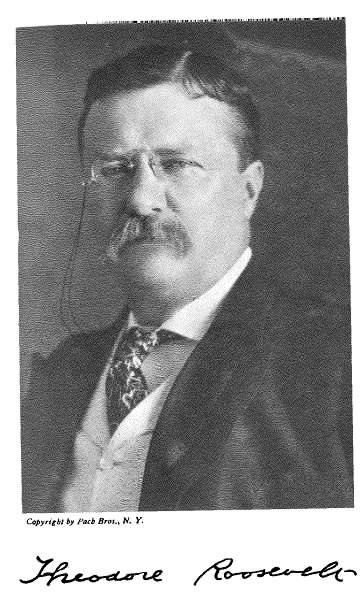
STAND FOR SOMETHING 567
In times like these the world especially needs such men as Mr. Roosevelt-men who hew close to the chalk-line of right and hold the line plumb to truth; men who do not pander to public favor; men who make duty and truth their goal and go straight to their mark, turning neither to the right nor to the left, though a paradise tempt them.
Who can ever estimate how much his influence has done toward purging politics and elevating the American ideal. He has changed the view-point of many statesmen and politicians. He has shown them a new and a better way. He has made many of them ashamed of the old methods of grafting and selfish greed. He has held up a new ideal, shown them that unselfish service to their country is infinitely nobler than an ambition for self-aggrandizement. American patriotism has a higher meaning today, because of the example of this great American. Many young politicians and statesmen have adopted cleaner methods and higher aims because of his influence. There is no doubt that tens of thousands of young men in this country are cleaner in their lives, and more honest and ambitious to be good citizens, because here is a man who always stands for the " square deal," for civic righteousness, for American manhood.
Every man ought to feel that there is something in him that bribery can not touch, that influence can not buy; something that is not for sale; something he would not sacrifice or tamper with for any price; something he would give his life for if necessary.
If a man stands for something worth while, compels recognition for himself alone, on account of his real worth, he is not dependent upon recommendations; upon fine clothes, a fine house, or a pull. He is his own best recommendation.
568 PUSHING TO THE FRONT
The young man who starts out with the resolution to make his character his capital, and to pledge his whole manhood for every obligation he enters into, will not be a failure, though he wins neither fame nor fortune. No man ever really does a great thing who loses his character in the process. No substitute has ever yet been discovered for honesty. Multitudes of people have gone to the wall trying to find one. Our prisons are full of people who have attempted to substitute something else for it.
No man can really believe in himself when he is occupying a false position and wearing a mask; when the little monitor within him is constantly saying, " You know you are a fraud; you are not the man you pretend to be." The consciousness of not being genuine, not being what others think him to be, robs a man of power, honeycombs the character, and destroys self-respect and self-confidence.
When Lincoln was asked to take the wrong side of a case he said, " I could not do it. All the time while talking to that jury I should be thinking, `Lincoln, you're a liar, you're a liar,' and I believe I should forget myself and say it out loud."
Character as capital is very much underestimated by a great number of young men. They seem to put more emphasis upon smartness, shrewdness, longheadedness, cunning, influence, a pull, than upon downright honesty and integrity of character. Yet why do scores of concerns pay enormous sums for the use of the name of a man who, perhaps, has been dead for half a century or more? It is because there is power in that name; because there is character in it; because it stands for something; because it represents reliability and square dealing. Think of what the name of Tiffany, of Park and Tilford, or any of the great names which stand in the commercial world as solid and immovable as the rock of Gibraltar, are worth!
STAND FOR SOMETHING 569
Does it not seem strange that young men who know these facts should try to build up a business on a foundation of cunning, scheming, and trickery, instead of building on the solid rock of character, reliability, and manhood? Is it not remarkable that so many men should work so hard to establish a business on an unreliable, flimsy foundation, instead of building upon the solid masonry of honest goods, square dealing, reliability?
A name is worth everything until it is questioned; but when suspicion clings to it, it is worth nothing. There is nothing in this world that will take the place of character. There is no policy in the world, to say nothing of the right or wrong of it, that compares with honesty and square dealing.
In spite of, or because of all the crookedness and dishonesty that is being uncovered, of all the scoundrels that are being unmasked, integrity is the biggest word in the business world today. There never was a time in all history when it was so big, and it is growing bigger. There never was a time when character meant so much in business; when it stood for so much everywhere as it does today.
There was a time when the man who was the shrewdest and sharpest and cunningest in taking advantage of others got the biggest salary; but today the man at the other end of the bargain is looming up as never before.
Nathan Straus, when asked the secret of the great success of his firm, said it was their treatment of the man at the other end of the bargain. He said they could not afford to make enemies; they could not afford to displease or to take advantage of customers, or to give them reason to think that they had been unfairly dealt with, - that, in the long run, the man who gave the squarest deal to the man at the other end of the bargain would get ahead fastest.
570 PUSHING TO THE FRONT
There are merchants who have made great fortunes, but who do not carry weight among their fellow men because they have dealt all their lives with inferiority. They have lived with shoddy and shams so long that the suggestion has been held in their minds until their whole standards of life have been lowered; their ideals have shrunken; their characters have partaken of the quality of their business.
Contrast these men with the men who stood for half a century or more at the head of solid houses, substantial institutions; men who have always stood for quality in everything; who have surrounded themselves not only with ability but with men and women of character. We instinctively believe in character. We admire people who stand for something; who are centered in truth and honesty. It is not necessary that they agree with us. We admire them for their strength, the honesty of their opinions, the inflexibility of their principles.
The late Carl Schurz was a strong man and antagonized many people. He changed his political views very often; but even his worst enemies knew there was one thing he would never go back on, friends or no friends, party or no party-and that was his devotion to principle as he saw it. There was no parleying with his convictions. He could stand alone, if necessary, with all the world against him. His inconsistencies, his many changes in parties and politics, could not destroy the universal admiration for the man who stood for his convictions. Although he escaped from a German prison and fled his country, where he had been arrested on account of his revolutionary principles when but a mere youth, Emperor William the First had such a profound respect for his honesty of purpose and his strength of character that he invited him to return to Germany and visit him, gave him a public dinner, and paid him great tribute.
STAND FOR SOMETHING 571
Who can estimate the influence of President Eliot in enriching and uplifting our national ideas and standards through the thousands of students who go out from Harvard University? The tremendous force and nobility of character of Phillips Brooks raised everyone who came within his influence to higher levels. His great earnestness in trying to lead people up to his lofty ideals swept everything before it. One could not help feeling while listening to him and watching him that there was a mighty triumph of character, a grand expression of superb manhood. Such men as these increase our faith in the race; in the possibilities of the grandeur of the coming man. We are prouder of our country because of such standards.
It is the ideal that determines the direction of the life. And what a grand sight, what an inspiration, are those men who sacrifice the dollar to the ideal. The principles by which the problem of success is solved are right and justice, honesty and integrity; and just in proportion as a man deviates from these principles he falls short of solving his problem.
It is true that he may reach something. He may get money, but is that success? The thief gets money, but does he succeed? Is it any honester to steal by means of a long head than by means of a long arm? It is very much more dishonest, because the victim is deceived and then robbed - a double crime.
We often receive letters which read like this " I am getting a good salary; but I do not feel right about it, somehow. I can not still the voice within me that says, `Wrong, wrong,' to what I am doing." " Leave it, leave it," we always say to the writers of these letters. " Do not stay in a questionable occupation, no matter what inducement it offers.
572 PUSHING TO THE FRONT
Its false light will land you on the rocks if you follow it. It is demoralizing to the mental faculties, paralyzing to the character, to do a thing which. one's conscience forbids."
Tell the employer who expects you to do questionable things that you can not work for him unless you can put the trade-mark of your manhood, the stamp of your integrity, upon everything you do. Tell him that if the highest thing in you can not bring success, surely the lowest can not. You can not afford to sell the best thing in you, your honor, your manhood, to a dishonest man or a lying institution. You should regard even the suggestion that you might sell out for a consideration as an insult.
Resolve that you will not be paid for being something less than a man; that you will not lease your ability, your education, your inventiveness, your self-respect, for salary, to do a man's lying for him; either in writing advertisements, selling goods, or in any other capacity.
Resolve that, whatever your vocation, you are going to stand for something; that you are not going to be merely a lawyer, a physician, a merchant, a clerk, a farmer, a congressman, or a man who carries a big money bag; but that you are going to be a man first, last, and all the time.
CHAPTER XLVI
NATURE'S LITTLE BILL
Though the mills of God grind slowly, yet they grind exceeding small;
Though with patience He stands waiting, with exactness grinds He all. - FREDERICK VON LOGAU.
Because sentence against an evil work is not executed speedily, therefore the heart of the sons of men is fully set in them to do evil.- ECCLESIASTES.
Man is a watch, wound up at first but never Wound up again: once down he's down forever. HERRICK.
Old age seizes upon an ill-spent youth like fire upon a rotten house. - SOUTH.
Last Sunday a young man died here of extreme old age at twenty-five. - JOHN NEWTON.
If you will not hear Reason, she'll surely rap your knuckles. POOR RICHARD'S SAYINGS
OH! oh! ah ! " exclaimed Franklin; " what have I done to merit these cruel sufferings?" "Many things," replied the Gout; " you have eaten and drunk too freely, and too much indulged those legs of yours in your indolence."
Nature seldom presents her bill on the day you violate her laws. But if you overdraw your account at her bank, and give her a mortgage on your body, be sure she will foreclose. She may loan you all you want; but, like Shylock, she will demand the last ounce of flesh. She rarely brings in her cancer bill before the victim is forty years old.
573
574 PUSHING TO THE FRONT
She does not often annoy a man with her drink bill until he is past his prime, and then presents it in the form of Bright's disease, fatty degeneration of the heart, drunkard's liver, or some similar disease. What you pay the saloon keeper is but a small part of your score.
We often hear it said that the age of miracles is past. We marvel that a thief dying on the cross should appear that very day in Paradise; but behold how that bit of meat or vegetable on a Hawarden breakfast table is snatched from Death, transformed into thought, and on the following night shakes Parliament in the magnetism and oratory of a Gladstone. The age of miracles past, when three times a day right before our eyes Nature performs miracles greater even than raising the dead ?
Watch that crust of bread thrown into a cell in Bedford jail and devoured by a poor, hungry tinker; cut, crushed, ground, driven by muscles, dissolved by acids and alkalies ; absorbed and hurled into the mysterious red river of life. Scores of little factories along this strange stream, waiting for this crust, transmute it as it passes, as if by magic, here into a bone cell, there into gastric juice, here into bile, there into a nerve cell, yonder into a brain cell. We can not trace the processes by which this crust arrives at the muscle and acts, arrives at the brain and thinks.
We can not see the manipulating hand which throws back and forth the shuttle which weaves Bunyan's destinies, nor can we trace the subtle alchemy which transforms this prison crust into the finest allegory in the world, the Pilgrim's Progress. But we do know that, unless we supply food when the stomach begs and clamors, brain and muscle can not continue to act; and we also know that unless the food is properly chosen, unless we eat it properly, unless we maintain good digestion by exercise of mind and body, it will not produce the speeches of a Gladstone or the allegories of a Bunyan.
NATURE'S LITTLE BILL 575
Truly we are fearfully and wonderfully made. Imagine a cistern which would transform the foul sewage of a city into pure drinking water in a second's time, as the black venous blood, foul with the ashes of burned-up brain cells and debris of worn-out tissues, is transformed in the lungs, at every breath, into pure, bright, red blood.
Each drop of blood from that magic stream of liquid life was compounded by a divine Chemist. In it float all our success and destiny. In it are the extensions and limits of our possibilities. In it are health and long life, or disease and premature death. In it are our hopes and our fears, our courage, our cowardice, our energy or lassitude, our strength or weakness, our success or failure. In it are susceptibilities of high or broad culture, or pinched or narrow faculties handed down from an uncultured ancestry.' From it our bones and nerves, our muscles and brain, our comeliness or ugliness, all come. In it are locked up the elements of a vicious or a gentle life, the tendencies of a criminal or a saint. How important is it, then, that we should obey the laws of health, and thus maintain the purity and power of this our earthly River of Life!
" We hear a great deal about the `vile body,' " said Spencer, " and many are encouraged by the phrase to transgress the laws of health. But Nature quietly suppresses those who treat thus disrespectfully one of her highest products, and leaves the world to be peopled by the descendants of those who are not so foolish." Nature gives to him that hath. She shows him the contents of her vast storehouse, and bids him take all he wants and be welcome. But she will not let him keep for years what he does not use. Use or lose is her motto. Every atom we do not utilize this great economist snatches from us.
576 PUSHING TO THE FRONT
If you put your arm in a sling and do not use it, Nature will remove the muscle almost to the bone, and the arm will become useless, but in exact proportion to your efforts to use it again she will gradually restore what she took away. Put your mind in the sling of idleness, or inactivity, and in like manner she will remove your brain, even to imbecility. The blacksmith wants one powerful arm, and she gives it to him, but reduces the other. You can, if you will, send all the energy of your life into some one faculty, but all your other faculties will starve.
A young lady may wear tight corsets if she chooses, but Nature will remove the rose from her cheek and put pallor there. She will replace a clear complexion with muddy hues and sallow spots. She will take away the elastic step, the luster from the eye.
Don't expect to have health for nothing. Nothing in this world worth anything can be had for nothing. Health is the prize of a constant struggle. Nature passes no act without affixing a penalty for its violation. Whenever she is outraged she will have her penalty, although it take a life.
A great surgeon stood before his class to perform a certain operation which the elaborate mechanism and minute knowledge of modern science had only recently made possible. With strong and gentle hand he did his work successfully so far as his part of the terrible business went; and then he turned to his pupils and said, " Two years ago a safe and simple operation, might have cured this disease. Six years ago a wise way of life might have prevented it. We have done our best as the case now stands, but Nature will have her word to say. She does not always consent to the repeal of her capital sentences." Next day the patient died.
Apart from accidents, we hold our life largely at will. What business have seventy-five thousand physicians in the United States? It is our own fault that even one-tenth of them get a respectable living.
NATURE'S LITTLE BILL 577
What a commentary upon our modern American civilization that three hundred and fifty thousand people in this country die annually from absolutely preventable diseases! Seneca said, " The gods have given us a long life, but we have made it short." Few people know enough to become old. It is a rare thing for a person to die of old age. Only three or four out of a hundred die of anything like old age. But Nature evidently intended, by the wonderful mechanism of the human body, that we should live well up to a century.
Thomas Parr, of England, lived to the age of one hundred and fifty-two years. He was married when he was a hundred and twenty, and did not leave off work until he was a hundred and thirty. The great Dr. Harvey examined Parr's body, but found no cause of death except a change of living. Henry Jenkins, of Yorkshire, England, lived to be a hundred and sixty-nine, and would probably have lived longer had not the king brought him to London, where luxuries hastened his death. The court records of England show that he was a witness in a trial a hundred and forty years before his death. He swam across a rapid river when he was a hundred.
There is nothing we are more ignorant of than the physiology and chemistry of the human body. Not one person in a thousand can correctly locate important internal organs or describe their use in the animal economy.
What an insult to the Creator who fashioned them so wonderfully and fearfully in His own image, that the graduates from our high schools and even universities, and young women who " finish their education," become proficient in the languages, in music, in art, and have the culture of travel, but can not describe or locate the various organs or functions upon which their lives depend!
578 PUSHING TO THE FRONT
"The time will come," says Frances Willard, "when it will be told as a relic of our primitive barbarism that children were taught the list of prepositions and the names of the rivers of Thibet, but were not taught the wonderful laws on which their own bodily happiness is based, and the humanities by which they could live in peace and good will with those about them." Nothing else is so important to man as the study and knowledge of himself, and yet he knows less of himself than he does of the beasts about him.
The human body is the great poem of the Great Author. Not to learn how to read it, to spell out its meaning, to appreciate its beauties, or to attempt to fathom its mysteries, is a disgrace to our civilization. What a price mortals pay for their ignorance, let a dwarfed, half-developed, one-sided, short-lived nation answer." A brilliant intellect in a sickly body is like gold in a spent swimmer's pocket."
Often, from lack of exercise, one side of the brain gradually becomes paralyzed and deteriorates into imbecility. How intimately the functions of the nervous organs are united! The whole man mourns for a felon. The least swelling presses a nerve against a bone and causes one intense agony, and even a Napoleon becomes a child. A corn on the toe, an affection of the kidneys or of the liver, a boil anywhere on the body, or a carbuncle, may seriously affect the eyes and even the brain. The whole system is a network of nerves, of organs, of functions, which are so intimately joined, and related in such close sympathy, that an injury to one part is immediately felt in every other.
Nature takes note of all our transactions, physical, mental, or moral, and places every item promptly to our debit or credit.
NATURE'S LITTLE BILL 579
Let us take a look at a page in Nature's ledger:
To damage to the heart in youth by immoderate athletics, tobacco chewing, cigarette smoking, drinking strong tea or coffee, rowing, running to trains, overstudy, excitement, etc..
To one digestive apparatus ruined, by eating hurriedly, by eating unsuitable or poorly cooked food, by drinking ice water when one is heated, by swallowing scalding drinks, especially tea, which forms tannic acid on the delicate lining, of the stomach; or by eating when tired or worried, or after receiving bad news, when the gastric juice can not be secreted, etc.
To one nervous system shattered by dissipation, abuses, over-excitement, a fast life, feverish haste to get riches or fame, hastening puberty by stimulating food, exciting life, etc.
To damage by undue mental exertion by burning the " midnight oil," exhausting the brain cells faster than they can be renewed.
To overstraining the brain trying to lead his class in college, trying to take a prize, or to get ahead of somebody else.
To hardening the delicate and sensitive gray matter of the brain and nerves, and ruining the lining membranes of the stomach and nervous system by alcohol, opium, etc.
The "irritable heart," the "tobacco heart," a life of promise impaired or blighted.
Dyspepsia, melancholia, years of misery to self, anxiety to one's family, pity and disgust of friends.
Years of weakness, disappointed ambition, hopeless inefficiency, a burnt-out life.
Impaired powers of mind, softening of the brain, blighted hopes.
580 PUSHING TO THE FRONT
A disappointed ambition, a life of invalidism.
A hardened brain, a hardened conscience, a ruined home, Bright's disease, fatty degeneration, nervous degeneration, a short, useless, wasted life.
By forced balances, here and Accounts closed there. Physiological and moral bankruptcy.
Sometimes two or three such items are charged to a single account. To offset them, there is placed - the credit side a little feverish excitement, too fleeting for calm enjoyment, followed by regret, remorse, and shame. Be sure your sins will find you out. They are all recorded.
"The gods are just, and of our pleasant vices Make instruments to scourge us."
It is a wonder that we live at all. We violate every law of our being, yet we expect to live to a ripe old age. What would you think of a man who, having an elegant watch delicately adjusted to heat and cold, should leave it on the sidewalk with cases open on a dusty or a rainy day, and yet expect it to keep good time? What would you think of a householder who should leave the doors and windows of his mansion open to thieves and tramps, to winds and dust and rain ?
What are our bodies but timepieces made by an Infinite Hand, wound up to run a century, and so delicately adjusted to heat and cold that the temperature will not vary half a degree between the heat of summer and the cold of winter whether we live in the regions of eternal frost or under the burning sun of the tropics ? A particle of dust or the slightest friction will throw this wonderful timepiece out of order, yet we often leave it exposed to all the corroding elements. We do not always keep open the twenty-five miles of ventilating pores in the skin by frequent bathing. We seldom lubricate the delicate wheels of the body with the oil of gladness. We expose it to dust and cinders, cold and draughts, and poisonous gases.
How careful we are to filter our water, air our beds, ventilate our sleeping-rooms, and analyze our milk!
NATURE'S LITTLE BILL 581
We shrink from contact with filth and disease. But we put paper colored with arsenic on our walls, and daily breathe its poisonous exhalations. We frequent theaters crowded with human beings, many of whom are uncleanly and diseased. We sit for hours and breathe in upon fourteen hundred square feet of lung tissue the heated, foul, and heavy air; carbonic acid gas from hundreds of gas burners, each consuming as much oxygen as six people; air filled with shreds of tissue expelled from diseased lungs; poisonous effluvia exhaled from the bodies of people who rarely bathe, from clothing seldom washed, fetid breaths, and skin disease in different stages of development. For hours we sit in this bath of poison, and wonder at our headache and lassitude next morning.
We pour a glass of ice water into a stomach busy in the delicate operation of digestion, ignorant or careless of the fact that it takes half an hour to recover from the shock and get the temperature back to ninety-eight degrees, so that the stomach can go on secreting gastric juice. Then down goes another glass of water with similar results.
We pour down alcohol which thickens the velvety lining of the stomach, and hardens the soft tissues, the thin sheaths of nerves, and the gray matter of the brain. We crowd meats, vegetables, pastry, confectionery, nuts, raisins, wines, fruits, etc., into one of the most delicately constructed organs of the body, and expect it to take care of its miscellaneous and incongruous load without a murmur.
After all these abuses we do not give the blood a chance to go to the stomach and help it out of its misery, but summon it to the brain and muscles, notwithstanding the fact that it is so important to have an extra supply to aid digestion that Nature has made the blood vessels of the alimentary canal large enough to contain several times the amount in the entire body.
582 PUSHING TO THE FRONT
Who ever saw a horse leave his oats and hay, when hungry, to wash them down with water? The dumb beasts can teach us some valuable lessons in and drinking. Nature mixes our gastric juice or pepsin and acids in just the right proportion to digest food, and keep it at exactly the right temperature. If we dilute it, or lower its temperature by ice water, we diminish its solvent or digestive power, and dyspepsia is the natural result.
English factory children have received the commiseration of the world because they were scourged to work fourteen hours out of the twenty-four. But there is many a theoretical republican who is a harsher taskmaster to his stomach than this; who allows it no more resting time than he does his watch; who gives it no Sunday, no holiday, no vacation in any sense, and who seeks to make his heart beat faster for the sake of the exhilaration he can thus produce.
Although the heart weighs a little over half a pound, yet it pumps eighteen pounds of blood from itself, forcing it into every nook and corner of the entire body, back to itself in less than two minutes. This little organ, the most perfect engine in the world, does a daily work equal to lifting one hundred and twenty four tons one foot high, and exerts one-third as much muscle power as does a stout man at hard labor. If the heart should expend its entire force lifting its own weight, it would raise itself nearly twenty thousand feet an hour, ten times as high as a pedestrian can lift himself in ascending a mountain. What folly, then, to goad this willing, hard-working slave to greater exertions by stimulants
We must pay the penalty of our vocations. Beware of work that kills the workman.
NATURE'S LITTLE BILL 583
Those who prize long life should avoid all occupations which compel them to breathe impure air or deleterious gases, and especially those in which they are obliged to inhale dust and filings from steel and brass and iron, the dust in coal mines, and dust from threshing machines. Stone cutters, miners, and steel grinders are short lived, the sharp particles of dust irritating and inflaming the tender lining of the lung cells. The knife and fork grinders in Manchester, England, rarely live beyond thirty-two years. Those who work in grain elevators and those who are compelled to breathe chemical poisons are short lived.
Deep breathing in dusty places sends the particles of dust into the upper and less used lobes of the lungs, and these become a constant irritant, until they finally excite an inflammation, which may end in consumption. All occupations in which arsenic is used shorten life.
Dr. William Ogle, who is authority upon this subject, says, " Of all the various influences that tend to produce differences of mortality in any community, none is more potent than the character of the prevailing occupations." Finding that clergymen and priests have the lowest death-rate, he represented it as one hundred, and by comparison found that the rate for inn and hotel servants was three hundred and ninety seven; miners, three hundred and thirty-one; earthenware makers, three hundred and seventeen; file makers, three hundred; innkeepers, two hundred and seventy four; gardeners, farmers, and agricultural laborers closely approximating the clerical standard. He gave as the causes of high mortality, first, working in a cramped or constrained attitude; second, exposure to the action of poisonous or irritating substances; third, excessive work, mental or physical; fourth, working in confined or foul air; fifth, the use of strong drink; sixth, differences in liability to fatal accidents; seventh, exposure to the inhalation of dust. The deaths of those engaged in alcoholic industries were as one thousand five hundred and twenty-one to one thousand of the average of all trades.
584 PUSHING' TO THE FRONT
It is very important that occupations should be congenial. Whenever our work galls us, whenever feel it to be a drudgery and uncongenial, the friction grinds life away at a terrible rate.
Health can be accumulated, invested, and made to yield its compound interest, and thus be doubled redoubled. The capital of health may, indeed, be forfeited by one misdemeanor, as a rich man may sink all his property in one bad speculation; but it is as capable of being increased as any other kind of capital.
One is inclined to think with a recent writer that it looks as if the rich men kept out of the kingdom of heaven were also excluded from the kingdom of brains. In New York, Boston, Philadelphia, and Chicago' are thousands of millionaires, some of them running through three or four generations of fortune; and yet, in all their ranks, there is seldom a man possessed of the higher intellectual qualities that flower in literature, eloquence, or statesmanship. Scarcely one of them has produced a book worth printing, a poem worth reading, or a speech worth listening to. They are struck with intellectual sterility. They go to college; they travel abroad; they hire the dearest masters; they keep libraries among their furniture; and some of them buy works of art. But, for all that, their brains wither under luxury, often by their own vices or tomfooleries, and mental barrenness is the result. He who violates Nature's law must suffer the penalty, though he have millions. The fruits of intellect do not grow among the indolent rich. They are usually out of the republic of brains. Work or starve is Nature's motto; starve mentally, starve morally, even if you are rich enough to prevent physical starvation.
NATURE'S LITTLE BILL 585
How heavy a bill Nature collects of him in whom the sexual instinct has been permitted to taint the whole life with illicit thoughts and deeds, stultifying the intellect, deadening the sensibilities, dwarfing the soul!
" I waive the quantum of the sin, The hazard of concealing; But och, it hardens all within, And petrifies the feeling."
The sense of fatigue is one of Nature's many signals of danger. All we accomplish by stimulating or crowding the body or mind when tired is worse than lost. Insomnia, and sometimes even insanity, is Nature's penalty for prolonged loss of sleep.
One of the worst tortures of the Inquisition was that of keeping victims from sleeping, often driving them to insanity or death. Melancholy follows insomnia; insanity, both. To keep us in a healthy condition, Nature takes us back to herself, puts us under the ether of sleep, and keeps us there nearly one-third of our lives, while she overhauls and repairs in secret our wonderful mechanism. She takes us back each night wasted and dusty from the day's work, broken, scarred, and injured in the great struggle of life. Each cell of the brain is reburnished and refreshened; all the ashes or waste from the combustion of the tissues is washed out into the blood stream, pumped to the lungs, and thrown out in the breath; and the body is returned in the morning as fresh and good as new.
The American honey does not always pay for the sting. Labor is the eternal condition on which the rich man gains an appetite for his dinner, and the poor man a dinner for his appetite; but the habit of constant, perpetual industry often becomes a disease.
In the Norse legend, Allfader was not allowed to drink from Mirmir's Spring, the fount of wisdom, until he had left his eye as a pledge.
586 PUSHING TO THE FRONT
Scholars often leave their health, their happiness, their usefulness behind, in their great eagerness to drink deep draughts at wisdom's fountain. Professional, men often sacrifice everything that is valuable in life for the sake of reputation, influence, and money. Business men sacrifice home, family, health, happiness, in the great struggle for money and power. The American prize, like the pearl in the oyster, is very attractive, but is too often the result of disease.
Charles Linnaeus, the great naturalist, so exhausted his brain by over-exertion that he could not recognize his own work, and even forgot his own name. Kirk White won the prize at Cambridge, but it cost him his life. He studied at night and forced his brain by stimulants and narcotics in his endeavor to pull through, but he died at twenty-four. Paley died at sixty-two of overwork. He was called "one of the sublimest spirits in the world."
President Timothy Dwight of Yale College nearly killed himself by overwork when a young man. When at Yale he studied nine hours, taught six hours a day, and took no exercise whatever. He could not be induced to stop until he became so nervous and irritable that he was unable to look at a book ten minutes a day. His mind gave way, and it was a long time before he fully recovered.
Imagine the surprise of the angels at the death of men and women in the early prime and vigor of life. Could we but read the notes of their autopsies we might say less of mysterious Providence at funerals. They would run somewhat as follows:
NOTES FROM THE ANGELS' AUTOPSIES.
What, is it returned so soon? - a body framed for a century's use returned at thirty? - a temple which was twenty-eight years in building destroyed almost before it was completed? What have gray hairs, wrinkles, a bent form, and death to do with youth ? Has all this beauty perished like a bud just bursting into bloom, plucked by the grim destroyer? Has she fallen a victim to tight-lacing, over-excitement, and the gaiety and frivolity of fashionable life? Here is an educated, refined woman who died of lung starvation. What a tax human beings pay for breathing impure air!
NATURE'S LITTLE BILL 587
Nature provides them with a tonic atmosphere, compounded by the divine Chemist, but they refuse to breathe it in its purity, and so must pay the penalty in shortened lives. They can live a long time without water, a longer time without food, clothing, or the so-called comforts of life; they can live without education or culture, but their lungs must have good, healthful air-food twenty-four thousand times a day if they would maintain health. Oh, that they would see, as we do, the intimate connection between bad air, bad morals, and a tendency to crime!
Here are the ruins of an idolized son and loving husband. Educated and refined: what infinite possibilities beckoned him onward at the beginning of his career! But the Devil's agent offered him imagination, sprightliness, wit, eloquence,' bodily strength, and happiness in eau de vie, or "water of life," as he called it, at only fifteen cents a glass. The best of our company tried to dissuade him, but to no avail. The poor mortal closed his " bargain" with the dramseller, and what did he get? A hardened conscience, a ruined home, a diseased body, a muddled brain, a heartbroken wife, wretched children, disappointed friends, triumphant enemies, days of remorse, nights of anguish, an unwept deathbed, an unhonored grave. And only to think that he is only one of many thousands! "What fools these mortals be!"
Did he not see the destruction toward which he was rushing with all the feverish haste of slavish appetite? Ah, yes, but only when it was too late. In his clenched hand, as he lay dead, was found a crumpled paper containing the following, in lines barely legible so tremulous were the nerves of the writer "Wife, children, and over forty thousand dollars all gone! I alone am responsible. All has gone down my throat. When I was twenty-one I had a fortune. I am not yet thirty-five years old. I have killed my beautiful wife, who died of a broken heart; have murdered our children with neglect. When this coin is gone I do not know how I can get my next meal. I shall die a drunken pauper. This is my last money, and my history. If this bill comes into the hands of any man who drinks, let him take warning from my life's ruin." What a magnificent specimen of manhood this would have been if his life had been under the rule of reason, not passion!
588 PUSHING TO THE FRONT
He dies of old age at forty, his hair is gray, his eyes are sunken, his complexion sodden, his body marked with the labels of his disease. A physique fit for a god, fashioned in the Creator's image, with infinite possibilities, a physiological hulk wrecked on passion's seas, and fit only for a danger signal to warn the race.
What would parents think of a captain who would leave his son in charge of a ship without giving him any instructions or chart showing the rocks, reefs, and shoals? Do they not know that those who sleep in the ocean are but a handful compared with those who have foundered on passion's seas? Oh, the sins of silence which parents commit against those dearer to them than life itself ! Youth can not understand the great solicitude of parents regarding their education, their associations, their welfare generally, and the mysterious silence in regard to their physical natures. An intelligent explanation, by all mothers to the daughters and by all fathers to the sons, of the mysteries of their physical lives, when at the right age, would revolutionize civilization.
This young clergyman killed himself trying to be popular. This student committed suicide by exhausting his brain in trying to lead his class. This young lawyer overdrew his account at Nature's bank, and she foreclosed by a stroke of paralysis. This merchant died at thirty-five by his own hand. His life was slipping away without enjoyment. He had murdered his capacity for happiness, and dug his own spiritual grave while making preparations for enjoying life. This young society man died of nothing to do and dissipation, at thirty.
What a miserable farce the life of men and women seems to us! Time, which is so precious that even the Creator will not give a second moment until the first is gone, they throw away as though it were water. Opportunities which angels covet they fling away as of no consequence, and die failures, because they have "no chance in life." Life, which seems so precious to us, they spurn as if but a bauble. Scarcely a mortal returns to us who has not robbed himself of years of precious life. Scarcely a man returns to us dropping off in genuine old age, as autumn leaves drop in the forest.
Has life become so cheap that mortals thus throw it away?
CHAPTER XLVII
HABIT-THE SERVANT - THE MASTER
Habit, if wisely and skillfully formed, becomes truly a second nature. - BACON.
Habit, with its iron sinews, Clasps and leads us day by day. - LAMARTINE.
The chain of habit coils itself around the heart like a serpent, to gnaw and stifle it. - HAZLITT.
You can not, in any given case, by any sudden and single effort, will to be true, if the habit of your life has been insincerity. - F. W. ROBERTSON.
It is a beautiful provision in the mental and moral arrangement of our nature, that that which is performed as a duty may by frequent repetition, become a habit; and the habit of stern virtue, so repulsive to others, may hang around our neck like a wreath of flowers. - PAXTON HOOD.
" When shall I begin to train my child? " asked a young mother of a learned physician. "How old is the child?" inquired the doctor. " Two years, sir." " Then you have lost just two years," replied he, gravely.
" You must begin with his grandmother," said Oliver Wendell Holmes, when asked a similar question. "
At the mouth of the Mississippi," says Beecher, " how impossible would it be to stay its waters, and to separate from each other the drops from the various streams that have poured in on either side, - of the Red River, the Arkansas, the Ohio, and the Missouri, - or to sift, grain by grain the particles of sand that have been washed from the Alleghany, or the Rocky Mountains; yet how much more impossible would it be when character is the river, and habits are the sidestreams! "
589
590 PUSHING TO THE FRONT
" We sow an act, we reap a habit; we sow a habit, we reap a character." While correct habits depend largely on self-discipline, and often on self-denial, bad habits, like weeds, spring up, unaided and untrained, to choke the plants of virtue and as with Canada thistles, allowed to go to seed in a fair meadow, we may have " one day's seeding, ten years' weeding."
We seldom see much change in people after they get to be twenty-five or thirty years of age, except in going further in the way they have started; but it is a great comfort to think that, when one is young, it is almost as easy to acquire a good habit as a bad one, and that it is possible to be hardened in goodness as well as in evil. Take good care of the first twenty years of your life, and you may hope that the last twenty will take good care of you.
A writer on the history of Staffordshire tells of an idiot who, living near a town clock, and always amusing himself by counting the hour of the day whenever the clock struck, continued to strike and count the hour correctly without its aid, when at one time it happened to be injured by an accident.
Dr. Johnson had acquired the habit of touching every post he passed in the street; and, if he missed one, he was uneasy, irritable, and nervous till he went back and touched the neglected post.
" Even thought is but a habit." Heredity is a man's habit transmitted to his offspring. A special study of hereditary drunkenness has been made by Professor Pellman of Bonn University, Germany.
HABIT 591
He thus traced the careers of children, grand children, and great-grandchildren in all parts of the present German Empire, until he was able to present tabulated biographies of the hundreds descended from some original drunkard. Notable among the persons described by Professor Pellman is Frau Ada Jurke, who was born in 1740, and was a drunkard, a thief, and a tramp for the last forty years of her life, which ended in 1800. Her descendants numbered 834, of whom 709 were traced in local records from youth to death. One hundred and six of the 709 were born out of wedlock. There were 144 beggars, and 62 more who lived from charity. Of the women, 181 led disreputable lives.
There were in the family 76 convicts, 7 of whom were sentenced for murder. In a period of some seventy-five years, this one family rolled up a bill of costs in almshouses, prisons, and correctional institutions amounting to at least 5,000,000 marks, or about $1,250,000.
Isaac Watts had a habit of rhyming. His father grew weary of it, and set out to punish him, which made the boy cry out :
" Pray, father, on me mercy take, And I will no more verses make."
A minister had a bad habit of exaggeration, which seriously impaired his usefulness. His brethren came to expostulate. With extreme humiliation over this fault as they set it forth, he said, " Brethren, I have long mourned over this fault, and I have shed barrels o f tears because of it." They gave him up as incorrigible.
Men carelessly or playfully get into habits of speech or act which become so natural that they speak or act as they do not intend, to their discomfiture. Professor Phelps told of some Andover students, who, for sport, interchanged the initial consonants of adjacent words.
592 PUSHING TO THE FRONT
" But," said he, " retribution overtook them. On acertain morning, when one of them was leading the devotions, he prayed the Lord to ` have mercy on us, feak and weeble sinners."' The habit had come to possess him.
Many speakers have undesirable habits of utterance or gesture. Some are continually applying the hand to some part of the face, the chin, the whiskers; some give the nose a peck with thumb and forefinger; others have the habit characterized as,
" Washing the hands with invisible soap In a bowl of invisible water."
" We are continually denying that we have habits which we have been practising all our lives," says Beecher. "Here is a man who has lived forty or fifty years; and a chance shot sentence or word lances him, and reveals to him a trait which he has always possessed, but which, until now, he had not the remotest idea that he possessed. For forty or fifty years he has been fooling himself about a matter as plain as the nose on his face."
Had the angels been consulted, whether to create man, with this principle introduced, that, if a man did a thing once, it would be easier the second time, and at length would be done without effort, they would have said, " Create! "
Remember that habit is an arrangement, a principle of human nature, which we must use to increase the efficiency and ease of our work in life.
" Make sobriety a habit, and intemperance will be hateful; make prudence a habit, and reckless profligacy will be as contrary to the course of nature in the child, or in the adult, as the most atrocious crimes. are to any of us."
Out of hundreds of replies from successful men as to the probable cause of failure, " bad habits " was in almost every one.
HABIT 593
How easy it is to be nobody; it is the simplest thing in the world to drift down the stream, into bad company, into the saloon; just a little beer, just a little gambling, just a little bad company, just a little killing of time, and the work is done.
New Orleans is from five to fifteen feet below high water in the Mississippi River. The only protection to the city from the river is the levee. In May, 1883, a small break was observed in the levee, and the water was running through. A few bags of sand or loads of dirt would have stopped the water at first; but it was neglected for a few hours, and the current became so strong that all efforts to stop it were fruitless. A reward of five hundred thousand dollars was offered to any man who would stop it; but it was too late - it could not be done.
Beware of " small sins " and " white lies."
A man of experience says: " There are four good habits, punctuality, accuracy, steadiness, and dispatch. Without the first, time is wasted; without the second, mistakes the most hurtful to our own credit and interest, and those of others, may be committed; without the third, nothing can be well done; and without the fourth, opportunities of great advantage are lost, which it is impossible to recall."
Abraham Lincoln gained his clear precision of statement of propositions by practise, and Wendell Phillips his wonderful English diction by always thinking and conversing in excellent style.
" Family customs exercise a vast influence over the world. Children go forth from the parent-nest, spreading the habits they have imbibed over every phase of society. These can easily be traced to their sources." "To be sure, this is only a trifle in itself; but, then, the manner in which I do every trifling thing is of very great consequence, because it is just in these little things that I am forming my business habits.
594 PUSHING TO THE FRONT
I must see to it that I do not fail here, even if this is only a small task."
" A physical habit is like a tree grown crooked, You can not go to the orchard, and take hold of a tree grown thus, and straighten it, and say, `Now keep straight!' and have it obey you. What can you do? You can drive down a stake, and bind the tree to it, bending it back a little, and scarifying the bark on one side. And if, after that, you bend it back a little more every month, keeping it taut through the season, and from season to season, at length you will succeed in making it permanently straight. You can straighten it, but you can not do it immediately; you must take one or two years for it."
Sir George Staunton visited a man in India who had committed murder; and in order not only to save his life, but what was of much greater consequence to him, his caste, he had submitted to a terrible penalty, to sleep for seven years on a bed, the entire top of which was studded with iron points, as sharp as they could be without penetrating the flesh. Sir George saw him during the fifth year of his sentence. His skin then was like the hide of a rhinoceros; and he could sleep comfortably on his bed of thorns, and he said that at the end of the seven years he thought he should use the same bed from choice. What a vivid parable of a sinful life! Sin, at first a bed of thorns, after a time becomes comfortable through the deadening of moral sensibility.
When the suspension bridge over Niagara River was to be erected, the question was, how to get the cable over. With a favoring wind a kite was elevated, which alighted on the opposite shores. To its insignificant string a cord was attached, which was drawn over, then a rope, then a larger one, then a cable; finally the great bridge was completed, connecting the United States with Canada.
HABIT 595
First across the gulf we cast Kite-borne threads till lines are passed, And habit builds the bridge at last.
Launch your bark on the Niagara River," said John B. Gough; "it is bright, smooth, and beautiful. Down the stream you glide on your pleasure excursion. Suddenly some one cries out from the bank, `Young men, ahoy! ' ` What is it?' " `The rapids are below you. '` Ha! ha! we have heard of the rapids, but we are not such fools as to get there. If we go too fast, then we shall up with the helm, and steer to the shore. Then on, boys, don't be alarmed - there is no danger.'
"Young men, ahoy there!" ` What is it? ' ` The rapids are below you! ' ` Ha l ha! we will laugh and quaff. What care we for the future? No man ever saw it. Sufficient for the day is the evil thereof. We will enjoy life while we may, will catch pleasure as it flies. There's time enough to steer out of danger.'
" ` Young men, ahoy! ' ` What is it?' ` Beware! Beware! The rapids are below you!' " Now you see the water foaming all around. See how fast you pass that point! Up with the helm! Now turn! Pull hard! Quick, quick! Pull for your lives! Pull till the blood starts from the nostrils, and the veins stand like whip-cords upon the brow! Set the mast in the socket! hoist the sail - ah ! ah ! it is too late! Shrieking, cursing, howling, blaspheming, over you go.
" Thousands go over the rapids every year, through the power of habit, crying all the while, `When I find out that it is injuring me, I will give it up! '"
A community is often surprised and shocked at some crime.
596 PUSHING TO THE FRONT
The man was seen on the street yesterday, or in his store, but he showed no indication that he would commit such crime today. Yet the crime committed today is but a regular and natural sequence of what the man did yesterday and the day before. It was but a result of the fearful momentum of all his past habits.
A painter once wanted a picture of innocence, and drew from life the likeness of a child at prayer. The little suppliant was kneeling by his mother. The palms of his hands were reverently pressed together, and his mild blue eyes were upturned with the expression of devotion and peace. The portrait was much prized by the painter, who hung it up on his wall, and called it " Innocence." Years passed away, and the artist became an old man. Still the picture hung there. He had often thought of painting a counterpart, the picture of guilt, but had not found the opportunity. At last he effected his purpose by paying a visit to a neighboring jail. On the damp floor of his cell lay a wretched culprit heavily ironed. Wasted was his body, and hollow his eyes; vice was visible in his face. The painter succeeded admirably; and the portraits were hung side by side for " Innocence " and " Guilt." The two originals of the pictures were discovered to be one and the same person, - first, in the innocence of child hood! second, in the degradation of guilt and sin and evil habits.
Will-power can be so educated that it will focus the thought upon the bright side of things, upon objects which lift and elevate. Habits of contentment and goodness may be formed the same as any others.
Walking upon the quarter-deck of a vessel, though at first intolerably confining, becomes by custom so agreeable to a sailor that on shore he often hems himself within the same bounds. Lord Kames tells of a man who, having relinquished the sea for a country life, reared an artificial mount, with a level summit, resembling a quarter-deck not only in shape, but in size, where he generally walked.
HABIT 597
When Franklin was superintending the erection of some forts on the frontier, as a defense against the Indians, he slept at night in a blanket on a hard floor; and, on his first return to civilized life, he could hardly sleep in a bed. Captain Ross and his crew, having been accustomed, during their polar wanderings, to lie on the frozen snow or a bare rock, afterwards found the accommodations of a whaler too luxurious for them, and the captain exchanged his hammock for a chair.
Two sailors, who had been drinking, took a boat off to their ship. They rowed but made no progress; and presently each began to accuse the other of not working hard enough. Lustily they plied the oars, but after another hour's work still found themselves no farther advanced. By this time they had become tolerably sober; and one of them, looking over the side, said to the other, " Why, Tom, we haven't pulled the anchor up yet." And thus it is with those who are anchored to something of which they are not conscious, perhaps, but which impedes their efforts, even though they do their very best.
" A youth thoughtless, when all the happiness of his home forever depends on the chances or the passions of an hour! " exclaims Ruskin. " A youth thoughtless, when his every act is a foundation-stone of future conduct, and every imagination a fountain of life or death! Be thoughtless in any after years, rather than now, - though, indeed, there is only one place where a man may be nobly thoughtless, - his deathbed. No thinking should ever be left to be done there."
Sir James Paget tells us that a practised musician can play on the piano at the rate of twenty-four notes a second. For each note a nerve current must be transmitted from the brain to the fingers, and from the fingers to the brain.
598 PUSHING TO THE FRONT
Each note requires three movements of a finger, the bending down and raising up, and at least one lateral, making. no less than seventy-two motions in a second, each requiring a distinct effort of the will, and directed unerringly with a certain speed, and a certain force, to a certain place.
Some can do this easily, and be at the same time busily employed in intelligent conversation. Thus, by obeying the law of habit until repetition has formed a second nature, we are able to pass the technique of life almost wholly over to the nerve centers, leaving our minds free to act or enjoy.
All through our lives the brain is constantly educating different parts of the body to form habits which will work automatically from reflex action, and thus is delegated to the nervous system a large part of life's duties. This is nature's wonderful economy to release the brain from the drudgery of individual acts, and leave it free to command all its forces for higher service.
Man's life-work is a masterpiece or a botch, according as each little habit has been perfectly or carelessly formed. It is said that if you invite one of the devil's children to your home the whole family will follow. So one bad habit seems to have a relationship with all the others. For instance, the one habit of negligence, slovenliness, makes it easier to form others equally bad, until the entire character is honeycombed by the invasion of a family of bad habits.
A man is often shocked when he suddenly discovers that he is considered a liar. He never dreamed of forming such a habit; but the little misrepresentations to gain some temporary end, had, before he was aware of it, made a beaten track in the nerve and brain tissue, until lying has become almost a physical necessity. He thinks he can easily overcome this habit, but he will not.
HABIT 599
He is bound to it with cords of steel; and only by painful, watchful, and careful repetition of the exact truth, with a special effort of the will-power at each act, can he form a counter trunk-line in the nerve and brain tissue. Society is often shocked by the criminal act of a man who has always been considered upright and true. But, if they could examine the habit-map in his nervous mechanism and brain, they would find the beginnings of a path leading directly to his deed, in the tiny repetitions of what he regarded as trivial acts. All expert and technical education is built upon the theory that these trunk-lines of habit become more and more sensitive to their accustomed stimuli, and respond more and more readily.
We are apt to overlook the physical basis of habit. Every repetition of an act makes us more likely to perform that act, and discovers in our wonderful mechanism a tendency to perpetual repetition, whose facility increases in exact proportion to the repetition. Finally the' original act becomes voluntary from a natural reaction.
It is cruel to teach the vicious that they can, by mere force of will-power, turn " about face," and go in the other direction, without explaining to them the scientific process of character-building, through habit formation. What we do today is practically what we did yesterday; and, in spite of resolutions, unless carried out in this scientific way, we shall repeat to morrow what we have done today. How unfortunate that the science of habit-forming is not known by mothers, and taught in our schools, colleges, and universities! It is a science compared with which other departments of education sink into insignificance.
The converted man is not always told that the great battle is yet before him; that he must persistently, painfully, prayerfully, and with all the will-power he possesses, break up the old habits, and lay counter lines which will lead to the temple of virtue.
600 PUSHING TO THE FRONT
He is not told that, in spite of all his efforts, in some unguarded moment, some old switch may be left open, some old desire may flash along the line, and that, possibly before he is aware of it, he may find himself yielding to the old temptation which he had supposed to be conquered forever.
An old soldier was walking home with a beefsteak in one hand and a basket of eggs in the other, when some one yelled, " Halt ! Attention! " Instantly the veteran came to a stand; and, as his arms took the position of " attention," eggs and meat went tumbling into the street, the accustomed nerves responding involuntarily to the old stimulus.
Paul evidently understood the force of habit. " I find, then," he declares, "the law, that to me who would do good, evil is present. For I delight in the law of God after the inward man; but I see a different law in my members, warring against the law in my mind, and bringing me into captivity, under the law of sin, which is in my members. O wretched man that I am! who shall deliver me from the body of this death! " He referred to the ancient custom of binding a murderer face to face with the dead body of his victim, until suffocated by its stench and dissolution. " I would give a world, if I had it," said an unfortunate wretch, " to be a true man; yet in twenty-four hours I may be overcome and disgraced with a shilling's worth of sin."
"How shall I a habit break?"
As you did that habit make.
As you gathered, you must lose;
As you yielded, now refuse.
Thread by thread the strands we twist,
Till they bind us, neck and wrist;
Thread by thread the patient hand
Must untwine, ere free we stand;
As we builded, stone by stone,
We must toil unhelped, alone,
Till the wall is overthrown.
CHAPTER XLVIII
THE CIGARETTE
We are so accustomed to the sight and smell of tobacco that we entirely overlook the fact that the tobacco of commerce in all its forms is the product of a poisonous weed. It is first a narcotic and then an irritant poison. It has its place in all toxicological classifications together with its proper antidotes.
Tobacco has not achieved its almost universal popularity without strong opposition. In England King James launched his famous " Counterblaste " against its use. In Turkey, where men and women are alike slaves to its fascination, tobacco was originally forbidden under severe penalties; the loss of the ears, the slitting of the nostrils and even death itself being penalties imposed for the infraction of the law forbidding the use of tobacco in any form. Since then pipes, cigars, snuff and chewing tobacco have become popularized and tobacco in some form or another is used by almost every nation. The last development in the form of tobacco using was the cigarette rolled between the fingers, and the worst form of the cigarette is the manufactured article sold in cheap packages and freely used by boys who in many cases have not reached their teens.
The manufactured American cigarette seems to be especially deadly in its effect. It is said to contain five and one-half per cent. of nicotine, or more than twice as much as the Cuban-made cigarette contains, and more than six times as much as is contained in the Turkish cigarette.
601
602 PUSHING TO THE FRONT
I am not going to quarrel with the use of tobacco in general by mature men. He who has come to man's estate is free to decide for himself whether he shall force a poison on his revolting stomach; for the nausea that follows the first use of tobacco is the stomach's attempt to eject the poison which has been absorbed from pipe, cigar, or cigarette. The grown man, too, is able to determine whether he wants to pay the tax which the use of tobacco levies upon his time, his health, his income and his prosperity. The most that can be said of the use of tobacco is that if habitual users of the narcotic weed are successful in life they must be successful in spite of the use of tobacco and not because of it; for it is opposed to both reason and common sense that the habitual use of a poison in any form should promote the development and exercise of the faculties whose energetic use is essential to success.
What I desire to do is to warn the boy, the growing youth, of the baneful influence of the cigarette on minds yet unformed, on bodies yet in process of development. The danger of the cigarette to the growing boy lies first in the fact that it poisons the body. That it does not kill at the outset is due to the fact that the dose is small and so slowly increased that the body gradually accommodates itself to this poison as it does to strychnine, arsenic, opium, and other poisons. But all the time there is a slow but steady process of physical degeneration. The digestion is affected, the heart is overtaxed, liver and bowels are deranged in their functions, and as the poison spreads throughout the system there is a gradual physical deterioration which is marked alike in the countenance and in the carriage of the body. Any person who cares to do so may prove for himself the poisonous nature of nicotine which is derived from tobacco and taken into the system by those who chew or smoke.
THE CIGARETTE 603
Dr. J. J. Kellogg says: " A few months ago I had all the nicotine removed from a cigarette, making a solution of it. I injected half the quantity into a frog, with the effect that the frog died almost instantly. The rest was administered to another frog with like effect. Both frogs were full grown, and of average size. The conclusion is evident that a single cigarette contains poison enough to kill two frogs. A boy who smokes twenty cigarettes a day has inhaled enough poison to kill forty frogs. Why does the poison not kill the boy? It does tend to kill him. If not immediately, he is likely to die sooner or later of weak heart, Bright's disease, or some other malady which scientific physicians everywhere now recognize as a natural result of chronic nicotine poisoning."
A chemist, not long since, took the tobacco used in an average cigarette and soaked it in several teaspoonfuls of water and then injected a portion of it under the skin of a cat. The cat almost immediately went into convulsions, and died in fifteen minutes. Dogs have been killed with a single drop of nicotine.
A single drop of nicotine taken from a seasoned pipe, and applied to the tongue of a venomous snake has caused almost instant death. A Western farmer tried to rear a brood of motherless chickens in his greenhouse. But the chickens did not thrive. They refused to eat; their skins became dry and harsh; their feathers were ruffled; they were feverish and drank constantly. Soon they began to die. As the temperature and general condition of the greenhouse seemed to be especially favorable to the rearing of chickens, the florist was puzzled to determine the cause of their sickness and death. After a careful study of the symptoms he found that the source of the trouble arose from the fumes of the tobacco stems burned in the greenhouse to destroy green flies and destructive plant parasites.
604 PUSHING TO THE FRONT
Though the chickens had always been removed from the green house during the tobacco fumigation and were not returned while any trace of smoke was apparent to the human senses, it was evident that the soil, air, and leaves of the plants retained enough of the poison to keep the chickens in a condition of semi-intoxication.
The conditions were promptly changed, and the chickens removed to other quarters recovered rapidly and in a short time were healthy and lively though they were stunted in growth because of this temporary exposure to the effects of nicotine. The symptoms in chickens were almost identical with the symptoms nicotine poisoning in young boys, and the effects relatively the same. The most moderate use of the cigarette is injurious to the body and mind of the youth; excessive indulgence leads inevitably to insanity and death.
A young man died in a Minnesota state institution not long ago, who, five years before, had been one of the most promising young physicians of the West. " Still under thirty years at the time of his commitment to the institution," says the newspaper account of his story, " he had already made three discoveries in nervous diseases that had made him looked up to in his profession. But he smoked cigarettes, smoked incessantly. For a long time the effects of the habit were not apparent on him. In fact, it was not until a patient died on the operating table under his hands, and the young doctor went to pieces, that it became known that he was a victim of the paper pipes. But then he had gone too far. He was a wreck in mind as well as in body, and he ended his days in a maniac's cell."
Another unfortunate victim of the cigarette was, not long ago, taken to the Brooklyn Hospital. He was a fireman on the railroad and was only twenty-one years old. He said he began smoking cigarettes when a mere boy.
THE CIGARETTE 605
Before being taken to the hospital he smoked all night for weeks without sleep. When in the hospital he recognized none, but called loudly to everyone he saw to kill him. He would batter his head against the wall in the attempt to commit suicide. At length he was taken to the King's County Hospital in a strait jacket, where death soon relieved him of his sufferings.
Similar results are following the excessive use of cigarettes, every day and in all sections of the country. "Died of heart failure" is the daily verdict on scores of those who drop down at the desk or in the street. Can not this sudden taking off, of apparently hale and sturdy men be related, oftentimes to the heart weakness caused by the excessive use of tobacco and particularly of cigarettes?
Excessive cigarette smoking increases the heart's action very materially, in some instances twenty-five or thirty beats a minute. Think of the enormous amount of extra work forced upon this delicate organ every twenty-four hours! The pulsations are not only greatly increased but also very materially weakened, so that the blood is not forced to every part of the system, and hence the tissues are not nourished as they would be by means of fewer but stronger, more vigorous pulsations.
The indulgence in cigarettes stunts the growth and retards physical development. An investigation of all the students who entered Yale University during nine years shows that the cigarette smokers were the inferiors, both in weight and lung capacity, of the non-smokers, although they averaged fifteen months older.
It has been said that the universal habit of smoking has made Germany " a spectacled nation." Tobacco greatly irritates the eyes, and injuriously affects the optic nerves.
606 PUSHING TO THE FRONT
The eyes of boys who use cigarettes to excess grow dull and weak, and every feature shows the mark of the insidious poison. The face is pallid and haggard, the cheeks hollow, the skin drawn, there is a loss of frankness of expression, the eyes are shifty, the movements nervous and uncertain, and all this is but preliminary to the ultimate degradation loss and of self-respect which follow the victim of the cigarette habit, through years of misery and failure. Side by side with physical deterioration there goes on a process of moral degeneration which robs the cigarette smoking boy of refinement, of manners. The moral depravity which follows cigarette habit is appalling. Lying, cheating, swearing, impurity, loss of courage and manhood, a complete dropping of life's standards, result from such indulgence.
Magistrate Crane, of New York City, says " Ninety-nine out of a hundred boys between the ages of ten and seventeen years who come before me charged with crime have their fingers disfigured by yellow cigarette stains - I am not a crank on this subject, I do not care to pose as a reformer, but it is my opinion that cigarettes will do more than liquor to ruin boys. When you have arraigned before you hopelessly deaf through the excessive use of cigarettes boys who have stolen their sisters' earnings, boys who absolutely refuse to work, who do nothing but gamble and steal, you can not help seeing that there is some direct cause, and a great deal of this boyhood crime, is, in my mind, easy to trace to the deadly cigarette. There is something in the poison of the cigarette that seems to get into the system of the boy and to destroy all moral fiber.
" He gives the following probable course of a boy who begins to smoke cigarettes: " First, cigarettes. Second, beer and liquors. Third, craps-petty gambling. Fourth, horse-racing - gambling on a bigger scale. Fifth, larceny. Sixth, state prison."
THE CIGARETTE 607
Another New York City magistrate says: " Yesterday I had before me thirty-five boy prisoners. Thirty three of them were confirmed cigarette smokers. Today, from a reliable source, I have made the gruesome discovery that two of the largest cigarette manufacturers soak their product in a weak solution of opium. The fact that out of thirty-five prisoners thirty-three smoked cigarettes might seem to indicate some direct connection between cigarettes and crime. And when it is announced on authority that most cigarettes are doped with opium, this connection is not hard to understand. Opium is like whisky,- it creates an increasing appetite that grows with what it feeds upon. A growing boy who lets tobacco and opium get a hold upon his senses is never long in coming under the domination of whisky, too. Tobacco is the boy's easiest and most direct road to whisky. When opium is added, the young man's chance of resisting the combined forces and escaping physical, mental, and moral harm is slim, indeed."
I think the above statement regarding the use of opium by manufacturers is exaggerated. Yet we know that young men of great natural ability, everywhere, some of them in high positions, are constantly losing their grip, deteriorating, dropping back, losing their ambition, their push, their stamina, and their energy, because of the cigarette's deadly hold upon them.
Did you ever watch the gradual deterioration of the cigarette smoker, the gradual withdrawal of manliness and character, the fading out of purpose, the decline of ambition; the substitution of the beastly for the manly, the decline of the divine and the ascendency of the, brute ?
A very interesting study this, to watch the gradual withdrawal from the face of all that was manly and clean, and all that makes for success. We can see where purity left him and was gradually replaced by vulgarity, and where he began to be cursed by commonness.
608 PUSHING TO THE FRONT
We can see the point at which he could begin to do a bad job or a poor day's work without feeling troubled about it.
We can tell when he began to lose his great pride in his personal appearance, when he began to leave his room in the morning and to go to his work without being perfectly groomed. Only a little while before he would have been greatly mortified to have been seen by his employers and associates with slovenly dress; but now baggy trousers, unblackened shoes, soiled linen, frayed neck-tie do not trouble him.
He is not quite as conscientious about his work as he used to be. He can leave a half finished job, and cut his hours and rob his employer a little here and there without being troubled seriously. He can write a slipshod letter. He isn't particular about his spelling, punctuation, or handwriting, as formerly. He doesn't mind a little deceit.
Vulgarity no longer shocks him. He does not blush at the unclean jest. Womanhood is not as sacred to him as in his innocent days. He does not reverence women as formerly; and he finds himself laughing at the coarse jest and the common remarks about them among his associates, when once he would have resented and turned away in disgust.
Dr. Lewis Bremer, late physician at St. Vincent's Institute for the Insane says, " Basing my opinion upon my experience gained in private sanitariums and hospitals, I will broadly state that the boy who smokes cigarettes at seven will drink whisky at fourteen, take morphine at twenty-five, and wind up at thirty with cocaine and the rest of the narcotics."
The saddest effects of cigarette smoking are mental. The physical signs of deterioration have their mental correspondencies.
THE CIGARETTE 609
Sir William Hamilton said: "There is nothing great in matter but man; there is nothing great in man but mind." The cigarette smoker takes man's distinguishing faculty and uncrowns it. He "puts an enemy in his mouth to steal away his brains."
Anything which impairs one's success capital, which cuts down his achievement and makes him a possible failure when he might have been a grand success, is a crime against him. Anything which benumbs the senses, deadens the sensibilities, dulls the mental faculties, and takes the edge off one's ability, is a deadly enemy, and there is nothing else which effects all this so quickly as the cigarette. It is said that within the past fifty years not a student at Harvard University who used tobacco has been graduated at the head of his class, although, on the average, five out of six use tobacco.
The symptoms of a cigarette victim resembles those of an opium eater. A gradual deadening, benumbing influence creeps all through the mental and moral faculties; the standards all drop to a lower level; the whole average of life is cut down, the victim loses that power of mental grasp, the grip of mind which he once had. In place of his former energy and vim and push, he is more and more inclined to take things easy and to slide along the line of the least resistance. He becomes less and less progressive. He dreams more and acts less. Hard work becomes more and more irksome and repulsive, until work seems drudgery to him. Professor William McKeever, of the Kansas Agricultural College, in the course of his findings after an exhaustive study of " The Cigarette Smoking Boy " presents facts which are as appalling as they are undeniable
" For the past eight years I have been tracing out the cigarette boy's biography and I have found that in practically all cases the lad began his smoking habit clandestinely and with little thought of its seriousness while the fond parents perhaps believed that their boy was too good to engage in such practise.
610 PUSHING TO THE FRONT
" I have tabulated reports of the condition of nearly 2,500 cigarette-smoking schoolboys, and in describing them physically my informants have repeatedly resorted to the use of such epithets as ` sallow,' ` soreeyed,' ` puny,' ` squeaky-voiced,' ` sickly,' ` short winded,' and `extremely nervous.' In my tabulated reports it is shown that, out of a group of twenty-five cases of young college students, smokers, whose average age of beginning was, 13, according to their own admissions they had suffered as follows: Sore throat, four; weak eyes, ten; pain in chest, eight; ` short wind,' twenty-one; stomach trouble, ten; pain in heart, nine. Ten of them appeared to be very sickly. The younger the boy, the worse the smoking hurts him in every way, for these lads almost invariably inhale the fumes; and that is the most injurious part of the practise."
Professor McKeever made hundreds of sphygmograph records of boys addicted to the smoking habit. Discussing what the records showed, he says "The injurious effects of smoking upon the boy's mental activities are very marked. Of the many hundreds of tabulated cases in my possession, several of the very youthful ones have been reduced almost to the condition of imbeciles. Out of 2,336 who were attending public school, only six were reported `bright students.' A very few, perhaps ten, were `average,' and all the remainder were `poor ' or `worthless ' as students. The average grades of fifty smokers and fifty non-smokers were computed from the records of one term's work done in the Kansas Agricultural college and the results favored the latter group with a difference of 17.5 per cent. The two groups represented the same class rank; that is, the same number of seniors, juniors, sophomores, and freshmen."
THE CIGARETTE 611
A thorough investigation of the effects of cigarette smoking on boys has been carried on in one of the San Francisco schools for many months. This investigation was ordered because a great many of the boys were inferior to the girls, both mentally and morally.
It was found that nearly three-fourths of the boys who smoked cigarettes had nervous disorders, while only one of those who did not smoke had any nervous symptoms. A great many of the cigarette smokers had defective hearing, while only one of those who did not smoke was so afflicted. A large percentage of the boys who smoked were defective in memory, while only one boy who did not smoke was so affected. A large portion of the boys who smoked were reported as low in deportment and morals, while only a very small percentage of those who did not smoke were similarly affected. It was found that the minds of many of the cigarette smokers could not comprehend or grasp ideas as quickly or firmly as those who did not smoke. Nearly all of the cigarette smokers were found to be untidy and unclean in their personal appearance, and a great many of them were truants; but among those who did not smoke not a single boy had been corrected for truancy. Most of the smokers ranked very low in their studies as compared with those who did not smoke. Seventy-nine per cent. of them failed of promotion, while the percentage of failure among those who did not smoke was exceedingly small.
Of twenty boy smokers who were under careful observation for several months, nineteen stood below the average of the class, while only two of those who did not smoke stood below. Seventeen out of the twenty were very poor workers and seemed absolutely incapable of close or continuous application to any of their studies.
612 PUSHING TO THE FRONT
Professor Wilkinson, principal of a leading high school, says, " I will not try to educate a boy with the cigarette habit. It is wasted time. The mental faculies of the boy who smokes cigarettes are blunted." Another high school principal says, " Boys who smoke cigarettes are always backward in their studies; they are filthy in their personal habits, and coarse in their manners, they are hard to manage and dull in appearance."
It is apparent therefore that the cigarette habit disqualifies the student mentally, that it retards him in his studies, dwarfs his intellect, and leaves him far behind those of inferior mental equipment who do not indulge in the injurious use of tobacco in any form.
The mental, moral, and physical deterioration from the use of cigarettes, has been noted by corporations and employers of labor generally, until today the cigarette devotee finds himself barred from many positions that are open to those of inferior capabilities, who are not enslaved by the deadly habit.
Cigarette smoking is no longer simply a moral question. The great business world has taken it up, as a deadly enemy of advancement, of achievement. Leading business firms all over the country have put the cigarette on the prohibited list. In Detroit alone, sixty-nine merchants have agreed not to employ the cigarette user. In Chicago, Montgomery Ward and Company, Hibbard, Spencer and Bartlett, and some of the other large concerns have prohibited cigarette smoking among all employees under eighteen years of age. Marshall Field and Company, and the Morgan and Wright Tire Company have this rule: " No cigarettes can be smoked by our employees." One of the questions on the application blanks at Wanamaker's reads: "Do you use tobacco or cigarettes?"
The superintendent of the Lindell Street Railway, of St. Louis, says: " Under no circumstances will I hire a man who smokes cigarettes.
THE CIGARETTE 613
He is as dangerous on the front of a motor as a man who drinks. In fact, he is more dangerous; his nerves are apt to give way at any moment. If I find a car running badly, I immediately begin to investigate to find if the man smokes cigarettes. Nine times out of ten he does, and then he goes, for good."
The late E. H. Harriman, head of the Union Pacific Railroad system, used to say that they " might as well go to a lunatic asylum for their employees as to hire cigarette smokers." The Union Pacific Railroad prohibits cigarette smoking among its employees. The New York, New Haven, and Hartford, the Chicago, Rock Island, and Pacific, the Lehigh Valley, the Burlington, and many others of the leading railroad companies of this country have issued orders positively forbidding the use of cigarettes by employees while on duty.
Some time ago, twenty-five laborers working on a bridge were discharged by the roadmasters of the West Superior, Wisconsin Railroad because of cigarette smoking. The Pittsburg and Western Railroad which is part of the Baltimore and Ohio system, gave orders forbidding the use of cigarettes by its employees on passenger trains and also notified passengers that they must not smoke cigarettes in their coaches.
In the call issued for the competitive examination for messenger service in the Chicago Post-office, sometime since, seven hundred applicants were informed that only the best equipped boys were wanted for this service, and that under no circumstances would boys who smoked cigarettes be employed. Other postoffices have taken a similar stand.
If some one should present you with a most delicately adjusted chronometer,-one which would not vary a second in a year-do you think it would pay you to trifle with it, to open the case in the dust, to leave it out in the rain overnight, or to put in a drop of glue or a chemical which would ruin the delicacy of its adjustment so that it would no longer keep good time? Would you think it wise to take such chances?
614 PUSHING TO THE FRONT
But the Creator has given you a matchless machine, so delicately and wondrously made that it takes a quarter of a century to bring it to perfection, to complete growth, and yet you presume to trifle with it, to do all sorts of things which are infinitely worse than leaving your watch open out of doors overnight, or even in water. The great object of the watch is to keep time. The supreme purpose of this marvelous piece of human machinery is power. The watch means nothing except time. If the human machinery does not produce power, it is of no use.
The merest trifle will prevent the watch from keeping time; but you think that you can put anything into your human machinery, that you can do all sorts of irrational things with it, and yet you expect it to produce power - to keep perfect time. It is important that the human machine shall be kept as responsive to the slightest impression or influence as possible, and the brain should be kept clear so that the thought may be sharp, biting, gripping, so that the whole mentality will act with efficiency. And yet you do not hesitate to saturate the delicate brain-cells with vile drinks, to poison them with nicotine, to harden them with smoke from the vilest of weeds. You expect the man to turn out as exquisite work, to do the most delicate things to retain his exquisite sense of ability notwithstanding the hardening, the benumbing influence of cigarette poisoning.
Let the boy or youth who is tempted to indulge in the first cigarette ask himself-Can I afford to take this enormous risk? Can I jeopardize my health, my strength, my future, my all, by indulging in a practise which has ruined tens of thousands of promising lives ?
THE CIGARETTE 615
Let the youth who is tempted say, " No!. I will wait until mind and body are developed, until I have reached man's estate before I will begin to use tobacco." Experience proves that those who reach a robust manhood are rarely willing to sacrifice health and happiness to the cigarette habit.
Many years ago an eminent physician and specialist in nervous diseases put himself on record as holding the firm belief that the evil effects of the use of tobacco were more lasting and far reaching than the injurious consequences that follow the excessive use of alcohol. Apart from affections of the throat and cancerous diseases of lips and tongue which frequently affect smokers there is a physical taint which is transmitted to offspring which handicaps the unfortunate infant " from its earliest breath."
The only salvation of the race, said this physician, lay in the fact that women did not smoke. If they too acquired the tobacco habit future generations would be stamped by the degeneracy and depravity which follow the use of tobacco as surely as they follow the use of alcohol.
In view of these facts the increase of cigarette smoking among women may well alarm those who have at heart the well being of the rising generation. So rapidly has this habit spread that fashionable hotels and cafes are providing rooms for the especial use of those women who like to indulge in an after-dinner cigarette. A noted restaurant in New York recently added an annex to which ladies with their escorts might retire and smoke. We often see women smoking in New York hotels and restaurants.
Not long ago the writer was a guest at a dinner and to his surprise several ladies at the table lighted their cigarettes with as much composure as if it were the most natural thing in the world.
616 PUSHING TO THE FRONT
At a reception recently, I saw the granddaughter of one of America's greatest authors smoking cigarettes. What a spectacle, to see a descendant so nearly removed from one of Nature's grandest noblemen, a princely gentleman, smoking! And I said to myself, " What would her grandfather think if he could see this ? "
On a train running between London and Liverpool, a compartment especially reserved for women smokers has been provided. It is said that three American women were the cause of this innovation. The superintendent of one of our largest American railways says that he would not be surprised if the American roads were compelled to follow the lead of their English brethren.
It is not unreasonable to suppose that this addiction to the use of tobacco is in many cases inherited. A friend told me of a very charming young woman who was passionately devoted to tobacco. At a time when it was not usual for women to smoke in public her craving for a cigarette was so strong that she could not deny herself the indulgence. She said her father, a deacon in the church, had been an inveterate smoker, and her love of tobacco dated back to her earliest remembrance. Every woman should use the uttermost of her influence to discourage the use of the cigarette and enlist the girls as well as boys in her fight against the evil and injurious practise of cigarette smoking.
CHAPTER XLIX
THE POWER OF PURITY
Blessed are the pure in heart for they shall see God. - SERMON ON THE MOUNT.
My strength is as the strength of ten Because my heart is pure. - TENNYSON.
Virtue alone raises us above hopes, fears, and chances. SENECA.
Even from the body's purity the mind Receives a secret sympathetic aid. - THOMSON.
PURITY is a broad word with a deep meaning. It denotes far more than superficial cleanness. It goes below the surface of guarded speech and polite manners to the very heart of being. " Out of the heart are the issues of life." Make the fountain clean and the waters that flow from it will be pure and limpid. Make the heart clean and the life will be clean.
Purity is defined as " free from contact with that which weakens, impairs or pollutes." How forceful then is the converse of the definition: Impurity weakens, impairs, and pollutes. It weakens both mind and body. It impairs the health. It pollutes not only the thoughts but the conduct which inevitably has its beginning and its end in thought.
Innocence is the state of natural purity. It was the state of Adam and Eve in the Garden of Eden. When they sinned "they knew that they were naked." They lost innocence never to regain it. But purity may be attained.
617
618 PUSHING TO THE FRONT
As an unclean garment may be washed, so the heart may be purified and made clean. Ghosts of past impurities still may dog us, but they are ghosts that may be laid with an imperative " Get thee behind me, Satan." They are like the lions that affrighted Bunyan's pilgrim-chained securely. They may roar and threaten, but they are powerless if we deny their power. The man who is striving for purity wholeheartedly is like one who sits safely in a guarded house. Old memories of evil things like specters may peer in at the windows and mow and gibber at him, but they can not touch him unless he gives them power, unless he unlocks the door of his heart and bids them enter.
As the lotus flower grows out of the mud, so may purity and beauty spring up from even the vilest past if we but will it so. As purity is power so impurity is impotence, weakness, degeneracy. Many a man goes on in an impure career thinking himself secure, thinking his secret hidden. But impurity, like murder, will out. There was a noted pugilist who was unexpectedly defeated in a great ring battle. People said the fight was a "fake," that it was a "put up job." But those who knew said " impurity." He had lived an evil, debauched life for several years, and he went into the ring impaired in strength, weakened by his transgressions of the law of pure living. Purity is power; impurity is weakness.
There is a saying of Scripture which is absolutely scientific: " Be sure your sin will find you out." Note this; it is not that your sin will be found out, but your sin will find you out. Sin recoils on the sinner, and of all sins that surely find us out, the sins against purity are the most certain to bring retribution.
Young men do not think that listening to an offcolor story, or anything that is vulgar, can injure them much, and, for fear of ridicule, they laugh when they hear anything of the kind, even when it is repulsive to them, and when they loathe it. It is a rare thing for a young man to express with emphasis his disapproval.
THE POWER OF PURITY 619
To know life properly is to know the best in it, not the worst. No one ever yet was made stronger by his knowledge of impurity or experience in sin.
It is said that the mind's phonograph will faithfully reproduce a bad story even up to the point of death. Do not listen once. You can never get the stain entirely out of your life. Your character will absorb the poison. Impurity is especially fatal in its grip upon the young, because of the vividness of the youthful imagination and the facility with which insinuating suggestions enter the youthful thought.
Our court records show that a very large percentage of criminals began their downfall through the fatal contagion of impurity communicated from various associations.
Remember that you can not tell what may come to you in the future, what honor or promotion; and you can not afford to take chances upon having anything in your history which can come up to embarrass you or to keep you back. A thing which you now look upon as a bit of pleasure may come up in the future to hamper your progress. The thing you do today while trying to have a good time may come up to block your progress years afterwards.
I know men who have been thrust into positions of honor and public trust who would give anything in the world if they could blot out some of the unclean experiences of their youth. Things in their early history, which they had forgotten all about and which they never expected to hear from again, are raked up when they become candidates for office or positions of trust. These forgotten bits of so-called pleasure loom up in after-life as insurmountable bars across their pathway.
620 PUSHING TO THE FRONT
I know a very rich young man who thought he was just having a good time in his youth-sowing his wild oats-who would give a large part of his vast wealth today if he could blot out a few years of his folly.
It seems strange that men will work hard to build a reputation, and then throw it all away by some weakness in their character. How many men there are in this country with great brain power, men who are kings in their specialties, men who have worked like slaves to achieve their aims, whose reputations have been practically ruined by the flaw of impurity! Character is a record of our thoughts and acts. That which we think about most, the ideals and motives uppermost in our mind, are constantly solidifying into character. What we are constantly thinking about, and aiming toward and trying to obtain becomes a permanent part of the life.
The man whose thoughts are low and impure, very quickly gives this bent and tendency to his character. The character levels itself with the thought, whether high or low. No man can have a pure, clean character who does not habitually have pure, clean thoughts. The immoral man is invariably an impure thinker whatever we harbor in the mind out-pictures itself in the body. In Eastern countries the leper is compelled to cry, " Unclean, unclean," upon the approach of any one not so cursed. What a blessing to humanity if our modern moral lepers were compelled to cry, " Unclean, unclean," before they approach innocent victims with their deadly contagion!
About the vilest thing on earth is a human being whose character is so tainted with impurity that he leaves the slimy trail of the serpent wherever he goes. There never was a more beautiful and pathetic prayer than that of the poor soiled, broken-hearted Psalmist in his hour of shame, " Create in me a clean heart." " Who shall ascend into the hill of the Lord, who shall stand in His holy place?
THE POWER OF PURITY 621
He that hath clean hands and a pure heart." There are thousands of men who would cut off their right hands today to be free from the stain, the poison, of impurity.
There can be no lasting greatness without purity. Vice honeycombs the physical strength as well as destroys the moral fiber. Now and again some man of note topples with a crash to sudden ruin. Yet the cause of the moral collapse is not sudden. There has been a slow undermining of virtue going on probably for years; then, in an hour when honor, truth, or honesty is brought to a crucial test, the weakened character gives way and there is an appalling commercial or social crash which often finds an echo in the revolver shot of the suicide.
Tennyson shows the effect of Launcelot's guilty love for Guinevere, in the great knight's conscious loss of power. His wrongful passion indirectly brought about the death of fair Elaine. He himself at times shrank from puny men wont to go down before the shadow of his spear. Like a scarlet blot his sin stains all his greatness, and he muses on it remorsefully:
"For what am I? What profits me my name
Of greatest knight? I fought for it and have it.
Pleasure to have it, none; to lose it pain;
Now grown a part of me: but what use in it?
To make men worse by making my sin known?
Or sin seem less, the sinner seeming great? "
Later when the knights of the Round Table joined in the search for the Holy Grail, that lost sacred vessel,
"The cup, the cup itself from which our Lord
Drank at the last sad supper with his own,"
Launcelot was overtaken by his sin and failed ignominiously. Only Galahad the Pure was permitted to see the cup unsurrounded by a blinding glory, a fearful splendor of watching eyes and guarding shapes.
622 PUSHING TO THE FRONT
No one is quite the same in his own estimation when he has been once guilty of contact with impurity. His self-respect has suffered a loss. Something has gone out of his life. His own good opinion of himself has suffered deterioration, and he can never face his life task with quite the same confidence again. Somehow he feels that the world will know of his soul's debauch and judge him accordingly.
There is nothing which will mar a life more quickly than the consciousness of a soul-stain. The loss of self-respect, the loss of character, is irreparable.
We are beginning to find that there is an intimate connection between absolute purity of one's thought and life and his good health, good thinking, and good work, a very close connection between the moral faculties and the physical health; that nothing so exhausts vitality and vitiates the quality of work and ideals, so takes the edge off of one's ambition, dulls the brain and aspiration, as impurity of thought and life. It seems to blight all the faculties and to demoralize the whole man, so that his efficiency is very much lessened. He does not speak with the same authority. The air of the conqueror disappears from his manner. He does not think so clearly; he does not act with so great certainty, and his self-faith is lost, because confidence is based upon self-respect, and he can no longer respect himself when he does things which he would not respect in another.
The fact that his impure acts are done secretly makes no difference. No one can thoroughly respect himself when he does that which demoralizes him, which is unbecoming a gentleman, no matter whether other people know it or not. Impurity blights everything it touches.
It is not enough to be thought pure and clean and sound. One must actually be pure and clean and sound morally, or his self-respect is undermined.
THE POWER OF PURITY 623
Purity is power because it means integrity of thought, integrity of conduct. It means wholeness. The impure man can not be a great power, because he can not thoroughly believe in himself when conscious that he is rotten in any part of his nature. Impurity works like leaven, which affects everything in a man. The very consciousness that the impurity is working within him robs him of power.
Apart from the moral side of this question, let us show how these things affect one's success in life by sapping the energies, weakening the nature, lowering one's standards, blurring one's ideals, discouraging one's ambition, and lessening one's vitality and power.
In the last analysis of success, the mainspring of achievement must rest in the strength of one's vitality, for, without a stock of health equal to great emergencies and persistent longevity, even the greatest ambition is comparatively powerless. And there is nothing that will sap the life-forces so quickly as dissipation and impure living.
Is there anything truer than that " To be carnally minded is death?" If the thought is carnal, the body must correspond, must express it in some physical discord. Nothing else will destroy the very foundations of vitality quicker than impurity of thought and animal self-indulgence. The ideals must be kept bright and the ambition clean-cut.
Purity of thought means that the mental processes are not clouded, muddy, or clogged by brain ash from a dissipated life, from violation of the laws of health. Pure thought comes from pure blood, and pure blood from a clean, sane life. Purity signifies a great deal besides freedom from sensual taint. It means saneness, purity, and quality.
624 PUSHING TO THE FRONT
It has been characteristic of great leaders, men whose greatness has stood the acid test of time, that they have been virtuous in conduct, pure in thought.
" I have such a rich story that I want to tell you," said an officer, who one evening came into the Union camp in a rollicking mood. "There are no ladies present, are there? " General Grant, lifting his eyes from the paper which he was reading, and looking the officer squarely in the eye, said slowly and deliberately " No, but there are gentlemen present."
A great trait of Grant's character," said George W. Childs, " was his purity. I never heard him express an impure thought, or make an indelicate allusion in any way or shape. There is nothing I ever heard him say that could not be repeated in the presence of women. If a man was brought up for an appointment, and it was shown that he was an immoral man, Grant would not appoint him, no matter how great the pressure brought to bear."
On one occasion, when Grant formed one of a dinner-party of Americans in a foreign city, conversation drifted into references to questionable affairs, when he suddenly rose and said, "Gentlemen, please excuse me, I will retire." It is the glory of a man to have clean lips and a clean mind. It is the glory of a woman not to know evil, even in her thoughts.
Isaac Newton's most intimate friend in young manhood was a noted foreign chemist. They were constant associates until one day the Italian told an impure story, after which Newton never would associate with him.
" My extreme youth, when I took command of the army of Italy," said Napoleon, " rendered it necessary that I should evince great reserve of manners and the utmost severity of morals. This was indispensable to enable me to sustain authority over men so greatly my superiors in age and experience.
THE POWER OF PURITY 625
I pursued a line of conduct in the highest degree irreproachable and exemplary. In spotless morality I was a Cato, and must have appeared such to all. I was a philosopher and a sage. My supremacy could be retained only by proving myself a better man than any other man in the army. Had I yielded to human weakness, I should have lost my power."
The military antagonist and conqueror of Napoleon, the Duke of Wellington, was a man of simple life and austere virtue. When he was laid to rest in the crypt of St. Paul's Cathedral, " in streaming London's central roar," the poet who wrote his funeral ode was able to say of him
"Whatever record leap to light
He never shall be shamed."
The peril of impurity lies in the insidiousness of the poison. Just one taint of impurity, one glance at a lewd picture, one hearing of an unclean story may begin the fatal corruption of mind and heart.
"It is the little rift within the lute
That by and by will make the music mute,
The little rift within the lover's lute
Or little pitted speck in garnered fruit
That rotting inward slowly molders all."
When Bunyan's pilgrim was assailed by temptation he stopped his ears with his fingers and fled for his life. Let the young man who values himself, who sets store upon health and has ambition to succeed in his chosen career, be deaf to unclean speech and flee the companionship of those who think and speak uncleanness.
It is the experience of every man who has forsaken vice and turned his feet into the paths of virtue that evil memories will, in his holiest hours, leap upon him like a lion from ambush.
626 PUSHING TO THE FRONT
Into the harmony of the hymn he sings memory will interpolate unbidden, the words of some sensual song. Pictures of his debauches, his past licentiousness, will fill his vision, and the unhappy victim can only beat upon his breast and cry, " Me miserable! Whither shall I flee? " This has been, through all time, the experience of the men that have sought sanctity in seclusion. The saints, the hermits in their caves, the monks in their cells, could never escape the obsessions of memory which with horrible realism and scorching vividness revived past scenes of sin.
A boy once showed to another a book of impure words and pictures. He to whom the book was shown had it in his hands only a few minutes. In afterlife he held high office in the church, and years and years afterwards told a friend that he would give half he possessed had he never seen, it, because its impure images, at the most holy times, would arise unbidden to his mind.
Physicians tell us that every particle of the body changes in a very few years; but no chemistry, human or divine, can entirely expunge from the mind a bad picture. Like the paintings buried for centuries in Pompeii, without the loss of tint or shade, these pictures are as brilliant in age as in youth. Association begets assimilation. We can not mix with evil associations without being contaminated; can not touch pitch without being defiled. Impurity is especially fatal in its grip upon the young, because of the vividness of the youthful imagination and the facility with which insinuating suggestions enter the youthful thought.
Indelible and satanic is the taint of the evil suggestive power which a lewd, questionable picture or story leaves upon the mind. Nothing else more fatally mars the ideals of life and lowers the standard of manhood and womanhood.
THE POWER OF PURITY 627
To read writers whose lines express the utmost possible impurity so dexterously and cunningly that not a vulgar word is used, but rosy, glowing, suggestive language-authors who soften evil and show deformity with the tints of beauty-what is this but to take the feet out of the straight road into the guiltiest path of seduction ?
Very few realize the power of a diseased imagination to ruin a precious life. Perhaps the defect began in a little speck of taint. No other faculty has such power to curse or bless mankind, to build up or tear down, to ennoble or debauch, to make happy or miserable, or has such power upon our destiny, as the imagination.
Many a ruined life began its downfall in the dry rot of a perverted imagination. How little we realize that by subtle, moral manufacture, repeated acts of the imagination weave themselves into a mighty tapestry, every figure and fancy of which will stand out in living colors in the character-web of our lives, to approve or condemn us.
In many cases where, for no apparent reason, one is making failure after failure, never reaching, even approximately, the position which was anticipated for him, if he would look frankly into his own heart, and searchingly at his own secret habits, he would find that which, hidden, like the worm at the heart of the rose, is destroying and making impossible all that ennobles, beautifies, and enriches life.
" I solemnly warn you," says Beecher, " against indulging a morbid imagination. In that busy and mischievous faculty begins the evil. Were it not for his airy imagination, man might stand his own master, - not overmatched by the worst part of himself. But ah ! these summer reveries, these venturesome dreams, these fairy castles, builded for no good purposes, they are haunted by impure spirits, who will fascinate, bewitch, and corrupt you.
628 PUSHING TO THE FRONT
Blessed are the pure in heart. Blessed art thou, most favored of God, whose THOUGHTs are chastened; whose imagination will not breathe or fly in tainted air, and whose path hath been measured by the golden reed of purity."
To be pure in heart is the youth's first great commandment. Do not listen to men who tell you that " vice is a necessity." Nothing is a necessity that is wrong, - that debauches self-respect. " All wickedness is weakness." Vice and vigor have nothing in common. Purity is strength, health, power. Do not imagine that impurity can be hidden! One may as, well expect to have consumption or any other deadly disease, and to look and appear healthy, as to be impure in thought and mind, and to look and appear manly and noble souled. Character writes its record in the flesh.
" No, no, these are not trifles," said George Whitefield, when a friend asked why he was so particular to bathe frequently, and always have his linen scrupulously clean; " a minister must be without spot, even in his garments." Purity in a good man can not be carried too far. There is a permanency in the stamp left by the sins resulting from impure thought that follows even to the grave. Diseases unnameable, the consequences of the Scarlet Sin, the following after the "strange woman," write their record in the very bones, literally fulfilling the Scripture statement - " Their sins shall lie down with their bones in the dust."
We often detect in the eye and in the manner the black leper spots of impurity long before the youth suspects they have ever been noticed. When there is a scar or a stain upon one's self-respect it is bound to appear on the surface sooner or later. What fearful blots and stains are left on the characters of those who have to fight for a lifetime to rid themselves of a blighting and contaminating influence, moral or physical!
THE POWER OF PURITY 629
Chemists tell us that scarlet is the only color which can not be bleached. There is no known chemical which can remove it. So, formerly, scarlet rags were made into blotting paper. When the sacred writer wished to emphasize the power of Divine forgiveness, of Divine love, he said: " Even though thy sins be as scarlet, they shall be made white as wool! " It certainly takes omnipotent power to expunge impurity from the mind. There is certainly one sin which only Divine power can bleach out of the character-the sin of impurity.
No man can think much of himself when he is conscious of impurity anywhere in his life. And the very knowledge that one is absolutely pure in his thought and clean in his life increases his self-respect and his self-faith wonderfully. It is a terrible handicap to be conscious that, however much others may think of us, we are foul inside, that our thoughts are vile. It does not matter that our vicious acts are secret, we can not cover them.
Whatever we have thought or done will outpicture itself in the expression, in the bearing. It will be hung out upon the bulletin board of the face and manner for the world to read. We instinctively feel a person's reality; not what he pretends, but what he is, for we radiate our reality, which often contradicts our words. There is only one panacea for impurity. Constant occupation and pure, high thinking are absolutely necessary to a clean life.
" I should be a poor counselor of young men," wrote a true friend of youth, " if I taught you that purity is possible only by isolation from the world. We do not want that sort of holiness which can thrive only in seclusion; we want that virile, manly purity which keeps itself unspotted from the world, even amid its
630 PUSHING TO THE FRONT
worst debasements, just as the lily lifts its slender chalice of white and gold to heaven, untainted by the soil in which it grows, though that soil be the reservoir of death and putrefaction." Impurity is the forfeiture of manliness. The true man must be untarnished. James went so far as to declare that this is just what religion is. " Pure religion and undefiled before God and the Father is this "to keep himself unspotted from the world."
Every true man shrinks from uncleanness. He knows what it means. Impurity makes lofty friendships impossible. It robs all of life's intercourse of its freshness and its joyous innocence. It sullies all beauty. It does these things chiefly because it separates men from God and His vision. The best and holiest is barred to the stained man. Impurity makes it impossible for him to appreciate what is pure and fine, dulls his finer perceptions, and he is not given the place where only pure and fine things are.
There can be no such thing as an impure gentleman. The two words contradict each other. A gentleman must be pure. He need not have fine clothes. He may have had few advantages. But he must be pure and clean. And, if he have all outward grace and gift and be inwardly unclean, though he may call himself a gentleman, he is a liar and a lie.
O, young man, guard your heart-purity! Keep innocency ! Never lose it; if it be gone, you have lost from the casket the most precious gift of God. The first purity of imagination, of thought, and of feeling, if soiled, can be cleansed by no fuller's soap. If a harp be broken, art may repair it; if a light be quenched, the flame may kindle it; but if a flower be crushed, what art can repair it? If an odor be wafted away, who can collect or bring it back?
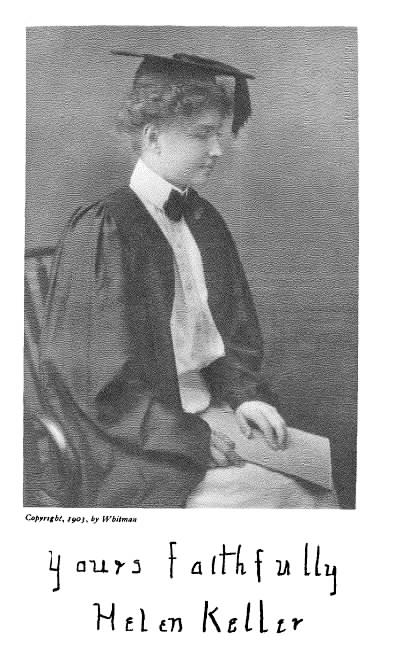
THE POWER OF PURITY 631
Parents are, in many cases, responsible for the impurity of their children. Through a mistaken sense of delicacy, they allow the awakened, searching mind of the child to get information concerning its physical nature from the mind of some boy or girl no better taught than itself, and so conceive wholly wrong and harmful ideas concerning things of which it is vitally important that every human being. should at the outset of life have clear and adequate ideas. Such silence, many times, is fatal, and always foolish, if not criminal.
I have noticed," says William Acton, " that all patients who have confessed to me that they have practised vice, lamented that they were not, when children, made aware of its consequences; and I have been pressed over and over again to urge on parents, guardians, schoolmasters, and others interested in the education of youth, the necessity of giving to their charges some warning, some intimation, of their danger. To parents and guardians I offer my earnest advice that they should, by hearty sympathy and frank explanation, aid their charges in maintaining pure lives." What stronger breastplate than a heart untainted ?
A prominent writer says: " If young persons poison their bodies and corrupt their minds with vicious courses, no lapse of time, after a reform, is likely to restore them to physical soundness and the soul purity of their earlier days."
There is one idea concerning purity which should never have been conceived, and, having been conceived, should be, once and forever, eternally exploded. It is that purity is different in the different sexes.
It would be loosening the foundations of virtue to countenance the notion that, because of a difference in sex, men are at liberty to set morality at defiance, and to do with impunity that which, if done by a woman, would stain her character for life.
632 PUSHING TO THE FRONT
To maintain a pure and virtuous condition of society, therefore, man as well as woman must be virtuous and pure, both alike shunning all acts infringing on the heart, character, and conscience, - shunning them as poison, which, once imbibed, can never be entirely thrown out again.
Is there any reason why a man should have any license to drag his thoughts through the mud and filth any more than a woman? Is there any sex in principle? Isn't a stain a blot upon a boy's character just as bad as upon a girl's? If purity is so refining and elevating for one sex, why should it not be for the other? It is incredible that a man should be socially ostracized for comparatively minor offenses, yet be rotten with immorality and be received into the best homes. But, if a woman makes the least false step in this direction, she is not only ostracized but treated with the utmost contempt, while the man who was the chief sinner in causing a woman's downfall, society will pardon.
To put it on the very lowest ground, I am certain that if young men knew and realized the fearful risks to health that they take by indulging in gross impurities they would put them by with a shudder of disgust and aversion. It may very easily happen-it very often actually does happen-that one single step from the path of purity clouds a man's whole life with misery and unspeakable suffering; and not only that, but even entails lifelong disease on children yet unborn.
To return to its Maker at the close of life the marvelous body which He gave us, scarred by a heedless life, with the heart rotten with impurity, the imagination filled with vicious images, the character honeycombed with vice, is a most ungrateful return for the priceless life of opportunity.
THE POWER OF PURITY 633
A mind retaining all the dew and freshness of innocence shrinks from the very idea of impurity, the very suggestion of it, as if it were sin to have even thought or heard of it, as if even the shadow of the evil would leave some soil on the unsullied whiteness of the virgin mind. " When modesty is once extinguished, it knows not a return."
CHAPTER L
THE HABIT OF HAPPINESS
The highest happiness must always come from the exercise of the best thing in us. When you find happiness in anything but useful work, you will be the first man or woman to make the discovery.
If you take an inventory of yourself at the very outset of your career you will find that you think you are going to find happiness in things or in conditions. Most people think they are going to find the largest part of their happiness in money, what money will buy or what it will give them in the way of power, influence, comforts, luxuries. They think they are going to find a great deal of their happiness in marriage. How quickly they find that the best happiness they will ever know is that which must be limited to their own capacity for enjoyment, that their happiness can not come from anything outside of them but must be developed from within.
Many people believe they are going to find much of their happiness in books, in travel, in leisure, in freedom from the thousand and one anxieties and cares and worries of business; but the moment they get in the position where they thought they would have freedom many other things come up in their minds and cut off much of the expected joy. When they get money and leisure they often find that they are growing selfish, which cuts off a lot of their happiness.
634
THE HABIT OF HAPPINESS 635
No man able to work can be idle without feeling a sense of guilt at not doing his part in the world, for every time he sees the poor laboring people who are working for him, who are working every where, he is constantly reminded of his meanness in shifting upon others what he is able to do and ought to do himself. Idleness is the last place to look for happiness. Idleness is like a stagnant pool. The moment the water ceases to flow, to work, to do something, all sorts of vermin and hideous creatures develop in it. It becomes torpid and unhealthy giving out miasma and repulsive odors. In the same way work is the only thing that will keep the individual healthy and wholesome and clean. An idle brain very quickly breeds impurities.
The married man quickly learns that his domestic happiness depends upon what he himself contributes to the partnership, that he can not take out a great deal without putting a great deal in, for selfishness always reaps a mean, despicable harvest. It is only the generous giver who gets much. There is nothing which will so shrivel up a man; and contract his capacity for happiness as selfishness. It is always a fatal blighter, blaster, disappointer. We must give to get, we must be great before we can get great enjoyment; great in our motive, grand in our endeavor, sublime in our ideas.
It is impossible, absolutely unscientific, for a bad person to be truly happy; just as impossible as it would be for one to be comfortable while lying on a bed of nettles which are constantly pricking him. There is no way under heaven by which a person can be really happy without being good, clean, square, and true. This does not mean that a person is happy because he does not use tobacco, drink, gamble, use profane language or does not do other vicious things. Some of the -meanest, narrowest, most contemptible people in the world do none of these things, but they are uncharitable, jealous, envious, revengeful.
636 PUSHING TO THE FRONT
They stab you in the back, slander you, cheat you. They may be cunning, underhanded, and yet have a fairly good standing in the church. No person can be really happy who has a small, narrow, bigoted, uncharitable mind or disposition. Generosity, charity, kindness are absolutely essential to real happiness. Deceitful people can not be happy; they can not respect themselves because they inwardly despise themselves for deceiving you. A person must be open minded, transparent, simple, in order to be really happy. A person who is always covering up something, trying to keep things from you, misleading you, deceiving you, can not get away from self-reproach, and hence can not be really happy.
Selfishness is a fatal enemy of happiness because no one ever does a really selfish thing without feeling really mean, without despising himself for it. I have never seen a strong young man sneak into a vacant seat in a car and allow an old man or woman with a package or a baby in her arms to stand, without looking as though he knew he had done a mean, selfish thing. There is a look of humiliation in his face. We are so constituted that we can not help condemning ourselves for our mean or selfish acts.
The liar is never really happy. He is always on nettles lest his deceit betray him. He never feels safe. Dishonesty in all its phases is fatal to happiness, for no dishonest person can get his self-approval. Without this no happiness is possible. Before you can be really happy, my friend, you must be able to look back upon a well-spent past, a conscientious, unselfish past. If not, you will be haunted by demons which will destroy your happiness. If you have been mean and selfish, greedy and dishonest with your fellowmen, all sorts of horrible things will rise out of your money pile to terrify and to make your happiness impossible.
THE HABIT OF HAPPINESS 637
In other words, happiness is merely a result of the life work. It will partake of the exact quality of the motive which you have put into your life work. If these motives have been selfish, greedy, grasping, if cunning and dishonesty have dominated in your career, your happiness will be marred accordingly.
You can not complain of your happiness, because it is your own child, the product of your own brain, your own effort. It has been made up of your motives, colored by your life aim. It exactly corresponds to the cause which produced it. There is the greatest difference in the world between the happiness which comes from a sweet, beautiful, unselfish, helpful, sympathetic, industrious, honorable career, and the mean satisfaction which may grow to be a part of your marked self if you have lived a selfish, grasping life.
What we call happiness is the harvest from our life sowing, our habitual thought-sowing, deed-doing. If we have sown selfish, envious, jealous, revengeful, hateful seeds, greedy, grasping seeds, we can not expect a golden happiness harvest like that which comes from a clean and unselfish, helpful sowing. If our harvest is full of the rank, poisonous weeds of jealousy, envy, dishonesty, cunning, and cruelty, we have no one to blame but ourselves, for we sowed the seed which produced that sort of a harvest.
Somehow some people have an entirely wrong idea of what real happiness is. They seem to think it can be bought, can be had by influence, that it can be purchased by money; that if they have money they can get that wonderful, mysterious thing which they call happiness.
But happiness is a natural, faithful harvest from our sowing. It would be as impossible for selfish seed, greed seed to produce a harvest of contentment, of genuine satisfaction, of real joy, as for thistle seeds to produce a harvest of wheat or corn.
638 PUSHING TO THE FRONT
Whatever the quality of your enjoyment or happiness may be, you have patterned it by your life motive, by the spirit in which you have worked, by the principles which have actuated you.
A pretty different harvest, I grant, many of us must face, marred with all sorts of hideous, poisonous weeds, but they are all the legitimate product of our sowing. No one can rob us of our harvest or change it very much. Every thought, every act, every motive, whether secret or public, is a seed which no power on earth can prevent going to its harvest of beauty or ugliness, honor or shame. Most people have an idea that happiness is something that can be manufactured. They do not realize that it can no more be manufactured than wheat or corn can be manufactured. It must be grown, and the harvest will be like the seed.
You, young man, make up your mind at the very outset of your career that whatever comes to you in life, that whether you succeed or fail, whether you have this or that, there is one thing you will have, and that is a happy, contented mind, that you will extract your happiness as you go along. You will not take the chances of picking up or developing the happy habit after you get rich, for then you may be too old.
Most people postpone their enjoyment until they are disappointed to find the power of enjoyment has largely gone by and that even if they had the means they could not get anything like as much real happiness out of it as they could have gotten as they went along when they were younger. Take no chances with your happiness, or the sort of a life that can produce it; whatever else you risk, do not risk this. Early form the happy habit, the habit of enjoyment every day, no matter what comes or does not come to you during the day. Pick crumbs of comfort out of your situation, no matter how unpleasant or disagreeable. I know a man who, although poor, can manage to
THE HABIT OF HAPPINESS 639
get more comfort out of a real tough, discouraging situation than any one else I have ever seen. I have often seen him when he did not have a dollar to his name, with a wife to support: yet he was always buoyant, happy, cheerful, consented. He would even make fun out of an embarrassing situation, see something ludricous in his extreme poverty.
There have never been such conflicting estimates, such varying ideas, regarding any state of human condition as to what constitutes happiness. Many people think that it is purchasable with money, but many of the most restless, discontented, unhappy people in the world are rich. They have the means of purchasing what they thought would produce happiness, but the real thing eludes them. On the other hand, some of the poorest people in the world are happy. The fact is that there is no possible way of cornering or purchasing happiness for it is absolutely beyond the reach of money. It is true, we can purchase a few comforts and immunities from some annoyances and worries with money which we can not get without it. On the other hand, the great majority of people who have inherited money are positively injured by it, because it often stops their own development by taking away the motive for self-effort and self-reliance.
When people get money they often stop growing because they depend upon the money instead of relying upon their own inherent resources. Rich people suffer from their indulgences more than poor ones suffer from their hardships.
A great many rich people die with liver and kidney troubles which are effected both by eating and drinking. The kidneys are very susceptible to the presence of alcohol. If rich people try to get greater enjoyment out of life than poor people by eating and drinking, they are likely very quickly to come to grief.
640 PUSHING TO THE FRONT
If they try to seek it through the avenue of leisure they soon find that an idle brain is one of the most dangerous things in the world-nothing deteriorates faster. The mind was made for continual strong action, systematic, vigorous exercise, and this is possible only when some dominating aim and a great life purpose leads the way.
No person can be really healthful whose mind is not usefully and continually employed. So there is no possibility of finding real happiness in idleness if we are able to work. Nature brings a wonderful compensatory power to those who are crippled or sick or otherwise disabled from working, but there is no compensation for idleness in those who are able to work. Nature only gives us the use of faculties we employ. " Use or lose " is her motto, and when we cease to use a faculty or function it is gradually taken away from us, gradually shrivels and atrophies.
There is no satisfaction like that which comes from the steady, persistent, honest, conscientious pursuit of a noble aim. There are a multitude of evidences in man's very structure that his marvelous mechanism was intended for action, for constant exercise, and that idleness and stagnation always mean deterioration and death of power. No man can remain idle without shrinking, shrivelling, constantly becoming a less efficient man; for he can keep up only those faculties and powers which he constantly employs, and there is no other possible way. Nature puts her ban of deterioration and loss of power upon idleness. We see these victims everywhere shorn of power-weak, nerveless, backboneless, staminaless, gritless people, without forcefulness, mere nonentities because they have ceased working. Without work mental health is impossible and without health the fullest happiness is impossible.
It has been said that happiness is the most delusive thing that man pursues. Yet why need it be a blind search?
THE HABIT OF HAPPINESS 641
If we were to stop the first hundred people we meet on the street and ask them what in their experience has given them the most happiness, probably the answer of no two would be alike.
How interesting and instructive it would be to give a thousand dollars to each of these hundred people, and without their knowing it, follow them and see what they would do with the money, what it would mean to them.
To some poor youth hungry for an education, with no opportunity to gain it, this money would mean a college education. Another would see in his money a more comfortable home for his aged parents. To another this money would suggest all sorts of dissipation. Some would see books and leisure for self improvement, a trip abroad.
We all wear different colored glasses and no two see life with the same tint. Some find their present happiness in coarse dissipation; others in a quiet nook with a book. Some find their greatest happiness in friends, in social intercourse; others seek happiness in roving over the earth, always thinking that the greatest enjoyment is in another day, in another place, a little further on, in the next room, or tomorrow, or in another country.
To many people, happiness is never where they are, but almost anywhere else.
Most people lose sight of the simplicity of happiness. They look for it in big, complicated things. Real happiness is perfectly simple. In fact, it is incompatible with complexity. Simplicity is its very essence.
I was dining recently with a particularly successful young man who is trying very hard to be happy, but he takes such a complicated, strenuous view of everything that his happiness is always flying from him. He drives everything so fiercely, his life is so vigorous, so complicated, that happiness can not find a home with him very long.
642 PUSHING TO THE FRONT
Nor does he understand why. He has money, health; but he always has that restless far-away, absent-minded gaze into something beyond, and I do not think he is ever really very happy. His whole manner of living is extremely complex. He does not seem to know where to find happiness. He has evidently mistaken the very nature of happiness. He thinks it consists in making a great show, in having great possessions, in doing things which attract a great deal of attention; but happiness would be strangled, suffocated in such an environment. The essentials of real happiness are few, simple, and close at hand.
Happiness is made up of very simple ingredients. It flees from the complex life. It evades pomp and show. The heart would starve amid the greatest luxuries. Simple joys and the treasures of the heart and mind make happiness. Happiness has very little to do with material things. It is a mental state of mind. Real permanent happiness can not be found in mere temporary things, because its roots reach away down into eternal principles.
One of the most pathetic pictures in civilization is the great army of men and women searching the world over for happiness, as though it existed in things rather than in a state of mind. The people who have spent years and a fortune trying to find it look as hungry and as lean of contentment and all that makes life desirable as when they started out. Chasing happiness all over the world is about as silly a business as any human being ever engaged in, for it was never yet found by any pursuer.
Yet happiness is the simplest thing in the world. It is found in many a home with carpetless floors and pictureless walls. It knows neither rank, station, nor color, nor does it recognize wealth. It only demands that it live with a contented mind and pure heart.
THE HABIT OF HAPPINESS 643
It will not live with ostentation; it flees from pretense; it loves the simple life; it insists upon a sweet, healthful, natural environment. It hates the forced and complicated and formal.
Real happiness flees from the things that pass away; it abides only in principle, permanency. I have never seen a person who has lived a grasping, greedy, money-chasing life, who was not disappointed at what money has given him for his trouble.
It is only in giving, in helping, that we find our quest. Everywhere we go we see people who are disappointed, chagrined, shocked, to find that what they thought would be the angel of happiness turned out to be only a ghost.
All the misery and the crime of the world rest upon the failure of human beings to understand the principle that no man can really be happy until he harmonizes with the best thing in him, with the divine, and not with the brute. No one can be happy who tries to harmonize his life with his animal instincts. The God (the good) in him is the only possible thing that can make him happy.
Real happiness can not be bribed by anything sordid or low. Nothing mean or unworthy appeals to it. There is no affinity between them. Founded upon principle, it is as scientific as the laws of mathematics, and he who works his problem correctly will get the happiness answer.
There is only one way to secure the correct answer to a mathematical problem; and that is to work in harmony with mathematical laws. It would not matter if half the world believed there was some other way to get the answer, it would never come until the law was followed with the utmost exactitude.
It does not matter that the great majority of the human race believe there is some other way of reaching the happiness goal.
644 PUSHING TO THE FRONT
The fact that they are discontented, restless, and unhappy shows that they are not working their problem scientifically.
We are all conscious that there is another man inside of us, that there accompanies us through life a divine, silent messenger, that other, higher, better self, which speaks from the depths of our nature and which gives its consent, its "amen" to every right action, and condemns every wrong one.
Man is built upon the plan of honesty, of rectitude - the divine plan. When he perverts his nature by trying to express dishonesty, chicanery, and cunning, of course he can not be happy. The very essence of happiness is honesty, sincerity, truthfulness. He who would have real happiness for his companion must be clean, straightforward, and sincere. The moment he departs from the right she will take wings and fly away.
It is just as impossible for a person to reach the normal state of harmony while he is practising selfish, grasping methods, as it is to produce harmony in an orchestra with instruments that are all jangled and out of tune. To be happy, we must be in tune with the infinite within us, in harmony with our better selves. There is no way to get around it. There is no tonic like that which comes from doing things worth while. There is no happiness like that which comes from doing our level best every day, everywhere; no satisfaction like that which comes from stamping superiority, putting our royal trademark upon everything which goes through our hands.
Recently a rich young man was asked why he did not work. " I do not have to," he said. " Do not have to " has ruined more young men than almost anything else. The fact is, Nature never made any provision for the idle man. Vigorous activity is the law of life; it is the saving grace, the only thing that can keep a human being from retrograding.
THE HABIT OF HAPPINESS 645
Activity along the line of one's highest ambition is the normal state of man, and he who tries to evade it pays the penalty in deterioration of faculty, in paralysis of efficiency. Do not flatter yourself that you can be really happy unless you are useful. Happiness and usefulness were born twins. To separate them is fatal.
It is as impossible for a human being to be happy who is habitually idle as it is for a fine chronometer to be normal where not running. The highest happiness is the feeling of well being which comes to one who is actively employed doing what he was made to do, carrying out the great life-purpose patterned in his individual bent. The practical fulfilling of the life purpose is to man what the actual running and keeping time are to the watch. Without action both are meaningless.
Man was made to do things. Nothing else can take the place of achievement in his life. Real happiness without achievement of some worthy aim is unthinkable. One of the greatest satisfactions in this world is the feeling of enlargement, of growth, of stretching upward and onward. No pleasure can surpass that which comes from the consciousness of feeling one's horizon of ignorance being pushed farther and farther away-of making headway in the world-of not only getting on, but also of getting up.
Happiness is incompatible with stagnation. A man must feel his expanding power lifting, tugging away at a lofty purpose, or he will miss the joy of living. The discords, the bickerings, the divorces, the breaking up of rich homes, and the resorting to all sorts of silly devices by many rich people in their pursuit of happiness, prove that it does not dwell with them, that happiness does not abide with low ideals, with selfishness, idleness, and discord. It is a friend of harmony, of truth, of beauty, of affection, of simplicity.
646 PUSHING TO THE FRONT
Multitudes of men have made fortunes, but have murdered their capacity for enjoyment in the process. How often we hear the remark, " He has the money, but can not enjoy it."
A man can have no greater delusion than that he can spend the best years of his life coining all of his energies into dollars, neglecting his home, sacrificing friendships, self-improvement, and everything else that is really worth while, for money, and yet find happiness at the end. The happiness habit is just as necessary to our best welfare as the work habit, or the honesty or square dealing habit.
No one can do his best, his highest thing, who is not perfectly normal, and happiness is a fundamental necessity of our being. It is an indication of health, of sanity, of harmony. The opposite is a symptom of disease, of abnormality. There are plenty of evidences in the human economy that we were intended for happiness, that it is our normal condition; that suffering, unhappiness, discontent, are absolutely foreign and abnormal to our natures.
There is no doubt that our life was intended to be one grand, sweet song. We are built upon the plan of harmony, and every form of discord is abnormal. There is something wrong when any human being in this world, tuned to infinite harmonies and beauties that are unspeakable, is unhappy and discontented.
CHAPTER LI
PUT BEAUTY INTO YOUR LIFE
When the barbarians overran Greece, desecrated her temples, and destroyed her beautiful works of art, even their savageness was somewhat tamed by the sense of beauty which prevailed everywhere. They broke her beautiful statues, it is true; but the spirit of beauty refused to die, and it transformed the savage heart and awakened even in the barbarian a new power. From the apparent death of Grecian art Roman art was born. " Cyclops forging iron for Vulcan could not stand against Pericles forging thought for Greece." The barbarian's club which destroyed the Grecian statues was no match for the chisel of Phidias and Praxiteles.
"What is the best education?" some one asked Plato many centuries ago. " It is," he replied, " that which gives to the body and to the soul all the beauty and all the perfection of which they are capable." The life that would be complete; that would be sweet and sane, as well as strong, must be ornamented, softened, and enriched by a love of the beautiful.
There is a lack in the make-up of a person who has no appreciation of beauty, who does not thrill before a great picture or an entrancing sunset, or a glimpse of beauty in nature. Savages have no appreciation of beauty. They have a passion for adornment, but there is nothing to show that their esthetic faculties are developed. They merely obey their animal instincts and passions.
647
648 PUSHING TO THE FRONT
But as civilization advances ambition grows, wants multiply, and higher and higher faculties show themselves, until in the highest expression of civilization, we find aspiration and love of the beautiful most highly developed. We find it manifested on the person, in the home, in the environment.
The late Professor Charles Eliot Norton of Harvard University, one of the finest thinkers of his day, said that beauty has played an immense part in the development of the highest qualities in human beings; and that civilization could be measured by its architecture, sculpture, and painting.
What an infinite satisfaction comes from beginning early in life to cultivate our finer qualities, to develop finer sentiments, purer tastes, more delicate feelings, the love of the beautiful in all its varied forms of expression! One can make no better investment than the cultivation of a taste for the beautiful, for it will bring rainbow hues and enduring joys to the whole life. It will not only greatly increase one's capacity for happiness, but also one's efficiency.
A remarkable instance of the elevating, refining influence of beauty has been demonstrated by a Chicago school teacher, who fitted up in her school a " beauty corner" for her pupils. It was furnished with a stained glass window, a divan covered with an Oriental rug, and a few fine photographs and paintings, among which was a picture of the Sistine Madonna. Several other esthetic trifles, artistically arranged, completed the furnishings of the " beauty corner." The children took great delight in their little retreat, especially in the exquisite coloring of the stained glass window. Insensibly their conduct and demeanor were affected by the beautiful objects with which they daily associated. They became more gentle, more refined, more thoughtful and considerate. A young Italian boy, in particular, who had been incorrigible before the establishment of the "beauty corner," became, in a short time, so changed and softened that the teacher was astonished.
PUT BEAUTY INTO YOUR LIFE 649
One day she asked him what it was that made him so good lately. Pointing to the picture of the Sistine Madonna the boy said, " How can a feller do bad things when she's looking at him? "
Character is fed largely through the eye and ear. The thousand voices in nature of bird and insect and brook, the soughing of the wind through the trees, the scent of flower and meadow, the myriad tints in earth and sky, in ocean and forest, mountain and hill, are just as important for the development of a real man as the education he receives in the schools. If you take no beauty into your life through the eye or the ear to stimulate and develop your esthetic faculties, your nature will be hard, juiceless, and unattractive.
Beauty is a quality of divinity, and to live much with the beautiful is to live close to the divine. " The more we see of beauty everywhere; in nature, in life, in man and child, in work and rest, in the outward and the inward world, the more we see of God (good)." There are many evidences in the New Testament that Christ was a great lover of the beautiful especially in nature. Was it not He who said: " Consider the lilies of the field; they toil not, neither do they spin; yet Solomon in all his glory was not arrayed like one of these"?
Back of the lily and the rose, back of the landscape, back of all beautiful things that enchant us, there must be a great lover of the beautiful and a great beauty principle. Every star that twinkles in the sky, every flower, bids us look behind it for its source, points us to the great Author of the beautiful.
The love of beauty plays a very important part in the poised, symmetrical life. We little realize how much we are influenced by beautiful people and things.
650 PUSHING TO THE FRONT
We may see them so often that they become common in our experience and fail to attract much of our conscious attention, but every beautiful picture, every sunset and bit of landscape, every beautiful face and form and flower, beauty in any form, wherever we encounter it, ennobles, refines and elevates character. There is everything in keeping the soul and mind responsive to beauty. It is a great refreshener, recuperator, life-giver, health promoter.
Our American life tends to kill the finer sentiments; to discourage the development of charm and grace as well as beauty; it over emphasizes the value of material things and under estimates that of esthetic things, which are far more developed in countries where the dollar is not the God.
As long as we persist in sending all the sap and energy of our being into the money-making gland or faculty and letting the social faculty, the esthetic faculty, and all the finer, nobler faculties lie dormant, and even die, we certainly can not expect a well-rounded and symmetrical life, for only faculties that are used, brain cells that are exercised, grow; all others atrophy. If the finer instincts in man and the nobler qualities that live in the higher brain are under-developed, and the coarser instincts which dwell in the lower brain close to the brute faculties are overdeveloped, man must pay the penalty of animality and will lack appreciation of all that is finest and most beautiful in life.
" The vision that you hold in your mind, the ideal that is enthroned in your heart-this you will build your life by, this you will become." It is the quality of mind, of ideals, and not mere things, that make a man.
It is as essential to cultivate the esthetic faculties and the heart qualities as to cultivate what we call the intellect. The time will come when our children will be taught, both at home and in school, to consider beauty as a most precious gift, which must be preserved in purity, sweetness, and cleanliness, and regarded as a divine instrument of education.
PUT BEAUTY INTO YOUR LIFE 651
There is no investment which will give such returns as the culture of the finer self, the development of the sense of the beautiful, the sublime, and the true; the development of qualities that are crushed out or strangled in the mere dollar-chaser. There are a thousand evidences in us that we were intended for temples of beauty, of sweetness, of loveliness, of beautiful ideas, and not mere storehouses for vulgar things.
There is nothing which will pay so well as to train the finest and truest, the most beautiful qualities in us in order that we may see beauty everywhere and be able to extract sweetness from everything. Everywhere we go there are a thousand things to educate the best there is in us. Every sunset, landscape, mountain, hill, and tree has secrets of charm and beauty waiting for us. In every patch of meadow or wheat, in every leaf and flower, the trained eye will see beauty which would ravish an angel. The cultured ear will find harmony in forest and field, melody in the babbling brook, and untold pleasure in all Nature's songs.
Whatever our vocation, we should resolve that we will not strangle all that is finest and noblest in us for the sake of the dollar, but that we will put beauty into our life at every opportunity. Just in proportion to your love for the beautiful will you acquire its charms and develop its graces. The beauty thought, the beauty ideal, will out-picture themselves in the face and manner. If you are in love with beauty you will be an artist of some kind. Your profession may be to make the home beautiful and sweet, or you may work at a trade; but whatever your vocation, if you are in love with the beautiful, it will purify your taste, elevate and enrich your life, and make you an artist instead of a mere artisan.
652 PUSHING TO THE FRONT
There is no doubt that in the future beauty will play an infinitely greater part in civilized life than it has thus far. It is becoming commercialized everywhere. The trouble with us is that the tremendous material prizes in this land of opportunity are so tempting that we have lost sight of the higher man. We have developed ourselves along the animal side of our nature; the greedy, grasping side. The great majority of us are still living in the, basement of our beings. Now and then one rises to the drawing-room. Now and then one ascends to the upper stories and gets a glimpse of the life beautiful, the life worth while. There is nothing on earth that will so slake the thirst of the soul as the beauty which expresses itself in sweetness and light.
An old traveling man relates that once when on a trip to the West he sat next to an elderly lady who every now and then would lean out of the open window and pour some thick salt-it seemed to him from a bottle. When she had emptied the bottle she would refill it from a hand-bag. A friend to whom this man related the incident told him he was acquainted with the lady, who was a great lover of flowers and an earnest follower of the precept: " Scatter your flowers as you go, for you may never travel the same road again." He said she added greatly to the beauty of the landscape along the railroads on which she traveled, by her custom of scattering flower seeds along the track as she rode. Many roads have thus been beautified and refreshed by this old lady's love of the beautiful and her effort to scatter beauty wherever she went.
If we would all cultivate a love of the beautiful and scatter beauty seeds as we go through life, what a paradise this earth would become!
PUT BEAUTY INTO YOUR LIFE 653
What a splendid opportunity a vacation in the country offers to put beauty into the life; to cultivate the esthetic faculties, which in most people are wholly undeveloped and inactive! To some it is like going into God's great gallery of charm and beauty. They find in the landscape, the valley, the mountains, the fields, the meadows, the flowers, the streams, the brooks and the rivers, riches that no money can buy; beauties that would enchant the angels. But this beauty and glory can not be bought; they are only for those who can see them, appreciate them-who can read their message and respond to their affinity.
Have you never felt the marvelous power of beauty in nature? If not, you have missed one of the most exquisite joys in life. I was once going through the Yosemite Valley, and after riding one hundred miles in a stage-coach over rough mountain roads, I was so completely exhausted that it did not seem as though I could keep my seat until we traveled over the ten more miles which would bring us to our destination. But on looking down from the top of the mountain I caught a glimpse of the celebrated Yosemite Falls and the surrounding scenery, just as the sun broke through the clouds; and there was revealed a picture of such rare beauty and marvelous picturesqueness that every particle of fatigue, brain-fag, and muscle weariness departed in an instant. My whole soul thrilled with a winged sense of sublimity, grandeur, and beauty, which I had never experienced before, and which I never can forget. I felt a spiritual uplift which brought tears of joy to my eyes.
No one can contemplate the wonderful beauties of Nature and doubt that the Creator must have intended that man, made in His own image and likeness, should be equally beautiful. Beauty of character, charm of manner, attractiveness and graciousness of expression, a godlike bearing, are our birthrights.
654 PUSHING TO THE FRONT
Yet how ugly, stiff, coarse, and harsh in appearance and bearing many of us are No one can afford to disregard his good looks or personal appearance.
But if we wish to beautify the outer, we must first beautify the inner, for every thought and every motion shapes the delicate tracings of our face for ugliness or beauty. Inharmonious and destructive attitudes of mind will warp and mar the most beautiful features.
Shakespeare says: " God has given you one face and you make yourselves another." The mind can make beauty or ugliness at will. A sweet, noble disposition is absolutely essential to the highest form of beauty. It has transformed many a plain face. A bad temper, ill nature, jealousy, will ruin' the most beautiful face ever created. After all, there is no beauty like that produced by a lovely-character. Neither cosmetics, massage, nor drugs can remove the lines of prejudice, selfishness, envy, anxiety, mental vacillation that are the results of wrong thought habits.
Beauty is from within. If every human being would cultivate a gracious mentality, not only would what he expressed be artistically beautiful, but also his body. There would indeed be grace and charm, a superiority about him, which would be even greater than mere physical beauty.
We have all seen even very plain women who, because of the charm of their personality, impressed us as transcendently beautiful. The exquisite soul qualities expressed through the body transformed it into their likeness. A fine spirit speaking through the plainest body will make it beautiful. Some one, speaking of Fanny Kemble, said: " Although she was very stout and short, and had a very red face, yet she impressed me as the supreme embodiment of majestic attributes. I never saw so commanding a personality in feminine form. Any type of mere physical beauty would have paled to insignificance by her side."
PUT BEAUTY INTO YOUR LIFE 655
Antoine Berryer says truly: There are no ugly women. There are only women who do not know how to look pretty." The highest beauty - beauty that is far superior to mere regularity of feature or form - is within reach of everybody. It is perfectly possible for one, even with the homeliest face, to make herself beautiful by the habit of perpetually holding in mind the beauty thought, not the thought of mere superficial beauty, but that of heart beauty, soul beauty, and by the cultivation of a spirit of kindness, hopefulness, and unselfishness.
The basis of all real personal beauty is a kindly, helpful bearing and a desire to scatter sunshine and good cheer everywhere, and this, shining through the face, makes it beautiful. The longing and the effort to be beautiful in character can not fail to make the life beautiful, and since the outward is but an expression of the inward, a mere out-picturing on the body of the habitual thought and dominating motives, the face, the manners, and the bearing must follow the thought and become sweet and attractive. If you hold the beauty thought, the love thought, persistently in the mind, you will make such an impression of harmony and sweetness wherever you go that no one will notice any plainness or deformity of person.
There are girls who have dwelt upon what they consider their unfortunate plainness so long that they have seriously exaggerated it. They are not half so plain as they think they are; and, were it not for the fact that they have made themselves very sensitive and self-conscious on the subject, others would not notice it at all.
656 PUSHING TO THE FRONT
In fact, if they could get rid of their sensitiveness and be natural, they could, with persistent effort, make up in sprightliness of thought, in cheerfulness of manner, in intelligence, and in cheery helpfulness, what they lack in grace and beauty of face.
We admire the beautiful face, the beautiful form, but we love the face illumined by a beautiful soul. We love it because it suggests the ideal of the possible perfect man or woman, the ideal which was the Creator's model. It is not the outward form of our dearest friend, but our ideal of friendship which he arouses or suggests in us that stirs up and brings into exercise our love and admiration. The highest beauty does not exist in the actual. It is the ideal, possible beauty, which the person or object symbolizes or suggests, that gives us delight.
Everyone should endeavor to be beautiful and attractive; to be as complete a human being as possible. There is not a taint of vanity in the desire for the highest beauty. The love of beauty that confines itself to mere external form, however, misses its deepest significance. Beauty of form, of coloring, of light and shade, of sound, make our world beautiful; yet the mind that is warped and twisted can not see all this infinite beauty. It is the indwelling spirit, the ideal in the soul, that makes all things beautiful; that inspires and lifts us above ourselves.
We love the outwardly beautiful, because we crave perfection, and we can not help admiring those persons and things that most nearly embody or measure up to our human ideal. But a beautiful character will make beauty and poetry out of the prosiest environment, bring sunshine into the darkest home, and develop beauty and grace amid the ugliest surroundings.
PUT BEAUTY INTO YOUR LIFE 657
What would become of us if it were not for the great souls who realize the divinity of life, who insist upon bringing out and emphasizing its poetry, its music, its harmony and beauty?
How sordid and common our lives would become but for these beauty-makers, these inspirers, these people who bring out all that is best and most attractive in every place, every situation and condition!
There is no accomplishment, no trait of character, no quality of mind, which will give greater satisfaction and pleasure or contribute more to one's welfare than an appreciation of the beautiful. How many people might be saved from wrong-doing, even from lives of crime, by the cultivation of the esthetic faculties in their childhood! A love of the truly beautiful would save children from things which encoarsen and brutalize their natures. It would shield them from a multitude of temptations.
Parents do not take sufficient pains to develop the love and appreciation of beauty in their children. They do not realize that in impressionable youth, everything about the home, even the pictures, the paper on the wall, affect the growing character. They should never lose an opportunity of letting their boys and girls see beautiful works of art, hear beautiful music; they should make a practise of reading to them or having them read very often some lofty poem, or inspirational passages from some great writer, that will fill their minds with thoughts of beauty, open their souls to the inflow of the Divine Mind, the Divine Love which encompasses us round about. The influences that moved our youth determine the character, the success and happiness of our whole lives.
Every soul is born responsive to the beautiful, but this instinctive love of beauty must be fostered through the eye and the mind must be cultivated, or it will die. The craving for beauty is as strong in a child of the slums as in a favorite of fortune. "
658 PUSHING TO THE FRONT
The physical hunger of the poor, the yearning of their stomachs," says Jacob A. Riis, " is not half so bitter, or so little likely to be satisfied as their esthetic hunger, their starving for the beautiful."
Mr. Riis has often tried to take flowers from his Long Island home to the " poors " in Mulberry Street, New York. "But they never got there," he says. " Before I had gone half a block from the ferry I was held up by a shrieky mob of children who cried for the posies and would not let me go another step till I had given them one. And when they got it they ran, shielding the flower with the most jealous care, to some place where they could hide and gloat over their treasure. They came dragging big, fat babies and little weazened ones that they might get a share, and the babies' eyes grew round and big at the sight of the golden glory from the fields, the like of which had never come their way. The smaller the baby, and the poorer, the more wistful its look, and so my flowers went. Who could have said them no?
" I learned then what I had but vaguely understood before, that there is a hunger that is worse than that which starves the body and gets into the newspapers. All children love beauty and beautiful things. It is the spark of the divine nature that is in them and justifies itself! To that ideal their souls grow. When they cry out for it they are trying to tell us in the only way they can that if we let the slum starve the ideal, with its dirt and its ugliness and its hard-trodden mud where flowers were meant to grow, we are starving that which we little know. A man, a human, may grow a big body without a soul; but as a citizen, as a mother, he or she is worth nothing to the commonwealth. The mark they are going to leave upon it is the black smudge of the slum.
PUT BEAUTY INTO YOUR LIFE 659
" So when in these latter days we invade that slum to make homes there and teach the mothers to make them beautiful; when we gather the children into kindergartens, hang pictures in the schools; when we build beautiful new schools and public buildings and let in the light, with grass and flower and bird, where darkness and foulness were before; when we teach the children to dance and play and enjoy themselves - alas! that it should ever be needed - we are trying to wipe off the smudge, and to lift the heavy mortgage which it put on the morrow, a much heavier one in the loss of citizenship than any community, even the republic, can long endure. We are paying arrears of debt which we incurred by our sad neglect, and we could be about no better business."
There are many poor children in the slums of New York, Mr. Millionaire, who could go into your drawing-room and carry away from its rich canvases, its costly furnishings, a vision of beauty which you never perceived in them because your esthetic faculties, your finer sensibilities, were early stifled by your selfish pursuit of the dollar.
The world is full of beautiful things, but the majority have not been trained to discern them. We can not see all the beauty that lies around us, because our eyes have not been trained to see it; our esthetic faculties have not been developed. We are like the lady who, standing with the great artist, Turner, before one of his wonderful landscapes, cried out in amazement: " Why, Mr. Turner, I can not see those things in nature that you have put in your picture."
" Don't you wish you could, madam? " he replied. Just think what rare treats we shut out of our lives in our mad, selfish, insane pursuit of the dollar! Do you not wish that you could see the marvels that Turner saw in a landscape, that Ruskin saw in a sunset?
660 PUSHING TO THE FRONT
Do you not wish that you had put a little more beauty into your life instead of allowing your nature to become encoarsened, your esthetic faculties blinded and your finer instincts blighted by the pursuit of the coarser things of life, instead of developing your brute instincts of pushing, elbowing your way through the world for a few more dollars, in your effort to get something away from somebody else?
Educated to the perception of beauty; he possesses a heritage of which no reverses can rob him. Yet it is a heritage possible to all who will take the trouble to begin early in life to cultivate the finer qualities of the soul, the eye, and the heart. " I am a lover of untainted and immortal beauty," exclaims Emerson. " Oh, world, what pictures and what harmony are thine ! "
A great scientist tells us that there is no natural object in the universe which, if seen as the Master sees it, coupled with all its infinite meaning, its utility and purpose, is not beautiful. Beauty is God's handwriting. Just as the most disgusting object, if put under a magnifying glass of sufficient power, would reveal beauties undreamed of, so even the most unlovely environment, the most cruel conditions, will, when viewed through the glass of a trained and disciplined mind show something of the beautiful and the hopeful. A life that has been rightly trained will extract sweetness from everything; it will see beauty everywhere.
Situated as we are in a world of beauty and sublimity, we have no right to devote practically all of our energies and to sap all our life forces in the pursuit of selfish aims, in accumulating material wealth, in piling up dollars. It is our duty to treat life as a glory, not as a grind or a purely business transaction, dealing wholly with money and bread-and-butter questions. Wherever you are, put beauty into your life.
CHAPTER LII
EDUCATION BY ABSORPTION
John Wanamaker was once asked to invest in an expedition to recover from the Spanish Main doubloons which for half a century had lain at the bottom of the sea in sunken frigates. "Young men," he replied, " I know of a better expedition than this, right here. Near your own feet lie treasures untold; you can have them all by faithful study.
" Let us not be content to mine the most coal, to make the largest locomotives, to weave the largest quantities of carpets; but, amid the sounds of the pick, the blows of the hammer, the rattle of the looms, and the roar of the machinery, take care that the immortal mechanism of God's own hand - the mind - is still full-trained for the highest and noblest service."
The uneducated man is always placed at a great disadvantage. No matter how much natural ability one may have, if he is ignorant, he is discounted. It is not enough to possess ability, it must be made available by mental discipline.
We ought to be ashamed to remain in ignorance in a land where the blind, the deaf and dumb, and even cripples and invalids, manage to obtain a good education.
Many youths throw away little opportunities for self-culture because they cannot see great ones. They let the years slip by without any special effort at self improvement, until they are shocked in middle life, or later, by waking up to the fact that they are still ignorant of what they ought to know.
661
662 PUSHING TO THE FRONT
Everywhere we go we see men and women, especially from twenty-five to forty years of age, who are cramped and seriously handicapped by the lack of early training. I often get letters from such people, asking if it is possible for them to educate themselves so late in life. ' Of course it is. There are so many good correspondence schools today, and institutions like Chautauqua, so many evening schools, lectures, books, libraries, and periodicals, that men and women who are determined to improve themselves have abundant opportunities to do so.
While you lament the lack of an early education and think it too late to begin, you may be sure that there are other young men and young women not very far from you who are making great strides in self-improvement, though they may not have half as good an opportunity for it as you have. The first thing to do is to make a resolution, strong, vigorous, and determined, that you are going to be an educated man or woman; that you are not going to go through life humiliated by ignorance; that, if you have been deprived of early advantages, you are going to make up for their loss. Resolve that you will no longer be handicapped and placed at a disadvantage for that which you can remedy.
You will find the whole world will change to you when you change your attitude toward it. You will be surprised to see how quickly you can very materially improve your mind after you have made a vigorous resolve to do so. Go about it with the same determination that you would to make money or to learn a trade. There is a divine hunger in every normal being for self-expansion, a yearning for rowth or enlargement. Beware of stifling this craving of nature for self-unfoldment.
EDUCATION AND ABSORPTION 663
Man was made for growth. It is the object, the explanation, of his being. To have an ambition to grow larger and broader every day, to push the horizon of ignorance ' a little further away, to become a little richer in knowledge, a little wiser, and more of a man - that is an ambition worth while. It is not absolutely necessary that an education should be crowded into a few years of school life. The best educated people are those who are always learning, always absorbing knowledge from every possible source and at every opportunity.
I know young people who have acquired a better education, a finer culture, through a habit of observation, or of carrying a book in the pocket to read at odd moments, or by taking courses in correspondence schools, than many who have gone through college. Youths who are quick to catch at new ideas, and who are in frequent contact with superior minds, not only often acquire a personal charm, but even, to a remarkable degree, develop mental power.
The world is a great university. From the cradle to the grave we are always in God's great kindergarten, where everything is trying to teach us its lesson; to give us its great secret. Some people are always at school, always storing up precious bits of knowledge. Everything has a lesson for them. It all depends upon the eye that can see, the mind that can appropriate.
Very few people ever learn how to use their eyes. They go through the world with a superficial glance at things; their eye pictures are so faint and so dim that details are lost and no strong impression is made on the mind. Yet the eye was intended for a great educator. The brain is a prisoner, never getting out to the outside world. It depends upon its five or six servants, the senses, to bring it material, and the larger part of it comes through the eye.
664 PUSHING TO THE FRONT
The man who has learned the art of seeing things looks with his brain.
I know a father who is training his boy to develop his powers of observation. He will send him out upon a street with which he is not familiar for a certain length of time, and then question him on his return to see how many things he has observed. He sends him to the show windows of great stores, to museums and other public places to see how many of the objects he has seen the boy can recall and describe when he gets home. The father says that this practise develops in the boy a habit of seeing things, instead of merely looking at them.
When a new student went to the great naturalist, Professor Agassiz of Harvard, he would give him a fish and tell him to look it over for half an hour or an hour, and then describe to him what he saw. After the student thought he had told everything about the fish, the professor would say, " You have not really seen the fish yet. Look at it a while longer, and then tell me what you see." He would repeat this several times, until the student developed a capacity for observation. If we go through life like an interrogation point, holding an alert, inquiring mind toward everything, we can acquire great mental wealth, wisdom which is beyond all material riches.
Ruskin's mind was enriched by the observation of birds, insects, beasts, trees, rivers, mountains, pictures of sunset and landscape, and by memories of the song of the lark and of the brook. His brain held thousands of pictures-of paintings, of architecture, of sculpture, a wealth of material which he reproduced as a joy for all time. Everything gave up its lesson, its secret, to his inquiring mind.
The habit of absorbing information of all kinds from others is of untold value. A man is weak and ineffective in proportion as he secludes himself from his kind.
EDUCATION AND ABSORPTION 665
There is a constant stream of power, a current of forces running to and fro between individuals who come in contact with one another, if they have inquiring minds. We are all giving and taking perpetually when we associate together. The achiever today must keep in touch with the society around him; he must put his finger on the pulse of the great busy world and feel its throbbing life. He must be a part of it, or there will be some lack in his life.
A single talent which one can use effectively is worth more than ten talents imprisoned by ignorance. Education means that knowledge has been assimilated and become a part of the person. It is the ability to express the power within one, to give out what one knows, that measures efficiency and achievement. Pent-up knowledge is useless. People who feel their lack of education, and who can afford the outlay, can make wonderful strides in a year by putting themselves under good tutors, who will direct their reading and study along different lines.
The danger of trying to educate oneself lies in desultory, disconnected, aimless studying which does not give anything like the benefit to be derived from the pursuit of a definite program for self-improvement. A person who wishes to educate himself at home should get some competent, well-trained person to lay out a plan for him, which can only be effectively done when the adviser knows the vocation, the tastes, and the needs of the would-be student. Anyone who aspires to an education, whether in country or city, can find someone to at least guide his studies; some teacher, clergyman, lawyer, or other educated person in the community to help him.
There is one special advantage in self-education,you can adapt your studies to your own particular needs better than you could in school or college.
666 PUSHING TO THE FRONT
Everyone who reaches middle life without an education should first read and study along the line of his own vocation, and then broaden himself as much as possible by reading on other lines.
One can take up, alone, many studies, such as history, English literature, rhetoric, drawing, mathematics, and can also acquire by oneself, almost as effectively as with a teacher, a reading knowledge of foreign languages. The daily storing up of valuable information for use later in life, the reading of books that will inspire and stimulate to greater endeavor, the constant effort to try to improve oneself and one's condition in the world, are worth far more than a bank account to a youth.
How many girls there are in this country who feel crippled by the fact that they have not been able to go to college. And yet they have the time and the material close at hand for obtaining a splendid education, but they waste their talents and opportunities in frivolous amusements and things which do not count in forceful character-building.
It is not such a very great undertaking to get all the essentials of a college course at home, or at least a fair substitute for it. Every hour in which one focuses his mind vigorously upon his studies at home may be as beneficial as the same time spent in college.
Every well-ordered household ought to protect the time of those who desire to study at home. At a fixed hour every evening during the long winter there should be by common consent a quiet period for mental concentration, for what is worth while in mental discipline, a quiet hour uninterrupted by time-thief callers.
EDUCATION AND ABSORPTION 667
In thousands of homes where the members are devoted to each other, and should encourage and help each other along, it is made almost impossible for anyone to take up reading, studying, or any exercise for self-improvement. Perhaps someone is thoughtless and keeps interrupting the others so that they can not concentrate their minds; or those who have nothing in common with your aims or your earnest life drop in to spend an evening in idle chatter. They have no ideals outside of the bread-and-butter and amusement questions, and do not realize how they are hindering you.
There is constant temptation to waste one's evenings and it takes a stout ambition and a firm resolution to separate oneself from a jolly, fun-loving, and congenial family circle, or happy-hearted youthful callers, in order to try to rise above the common herd of unambitious persons who are content to slide along, totally ignorant of everything but the requirements of their particular vocations.
A habit of forcing yourself to fix your mind steadfastly and systematically upon certain studies, even if only for periods of a, few minutes at a time, is, of itself, of the greatest value. This habit helps one to utilize the odds and ends of time which are unavailable to most people because they have never been trained to concentrate the mind at regular intervals. A good understanding of the possibilities that live in spare moments is a great success asset.
The very reputation of always trying to improve yourself, of seizing every opportunity to fit yourself for something better, the reputation of being dead-in-earnest, determined to be somebody and to do something in the world, would be of untold assistance to you. People like to help those who are trying to help themselves. They will throw opportunities in their way. Such a reputation is the best kind of capital to start with.
668 PUSHING TO THE FRONT
One trouble with people who are smarting under the consciousness of deficient education is that they do not realize the immense value of utilizing spare minutes. Like many boys who will not save their pennies and small change because they can not see how a fortune could ever grow by the saving, they can not see how a little studying here and there each day will ever amount to a good, substitute for a college education.
I know a young man who never even attended a high school, and yet educated himself so superbly that he has been offered a professorship in a college. Most of his knowledge was gained during his odds and ends of time, while working hard at his vocation. Spare time meant something to him. The correspondence schools deserve very great credit for inducing hundreds of thousands of people, including clerks, mill operatives, and employees of all kinds, to take their courses, and thus save for study the odds and ends of time which otherwise would probably be thrown away. We have heard of some most remarkable instances of rapid advancement which these correspondence school students have made by reason of the improvement in their education. Many students have reaped a thousand per cent on their educational investment. It has saved them years of drudgery and has shortened wonderfully the road to their goal.
Wisdom will not open her doors to those who are not willing to pay the price in self-sacrifice, in hard work. Her jewels are too precious to scatter before the idle, the ambitionless. The very resolution to redeem yourself from ignorance at any cost is the first great step toward gaining an education.
EDUCATION AND ABSORPTION 669
Charles Wagner once wrote to an American regarding his little boy, " May he know the price of the hours. God bless the rising boy who will do his best, for never losing a bit of the precious and God-given time."
There is untold wealth locked up in the long winter evenings and odd moments ahead of you. A great opportunity confronts you. What will you do with it ?
CHAPTER LIII
THE POWER OF SUGGESTION
When plate-glass windows first came into use, Rogers, the poet, took a severe cold by sitting with his back to what he supposed was an open window in a dining-room but which was really plate-glass. All the time he was eating he imagined he was taking cold, but he did not dare ask to have the window closed.
We little realize how much suggestion has to do with health. In innumerable instances people have been made seriously ill, sometimes fatally so, by others telling them how badly they looked, or suggesting that they had inherited some fatal disease.
A prominent New York business man recently told me of an experiment which the friends of a robust young man made upon him. It was arranged that, beginning in the morning, each one should tell him, when he came to work, that he was not looking well, and ask him what the trouble was. They were to say it in a way that would not arouse his suspicions, and note the result. At one o'clock this vigorous young man had been so influenced by the suggestion that he quit work and went home, saying that he was sick.
There have been many interesting experiments in the Paris hospitals upon patients in a hypnotic trance, wounds being inflicted by mental suggestion. While a cold poker was laid across their limbs, for example, the subjects were told that they were being seared with a red-hot iron, and immediately the flesh would have the appearance of being severely burned.
670
THE POWER OF SUGGESTION 671
I have known patients to collapse completely at the sight of surgical instruments in the operating room. I have heard them say that they could actually feel the cutting of the knife long before they took the anesthetic.
Patients are often put to sleep by the injection into their arms of a weak solution of salt and water, which they are led to think is morphia. Every physician of large experience knows that he can relieve or produce pain simply by suggestion. Many a physician sends patients to some famous resort not so much for the waters or the air as for the miracle which the complete change of thought effects.
Even quacks and charlatans are able, by stimulating the hope of those who are sick, to produce marvelous cures. The mental attitude of the nurse has much to do with the recovery of a sick person. If she holds the constant suggestion that the patient will recover; if she stoutly affirms it, it will be a wonderful rallying help to the forces which make for life. If, on the other hand, she holds the conviction that he is going to die, she will communicate her belief, and this will consequently depress the patient.
We are under the influence of suggestion every moment of our waking lives. Everything we see, hear, feel, is a suggestion which produces a result corresponding to its own nature. Its subtle power seems to reach and affect the very springs of life.
The power of suggestion on expectant minds is often little less than miraculous. An invalid with a disappointed ambition, who thinks he has been robbed of his chances in life and who has suffered for years, becomes all wrought up over some new remedy which is advertised to do marvels.
672 PUSHING TO THE FRONT
He is in such an expectant state of mind that he is willing to make almost any sacrifice to obtain the wonderful remedy; and when he receives it, he is in such a receptive mood that he responds quickly, and thinks it is the medicine which has worked the magic.
Faith in one's physician is a powerful curative suggestion. Many patients, especially those who are ignorant, believe that the physician holds the keys of life and death. They have such implicit confidence in him that what he tells them has powerful influence upon them for good or ill. The possibilities of healing power in the affirmative suggestion that the patient is going to get well are tremendous. The coming physician will constantly reassure his patient verbally, often vehemently, that he is absolutely bound to recover; he will tell him that there is an omnipotent healing power within him, and that he gets a hint of this in the power which heals a wound, and which refreshes, renews, and recreates him during sleep.
It is almost impossible for a patient to get well while people are constantly reminding him how ill he looks. His will-power together with all his physical recuperative forces could not counteract the effect of the reiteration of the sick suggestion. Many a sick-room is made a chamber of horrors because of the depressing suggestion which pervades it. Instead of being filled with sunshine, good cheer, and encouragement, it is often darkened, God's beautiful sunshine shut out; ventilation is poor; everybody has a sad, anxious face; medicine bottles and surgical apparatus are spread about; everything is calculated to engender disease rather than to encourage health and inspire hope. Why, there is enough depressing suggestion in such a place to make a perfectly well person ill
What people need is encouragement, uplift, hope. Their natural resisting powers should be strengthened and developed.
THE POWER OF SUGGESTION 673
Instead of telling a friend in trouble, despair, or suffering that you feel very sorry for him, try to pull him out of his slough of despond, to arouse the latent recuperative, restorative energies within him. Picture to him his God image, his better self, which, because it is a part of the great immortal principle, is never sick and never out of harmony, can never be discordant or suffer.
Right suggestion would prevent a great majority of our divorces. Great infatuation for another has been overcome by suggestion in numerous instances. Many women have been thus cured of a foolish love for impossible men, as in the case of girls who have become completely infatuated with the husband of a friend. Fallen women have been entirely reclaimed, have been brought to see their better, finer, diviner selves through the power of suggestion.
The suggestion which comes from a sweet, beautiful, charming character is contagious and sometimes revolutionizes a whole neighborhood. We all know how the suggestion of heroic deeds, great records, has aroused the ambitions and stirred the energies of others to do likewise. Many a life has turned upon a few moments' conversation, upon a little encouragement, upon the suggestion of an inspiring book.
Many men who have made their impress upon history, who have left civilization a little higher, accomplished what they did largely because their ambition was aroused by suggestion; some book or some individual gave them the first glimpse of their possibility and enabled them to feel for the first time a thrill of the power within them.
The suggestion of inferiority is one of the most difficult to overcome. Who can ever estimate the damage to humanity and the lives wrecked through it! I know men whose whole careers have been practically ruined through the constant suggestion, while they were children, that they would never amount to anything.
674 PUSHING TO THE FRONT
This suggestion of inferiority has made them so timid and shy and so uncertain of themselves that they have never been able to assert their individuality.
I knew a college student whose rank in his class entitled him to the highest recognition, whose life was nearly ruined by suggestion; he overheard some of his classmates say that he had no more dignity than a goose, and always made a very poor appearance; that under no circumstances would they think of electing him as class orator, because he would make such an unfortunate impression upon an audience. He had unusual ability, but his extreme diffidence, timidity, shyness, made him appear awkward and sometimes almost foolish, all of which he would undoubtedly have overgrown, had he not overheard the criticism of his classmates. He thought it meant that he was mentally inferior, and this belief kept him back ever after.
What a subtle power there is in the suggestion of the human voice! What emotions are aroused in us by its different modulations! How we laugh and cry, become indignant, revengeful, our feelings leaping from one extreme to the other, according to the passion-freighted or love-freighted words which reach our ear; how we sit spell-bound, with bated breath, before the great orator who is playing upon the emotions of his audience, as a musician plays upon the strings of his harp, now bringing out tears, now smiles, now pathos, now indignation! The power of his word-painting makes a wonderful impression. A thousand listeners respond to whatever he suggests. The voice is a great betrayer of our feelings and emotions.
THE POWER OF SUGGESTION 675
It is tender when conveying love to our friends; cold, selfish, and without a particle of sympathy during business transactions when we are trying to get the best of a bargain. How we are attracted by a gentle voice, and repulsed by one that is harsh! We all know how susceptible even dogs and horses are to the different modulations of the human voice. They know the tone of affection; they are reassured and respond to it. But they are stricken with fear and trembling at the profanity of the master's rage.
Some natures are powerfully affected by certain musical strains; they are immediately lifted out of the deepest depression and despondency into ecstasy. Nothing has touched them; they have just merely felt a sensation through the auditory nerve which aroused and awakened into activity certain brain cells and changed their whole mental attitude. Music has a decided influence upon the blood pressure in the arteries, and upon the respiration. We all know how it soothes, refreshes, and rests us when jaded and worried. When its sweet harmonies fill the soul, all cares, worries, and anxieties fly away.
George Eliot, in " The Mill on the Floss," gives voice to what some of us have often, doubtless, felt, when under its magic spell. " Certain strains of music," she says, " affect me so strangely that I can never hear them without changing my whole attitude of mind for a time, and if the effect would last, I might be capable of heroism." Latimer, Ridley, and hundreds of others went to the stake actually rejoicing, the spectators wondering at the smile of ineffable peace which illumined their faces above the fierce glare of the flames, at the hymns of praise and thanksgiving heard amid the roar of crackling fagots.
" No, we don't get sick," said an actor, " because we can't get sick. Patti and a few other stars could afford that luxury, but to the majority of us it is denied.
676 PUSHING TO THE FRONT
It is a case of `must' with us; and although there have been times when, had I been at home, or a private man, I could have taken to my bed with as good a right to be sick as any one ever had, I have not done so, and have worn off the attack through sheer necessity. It's no fiction that will power is the best of tonics, and theatrical people understand that they must keep a good stock of it always on hand.
A tight-rope walker was so ill with lumbago that he could scarcely move. But when he was advertised to appear, he summoned all his will power, and traversed the rope several times with a wheelbarrow, according to the program. When through he doubled up and had to be carried to his bed, "as stiff as a frozen frog."
Somewhere I have read a story of a poor fellow who went to hang himself, but finding by chance a pot of money, he flung away the rope and went hurriedly home. He who hid the gold, when he missed it, hanged himself with the rope which the other man had left. Success is a great tonic, and failure a great depressant.
The successful attainment of what the heart longs for, as a rule, improves health and happiness. Generally we not only find our treasure where our heart is, but our health also. Who has not noticed men of indifferent health, perhaps even invalids, and men who lacked energy and determination, suddenly become roused to a realization of unthought-of powers and unexpected health upon attaining some signal success? The same is sometimes true of persons in poor health who have suddenly been thrown into responsible positions by death of parents or relatives, or who, upon sudden loss of property, have been forced to do what they had thought impossible before.
THE POWER OF SUGGESTION 677
An education is a health tonic. Delicate boys and girls, whom parents and friends thought entirely too slender to bear the strain, often improve in health in school and college. Other things equal, intelligent, cultured, educated people enjoy the best health. There is for the same reason a very intimate relation between health and morals. A house divided against itself can not stand. Intemperance, violation of chastity, and vice of all kinds are discordant notes in the human economy which tend to destroy the great harmony of life. The body is but a servant of the mind. A well-balanced, cultured, and well-disciplined intellect reacts very powerfully upon the physique, and tends to bring it into harmony with itself. On the other hand, a weak, vacillating, one sided, unsteady, and ignorant mind will ultimately bring the body into sympathy with it. Every pure and uplifting thought, every noble aspiration for the good and the true, every longing of the heart for a higher and better life, every lofty purpose and unselfish endeavor, reacts upon the body, makes it stronger, more harmonious, and more beautiful.
" As a man thinketh in his heart, so is he." The body is molded and fashioned by the thought. If a young woman were to try to make herself beautiful, she would not begin by contemplating ugliness, or dwelling upon the monstrosities of vice, for their hideous images would be reproduced in her own face and manners. Nor would she try to make herself graceful by practising awkwardness. We can never gain health by contemplating disease any more than we can reach perfection by dwelling upon imperfection, or harmony through discord.
We should keep a high ideal of health and harmony constantly before the mind; and we should fight every discordant thought and every enemy of harmony as we would fight a temptation to crime.
678 PUSHING TO THE FRONT
Never affirm or repeat about your health what you do not wish to be true. Do not dwell upon your ailments nor study your symptoms. Never allow yourself to think that you are not complete master of yourself. Stoutly affirm your own superiority over bodily ills, and do not acknowledge yourself the slave of an inferior power.
The mind has undoubted power to preserve and sustain physical youth and beauty, to keep the body strong and healthy, to renew life, and to preserve it from decay, many years longer than it does now. The longest lived men and women have, as a rule, been those who have attained great mental and moral development. They have lived in the upper region of a higher life, beyond the reach of much of the jar, the ' friction, and the discords which weaken and shatter most lives.
Many nervous diseases have been cured by music, while others have been greatly retarded in their development by it. Anything which keeps the mind off our troubles tends to restore harmony throughout the body. It is a great thing to form a habit, acquire a reputation, of always talking up and never down, of seeing good things and never bad, of encouraging and never discouraging, and of always being optimistic about everything.
" Send forth loving, stainless, and happy thoughts, and blessings will flow into your hands; send forth hateful, impure, and unhappy thoughts, and curses will rain down upon you and fear and unrest will wait upon your pillow."
There is no one principle that is abused today in the business world more than the law of suggestion. Everywhere in this country we see the pathetic victims of those who make a business of overpowering and controlling weaker minds.
THE POWER OF SUGGESTION 679
Thus is suggestion carried even to the point of hypnotism as is illustrated by unscrupulous salesmen and promoters.
If a person steals the property of another he is imprisoned, but if he hypnotizes his victim by projecting his own strong trained thought into the innocent, untrained, unsuspecting victim's mind, overcomes his objections, and induces him voluntarily to buy the thing he does not want and can not afford to buy, perhaps impoverishing himself for years so that he and his family suffer for the necessities of life, no law can stop him. It would be better and should be considered less criminal for a man to go into a home and steal articles of value than to overpower the minds of the heads of poor families and hypnotize them into signing contracts for what they have really no right and are not able to buy.
Solicitors often command big salaries because of their wonderful personal magnetism and great powers of persuasion. The time will come when many of these " marvelous persuaders," with long heads cunningly trained, traveling about the country, hypnotizing their subjects and robbing them of their hard earned money, will be regarded as criminals.
On the other hand, suggestion is used for practical good in business life. It is now a common practise in many concerns to put in the hands of their employees inspiring books and to republish in pamphlet form special articles from magazines and periodicals which are calculated to stir the employees to new endeavor, to arouse them to greater action and make them more ambitious to do bigger things. Schools of salesmanship are using very extensively the psychology of business and are giving all sorts of illustrations which will spur men to greater efficiency.
680 PUSHING TO THE FRONT
The up-to-date merchant shows his knowledge of the power of suggestion for customers by his fascinating show-windows and display of merchandise. The restaurant keeper knows the power of suggestion of delicious viands upon the appetite, and we often see tempting dishes and articles of food displayed in the window or in the restaurant where the eye will carry the magic suggestion to the brain.
A person who has been reared in luxury and refinement would be so affected by the suggestion of uncleanliness and disorderliness in a cheap Bowery eating place that he would lose the keenest appetite. If, however, the same food, cooked in the same way, could be transferred to one of the luxurious Broadway restaurants and served upon delicate china and spotless linen with entrancing music, the entire condition would be reversed. The new suggestion would completely reverse the mental and physical conditions.
The suggestion of the ugly suspicions of a whole nation so overpowered Dreyfus during his trial that it completely neutralized his individuality, overbalanced his consciousness of innocence. His whole manner was that of a guilty person, so that many of his friends actually believed him guilty. After the verdict, in the presence of a vast throng which had gathered to see him publicly disgraced, when his buttons and other insignia of office were torn from his uniform, his sword taken from him and broken, and the people were hissing, jeering, and hurling all sorts of anathemas at him, no criminal could have exhibited more evidence of guilt. The radiations of the guilty suggestion from millions of people completely overpowered his own mentality, his individuality, and, although he was absolutely innocent, his appearance and manner gave every evidence of the treason he was accused of.
THE POWER OF SUGGESTION 681
There is no suggestion so fatal, so insinuating, as that of impurity. Vast multitudes of people have fallen victims to this vicious, subtle, fatal poison. Who can depict the tragedies which have been caused by immoral, impure suggestion conveyed to minds which were absolutely pure, which have never before felt the taint of contamination? The subtle poisoning infused through the system makes the entrance of the succeeding vicious suggestions easier and easier, until finally the whole moral system becomes saturated, with the poison.
There is a wonderful illustration of the power of suggestion in the experience of what are called the Stigmatists. These nuns who for years concentrated all of their efforts in trying to live the life that Christ did, to enter into all of His sufferings, so completely concentrated all of their energies upon the Christ suffering, and so vividly pictured the wounds in their imaginations, that their thought really changed the chemical and physical structure of the tissues and they actually reproduced the nail marks in the hands and feet and the spear wound as in the side of the crucified Christ.
These nuns devoted their lives to this reproduction of the physical evidences of the crucifixion. The fixing of the mind for a long period of time upon the wounds of the hands, feet, and the side, were so vivid, so concentrated, that the picture was made real in their own flesh. In addition to the mental picturing, they kept constantly before them the physical picture of the crucified Christ, which made their mental picture all the more vivid and concentrated. The religious ecstasy was so intense that they could actually see Christ being crucified, and this mental attitude was out-pictured in the flesh.
CHAPTER LIV
THE CURSE OF WORRY
This monster dogs us from the cradle to the grave. There is no occasion so sacred but it is there. Unbidden it comes to the wedding and the funeral alike. It is at every reception, every banquet; it occupies a seat at every table. No human intellect can estimate the unutterable havoc and ruin wrought by worry. It has ever forced genius to do the work of mediocrity; it has caused more failures, more broken hearts, more blasted hopes, than any other one cause since the dawn of the world.
Did you ever hear o f any good coming to any human being from worry? Did it ever help anybody to better his condition? Does it not always-everywhere-do just the opposite by impairing the health, exhausting the vitality, lessening efficiency? What have not men done under the pressure of worry! They have plunged into all sorts of vice; have become drunkards, drug fiends; have sold their very souls in their efforts to escape this monster.
Think of the homes which it has broken up; the ambitions it has ruined; the hopes and prospects it has blighted! Think of the suicide victims of this demon! If there is any devil in existence, is it not worry, with all its attendant progeny of evils?
Yet, in spite of all the tragic evils that follow in its wake, a visitor from another world would get the impression that worry is one of our dearest, most helpful friends, so closely do we hug it to ourselves and so loath are we to part from it.
682
THE CURSE OF WORRY 683
Is it not unaccountable that people who know perfectly well that success and happiness both depend on keeping themselves in condition to get the most possible out of their energies should harbor in their minds the enemy of this very success and happiness? Is it not strange that they should form this habit of anticipating evils that will probably never come, when they know that anxiety and fretting will not only rob them of peace of mind and strength and ability to do their work, but also of precious years of life?
No man can utilize his normal power who dissipates his nervous energy in useless anxiety. Nothing will sap one's vitality and blight one's ambition or detract from one's real power in the world more than the worrying habit. Work kills no one, but worry has killed vast multitudes. It is not the doing things which injures us so much as the dreading to do them-not only performing them mentally over and over again, but anticipating something disagreeable in their performance.
Many of us approach an unpleasant task in much the same condition as a runner who begins his start such a long distance away that by the time he reaches his objective point-the ditch or the stream which is to test his agility-he is too exhausted to jump across.
Worry not only saps vitality and wastes energy, but it also seriously affects the quality of one's work. It cuts down ability. A man can not get the highest quality of efficiency into his work when his mind is troubled. The mental faculties must have perfect freedom before they will give out their best. A troubled brain can not think clearly, vigorously, and logically. The attention can not be concentrated with anything like the same force when the brain cells are poisoned with anxiety as when they are fed by pure blood and are clean and unclouded.
684 PUSHING TO THE FRONT
The blood of chronic worriers is vitiated with poisonous chemical substances and broken-down tissues, according to Professor Elmer Gates and other noted scientists, who have shown that the passions and the harmful emotions cause actual chemical changes in the secretions and generate poisonous substances in the body which are fatal to healthy growth and action.
One of the worst forms of worry is the brooding over failure. It blights the ambition, deadens the purpose and defeats the very object the worrier has in view. Some people have the unfortunate habit of brooding over their past lives, castigating themselves for their shortcomings and mistakes, until their whole vision is turned backward instead of forward, and they see everything in a distorted light, because they are looking only on the shadow side.
The longer the unfortunate picture which has caused trouble remains in the mind, the more thoroughly it becomes imbedded there, and the more difficult it is to remove it. Are we not convinced that a power beyond our control runs the universe, that every moment of worry detracts from our success capital and makes our failure more probable; that every bit of anxiety and fretfulness leaves its mark on the body, interrupts the harmony of our physical and mental well-being, and cripples efficiency, and that this condition is at war with our highest endeavor?
Is it not strange that people will persist in allowing little worries, petty vexations, and unnecessary frictions to grind life away at such a fearful rate that old age stares them in the face in middle life? Look at the women who are shriveled and shrunken and aged at thirty, not because of the hard work they have done, or the real troubles they have had, but because of habitual fretting, which has helped nobody, but has brought discord and unhappiness to their homes.
THE CURSE OF WORRY 685
Somewhere I read of a worrying woman who made a list of possible unfortunate events and happenings which she felt sure would come to pass and be disastrous to her happiness and welfare. The list was lost, and to her amazement, when she recovered it, a long time afterwards, she found that not a single unfortunate prediction in the whole catalogue of disasters had been realized. Is not this a good suggestion for worriers? Write down everything which you think is going to turn out badly, and then put the list aside. You will be surprised to see what a small percentage of the doleful things ever come to pass.
It is a pitiable thing to see vigorous men and women, who have inherited godlike qualities and who bear the impress of divinity, wearing anxious faces and filled with all sorts of fear and uncertainty, worrying about yesterday, today, tomorrow - everything imaginable.
" Fear runs like a baleful thread through the whole web of life from beginning to end," says Dr. Holcomb. "We are born into the atmosphere of fear and dread, and the mother who bore us had lived in the same atmosphere for weeks and months before we were born. We are afraid of our parents, afraid of our teachers, afraid of our playmates, afraid of ghosts, afraid of rules and regulations and punishments, afraid of the doctor, the dentist, the surgeon. Our adult life is a state of chronic anxiety, which is fear in a milder form. We are afraid of failure in business, afraid of disappointments and mistakes, afraid of enemies, open or concealed; afraid of poverty, afraid of public opinion, afraid of accidents, of sickness, of death, and unhappiness after death.
686 PUSHING TO THE FRONT
Man is like a haunted animal from the cradle to the grave, the victim of real or imaginary fears, not only his own, but those reflected upon him from the superstitions, self-deceptions, sensory illusions, false beliefs, and concrete errors of the whole human race, past and present." Most of us are foolish children, afraid of our shadows, so handicapped in a thousand ways that we can not get efficiency into our life work.
A man who is filled with fear is not a real man. He is a puppet, a mannikin, an apology of a man. Quit fearing things that may never happen, just as you would quit any bad practise which has caused you suffering. Fill your. mind with courage, hope, and confidence. Do not wait until fear thoughts become intrenched in your mind and your imagination. Do not dwell upon them. Apply the antidote instantly, and the enemies will flee. There is no fear so great or intrenched so deeply in the mind that it can not be neutralized or entirely eradicated by its opposite. The opposite suggestion will kill it.
Once Dr. Chalmers was riding on a stage-coach beside the driver, and he noticed that John kept hitting the off leader a severe crack with his whip. When he asked him why he did this, John answered: " Away yonder there is a white stone; that off leader is afraid of that stone; so by the crack of my whip and the pain in his legs I want to get his mind off from it." Dr. Chalmers went home, elaborated the idea, and wrote " The Expulsive Power of a New Affection." You must drive out fear by putting a new idea into the mind.
Fear, in any of its expressions, like worry or anxiety, can not live an instant in your mind in the presence of the opposite thought, the image of courage, fearlessness, confidence, hope, self-assurance, self-reliance. Fear is a consciousness of weakness. It is only when you doubt your ability to cope with the thing you dread that fear is possible.
THE CURSE OF WORRY 687
Fear of disease, even, comes from a consciousness that you will not be able to successfully combat it.
During an epidemic of a dreaded contagious disease, people who are especially susceptible and full of fear become panic-stricken through the cumulative effect of hearing the subject talked about and discussed on every hand and the vivid pictures which come from reading the newspapers. Their minds (as in the case of yellow fever) become full of images of the disease, of its symptoms-black vomit, delirium, - and of death, mourning, and funerals.
If you never accomplish anything else in life, get rid of worry. There are no greater enemies of harmony than little anxieties and petty cares. Do not flies aggravate a nervous horse more than his work? Do not little naggings, constantly touching him with the whip, or jerking at the reins, fret and worry him much more than the labor of drawing the carriage? It is the little pin-pricks, the petty annoyances of our everyday life, that mar our comfort and happiness and rob us of more strength than the great troubles which we nerve ourselves to meet. It is the perpetual scolding and fault-finding of an irritable man or woman which ruins the entire peace and happiness of many a home.
The most deplorable waste of energy in human life is caused by the fatal habit of anticipating evil, of fearing what the future has in store for us, and under no circumstances can the fear or worry be justified by the situation, for it is always an imaginary one, utterly groundless and without foundation. What we fear is invariably something that has not yet happened. It does not exist; hence is not a reality. If you are actually suffering from a disease you have feared, then fear only aggravates every painful feature of your illness and makes its fatal issue more probable.
688 PUSHING TO THE FRONT
The fear habit shortens life, for it impairs all the physiological processes. Its power is shown by the fact that it actually changes the chemical composition of the secretions of the body. Fear victims not only age prematurely but they also die prematurely. All work done when one is suffering from a sense of fear or foreboding has little efficiency. Fear strangles originality, daring, boldness; it kills individuality, and weakens all the mental processes. Great things are never done under a sense of fear of some impending danger. Fear always indicates weakness, the presence of cowardice. What a slaughterer of years, what a sacrificer of happiness and ambitions, what a ruiner of careers this monster has been! The Bible says, "A broken spirit drieth the bones." It is well known that mental depression-melancholy-will check very materially the glandular secretions of the body and literally dry up the tissues.
Fear depresses normal mental action, and renders one incapable of acting wisely in an emergency, for no one can think clearly and act wisely when paralyzed by fear. When a man becomes melancholy and discouraged about his affairs, when he is filled with fear that he is going to fail, and is haunted by the specter of poverty and a suffering family, before he realizes it, he attracts the very thing he dreads, and the prosperity is crushed out of his business. But he is a mental failure first.
If, instead of giving up to his fear, a man would persist in keeping prosperity in his mind, assume a hopeful, optimistic attitude, and would conduct his business in a systematic, economical, far-sighted manner, actual failure would be comparatively rare. But when a man becomes discouraged, when he loses heart and grip, and becomes panic-stricken and a victim of worry, he is not in a position to make the effort which is absolutely necessary to bring victory, and there is a shrinkage all along the line.
THE CURSE OF WORRY 689
There is not a single redeeming feature about worry or any of its numerous progeny. It is always, everywhere, an unmitigated curse. Although there is no reality in fear, no truth behind it, yet everywhere we see people who are slaves to this monster of the imagination.
CHAPTER LV
TAKE A PLEASANT THOUGHT TO BED WITH YOU
Shut off your mental steam when you quit work Lock up your business when you lock up your office or factory at night. Don't drag it into your home to mar your evening or to distress your sleep. You can not afford to allow the enemies of your peace and happiness to etch their black pictures deeper and deeper into your consciousness.
Many people lie down to sleep as the camels lie down in the desert, with their packs still on their backs. They do not seem to know how to lay down their burdens, and their minds go on working a large part of the night. If you are inclined to worry during the night, to keep your mental faculties on the strain, taut, it will be a good plan for you to have a bow in your bedroom and unstring it every night as a reminder that you should also unstring your mind so that it will not lose its springing power. The Indian knows enough to unstring his bow just as soon as he uses it so that it will not lose its resilience.
If a man who works hard all day uses his brain a large part of the night, doing his work over and over again, he gets up in the morning weary, jaded. Instead of having a clear, vigorous brain capable of powerfully focusing his mind, he approaches his work with all his standards down, and with about as much chance of winning as a race horse who has been driven all night before a contest would have. Not even a man with the will of a Napoleon could win out under such conditions.
It is of the utmost importance to stop the grinding, rasping process in the brain at night and to keep from wearing life away and wasting one's precious vitality.
690
A PLEASANT THOUGHT 691
Many people become slaves to night worry. They get into a chronic habit of thinking after they retire especially of contemplating their troubles and trials, - and it is a very difficult habit to break.
It is fundamental to sound health to make it a rule never to discuss business troubles and things that vex and irritate one at night, especially just before retiring, for whatever is dominant in the mind when one falls asleep continues its influence on the nervous structure long into the night.
Some people age more at night than during the daytime, when, it would appear, if they must worry at all, the reverse ought to be true. When hard at work during the day they do not have much time to think of their ailments, their business troubles, their misfortunes. But when they retire, the whole brood of troubling thoughts and worry ghosts fill the mind with horrors. They grow older instead of younger, as they would under the influence of sound, refreshing sleep.
Mental discord saps vitality, lessens courage, shortens life. It does not pay to indulge in violent temper, corroding thoughts, mental discord in any form. Life is too short, too precious, to spend any part of it in such unprofitable, soul-racking, health-destroying business. The imagination is particularly active at night, and all unpleasant, disagreeable things seem a great deal worse then than in the day, because in the silence and darkness imagination magnifies everything. We have all dreamed of the evening's experience, after we went to sleep: perhaps it is the refrain of a song or the intense situation in a play which we live over again. This shows how powerful impressions are; how important it is never to retire to rest in a fit of temper, or in an ugly, unpleasant mood.
692 PUSHING TO THE FRONT
We should get ourselves into mental harmony, should become serene and quiet before retiring, and, if possible, lie down smiling, no matter how long it may take to secure this condition. Never retire with a frown on your brow; with a perplexed, troubled, vexed expression. Smooth out the wrinkles; drive away all the enemies of your peace of mind, and never allow yourself to go to sleep with critical, cruel, jealous thoughts toward any one.
It is bad enough to feel inimical toward others when under severe provocation or in a hot temper, but you certainly can not afford deliberately to continue this state of mind after the provocation has ceased. The wear and tear upon your nervous. system and your health takes too much out of you. Be at peace with all the world at least once every twenty-four hours. You can not afford to allow the enemies of your happiness and your manhood or womanhood to etch their miserable images deeper and deeper into your life and character as you sleep.
Many of us with crotchety, sour dispositions and quick tempers sometimes have very hard work to be decent in our treatment of others. But we can, at least when we are alone, and away from the people who nettle and antagonize us, forget injuries, quit harboring unpleasant thoughts and hard feelings toward others.
It is a great thing to form a habit of forgetting and forgiving before going to sleep, of clearing the mind of all happiness and success enemies. If we have been impulsive, foolish, or wicked during the day in our treatment of others; if we have been holding a vicious, ugly, revengeful, jealous attitude toward others, it is a good time to wipe off the slate and start anew. It is a blessed thing to put into practise St. Paul's exhortation to the Ephesians : "Let not the sun go down upon your wrath."
A PLEASANT THOUGHT 693
If you wish to wake up feeling refreshed and renewed, you simply must retire in a happy, forgiving, cheerful mood. If you go to sleep in an ugly mood or while worrying or depressed, you will wake up tired, exhausted and with no elasticity or spring in your brain or buoyancy in your spirits, for the blood poisoned by worry, by discordant mood, is incapable of refreshing the brain.
If you have a grudge against another, forget it, wipe it out, erase it completely, and substitute a charitable love thought, a kindly, generous thought, before you fall asleep. If you make a habit of clearing the mind every night of its enemies, of driving them all out before you go to sleep, your slumber will be undisturbed by hideous dreams and you will rise refreshed, renewed.
Clean your mental house before retiring. Throw out everything that causes you pain, everything that is disagreeable, undesirable; all unkind thoughts of anger, hatred, jealousy, all selfish, uncharitable thoughts. Do not allow them to print their black hideous pictures upon your mind. And when you have let go of all the rubbish and have swept and dusted and garnished your mind, fill it full of the pleasantest, sweetest, happiest, most helpful, encouraging, uplifting thought-pictures possible.
An evening-happiness bath ought to be the custom in every home. A bath of love and good-will toward every living creature is more important than a water bath. .
We should fall asleep in the most cheerful, the happiest possible frame of mind. Our minds should be filled with lofty thoughts-with thoughts of love and of helpfulness-thoughts which will continue to create that which is helpful and uplifting, which will renew the soul and help us to awake in the morning refreshed and in superb condition for the day's work.
694 PUSHING TO THE FRONT
If you have any difficulty in banishing unpleasant or torturing thoughts, force yourself to read some good, inspiring book - something that will smooth out your wrinkles and put you in a happy mood; something that will make you see the real grandeur and beauty of life; something that will make you feel ashamed of petty meannesses and narrow, uncharitable thoughts.
After a little practise, you will be surprised to see how quickly and completely you can change your whole mental attitude so that you will face life the right way before you fall asleep. You will be surprised also to find how wonderfully serene, calm, refreshed, and rejuvenated you will be when you wake in the morning, and how much easier it will be to start right, and wear a smile that won't come off during the day, than it was when you went to bed in an ill-humored, worrying or ugly mood, or full of ungenerous, uncharitable thoughts. Unless you tune your mind to harmony for sleep, there will be a constant strain upon the nervous system. Even if you do manage to go to sleep with a troubled mind, the brain keeps on working and you will wake up exhausted.
We should take special pains to erase the memory of all unfortunate experiences of the day, all domestic business or professional troubles and anxieties, in order to retire in a placid, peaceful, harmonious state of mind; not only because of the necessity of rising refreshed and invigorated in the morning, but because the character and the disposition are affected by the condition of the mind upon falling asleep. Mental discords not only prevent sound sleep but also leave in the blood poisonous waste from the chemical changes which in turn dulls and impairs the brain action.
A PLEASANT THOUGHT 695
Many business men suffer so much torture at night that some of them actually dread to retire because of the long, tedious, wakeful hours. Financial troubles are particularly exaggerated at night; and even many optimists suffer more or less from pessimism then. Business men ought to know how to turn off brain power when they are not using it. They would not think of leaving or closing their factories at night without turning off the machinery power. Why should they then attempt to go to sleep without turning off their mental power? It is infinitely important to one's health to turn off mental power when not actually using it to produce something.
When you get through your regular day's work, why allow your precious energy to dribble away in little worries? Why carry your business home, take it to bed with you, and waste your life forces in ineffective thinking? Why permit a great leakage of mental energy and a waste of life-force? You must learn to shut off mental steam when you quit work.
Many men use up almost as much mental energy in the evening and in a restless night as during their actual work in the day. Refresh, renew, rejuvenate yourself by play and pleasant recreation. Play as hard as you work; have a jolly good time, and then you will get that refreshing, invigorating sleep which gives an overplus of energy, a buoyancy of spirit which will make you eager to plunge into the next day's work.
No matter how tired or busy you are, or how late you retire, make it a rule never to go to sleep without erasing every unfortunate impression, every disagreeable experience, every unkind thought, every particle of envy, jealousy, and selfishness, from the mind. Just imagine that the words " harmony," " good cheer," and " good will to every living creature " are written all over your sleeping room in letters o f light.
696 PUSHING TO THE FRONT
People who have learned the art of putting themselves into harmony with all the world before they retire, of never harboring a thought of jealousy, hatred, envy, revenge, or ill-will of any kind against any human being, get a great deal more out of sleep and retain their, youth much longer and are much more efficient than those who have the habit of reviewing their disagreeable experiences and thinking about all their troubles and trials in the night.
Make it a rule to put the mind into harmony and a good-will attitude when retiring, and you will be surprised to see how much fresher, younger, stronger and more normal you will become.
I know people whose lives have been completely revolutionized by this experiment of putting themselves in tune before going to sleep. Formerly they were in the habit of retiring in a bad mood; tired, discouraged over anticipated evils and all sorts of worries and anxieties. They would worry over the bad things in their business, the unfortunate conditions in their affairs, and their mistakes, and would discuss their misfortunes at night with their wives. The result was that their minds were in an upset condition when they fell asleep, and these melancholy, black, ugly pictures, so exaggerated in awful vividness in the stillness, became etched deeper and deeper into their minds, and they awoke in the morning weary and exhausted, instead of feeling, as every one should, like a newly-made creature with fresh ambition and invigorated determination.
Form the habit of making a call upon the Great Within of you before retiring. Leave the message of up-lift, of self-betterment, self-enlargement, which you yearn for and long to realize but do not know how to bring about.
A PLEASANT THOUGHT 697
Registering this call, this demand for something higher and nobler, in your subconsciousness, putting it right up to yourself, will work like a leaven during the night; and after a while all the building forces within you will help to unite in furthering your aim; in helping you to realize your vision.
There are marvelous possibilities for health building, success building, happiness building, in the preparation of the mind before going to sleep by impressing, declaring, picturing as vividly as possible our ideals of ourselves, what we would like to become and what we long to accomplish. You will be surprised to see how quickly that wonderful force in your subjective self will begin to shape the pattern, to copy the model which you thus give it. In these great interior creative, restorative forces lies the great secret of life. Blessed is he who findeth it.
CHAPTER LVI
THE CONQUEST OF POVERTY
No one can become prosperous while he really expects or half expects to remain poor. We tend to get what we expect, and to expect nothing is to get nothing. When every step you take is on the road to failure, how can you hope to arrive at the success goal?
Prosperity begins in the mind and is impossible while the mental attitude is hostile to it. It is fatal to work for one thing and to expect something else, because everything must be created mentally first and is bound to follow its mental pattern.
MOST people do not face life in the right way. They neutralize a large part of their effort because their mental attitude does not correspond with their endeavor, so that while working for one thing they are really expecting something else. They discourage, drive away, the very thing they are pursuing by holding the wrong mental attitude towards it. They do not approach their work with that assurance of victory which attracts, which forces results, that determination and confidence which knows no defeat.
To be ambitious for wealth and yet always expecting to be poor, to be always doubting your ability to get what you long for, is like trying to reach East by traveling West. There is no philosophy which will help a man to succeed when he is always doubting his ability to do so, and thus attracting failure.
The man who would succeed must think success, must think upward. He must think progressively, creatively, constructively, inventively, and, above all, optimistically
698
THE CONQUEST OF POVERTY 699
You will go in the direction in which you face. If you look towards poverty, towards lack, you will go that way. If, on the other hand, you turn squarely around and refuse to have anything to do with poverty, - to think it, - live it, or recognize it - you will then begin to make progress towards the goal of plenty.
As long as you radiate doubt and discouragement, you will be a failure. If you want to get away from poverty, you must keep your mind in a productive, creative condition. In order to do this you must think confident, cheerful, creative thoughts. The model must precede the statue. You must see a new world before you can live in it.
If the people who are down in the world, who are side-tracked, who believe that their opportunity has gone forever, that they can never get on their feet again, only knew the power of reversal of their thought, they could easily get a new start. If you would attract good fortune you must get rid of doubt. As long as that stands between you and your ambition, it will be a bar that will cut you off. You must have faith. No man can make a fortune while he is convinced that he can't. - The " I can't " philosophy has wrecked more careers than almost anything else. Confidence is the magic key that unlocks the door of supply.
I never knew a man to be successful who was always talking about business being bad. The habit of looking down, talking down, is fatal to advancement. The Creator has bidden every man to look up, not down. He made him to climb, not to grovel. There is no providence which keeps a man in poverty, or in painful or distressing circumstances.
The Creator never put vast multitudes of people on this earth to scramble for a limited supply, as though He were not able to furnish enough for all.
700 PUSHING TO THE FRONT
There is nothing in this world which men desire and struggle for, and that is good for them, of which there is not enough for everybody.
Take the thing we need most - food. We have not begun to scratch the possibilities of the food supply in America. The State of Texas could supply food, home, and luxuries to every man, woman, and child on this continent. As for clothing, there is material enough in the country to clothe all its inhabitants in purple and fine linen. We have not begun yet to touch the possibilities of our clothing and dress supply. The same is true of all of the other necessities and luxuries. We are still on the outer surface of abundance, a surface covering kingly supplies for every individual on the globe.
When the whale ships in New Bedford Harbor and other ports were rotting in idleness, because the whale was becoming extinct, Americans became alarmed lest we should dwell in darkness; but the oil wells came to our rescue with abundant supply. And then, when we began to doubt that this source would last, Science gave us the electric light.
There is building material enough to give every person on the globe a mansion finer than any that a Vanderbilt or Rothschild possesses. It was intended that we should all be rich and happy; that we should have an abundance of all the good things the heart can crave. We should live in the realization that there is an abundance of power where our present power comes from, and that we can draw upon this great source for as much as we can use.
There is something wrong when the children of the King of kings go about like sheep hounded by a pack of wolves. There is something wrong when those who have inherited infinite supply are worrying about their daily bread; are dogged by fear and anxiety so that they can not take any peace; that their lives are one battle with want; that they are always under the harrow, of worry, always anxious.
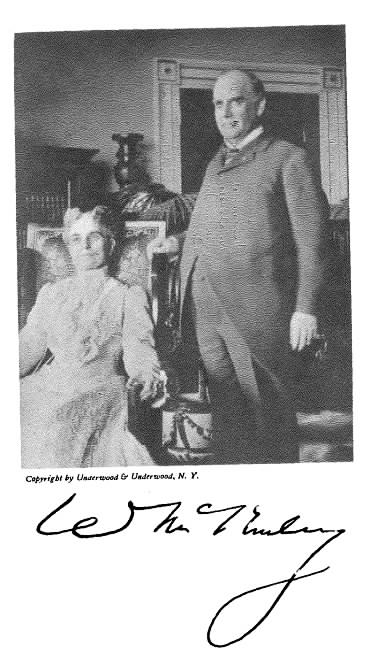
THE CONQUEST OF POVERTY 701
There is something wrong when people are so worried and absorbed in making a living that they can not make a life.
We were made for happiness, to express joy and gladness, to be prosperous. The trouble with us is that we do not trust the law of infinite supply, but close our natures so that abundance cannot flow to us. In other words, we do not obey the law of attraction. We keep our minds so pinched and our faith in ourselves so small, so narrow, that we strangle the inflow of supply. Abundance follows a law as strict as that of mathematics. If we obey it, we get the flow; if we strangle it, we cut it off. The trouble is not in the supply; there is abundance awaiting everyone on the globe.
Prosperity begins in the mind, and is impossible with a mental attitude which is hostile to it. We can not attract opulence mentally by a poverty-stricken attitude which is driving away what we long for. It is fatal to work for one thing and to expect something else. No matter how much one may long for prosperity, a miserable, poverty-stricken, mental attitude will close all the avenues to it. The weaving of the web is bound to follow the pattern. Opulence and prosperity can not come in through poverty-thought and failure-thought channels. They must be created mentally first. We must think prosperity before we can come to it.
How many take it for granted that there are plenty of good things in this world for others, comforts, luxuries, fine houses, good clothes, opportunity for travel, leisure, but not for them! They settle down into the conviction that these things do not belong to them, but are for those in a very different class.
702 PUSHING TO THE FRONT
But why are you in a different class? Simply because you think yourself into another class; think yourself into inferiority; because you place limits for yourself. You put up bars between yourself and plenty. You cut off abundance, make the law of supply inoperative for you, by shutting your mind to it. And by what law can you expect to get what you believe you can not get? By what philosophy can you obtain the good things o f the world when you are thoroughly convinced that they are not for you?
One o f the greatest curses o f the world is the belief in the necessity o f poverty. Most people have a strong conviction that some must necessarily be poor; that they were made to be poor. But there was no poverty, no want, no lack, in the Creator's plan for man. There need not be a poor person on the planet. The earth is full of resources which we have scarcely yet touched. We have been poor in the very midst of abundance, simply, because of our own blighting limiting thought.
We are discovering that thoughts are things, that they are incorporated into the life and form part of the character, and if we harbor the fear thought, the lack thought, if we are afraid of poverty, of coming to want, this poverty thought, fear thought incorporates itself in the very life texture and makes us the magnet to attract more poverty like itself.
It was not intended that we should have such a hard time getting a living, that we should just manage to squeeze along, to get together a few comforts, to spend about all of our time making a living instead of making a life. The life abundant, full, free, beautiful, was intended for us.
Let us put up a new image, a new ideal of plenty, of abundance. Have we not worshiped the God of poverty, of lack, of want, about long enough? Let us hold the thought that God is our great supply, that if we can keep in tune, in close touch with Him, so that we can feel our at-one-ness with Him, the great Source of all supply, abundance will flow to us and we shall never again know want.
THE CONQUEST OF POVERTY 703
There is nothing which the human race lacks so much as unquestioned, implicit confidence in the divine source of all supply. We ought to stand in the same relation to the Infinite Source as the child does to its parents. The child does not say, " I do not dare eat this food for fear that I may not get any more." It takes everything with absolute confidence and assurance that all its needs will be supplied, that there is plenty more where these things came from.
We do not have half good enough opinions of our possibilities; do not expect half enough of ourselves; we do not demand half enough, hence the meagerness, the stinginess of what we actually get. We do not demand the abundance which belongs to us, hence the leanness, the lack of fulness, the incompleteness of our lives. We do not demand royally enough. We are content with too little of the things worth while. It was intended that we should live the abundant life, that we should have plenty of everything that is good for us. No one was meant to live in poverty and wretchedness. The lack o f anything that is desirable is not natural to the constitution of any human being.
Erase all the shadows, all the doubts and fears, and the suggestions of poverty and failure from your mind. When you have become master of your thought, when you have once learned to dominate your mind, you will find that things will begin to come your way. Discouragement, fear, doubt, lack of self-confidence, are the germs which have killed the prosperity and happiness of tens of thousands of people. Every man must play the part of his ambition. If you are trying to be a successful man you must play the part. If you are trying to demonstrate opulence, you must play it, not weakly, but vigorously, grandly. You must feel opulent, you must think opulence, you must appear opulent.
704 PUSHING TO THE FRONT
Your bearing must be filled with confidence. You must give the impression of your own assurance, that you are large enough to play your part and to play it superbly. Suppose the greatest actor living were to have a play written for him in which the leading part was to represent a man in the process of making a fortune - a great, vigorous, progressive character, who conquered by his very presence. Suppose this actor, in playing the part, were to dress like an unprosperous man, walk on the stage in a stooping, slouchy, slipshod manner, as though he had no ambition, no energy or life, as though he had no real faith that he could ever make money or be a success in business; suppose he went around the stage with an apologetic, shrinking, skulking manner, as much as to say, " Now, I do not believe that I can ever do this thing that I have attempted; it is too big for me.
Other people have done it, but I never thought that I should ever be rich or prosperous. Somehow good things do not seem to be meant for me. I am just an ordinary man, I haven't had much experience and I haven't much confidence in myself, and it seems presumptuous for me to think I am ever going to be rich or have much influence in the world.": What kind of an impression would he make upon the audience? Would he give confidence, would he radiate power or forcefulness would he make people think that that kind of a weakling could create fortune, could manipulate conditions which would produce money? Would not everybody say that the man was a failure? Would they not laugh at the idea of his conquering anything?
Poverty itself is not so bad as the poverty thought. It is the conviction that we are poor and must remain so that is fatal. It is the attitude of mind that is destructive, the facing toward poverty, and feeling so reconciled to it that one does not turn about face and struggle to get away from it with a determination which knows no retreat.
THE CONQUEST OF POVERTY 705
If we can conquer inward poverty, we can soon conquer poverty of outward things, for, when we change the mental attitude, the physical changes to correspond. Holding the poverty thought, keeps us in touch with poverty-stricken, poverty-producing conditions; and the constant thinking of poverty, talking poverty, living poverty, makes us mentally poor. This is the worst kind of poverty.
We can not travel toward prosperity until the mental attitude faces prosperity. As long as we look toward despair, we shall never arrive at the harbor of delight. The man who persists in holding his mental attitude toward poverty, or who is always thinking of his hard luck and failure to get on, can by no possibility go in the opposite direction, where the goal of prosperity lies.
There are multitudes of poor people in this country who are half satisfied to remain in poverty, and who have ceased to make a desperate struggle to rise out of it. They may work hard, but they have lost the hope, the expectation of getting an independence. Many people keep themselves poor by fear of poverty, allowing themselves to dwell upon the possibility of coming to want, of not having enough to live upon, by allowing themselves to dwell upon conditions of poverty.
When you make up your mind that you are done with poverty forever; that you will have nothing more to do with it; that you are going to erase every trace of it from your dress, your personal appearance, your manner, your talk, your actions, your home; that you are going to show the world your real mettle; that you are no longer going to pass for a failure; that you have set your face persistently toward better things - a competence, an independence - and that nothing on
706 PUSHING TO THE FRONT
earth can turn you from your resolution, you will be amazed to find what a reenforcing power will come to you, what an increase of confidence, reassurance, and self-respect.
Resolve with all the vigor you can muster that, since there are plenty of good things in the world for everybody, you are going to have your share, without injuring anybody else or keeping others back. It was intended that you should have a competence, an abundance. It is your birthright. You are success organized, and constructed for happiness, and you should resolve to reach your divine destiny.
CHAPTER LVII
A NEW WAY OF BRINGING UP CHILDREN
"Only a thought, but the work it wrought
Could never by tongue or pen be taught,
But it ran through a life like a thread of gold,
And the life bore fruit a hundredfold."
Not long ago there was on exhibition in New York a young horse which can do most marvelous things; and yet his trainer says that only five years ago he had a very bad disposition. He was fractious, and would kick and bite, but now instead of displaying his former viciousness, he is obedient, tractable, and affectionate. He can readily count and reckon up figures, can spell many words, and knows what they mean.
In fact this horse seems to be capable of learning almost anything. Five years of kindness have completely transformed the vicious yearling colt. He is very responsive to kindness, but one can do nothing with him by whipping or scolding him. His trainer says that in all the five years he has never touched him with a whip but once.
I know a mother of a large family of children who has never whipped but one of them, and that one only once. When her first child was born people said she was too good-natured to bring up children, that she would spoil them, as she would not correct or discipline them, and would do nothing but love them. But this love has proved the great magnet which has held the family together in a marvelous way. Not one of those children has gone astray.
707
708 PUSHING TO THE FRONT
They have all grown up manly and womanly, and love has been wonderfully developed in their natures. Their own affection responded to the mother's love and has become their strongest motive. Today all her children look upon "Mother" as the grandest figure in the world. She has brought out the best in them because she saw the best in them. The worst did not need correcting or repressing, because the expulsive power of a stronger affection drove out of the nature or discouraged the development of vicious tendencies which, in the absence of a great love, might have become dominant and ruined the life.
Love is a healer, a life-giver, a balm for our hurts. All through the Bible are passages which show the power of love as a healer and life-lengthener. " With long life will I satisfy him," said the Psalmist, "because he hath set his love upon me." When shall we learn that the great curative principle is love, that love heals because it is harmony? There can be no discord where it reigns. Love is serenity, is peace and happiness.
Love is the great disciplinarian, the supreme harmonizer, the true peacemaker. It is the great balm for all that blights happiness or breeds discontent, a sovereign panacea for malice, revenge, and all the brutal propensities. As cruelty melts before kindness, so the evil passions and their antidote in sweet charity and loving sympathy.
The mother is the supreme shaper of life and destiny. Many a mother's love for her children has undoubtedly stayed the ravages of some fatal disease. Her conviction that she was necessary to them and her great love for them have braced her, and have enabled her to successfully cope with the enemies of her life for a long time.
One mother I know seems to have the magical art of curing nearly all the ills of her children by love.
BRINGING UP CHILDREN 709
If any member of the family has any disagreeable experience, is injured or pained, hurt or unhappy, he immediately goes to the mother for the universal balm, which heals all troubles.
This mother has a way of drawing the troubled child out of discord into the zone of perpetual harmony. If he is swayed by jealousy, hatred, or anger, she applies the love solvent, the natural antidote for these passion poisons. She knows that scolding a child when he is already suffering more than he can bear is like trying to put out a fire with kerosene.
Our orphan asylums give pathetic illustration of how quickly the child mind matures and ages prematurely without the uplift and enrichment of the mother love, the mother sympathy, - parental protection and home influence. It is well known that children who lose their parents and are adopted by their grandparents and live in the country, where they do not have an opportunity to mingle much with other children, adopt the manners and mature vocabulary of their elders, for they are very imitative, and become little men and women before they are out of their youth.
Think of a child reared in the contaminating atmosphere of the slums, where everything is dripping with suggestions of vulgarity and wickedness of every description. Think of his little mind being filled with profanity, obscenity, and filth of all kinds! Is it any wonder that he becomes so filled with vicious, criminal suggestions that he tends to become like his environment?
Contrast such a child with one that is brought up in an atmosphere of purity, refinement, and culture, and whose mind is always filled with noble, uplifting suggestions of the true, the beautiful, and the lovely. What a difference in the chances of these two children, and without any special effort or choice of their own!
710 PUSHING TO THE FRONT
One mind is trained upward, towards the light, the other downward, towards darkness. What chance has a child to lead a noble life when all his first impressionable years are saturated with the suggestion of evil, when jealousy and hatred, revenge, quarreling and bickering, all that is low and degrading, fill his ears and eyes?
How important it is that the child should only hear and see and be taught that which will make for beauty and for truth, for loveliness and grandeur of character! We ought to have a great deal of charity for those whose early lives have been soaked in evil, criminal, impurity thoughts. The minds of children are like the sensitive plates of a photographer, recording every thought or suggestion to which they are exposed. These early impressions make up the character and determine the future possibility.
If you would encourage your child and help him to make the most of himself, inject bright, hopeful, optimistic, unselfish pictures into his atmosphere. To stimulate and inspire his confidence and unselfishness means growth, success, and happiness for him in his future years, while the opposite practice may mean failure and misery. It is of infinitely more importance to hold the right thought towards a child, the confident, successful, happy, optimistic thought, than to leave him a fortune without this. With his mind properly trained he could not fail, could not be unhappy, without reversing the whole formative process of his early life.
Keep the child's mind full of harmony, of truth, and there will be no room for discord, for error. It is cruel constantly to remind children of their deficiencies or peculiarities.
BRINGING UP CHILDREN 711
Sensitive children are often seriously injured by the suggestion of inferiority and the exaggeration of defects which might have been entirely overcome. This everlasting harping against the bad does not help the child half as much as keeping his little mind full of the good, the beautiful, and the true. The constant love suggestion, purity suggestion, nobility suggestion will so permeate the life after a while that there will be nothing to attract the opposite. It will be so full of sunshine, so full of beauty and love, that there will be little or no place for their opposites.
The child's self-confidence should be buttressed, braced, and encouraged in every possible way; not that he should be taught to overestimate his ability and his possibilities, but the idea that he is God's child, that he is heir to an Infinite inheritance, magnificent possibilities, should be instilled into the very marrow of his being.
A great many boys, especially those who are naturally sensitive, shy, and timid, are apt to suspect that they lack the ability which others have. It is characteristic of such youths that they distrust their own ability and are very easily discouraged or encouraged. It is a sin to shake or destroy a child's self-confidence, to reflect upon his ability or to suggest that he will never amount to much. These discouraging words, like initials cut in the sapling, grow wider and wider with the years, until they become great ugly scars in the man.
Most parents do not half realize how impressionable children are, and how easily they may be injured or ruined by discouragement or ridicule. Children require a great deal of appreciation, praise, and encouragement. They live upon it. It is a great tonic to them. On the other hand, they wither very quickly under criticism, blame, or depreciation. Their sensitive natures can not stand it.
712 PUSHING TO THE FRONT
It is the worst kind of policy to be constantly blaming, chiding them, and positively cruel, bordering on criminality even, to suggest to them that they are mentally deficient or peculiar, that they are stupid and dull, and that they will probably never amount to anything in the world.
How easy it is for a parent or teacher to ruin a child's constructive ability, to change a naturally, positive creative mind to a negative, non-producing one, by chilling the child's enthusiasm, by projecting into his plastic mind the idea that he is stupid, dull, lazy, a " blockhead " and good-for-nothing; that he will never amount to anything; that it is foolish for him to try to be much, because he has not the ability or physical stamina to enable him to accomplish what many others do. Such teaching would undermine the brightest intellect.
I have known of an extremely sensitive, timid boy who had a great deal of natural ability, but who developed very slowly, whose whole future was nearly ruined by his teacher and parents constantly telling him that he was stupid and dull, and that he probably never would amount to anything. A little praise, a little encouragement, would have made a superb man of this youth, because he had the material for the making of one. But he actually believed that he was not up to the ordinary mental standard; he was thoroughly convinced that he was mentally deficient, and this conviction never entirely left him..
We are beginning to discover that it is much easier to attract than to coerce. Praise and encouragement will do infinitely more for children than threats and punishment. The warm sunshine is more than a match for the cold, has infinitely more influence in developing the bud, the blossom, and the fruit than the wind and the tempest, which suppress what responds voluntarily to the genial influence of the sun's rays.
We all know how boys will work like troopers under the stimulus of encouragement and praise. Many parents and teachers know this, and how fatal theopposite policy is.
BRINGING UP CHILDREN 713
But unfortunately a great majority do not appreciate the magic of praise and appreciation. Pupils will do anything for a teacher who is always kind, considerate, and interested in them; but a cross, fractious, nagging one so arouses their antagonism that it often proves a fatal bar to their progress. There must be no obstruction, no ill-feeling between the teacher and the pupil, if the best results are to be obtained.
Many parents are very much distressed by the waywardness of their children; but this waywardness is often more imaginary than real. A large part of children's pranks and mischief is merely the outcome of exuberant youthful spirits, which must have an outlet, and if they are suppressed, their growth is fatally stunted. They are so full of life, energy, and so buoyant that they can not keep still. They must do something. Give them an outlet for their animal spirits. Love is the only power that can regulate and control them.
Do not try to make men of your boys or women of your girls. It is not natural. Love them. Make home just as happy a place as possible, and give them rein, freedom. Encourage them in their play, for they are now in their fun age. Many parents ruin the larger, completer, fuller development of their children by repressing them, destroying their childhood, their play days, by trying to make them adults. There is nothing sadder in American life than the child who has been robbed of its childhood.
Children are little animals, sometimes selfish, often cruel, due to the fact that some parts of their brain develop faster than others, so that their minds are temporarily thrown out of balance, sometimes even to cruel or criminal tendencies, but later the mind becomes more symmetrical and the vicious tendencies usually disappear.
714 PUSHING TO THE FRONT
Their moral faculties and sense of responsibility unfold more slowly than other traits, and, of course, they will do mischievous things; but it is a fatal mistake to be always suppressing them. They must give out their surplus energy in some way. Encourage them to romp. Play with them. It will keep you young, and will link them to you with hooks of steel. Do not be afraid of losing your dignity. If you make home the happiest, most cheerful place on earth for your children, if you love them enough, there is little danger of their becoming bad.
Thousands of parents by being so severe with their children, scolding and criticizing them and crushing their childhood, make them secretive and deceitful instead of open and transparent, and estrange them and drive them away from home. A man ought to look back upon the home of his childhood as the Eden of his life, where love reigned, instead of as a place where a long-faced severity and harshness ruled, where he was suppressed and his fun-loving spirits snuffed out.
Every mother, whether she realizes it or not, is constantly using the power of suggestion in rearing her children, healing all their little hurts. She kisses the bumps and bruises and tells the child all is well again, and he is not only comforted, but really believes that the kiss and caress have magic to cure the injury. The mother is constantly antidoting and neutralizing the child's little troubles and discords by giving the opposite thought and applying the love-elixir.
It is possible, through the power of suggestion, to develop in children faculties upon which health, success, and happiness depend. Most of us know how dependent our efficiency is upon our moods, our courage, hope. If the cheerful, optimistic faculties were brought out and largely developed in childhood, it would change our whole outlook upon life, and we would not drag through years of half-heartedness, discouragement, and mental anguish, our steps dogged by fear, apprehension, anxiety, and disappointment.
BRINGING UP CHILDREN 715
One reason why we have such poor health is because we have been steeped in poor-health thought from infancy. We have been saturated with the idea that pain, physical suffering, and disease, are a part of life; necessary evils which can not be avoided. We have had it so instilled into us that robust health is the exception and could not be expected to be the rule that we have come to accept this unfortunate condition of things as a sort of fate from which we can not hope to get away. The child hears so much sick talk, is cautioned so much about the dangers of catching all sorts of diseases, that he grows up with the conviction that physical discords, aches, pains, all discomfort and suffering, are a necessary part of his existence, that at any time disease is liable to overtake him and ruin his happiness and thwart his career.
Think of what the opposite training would do for the child; if he were taught that health is the everlasting fact and that disease is but the manifestation of the absence of harmony! Think what it would mean to him if he were trained to believe that abounding health, rich, full, complete, instead of sickness, that certainty instead of uncertainty were his birthright! Think what it would mean for him to expect this during all his growing years, instead of building into his consciousness the opposite, instead of being saturated with the sick thought and constantly being cautioned against disease and the danger of contracting it!
The child should be taught that God never created disease, and never intended that we should suffer; that we were made for abounding health and happiness, made for enjoyment not for pain-made to be happy, not miserable, to express harmony, not discord. Children are extremely credulous.
716 PUSHING TO THE FRONT
They are inclined to believe everything that an adult tells them, especially the nurse, the father and mother, and their older brothers and sisters. Even the things that are told them in jest they take very seriously; and their imaginations are so vivid and their little minds so impressionable that they magnify everything. They are often punished for telling falsehoods, when the fault is really due to their excessively active imagination.
Many ignorant or thoughtless parents and nurses constantly use fear as a means of governing children. They fill their little minds full of all sorts of fear stories and terror pictures which may mar their whole lives. They often buy soothing syrups and all sorts of sleeping potions to prevent the little ones from disturbing their rest at night, or to keep them quiet and from annoying them in the day time, and thus are liable to stunt their brain development.
Even if children were not seriously injured by fear, it would be wicked to frighten them, for it is wrong to deceive them. If there is anything in the world that is sacred to the parent or teacher, it is the unquestioned confidence of children. I believe that the beginnings of deterioration in a great many people who go wrong could be traced to the forfeiting of the children's respect and confidence by the parents and teachers. We all know from experience that confidence once shaken is almost never entirely restored.
Even when we forgive, we seldom forget; the suspicion often remains. There should never be any shadows between the child and his parents and teachers. He should always be treated with the utmost frankness, transparency, sincerity. The child's respect is worth everything to his parents. Nothing should induce them to violate it or to shake it. It should be regarded as a very sacred thing, a most precious possession.
BRINGING UP CHILDREN 717
Think of the shock which must come to a child when he grows up and discovers that those he has trusted implicitly and who seemed almost like gods to him have been deceiving him for years in all sorts of ways. I have heard mothers say that they dreaded to have their children grow up and discover how they had deceived them all through their childhood; to have them discover that they had resorted to fear, superstition, and all sorts of deceits in order to govern or influence them.
Whenever you are tempted to deceive a child again, remember that the time will come when he will understand, and that he will receive a terrible shock when he discovers that you, up to whom he has looked with such implicit trust, such simple confidence, have deceived him. Parents should remember that every distressing, blood-curdling story told to a child, every superstitious fear instilled into his young life, the mental attitude they bear towards him, the whole treatment they accord him, are making phonographic records in his nature which will be reproduced with scientific exactness in his future life.
Whatever you do, never punish a child when he is suffering with fear. It is a cruel thing to punish children the way most mothers and teachers do, anyway; but to punish a child when he is already quivering with terror is extremely distressing, and to whip a child when you are angry is brutal. Many children never quite forget or forgive a parent or teacher for this cruelty.
Parents, teachers, friends often put a serious stumbling-block in the way of a youth by suggesting that he ought to study for the ministry, or the law; to be a physician, an engineer, or enter some other profession or business for which he may be totally unfitted.
718 PUSHING TO THE FRONT
I know a man whose career was nearly ruined by the suggestion of his grandmother when he was a child that she would educate him for the church, and it was her wish for him to become a clergyman. It was not that she saw in the little child any fitness for this holy office, but because she wanted a clergyman in the family, and she often reminded him that he must not disappoint her. The boy, who idolized his grand mother, pondered this thought until he became a young man. The idea possessed him so strongly that every time he tried to make a choice of a career the picture of a clergyman rushed first to his mind, and, although he could see no real reason why he should become a clergyman, the suggestion that he ought to worked like leaven in his nature and kept him from making any other choice until too late to enable him to succeed to any great extent.
I know a most brilliant and marvelously fascinating woman who is extremely ambitious to make a name for herself, but she is almost totally lacking in her ability to apply herself, even in the line where her talent is greatly marked. She seems to be abundantly endowed in every faculty and quality except this. Now, if her parents had known the secret of correcting mental deficiencies, building up weak faculties, this girl could have been so trained that she would probably have had a great career and made a world-wide name for herself.
I have in mind another woman, a most brilliant linguist, who speaks fluently seven languages. She is a most fascinating conversationalist and impresses one as having read everything, but, although in good health, she is an object of charity today, simply because she has never developed her practical faculties at all, and this because she was never trained to work, to depend upon herself even in little things when she was a child. She was fond of her books, was a most brilliant scholar, but never learned to be practical or to do anything herself.
BRINGING UP CHILDREN 719
Her self-reliance and independence were never developed. All of her early friends predicted a brilliant future for her, but because of the very consciousness of possessing so many brilliant qualities and of the fact that she was flattered during all her student life and not obliged to depend upon herself for anything, she continued to exercise her strong scholarship faculties only, little dreaming that the neglect to develop her weaker ones would wreck her usefulness and her happiness.
It is not enough to possess ability. We must be able to use it effectively, and whatever interferes with its activity to that extent kills efficiency. There are many people who are very able in most qualities and yet their real work is seriously injured and often practically ruined, or they are thrown into the mediocre class, owing to some weakness or deficiency which might have been entirely remedied by cultivation and proper training in earlier life.
I know a man of superb ability in nearly every respect who is so timid and shy that he does not dare push himself forward or put himself in the position of greatest advantage, does not dare begin things. Consequently his whole life has been seriously handicapped.
If children could only be taught to develop a positive, creative mind, it would be of infinitely more value and importance to them than inheriting a fortune with a non-productive one. Youths should be taught that the most valuable thing to learn in life next to integrity is how to build their minds up to the highest possible producing point, the highest possible state of creative efficiency.
The most important part of the education of the future will be to increase the chances of success in life and lessen the danger of failure and the wrecking of one's career by building up weak and deficient faculties, the suggestion of his grandmother when he was a child that she would educate him for the church, and it was her wish for him to become a clergyman.
718 PUSHING TO THE FRONT
It was not that she saw in the little child any fitness for this holy office, but because she wanted a clergyman in the family, and she often reminded him that he must not disappoint her. The boy, who idolized his grandmother, pondered this thought until he became a young man. The idea possessed him so strongly that every time he tried to make a choice of a career the picture of a clergyman rushed first to his mind, and, although he could see no real reason why he should become a clergyman, the suggestion that he ought to worked like leaven in his nature and kept him from making any other choice until too late to enable him to succeed to any great extent.
I know a most brilliant and marvelously fascinating woman who is extremely ambitious to 'make a name for herself, but she is almost totally lacking in her ability to apply herself, even in the line where her talent is greatly marked. She seems to be abundantly endowed in every faculty and quality except this. Now, if her parents had known the secret of correcting mental deficiencies, building up weak faculties, this girl could have been so trained that she would probably have had a great career and made a world-wide name for herself.
I have in 'mind another woman, a most brilliant linguist, who speaks fluently seven languages. She is a most fascinating conversationalist and impresses one as having read everything, but, although in good health, she is an object of charity to-day, simply because she has never developed her practical faculties at all, and this because she was never trained to work, to depend upon herself even in little things when she was a child. She was fond of her books, was a most brilliant scholar, but never learned to be practical or todo anything herself.
BRINGING UP CHILDREN 719
Her self-reliance and independence were never developed. All of her early friends predicted a brilliant future for her, but because of the very consciousness of possessing so many brilliant qualities and of the fact that she was flattered during all her student life and not obliged to depend upon herself for anything, she continued to exercise her strong scholarship faculties only, little dreaming that the neglect to develop her weaker ones would wreck her usefulness and her happiness.
It is not enough to possess ability. We must be able to use it effectively, and whatever interferes with its activity to that extent kills efficiency. There are many people who are very able in most qualities and yet their real work is seriously injured and often practically ruined, or they are thrown into the mediocre class, owing to some weakness or deficiency which might have been entirely remedied by cultivation and proper training in earlier life.
I know a man of superb ability in nearly every respect who is so timid and shy that he does not dare push himself forward or put himself in the position of greatest advantage, does not dare begin things. Consequently his whole life has been seriously handicapped.
If children could only be taught to develop a positive, creative mind, it would be of infinitely more value and importance to them than inheriting a fortune with a non-productive one. Youths should be taught that the most valuable thing to learn in life next to integrity is how to build their minds up to the highest possible producing point, the highest possible state of creative efficiency.
The most important part of the education of the future will be to increase the chances of success in life and lessen the danger of failure and the wrecking of one's career by building up weak and deficient faculties, correcting one-sided tendencies, so that the individual will become more level-headed, better balanced, and have a more symmetrical mind.
720 PUSHING TO THE FRONT
Many students leave school and college knowing a great deal, but without a bit of improvement in their self-confidence, their initiative ability. They are just as timid, shy, and self-depreciatory as before entering. Now, what advantage is it to send a youth out into the world with a head full of knowledge but without the confidence or assurance to use it effectively, or the ability to grapple with life's problems with that vigor and efficiency which alone can bring success?
It is an unpardonable reflection upon a college which turns out youths who dare not say their souls are their own, who have not developed a vigorous self-confidence, assurance, and initiative. Hundreds of students are turned out of our colleges every year who would almost faint away if they were suddenly called upon to speak in public, to read a resolution, or even to put a motion.
The time will come when an education will enable a youth while upon his feet in public to express himself forcefully, to use the ability he has and summon his knowledge quickly. He will be so trained in self-control, in self-confidence, in level-headedness, that he will not be thrown off his guard in an emergency. The future education will mean that what the student knows will be available, that he can utilize it at will, that he will be trained to use it efficiently. Many of our graduates leave college every year as weak and inefficient in many respects as when they began their education. What is education for if it is not to train the youth to be the master of his faculties, master of every situation, able to summon all of his reserves of knowledge and power at will?
A college graduate, timid, stammering, blushing, and confused, when suddenly called upon to use his knowledge whether in public or elsewhere, ought to be an unknown thing.
BRINGING UP CHILDREN 721
Of what use is education which can not be summoned at will? Of what good are the reserves of learning which can not be marshalled quickly when we need them, which do not help one to be master of himself and the situation, whatever it may be?
The time will come when no child will be allowed to grow up without being taught to believe in himself, to have great confidence in his ability. This will be a most important part of his education, for if he believes in himself enough, he will not be likely to allow a single deficient faculty or weakness to wreck his career. He should be reared in the conviction that he was sent into this world with a mission and that he is going to deliver it.
Every youth should be taught that it was intended he should fill a place in the world which no one else can fill; that he should expect to fill it, and train himself for it; taught that he was made in the Creator's image, that in the truth of his being he is divine, perfect, immortal, and that the image of God can not fail. He should be taught to think grandly of himself, to form a sublime estimate of his possibilities and of his future. This will increase his self-respect and self-development in well-proportioned living.
CHAPTER LVIII
THE HOME AS A SCHOOL OF GOOD MANNERS
Not long ago I visited a home where such exceptionally good breeding prevailed and such fine manners were practised by all the members of the family, that it made a great impression upon me. This home is the most remarkable school of good manners, refinement, and culture generally, I have ever been in. The parents are bringing up their children to practise their best manners on all occasions. They do not know what company manners mean.
The boys have been taught to treat their sisters with as much deference as though they were stranger guests. The politeness, courtesy, and consideration which the members of this family show toward one another are most refreshing and beautiful. Coarseness, gruffness, lack of delicacy find no place there. Both boys and girls have been trained from infancy to make themselves interesting, and to entertain and try to make others happy.
The entire family make it a rule to dress before dinner in the evening, just as they would if special company were expected. Their table manners are specially marked. At table every one is supposed to be at his best, not to bring any grouch, or a long or sad face to it, but to contribute his best thought, his wittiest sayings, to the conversation. Every member of the family is expected to do his best to make the meal a really happy occasion. There is a sort of rivalry to see who can be the most entertaining, or contribute the spiciest bits of conversation.
722
SCHOOL OF GOOD MANNERS 723
There is no indication of dyspepsia in this family, because every one is trained to laugh and be happy generally, and laughter is a fatal enemy of indigestion.
The etiquette of the table is also strictly observed. Every member of the family tries to do just the proper thing and always to be mindful of others' rights. Kindness seems to be practised for the joy of it, not for the sake of creating a good impression on friends or acquaintances. There is in this home an air of peculiar refinement which is very charming. The children are early taught to greet callers and guests cordially, heartily, in real Southern, hospitable fashion, and to make them feel that they are very welcome. They are taught to make every one feel comfortable and at home, so that there will be no sense of restraint.
As a result of this training the children have formed a habit of good behavior and are considered an acquisition to any gathering. They are not embarrassed by the awkward slips and breaks which are so mortifying to those who only wear their company manners on special occasions.
A stranger would almost think this home was a school of good breeding, and it is a real treat to visit these people. It is true the parents in this family have the advantage of generations of fine breeding and Southern hospitality back of them, which gives the children a great natural advantage. There is an atmosphere of chivalry and cordiality in this household which is really refreshing.
Many parents seem to expect that their children will pick up their good manners outside of the home, in school, or while visiting. This is a fatal mistake. Every home should be a school of good manners and good breeding.
724 PUSHING TO THE FRONT
The children should be taught that there is nothing more important than the development of an interesting personality, an attractive presence, and an ability to entertain with grace and ease. They should be taught that the great object of life is to develop a superb personality, a noble manhood and womanhood.
There is no art like that of a beautiful behavior, a fine manner, no wealth greater than that of a pleasing personality.
CHAPTER LIX
MOTHER
" ALL that I am or hope to be," said Lincoln, after he had become President, " I owe to my angel mother." " My mother was the making of me," said Thomas Edison recently, " She was so true, so sure of me; and I felt that I had some one to live for; some one I must not disappoint."
" All that I have ever accomplished in life," declared Dwight L. Moody, the great evangelist, " I owe to my mother."
"To the man who has had a good mother, all women are sacred for her sake," said Jean Paul Richter.
The testimony of great men in acknowledgment of the boundless debt they owe to their mothers would make a record stretching from the dawn of history to today. Few men, indeed, become great who do not owe their greatness to a mother's love and inspiration.
How often we hear people in every walk of life say, " I never could have done this thing but for my mother. She believed in me, encouraged me when others saw nothing in me."
" A kiss from my mother made me a painter," said Benjamin West.
A distinguished man of today says: " I never could have reached my present position had I not known that my mother expected me to reach it. From a child she made me feel that this was the position she expected me to fill; and her faith spurred me on and gave me the power to attain it."
725
726 PUSHING TO THE FRONT
Everything that a man has and is he owes to his mother. From her he gets health, brain, encouragement, moral character, and all his chances of success. "In the shadow of every great man's fame walks his mother," says Dorothy Dix." She has paid the price of his success. She went down into the Valley of the Shadow to give him life, and every day for years and years thereafter she toiled incessantly to push him on toward his goal.
" She gave the labor of her hands for his support; she poured into him ambition when he grew discouraged; she supplemented his weakness with her strength; she filled him with her hope and faith when his own failed. " At last he did the Big Thing, and people praised him, and acclaimed him, and nobody thought of the quiet, insignificant little woman in the background, who had been the real power behind the throne. Sometimes even the king himself forgets who was the kingmaker."
Many a man is enjoying a fame which is really due to a self-effacing, sacrificing mother. People hurrah for the governor, or mayor, or congressman, but the real secret of his success is often tucked away in that little unknown, unappreciated, unheralded mother. His education and his chance to rise may have been due to her sacrifices.
It is a strange fact that our mothers, the molders of the world, should get so little credit and should be so seldom mentioned among the world's achievers. The world sees only the successful son; the mother is but a round in the ladder upon which he has climbed. Her name or face is seldom seen in the papers; only her son is lauded and held up to our admiration. Yet it was that sweet, pathetic figure in the background that made his success possible.
MOTHER 727
The woman who merits the greatest fame is the woman who gives a brilliant mind to the world. The mothers of great men and women deserve just as much honor as the great men and women themselves, and they will receive it from the better understanding of the coming days.
" A wife may do much toward polishing up a man and boosting him up the ladder, but unless his mother first gave him the intellect to scintillate and the muscles to climb with, the wife labors in vain," continues Dorothy Dix, in the Evening Journal. "You can not make a clod shine. You can not make a mollusk aspire. You must have the material to work with, to produce results.
By the time a man is married his character is formed, and he changes very little. His mother has made him; and no matter how hard she tries, there is very little that his wife can do toward altering him. " It is not the philosophies, the theories, the code of ethics that a man acquires in his older years that really influence him. It is the things that he learned at his mother's knee, the principles that she instilled in him in his very cradle, the taste and habits that she formed, the strength and courage that she breathed into him.
" It is the childish impressions that count. It is the memory of whispered prayers, of bedtime stories, of old ideals held unfalteringly before a boy's gaze; it is half-forgotten songs, and dim visions of heroes that a mother taught her child to worship, that make the very warp and woof of the soul..
" It is the pennies, that a mother teaches a boy to save and the self-denial that she inculcates in doing it, that form the real foundation of the fortune of the millionaire.
It is the mother that loves books, and who gives her sons her love of learning, who bestows the great scholars, the writers, and orators, on, the world.
728 PUSHING TO THE FRONT
" It is the mother that worships science, who turns the eyes of the child upon her breast up to the wonder of the stars, and who teaches the little toddler at her side to observe the marvel of beast, and bird, and flower, and all created things, whose sons become the great astronomers and naturalists, and biologists." The very atmosphere that radiates from and surrounds the mother is the inspiration and constitutes the holy of holies of family life.
" In my mother's presence," said a prominent man, " I become for the time transformed into another person." How many of us have felt the truth of this statement ! How ashamed we feel when we meet her eyes, that we have ever harbored an unholy thought, or dishonorable suggestion! It seems impossible to do wrong while under that magic influence. What revengeful plans, what thoughts of hatred and jealousy, have been scattered to the four winds while in the mother's presence! Her children go out from communion with her resolved to be better men, nobler women, truer citizens.
" How many of us have stood and watched with admiration the returning victor of some petty battle, cheering until we were hoarse, exhausting ourselves with the vehemence of our enthusiasm," says a writer, " when right beside us, possibly touching our hand, was one greater than he? One whose battle has not been petty-whose conflict has not been of short duration, but has for us fought many a severe fight.
" When we had the scarlet fever or diphtheria and not one would come near us, who held the cup of cold water to our fever-parched lips? Who bent over us day and night and fought away with almost supernatural strength the greatest of all enemies - death? The world's greatest heroine-Mother! Who is it that each Sunday dinner-time chose the neck of the chicken that we might have the juicy wing or breast or leg?
MOTHER 729
Who is it stays home from the concert, the social, the play, that we may go with the others and not be stinted for small change? Who is it crucifies her love of pretty clothes, her desire for good things, her longing for pleasure that we may have all these? Who is it? Mother!"
The greatest heroine in the world is the mother. No one else makes such sacrifices, or endures anything like the suffering that she uncomplainingly endures for her children. What is the giving of one's life in battle or in a wreck at sea to save another, in comparison with the perpetual sacrifice of many mothers of a living death lasting for half a century or more? How the world's heroes dwindle in comparison with the mother heroine!
There is no one in the average family, the value of whose services begins to compare with those of the mother, and yet there is no one who is more generally neglected or taken advantage of. She must remain at home evenings, and look after the children, when the others are out having a good time. Her cares never cease. She is responsible for the housework, for the preparation of meals; she has the children's clothes to make or mend, there is company to be entertained, darning to be done, and a score of little duties which must often be attended to at odd moments, snatched from her busy days, and she is often up working at night, long after every one else in the house is asleep.
No matter how loving or thoughtful the father may be, the heavier burdens, the greater anxieties, the weightier responsibilities of the home, of the children, usually fall on the mother. Indeed, the very virtues of the good mother are a constant temptation to the other members of the family, especially the selfish ones, to take advantage of her.
730 PUSHING TO THE FRONT
They seem to take it for granted that they can put all their burdens on the patient, uncomplaining mother; that she will always do anything to help out, and to enable the children to have a good time; and in many homes, sad to say, the mother, just because of her goodness, is shamefully imposed upon and neglected. " Oh, mother won't mind, mother will stay at home." How often we hear remarks like this from thoughtless children! It is always the poor mother on whom the burden falls; and the pathetic thing is that she rarely gets much credit or praise.
Many mothers in the poor and working classes practically sacrifice all that most people hold dearest in life for their children. They deliberately impair their health, wear themselves out, make all sorts of sacrifices, to send a worthless boy to college. They take in washing, go out house-cleaning, do the hardest and most menial work, in order to give their boys and girls an education and the benefit of priceless opportunities that they never had; yet, how often, they are rewarded only with total indifference and neglect!
Some time ago I heard of a young girl, beautiful, gay, full of spirit and vigor, who married and had four children. Her husband died penniless, and the mother made the most heroic efforts to educate the children. By dint of unremitting toil and unheard of sacrifices and privations she succeeded in sending the boys to college and the girls to a boarding-school. When they came home, pretty, refined girls and strong young men, abreast with all the new ideas and tastes of their times, she was a worn out, commonplace old woman. They had their own pursuits and companions. She lingered unappreciated among them for two or three years, and then died, of some sudden failure of the brain. The shock of her fatal illness woke them to consciousness of the truth. They hung over her, as she lay prostrate, in an agony of grief.
MOTHER 731
The oldest son, as he held her in his arms, cried " You have been a good mother to us! " Her face brightened, her eyes kindled into a smile, and she whispered: " You never said so before, John." Then the light died out, and she was gone.
Many men spend more money on expensive caskets, flowers, and emblems of mourning than they ever spent on their poor, loving, self-sacrificing mothers for many years while alive. Men who, perhaps, never thought of carrying flowers to their mothers in life, pile them high on their coffins. Who can ever depict the tragedies that have been enacted in the hearts of American mothers, who have suffered untold tortures from neglect, indifference, and lack of appreciation?
What a pathetic story of neglect many a mother's letters from her grown-up children could tell! A few scraggy lines, a few sentences now and then, hurriedly written and mailed-often to ease a troubled conscience - mere apologies for letters, which chill the mother heart.
I know men who owe their success in life to their mother; who have become prosperous and influential, because of the splendid training of the self-sacrificing mother, and whose education was secured at an inestimable cost to her, and yet they seldom think of carrying to her flowers, confectionery, or little delicacies, or of taking her to a place of amusement, or of giving her a vacation or bestowing upon her any of the little attentions and favors so dear to a woman's heart. They seem to think she is past the age for these things, that she no longer cares for them, that about all she expects is enough to eat and drink, and the simplest kind of raiment.
These men do not know the feminine heart which never changes in these respects, except to grow more appreciative of the little attentions, the little considerations, and thoughtful acts which meant so much to them in their younger days.
732 PUSHING TO THE FRON'T
Not long ago I heard a mother, whose sufferings and sacrifices for her children during a long and trying struggle with poverty should have given her a monument, say, that she guessed she'd better go to an old ladies' home and end her days there. What a picture that was ! An aged woman with white hair and a sweet, beautiful face; with a wonderful light in her eye; calm, serene, and patient, yet dignified, whose children, all of whom are married and successful, made her feel as if she were a burden! They live in luxurious homes, but have never offered to provide a home for the poor, old rheumatic mother, who for so many years slaved for them. They put their own homes, stocks, and other property in their wives' names, and while they pay the rent of their mother's meagerly furnished rooms and provide for her actual needs, they apparently never think what joy it would give her to own her own home, and to possess some pretty furnishings, and a few pictures.
In many cases men through thoughtlessness do not provide generously for their mothers even when well able to. They seem to think that a mother can live most anywhere, and most anyway; that if she has enough to supply her necessities she is satisfied. Just think, you prosperous business men, how you would feel if the conditions were reversed, if you were obliged to take the dependent, humiliating position of your mother
Whatever else you are obliged to neglect, take no chances of giving your mother pain by neglecting her, and of thus making yourself miserable in the future. The time may come when you will stand by her bedside, in her last sickness, or by her coffin, and wish that you had exchanged a little of your money for more visits and more attentions and more little presents to your mother; when you will wish that you had cultivated her more, even at the cost of making a little less money.
MOTHER 733
There is no one else in this world who can take your mother's place in your life. And there is no remorse like that which comes from the remembrance of ill treating, abusing, or being unkind to one's mother. These things stand out with awful vividness and terrible clearness when the mother is gone forever from sight, and you have time to contrast your treatment with her long suffering, tenderness, and love, and her years of sacrifice for you.
One of the most painful things I have ever witnessed was the anguish of a son who had become wealthy and in his prosperity neglected the mother, whose sacrifices alone had made his success possible. He did not take the time to write to her more than twice a year, and then only brief letters. He was too busy to send a good long letter to the poor old lonely mother back in the country, who had risked her life and toiled and sacrificed for years for him!
Finally, when he was summoned to her bedside in the country, in her last sickness, and realized that his mother had been for years without the ordinary comforts of life, while he had been living in luxury, he broke down completely. And while he did everything possible to alleviate her suffering, in the few last days that remained to her on earth, and gave her an imposing burial, what torture he must have suffered, at this pitiful picture of his mother who had sacrificed everything for him
" The regrets for thoughtless acts and indifference to admonitions now felt and expressed by many living sons of dead mothers will, in time, be felt and expressed by the living sons of living mothers," says Richard L. Metcalfe, in the " Commoner." " The boys of today who do not understand the value of the mother's companionship will yet sing - with those who already know - this song of tribute and regret:
734, PUSHING TO THE FRONT
"'The hours I spent with thee, dear heart, Are as a string of pearls to me;
I count them over, every one apart, My rosary.
"'Each hour a pearl, each pearl a prayer, To still a heart in absence wrung;
I tell each bead unto the end, and there A cross is hung.
`0 memories that bless-and burn! Oh mighty gain and bitter loss!
I kiss each bead and strive at last to learn
To kiss the cross, Sweet heart, To kiss the cross."'
No man worthy of the name ever neglects or forgets his mother. I have an acquaintance, of very poor parentage, who had a hard struggle to get a start in the world; but when he became prosperous and built his beautiful home, he finished a suite of rooms in it especially for his mother, furnished them with all conveniences and comforts possible, and insisted upon keeping a maid specially for her. Although she lives with her son's family, she is made to feel that this part of the great home is her own, and that she is as independent as though she lived in her own house. Every son should be ambitious to see his mother as well provided for as his wife.
Really great men have always reverenced and cared tenderly for their mothers. President McKinley provided in his will that, first of all, his mother should be made comfortable for life. The first act of Garfield, after he was inaugurated President, was to kiss his aged mother, who sat near him, and who said this was the proudest and happiest moment of her life.
MOTHER 735
Ex-President Loubet of France, even after his elevation to the presidency, took great pride in visiting his mother, who was a humble market gardener in a little French village. A writer on one occasion, describing a meeting between this mother and her son, says " Her noted son awaited her in the market-place, as she drove up in her little cart loaded with vegetables. Assisting his mother to alight, the French President gave her his arm and escorted her to her accustomed seat. Then holding over her a large umbrella, to shield her from the threatening weather, he seated himself at her side, and mother and son enjoyed a long talk together."
I once saw a splendid young college graduate introduce his poor, plainly dressed old mother to his classmates with as much pride and dignity as though she was a queen. Her form was bent, her hands were calloused, she was prematurely old, and much of this deterioration was caused by all sorts of drudgery to help her boy to pay his college expenses.
I have seen other college men whose mothers had made similar sacrifices, and who were ashamed to have them attend their graduating exercises, ashamed to introduce them to their classmates.
Think of the humiliation and suffering of the slave mother, who has given all the best of her life to a large family, battling with poverty in her efforts to dignify her little home, and to give her children an education, when she realizes that she is losing ground intellectually, yet has no time or strength for reading, or self-culture, no opportunity for broadening her mental outlook by traveling or mingling with the world! But this is nothing compared to the anguish she endures, when, after the flower of her youth is gone and there is nothing left of her but the ashes of a burned-out existence, the shreds of a former superb womanhood, she awakes to the consciousness that her children are ashamed of her ignorance and desire to keep her in the background.
736 PUSHING TO THE FRONT
From babyhood children should be taught to look up to, not down on their mother. For that reason she should never appear before them in slovenly raiment, nor conduct herself in any way that would lessen their respect. She should keep up her intellectual culture that they may not advance beyond her understanding and sympathies.
No matter how callous or ungrateful a son may be, no matter how low he may sink in vice or crime, he is always sure of his mother's love, always sure of one who will follow him even to his grave, if she is alive and can get there; of one who will cling to him when all others have fled. It is forever true, as Kipling poignantly expresses it in his beautiful verses on "Mother Love":
'If I were hanged on highest hill, Mother o' mine, O mother o' mine!
I know whose love would follow still, Mother o' mine. O mother o' mine !
"'If I were drowned in the deepest sea, Mother o' mine, O mother o' mine!
I know whose tears would come down to me, Mother o'. mine, O mother o' mine! "
'If I were cursed of body and soul, Mother o' mine, O mother o' mine !
"I know whose prayer's would make me whole, Mother o' mine, O mother o' mine ! "'
One of the saddest sights I have ever seen was that of a poor, old, broken-down mother, whose life had been poured into her children, making a long journey to the penitentiary to visit her boy, who had been abandoned by everybody but herself. Poor old mother! It did not matter that he was a criminal, that he had disgraced his family, that everybody else had forsaken him, that he had been unkind to her the mother's heart went out to him just the same.
MOTHER 737
She did not see the hideous human wreck that crime had made. She saw only her darling boy, the child that God had given her, pure and innocent as in his childhood. Oh, there is no other human love like this, which follows the child from the cradle to the grave, never once abandons, never once forsakes him, no matter how unfortunate or degenerate he may become.
" So your best girl is dead," sneeringly said a New York magistrate to a young man who was arrested for attempting suicide. " Who was she? " Without raising his eyes, the unfortunate victim burst into tears and replied, " She was my mother! "The smile vanished from the magistrate's face and, with tears in his eyes, he said, " Young man, go and try to be a good man, for your mother's sake." How little we realize what tragedy may be going on in the hearts of those whom we sneeringly condemn!
What movement set on foot in recent years, deserves heartier support than that for the establishment of a national Mothers' Day? The day set apart as Mothers' Day by those who have inaugurated this movement is the second Sunday in May. Let us unite in doing all we can to make it a real Mothers' Day, by especially honoring our mothers; in the flesh, those of us who are so fortunate as to have our mothers with us; in the spirit, those who are not so fortunate.
If away from her, write a good, loving letter, or telephone or telegraph to the best mother who ever lived your mother. Send her some flowers, an appropriate present; go and spend the day with her, or in some other way make her heart glad. Show her that you appreciate her, and that you give her credit for a large part of your success.
738 PUSHING TO THE FRONT
Let us do all we can to make up for past neglect of the little-known, half-appreciated, unheralded mothers who have had so little credit in the past, and are so seldom mentioned among the world's achievers, by openly, and especially in our hearts, paying our own mothers every tribute of honor, respect, devotion, and gratitude that love and a sense of duty can suggest. Let us acknowledge to the world the great debt we owe them by wearing, every one of us, boy and girl, man and woman, on Mothers' Day, a white carnation - the flower chosen as the symbol and emblem of motherhood.
Happily chosen emblem ! What could more fittingly represent motherhood with its whiteness symbolizing purity; its lasting qualities, faithfulness; its fragrance, love; its wide field of growth, charity; its form, beauty!
What an impressive and beautiful tribute to motherhood it would be for a whole nation to unite one day in wearing its chosen emblem, and in song and speech, and other appropriate exercises, to honor its mothers.
CHAPTER LX
WHY S0 MANY MARRIED WOMEN DETERIORATE
A woman writes me: " You would laugh if you knew the time I have had in getting the dollar which I enclose for your inspiring magazine. I would get a pound less of butter, a bar less of soap. I never have a cent of my own. Do you think it wrong of me to deceive my husband in this way? I either have to do this or give up trying at all."
There are thousands of women who work harder than their husbands and really have more right to the money, who are obliged to practise all sorts of deceit in order to get enough to buy clothing and other things essential to decent living. The difficulty of extracting money from an unwilling husband has been the beginning of thousands of tragedies. The majority of husbands are inclined to exert a censorship over their wives' expenditures. I have heard women say that they would go without necessary articles of clothing and other requirements just as long as possible and worry for days and weeks before they could summon courage to ask for money, because they dreaded a scene and the consequent discord in the home. Many women make it a rule never to ask for money, except when the husband is leaving the house and in a hurry to get away. The disagreeable scene is thus cut as short as possible, as he has not time then to, go into all the details of his wife's alleged extravagances and find out what has become of every cent of the money given her on some similar previous occasion.
739
740 PUSHING TO THE FRONT
The average man does not begin to realize how it humiliates his wife to feel that she must ask him for fifty cents, a dollar, or five dollars every time she needs it, and to tell him just exactly what she is going to do with it, and then perhaps be met with a sharp reproof for her extravagance of foolish expenditures. Men who are extremely kind and considerate with their wives in most things are often contemptibly mean regarding money matters. Many a man who is generous with his tips and buys expensive cigars and orders costly lunches for himself and friends at the club because he wants to be considered a " good fellow," will go home at night and bicker with his wife over the smallest expenditure, destroying the whole peace of the household, when perhaps she does not spend as much upon herself as he does for cigars and drink.
Why is it that men are so afraid to trust their wives with money when they trust them implicitly with everything else, especially as women are usually much more economical than men would be in managing the home and providing for the children? A large part of the friction in the average home centers around money matters and could be avoided by a simple, definite understanding between husband and wife, and a business arrangement of household finances. A regular advance to the wife for the household and a certain sum for personal use which she need not account for, would do more to bring about peace and harmony in the majority of homes than almost anything else.
To be a slave to the home, as many women are, and then to be obliged to assume the attitude of a beggar for every little bit of money she needs for herself, or to have to give an accounting for every cent she spends and tell her lord and master what she did with her last money before she can get any more, is positively degrading.
WHY WOMEN DETERIORATE 741
When the husband gets ready to regard his wife as an equal partner in the marriage firm instead of as an employee with one share in a million-dollar company, or as merely a housekeeper; when he is willing to regard his income as much his wife's as his own and not put her in the position of a beggar for every. penny she gets; when he will grant her the same privileges he demands for himself; when he is willing to allow his wife to live her own life in her own way without trying to " boss " her, we shall have more true marriages, happier homes, a higher civilization.
Some one says that a man is never so happy as when he has a few dollars his wife knows nothing about. And there is a great deal of truth in it. Men who are perfectly honest with their wives about most things are often secretive about money matters. They hoodwink them regarding their incomes and especially about any ready cash they have on hand. No matter how much the average man may think of his wife, or how considerate he may be in other matters, he rarely considers that she has the same right to his cash that he has, although he may be boasting to outsiders of her superior management in matters of economy. He feels that he is the natural guardian of the money, as he makes it; that he has a little more right to it than has his wife, and that he must protect it and dole it out to her.
What disagreeable experiences, unfortunate bickerings, misunderstandings and family prejudice could be avoided if newly-married women would insist upon having a certain proportion of the income set aside for the maintenance of the home and for their own personal needs, without the censorship of their husbands and without being obliged to give an itemized account of their expenditures !
It is a rare thing to find a man who does not waste ten times as much money on foolish things as does his wife, and yet he would make ten times the talk about his wife's one-tenth foolishness as his own ten tenths.
742 PUSHING TO THE FRONT
On the other hand, thousands of women, starving for affection, protest against their husband's efforts to substitute money for it - to satisfy their cravings, their heart-hunger, with the things that money can buy.
It is an insult to womanhood to try to satisfy her nature with material things, while the affections are famishing for genuine sympathy and love, for social life, for contact with the great, throbbing world outside. Women do admire beautiful things; but there is something they admire infinitely more. Luxuries do not come first in any real woman's desires. She prefers poverty with love to luxury with an indifferent or loveless husband. How gladly would these women whose affections are blighted by cold indifference or the unfaithfulness of their husbands, exchange their liberal allowance, their luxuries, for genuine sympathy and affection
One of the most pathetic spectacles in American life is that of the faded, outgrown wife, standing helpless in the shadow of her husband's prosperity and power, having sacrificed her youth, beauty, and ambition, nearly everything that the feminine mind holds dear to enable an indifferent, selfish, brutish husband to get a start in the world.
It does not matter that in her unselfish effort to help him she burned up much of her attractiveness over the cooking stove; that she lost more of it at the washtub, in scrubbing and cleaning, and rearing and caring for their children during the slavery of her early married life; it does not matter how much she suffered during those terrible years of poverty and privation. Just as soon as the selfish husband begins to get prosperous, finds that he is succeeding, feels his power, he often begins to be ashamed of the woman who has given up everything to make his success possible.
WHY WOMEN DETERIORATE 743
It is a sad thing to see any human being whose life is blighted by the lack of love; but it is doubly pathetic to see a woman who has given everything to the man she loved and who gets in return only her board and clothes and an allowance, great or small.
Some men seem to think that the precept, "Man does not live by bread alone," was not meant to include woman. They can not understand why she should not be happy and contented if she has a comfortable home and plenty to eat and wear. They would be surprised to learn that many a wife would gladly give up luxuries and live on bread and water, if she could only have her husband's sympathy in her aspirations, his help and encouragement in the unfolding of her stifled talents. I know a very able, promising young man who says that if he had had a rich father he never would have developed his creative power; that his ambition would have been strangled; that it was the desperate struggle to make a place for himself in the world that developed the real man in him.
This young man married a poor girl who had managed by the hardest kind of work and sacrifice to pay her way through college. She had just begun to develop her power, to feel her wings, when her husband caged her in his home, took away her highest incentive for self-development. He said that a man who could not support a wife without her working had no business to marry. He dressed his wife like a queen; gave her horses and carriages and servants. But all the time he was discouraging her from developing her self-reliance, taking away all motives for cultivating her resourcefulness and originality.
At first the wife was very eager to work. Her ambition rebelled against the gilded chains by which she was bound. She was restless, nervous, and longed to use her powers to do something for herself and the world.
744 PUSHING TO THE FRONT
But her husband did not believe in a woman doing the things she wished to do. He wanted his wife to look pretty and fresh when he returned from his business at night; to keep young and to shine in society. He was proud of her beauty and vivacity. He thought he loved her, but it was a selfish love, for real love has a tender regard for a person's highest good, for that person's sake.
'
Gradually the glamour of society, the lethe of a luxurious life, paralyzed her ambition, which clamored less and less peremptorily for recognition, until at length she subsided into a life of almost total inaction. Multitudes of women in this country today are vegetating in luxurious homes, listless, ambitionless, living narrow, superficial, rutty lives, because the spur of necessity has been taken away from them; because their husbands, who do not want them to work, have taken them out of an ambition-arousing environment.
But a life of leisure is not the only way of paralyzing the development of a wife's individuality. It can be done just as effectively by her becoming a slave of her family. I believe that the average wife is confined to her home a great deal too much. Many women do not seem to have any existence outside of the little home orbit; do not have any special interests or pleasures to speak of apart from their husbands. They have been brought up to think that wives have very little purpose in life other than to be the slaves and playthings of their lords and masters, to bear and bring up children, and to keep meekly in the background.
The wife who wishes to hold her husband's affection, if he is ambitious, must continue to grow, must keep pace with him mentally.
WHY WOMEN DETERIORATE 745
She must make a continual investment in self-improvement and in intellectual charm so that her mental growth will compensate for the gradual loss of physical charm. She must keep her husband's admiration, and if he is a progressive man he is not likely to admire a wife who stands still mentally. Admiration is a very important part of love.
You may be very sure that if you have an ambitious husband you must do something to keep up with him besides lounging, idling about the home, reading silly novels, dressing stylishly and waiting for him to return at night. If he sees that your sun rises and sets in him, that you have little interest outside, that you are not broadening and deepening your life in other ways by extending your interests, reaching out for self-enlargement, self-improvement, he will be disappointed in you, and this will be a great strain upon his love.
It is impossible for a girl who has had only a little schooling to appreciate the transforming power that comes from liberal education and broad culture. For the sake of her husband and children and her own peace of mind and satisfaction, she should try to improve herself in every possible way. Think of what it means to be able to surround one's home with an atmosphere of refinement, culture and superior intelligence! The quality of one's own ideals has a great deal to do with the quality of the ideals of one's family.
Even considered alone from the standpoint of self-protection, as a safeguard, a woman ought to get a liberal education; a college education, if possible. The conditions of home life in this country are such that it is very difficult for the wife to keep up with her husband's growth, to keep pace with him, because he is constantly in an ambition-arousing, stimulating environment. Unless she is unusually ambitious and has great power of application and concentration and plenty of leisure, she is likely to drop behind her husband.
746 PUSHING TO THE FRONT
As a rule, the husband has infinitely more to encourage and stimulate him than has the wife. Success itself is a tremendous tonic. The consciousness of perpetual triumph, of conquering things, is a great stimulus.
It is true that women have developed more admirable and loving qualities in their home life than have men; but during all these centuries, while women have been shut up in the home, men have been touching hands with the great, busy world, absorbing knowledge of human nature and broadening their minds by coming into contact with men and things. They have developed independence, stamina, strength, by being compelled to solve the larger, more practical problems of life.
The business man and the professional man are really in a perpetual school, a great practical university. The strenuous life, however dangerous, is essentially educative. The man has the incalculable advantage of a great variety of experiences and of freshness of view. He is continually coming in contact with new people, new things, being molded by a vast number of forces in the busy world which never touch the wife.
If women, equally with men, do not continue to grow and expand after marriage, how can we expect race improvement? Woman must ascend to higher, wider planes, or both man and woman must descend. " Male and female created He them." There is no separating them; they must rise or fall together.
The woman's cause is man's; they rise or sink Together, dwarfed or godlike, bond or free."
Many a man has tired of his wife because she has not kept pace with him; because, instead of growing broader and keener as the years pass, she has become narrow. It never occurs to him that the fault may be wholly his own.
WHY WOMEN DETERIORATE 747
In the early years of their married life he perhaps laughed at her " dreams," as he called her longings for self-improvement. He discouraged, if he did not actually oppose, every effort she made to grow to the full stature of her womanhood. His indifference or hostility quenched the hopes she had indulged before marriage. The bitterness of her disappointment crushed her spirit. She lost her buoyancy and enthusiasm and gradually sank to the level of a household drudge. And the husband wonders what has changed the joyous, high-spirited girl he married into the dull, apathetic woman who now performs her duties like an automaton.
There are today thousands of wives doing the work of ordinary housemaids, who, putting it on a low standard, are smothering ability to earn perhaps more money than the men who enslave them, if they only had an opportunity to unfold the powers which God has given them; but they have been brought up from infancy to believe that marriage is the only real career for a woman, that these longings and hungerings for self-expression are to be smothered, covered up by the larger duties of a wife and mother.
If the husbands could change places with their wives for a year, they would feel the contracting, narrowing influence in which the average wife lives. Their minds would soon cease to reach out; they would quickly feel the pinching, paralyzing effect of the monotonous existence, of doing the same things every day, year in and year out. The wives, on the other hand, would soon begin to broaden out. Their lives would become richer, fuller, more complete, from contact with the world, from the constant stretching of their minds over large problems.
748 PUSHING TO THE FRONT
I have heard men say that remaining in the home on Sundays or holidays just about uses them up; that it is infinitely harder and more trying than the same time spent in their occupations, and that while they love their children their incessant demands, the noise and confusion would drive them to drink if they had to bear it all the time. Strong men admit that they can not stand these little nerve-racking vexations of the home. Yet they wonder why the wife and mother is nervous, and seem to think that she can bear this sort of thing three hundred and sixty-five days in the year without going away and getting relief for a half-dozen days during the whole time.
Few men would exchange places with their wives. Their hours are shorter, and when their day's work is done, it is done, while a wife and mother not only works all day, but is also likely to be called during the night. If any one is disturbed in the night by the children, it is the mother; rarely the father.
How long would men continue to conduct their business offices or factories with the primitive, senseless methods in vogue in the average kitchen today? Man puts all his inventiveness, his ingenuity, in improving methods, in facilitating his business and getting the drudgery out of his work in his office and factory, but the wife and mother still plods along in an ill-fitted kitchen and laundry. And yet our greatest modern inventor has said that the cares of the home could be reduced to a minimum and the servant problem solved if the perfectly practicable devices for lightening household labor were adopted in the home!
" But," many of our men readers will say, " is there any profession in the world grander than that of home making? Can anything be more stimulating, more elevating,, than home making and the rearing of children? How can such a vocation be narrowing or monotonous? "
Of course it is grand. There is nothing grander in the universe than the work of a true wife, a noble mother.
WHY WOMEN DETERIORATE 749
But it would require the constitution of a Hercules, an infinitely greater patience than that of a Job, to endure such work with almost no change or outside variety, year in and year out, as many wives and mothers do, without breaking down.
The average man does not appreciate how almost devoid of incentives to broadmindedness, to many sidedness, to liberal growth, the home life of many women is. There is a disease called arrested development, in which the stature of the adult remains that of a child, all physical growth and expansion having stopped.
One of the most pitiable phases of American life and one of the most discouraging elements in our civilization is the suppressed wife who is struggling with arrested development after marriage. I have known of beautiful young wives who went to their husbands with the same assurance of confidence and trust as to their hopes and ambitions with which a child would approach its mother, only to meet with a brutal rebuff for even venturing to have an ambition which did not directly enhance the husband's comfort or convenience in his home.
It is a strange fact that most men think that when a woman marries she goes to her new home with as rigid vows as the monks take on entering the monastery, or the nuns the convent, and they regard the suggestion of a career for her, which does not directly bear upon the home, as domestic treason.
There are some women, especially sensitive ones, who would never again tell their husbands of their hopes and aspirations after they had been laughed at and ridiculed a few times, but would be forever silent, even when the canker of bitter disappointment was consuming them.
750 PUSHING TO THE FRONT
Suppose a girl has the brains and the ability of a George Eliot and she marries a young business man who thinks that writing articles or books or devoting a large part of her time to music is all nonsense; that her place is at home, taking care of it and bringing up her children, and denies her the right to exercise her talent. How would he like to have the conditions reversed? It is true that woman is peculiarly fitted for the home, and every normal woman should have a home of her own, but her career should not be confined or limited to it any more than a man's. I do not see why she should not be allowed to live the life normal to her; why she should be denied the right of self-expression, any more than the man. And I regard that man as a tyrant who tries to cramp her in the natural expression of her ambition or sneers at, nags, and criticizes her for seeking to bring out, to unfold, the sacred thing which the Creator has given her. This is one of her inalienable rights which no man should dare interfere with. If he does, he deserves the unhappiness which is likely to come to his home.
A wife should neither be a drudge nor a dressed-up doll; she should develop herself by self-effort, just as her husband develops himself. She should not put herself in a position where her inventiveness, resourcefulness, and individuality will be paralyzed by lack of motive. We hear a great deal about the disinclination of college girls to marry. If this is a fact, it is largely due to the unfairness of men. The more education girls get, the more they will hesitate to enter a condition of slavery, even under the beautiful guise of home.
Is it any wonder that so many girls refuse to marry, refuse to take chances of suppressing the best thing in them? Is it any wonder that they protest against putting themselves in a position where they will not be able to deliver to the world the sacred message which the Creator has given them?
I believe in marriage, but I do not believe in that marriage which paralyzes self-development, strangles ambition, discourages evolution and self-growth, and which takes away the life purpose.
WHY WOMEN DETERIORATE 751
To be continually haunted by the ghosts of strangled talents and smothered faculties prevents real contentment and happiness. Many a home has been made miserable, not because the husband was not kind and affectionate, not because there was not enough to eat and to wear, but because the wife was haunted with unrealized hopes and disappointed ambitions and expectations.
Is there anything more pitiful than such a stifled life with its crushed hopes? Is there anything sadder than to go through life conscious of talents and powers which we can not possibly develop; to feel that the best thing in us must be strangled for the want of opportunity, for the lack of appreciation even by those who love us best; to know that we can never by any possibility reach our highest expression, but must live a sordid life when under different conditions a higher would be possible?
A large part of the marital infelicity about which we hear so much comes from the husband's attempt to cramp his wife's ambition and to suppress her normal expression. A perversion of native instinct, a constant stifling of ambition, and the longing to express oneself naturally, gradually undermine the character and lead to discontentment and unhappiness. A mother who is cramped and repressed transmits the seeds of discontent and one-sided tendencies to her children.
The happiest marriages are those in which the right of husband and wife to develop broadly and naturally along individual lines has been recognized by each. The noblest and most helpful wives and mothers are those who develop their powers to their fullest capacity.
Woman is made to admire power, and she likes to put herself under the domination of a masterful man and rest in his protection.
752 PUSHING TO THE FRONT
But it must be a voluntary obedience which comes from admiration of original force, of sturdy, rugged, masculine qualities. The average man can not get away from the idea of his wife's service to him personally; that she is a sort of running mate, not supposed to win the race, but to help to pull him along so that he will win it. He can not understand why she should have an ambition which bears no direct relation to his comfort, his well-being, his getting on in the world.
The very suggestion of woman's inferiority, that she must stand in the man's shadow and not get ahead of him, that she does not have quite the same rights in anything that he has, the same property rights, the same suffrage rights; in other words, the whole suggestion of woman's inferiority, has been a criminal wrong to her. Many women who are advocating woman's suffrage perhaps would not use the ballot if they had it. Their fight is one for freedom to do as they please, to live their own lives in their own way. The greatest argument in the woman's suffrage movement is woman's protest against unfair, unjust treatment by men. Man's opposition to woman suffrage is merely a relic of the old-time domestic barbarism. It is but another expression of his determination to " boss " everybody and everything about him.
The time will come when men will be ashamed that they ever opposed woman's suffrage. Think of a man considering it right and just for his most ignorant workman to have an equal vote with himself on public matters and yet denying the right to his educated wife and daughters !
CHAPTER LXI
THRIFT
" Mony a mickle makes a muckle." - SCOTCH PROVERB.
"A penny saved is a penny earned." - ENGLISH SAYING.
"Beware of little extravagances; a small leak will sink a big ship."-FRANKLIN.
" No gain is more certain than that which proceeds from the economical use of what we have." - LATIN PROVERB.
"Make all you can, save all you can, give all you can." - JOHN WESLEY. "
"All fortunes have their foundation laid in economy." - J. G. HOLLAND.
In the philosophy of thrift, the unit measure of prosperity is always the smallest of coins current. Thrift is measured not by the pound but by the penny, not by the dollar but by the cent. Thus any person in receipt of an income or salary however small finds it in his power to practise thrift and to lay the foundation of prosperity.
The word thrift in its origin means the grasping or holding fast the things that we have. It implies economy, carefulness, as opposed to waste and extravagance. It involves self-denial and frugal living for the time being, until the prosperity which grows out of thrift permits the more liberal indulgence of natural desires.
One of the primary elements of thrift is to spend less than you earn, to save something however small from the salary received, to lay aside at regular intervals when possible some part of the money earned or made, in provision for the future.
753
754 PUSHING TO THE FRONT
" Every boy should realize, in starting out, that he can never accumulate money unless he acquires the habit of saving," said Russell Sage. " Even if he can save only a few cents at the beginning, it is better than saving nothing at all; and he will find, as the months go on, that it becomes easier for him to lay by a part of his earnings. It is surprising how fast an account in a savings bank can be made to grow, and the boy who starts one and keeps it up stands a good chance of enjoying a prosperous old age. Some people who spend every cent of their income on their living expenses are always bewailing the fact that they have never become rich.
They pick out some man who is known to have made a fortune and speak of him as being `lucky.' There is practically no such thing as luck in business, and the boy who depends upon it to carry him through is very likely not to get through at all. The men who have made a success of their lives are men who started out right when they were boys. They studied while at school, and when they went to work, they didn't expect to be paid wages for loafing half the time. They weren't always on the lookout for an ` easy snap' and they forged ahead, not waiting always for the opportunities that never came, and bewailing the supposed fact that times are no longer what they used to be."
"A young man may have many friends," says Sir Thomas Lipton, " but he will find none so steadfast, so constant, so ready to respond to his wants, so capable of pushing him ahead, as a little leather-covered book, with the name of a bank on the cover. Saving is the first great principle of success. It creates independence, it gives a young man standing, it fills him with vigor, it stimulates him - with proper energy; in fact, it brings to him the best part of any success, - happiness and contentment."
THRIFT 755
It is estimated that if a man will begin at twenty years of age to lay by twenty-six cents every working day, investing at seven per cent compound interest, he will at seventy years of age have amassed thirty-two thousand dollars.
"Economy is wealth."This proverb has been repeated to most of us until we are either tired of it or careless of it, but it is well to remember that a saying becomes a proverb because of its truth and significance. Many a man has proved that if economy is not actual wealth, it is, in many cases, potentially so.
Professor Marshall, the noted English economist, estimates that $500,000,000 is spent annually by the British working classes for things that do nothing to make their lives nobler or happier. At a meeting of the British Association, the president, in an address to the economic section, expressed his belief that the simple item of food-waste alone would justify the above-mentioned estimate. One potent cause of waste today is that very many of the women do not know how to buy economically, and are neither passable cooks nor good housekeepers. Edward Atkinson estimated that in the United States the waste from bad cooking alone is over a hundred million dollars a year!
"Provided he has some ability and good sense to start with, is thrifty, honest, and economical," said Philip D. Armour, " there is no reason why any young man should not accumulate money and attain so-called success in life." When asked to what qualities he attributed his own success, Mr. Armour said " I think that thrift and economy had much to do with it. I owe much to my mother's training and to a good line of Scotch ancestors, who have always been thrifty and economical."
"A young man should cultivate the habit of always saving something," said the late Marshall Field, " however small his income."
756 PUSHING TO THE FRONT
It was by living up to this principle that Mr. Field became the richest and most successful merchant in the world. When asked by an interviewer, whom I sent to him on one occasion, what he considered the turning point in his career, he answered, " Saving the first five thousand dollars I ever had, when I might just as well have spent the modest salary I made. Possession of that sum, once I had it, gave me the ability to meet opportunities. That I consider the turning point."
The first savings prove the turning point in many a young man's career. But it is true that the lack of thrift is one of the greatest curses of modern civilization. Extravagance, ostentatious display, a desire to outshine others, is a vice of our age, and especially of our country. Some one has said that " investigation would place at the head of the list of the cause of poverty, wastefulness inherited from wasteful parents."
" If you know how to spend less than you get," said Franklin, " you have the philosopher's stone." The great trouble with many young people is that they do not acquire the saving habit at the start, and never find the " philosopher's stone." They don't learn to spend less than they get. If they learned that lesson in time, they would have little difficulty in making themselves independent. It is this first saving that counts. John Jacob Astor said it cost him more to get the first thousand dollars than it did afterwards to get a hundred thousand; but if he had not saved the first thousand, he would have died poor.
" The first thing that a man should learn to do," says Andrew Carnegie, " is to save his money. By saving his money he promotes thrift, the most valued of all habits. Thrift is the great fortune-maker. It draws the line between the savage and the civilized man. Thrift not only develops the fortune, but it develops, also, the man's character."
THRIFT 757
The savings bank is one of the greatest encouragements to thrift, because it pays a premium on deposits in the form of interest on savings. One of the greatest benefits ever extended by this government to its citizens is the opening of Postal Savings Banks where money can be deposited with absolute security against loss, because the Federal Government would have to fail before the bank could fail. The economies which enable a man to start a savings account are not usually pinching economies, not the stinting of the necessaries of life, but merely the foregoing of selfish pleasures and indulgences which not only drain the purse but sap the physical strength and undermine the health of brain and body.
The majority of people do not even try to practise self-control; are not willing to sacrifice present enjoyment, ease, for larger future good. They spend their money at the time for transient gratification, for the pleasure of the moment, with little thought for tomorrow, and then they envy others who are more successful, and wonder why they do not get on better themselves. They store up neither money nor knowledge for the future. The squirrels know that it will not always be summer. They store food for the winter, which their instinct tells them is coming; but multitudes of human beings store nothing, consume everything as they go along, so that when sickness or old age come, there is no reserve, nothing to fall back upon. They have sacrificed their future for the present.
The facility with which loose change slips away from these people is most insidious and unaccountable. I know young men who spend more for unnecessary things, what they call " incidentals " cigars, drinks, all sorts of sweets, soda-water and nick-nacks of various kinds - than for their essentials, board; clothes, rooms.
758 PUSHING TO THE FRONT
Then they wonder where all their money goes to, as they never keep any account of it, and rarely restrain a desire. They do not realize it when they fling out a nickel here and a dime there, pay a quarter for this and a quarter for that; but in a week it counts up, and in a year it amounts to a large sum. " He never lays up a cent " is an expression which we hear every day regarding those who earn enough to enable them to save a competence.
A short time ago, a young man in New York complained to a friend of poverty and his inability to save money.
" How much do you spend for luxuries? " asked the friend. " Luxuries ! " answered the young man, " if by luxuries you mean cigars and a few drinks, I don't average, including an occasional cigar or a glass of light wine for a friend, over six dollars a week. Most of the boys spend more, but I make it a rule to be moderate in my expenditures."
" Ten years ago," declared the friend, " I was spending about the same every week for the same things, and paying thirty dollars a month for five inconvenient rooms up four flights of stairs. I had just married then, and one day I told my wife that I longed to have her in a place befitting her needs and refinement. `John,' was her reply, 'If you love me well enough to give up two things which are not only useless, but extremely harmful to you, we can, for what those things alone cost, own a pretty home in ten years.'
" She sat down by me with a pencil and paper, and in less than five minutes had demonstrated that she was right. You dined with me in the suburbs the other day, and spoke of the beauty and convenience of our cottage. That cottage cost three thousand dollars, and every dollar of it was my former cigar and drink money. But I gained more than a happy wife and pretty home by saving; I gained self-control, better health, self-respect, a truer manhood, a more permanent happiness.
THRIFT 759
I desire every young man who is trying to secure pleasure through smoking and drinking, whether moderately or immoderately, to make use of his judgment, and pencil and paper, and see if he is not forfeiting in a number of directions far more than he is gaining."
There is an impressive fact in the Gospel story of the Prodigal Son. The statement " he wasted his substance in riotous living " means more than that he wasted his funds. It implies that he wasted himself. And the most serious phase of all waste is not the waste of substance but the waste of self, of one's energy, capital, the lowering of morals, the undermining of character, the loss of self-respect which thrift encourages and promotes.
Thrift is not only one of the foundation-stones of a fortune, but also one of character. The habit of thrift improves the quality of the character. The saving of money usually means the saving of a man. It means cutting off indulgences or avoiding vicious habits which are ruinous. It often means health in the place of dissipation. It often means a clear instead of a cloudy and muddled brain. Furthermore, the saving habit indicates an ambition to get on and up in the world. It develops a spirit of independence, of self-reliance. A little bank account or an insurance policy indicates a desire to improve one's condition, to look up in life. It means hope, it means ambition, a determination to " make good."
People believe in the young man, who, without being mean or penurious, saves a part of his income. It is an indication of many sterling qualities. Business men naturally reason that if a young man is saving his money, he is also saving his energy, his vitality, from being wasted, that he is looking up in the world, and not down; that he is longheaded, wise; that he is determined not to sacrifice the larger gain of the future for the gratification of the hour.
760 PUSHING TO THE FRONT
A snug little bank account will add to your self-respect and self-confidence, because it shows that you have practicability; a little more independence. You can look the world in the face with a little more assurance, you can stand a little more erect and face the future with more confidence, if you know that there stands between yourself and want a little ready money or a safe investment of some kind. The very consciousness that there is something back of you that will prove a barrier to the wolf which haunts so many human beings, and which is a terror and an efficiency destroyer to so many, will strengthen and buttress you at every point. It will relieve you from worry and anxiety about the future; it will unlock your faculties, release them from the restraint and suppression which uncertainty, fear, and doubt impose, and leave you free to do your best work.
Another great aid and incentive to thrift is the life insurance policy. " Primarily devised for the support of widows and orphans, life insurance practise has been developed so as to include the secure investment of surplus earnings in conjunction with the insurance of a sum payable at death." I am a great believer in the efficiency of savings banks as character builders; but life insurance has some greater advantages, especially in furnishing that imperious " must," that spur of necessity so important as a motive to most people.
People can put money into savings-banks when they get it, provided some stronger desire does not overcome the inclination; but they feel that they must pay their insurance premium. Then again, money obtainable just by signing the name is so easily withdrawn for spending in all sorts of ways.
THRIFT 761
This is one reason why I often recommend life insurance to young people as a means of saving. It has been of untold value as an object-lesson of the tremendous possibilities in acquiring the saving habit. I believe that life insurance is doing a great deal to induce the habit of saving. When a young man on a salary or a definite income takes out an insurance policy he has a definite aim. He has made up his mind positively to save so much money every year from his income to pay his premium.
Then it is easier for him to say " No," to the hundred-and-one alluring temptations to spend his money for this and that. He can say " No," then with emphasis, because he knows must keep up his insurance.
An insurance policy has often changed the habits of an entire family from thriftlessness and spendthrift tendencies to thrift and order. The very fact that a certain amount must be saved from the income every week, or every month, or every year, has often developed the faculty of prudence and economy of the entire household. Everybody is cautioned to be careful because the premium must be paid. And oftentimes it is the first sign of a program or order-system in the home.
The consciousness of a sacred obligation to make payments on that which means protection for those dear to you often shuts out a great deal of foolishness, and cuts out a lot of temptation to spend money for self-gratification and to cater to one's weak tendencies. The life insurance policy has thus proved to be a character insurance as well, an insurance against silly expenditures, an insurance against one's own weak will power, or vicious, weak tendencies; a real protection against one's self, one's real enemy.
Among the sworn enemies of thrift may be named going into debt, borrowing money, keeping no itemized account of daily expenditures, and buying on the instalment plan.
762 PUSHING TO THE FRONT
That great English preacher Spurgeon said that debt, dirt, and the devil made up the trinity of evil. And debt can discount the devil at any time for possibilities of present personal torment. The temptations to go into debt are increasing rapidly. On every hand in the cities one may read such advertisements as " We Trust You," " Your Credit is Good With Us," and with these statements come offers of clothing, furniture, and what not " on easy payments." But as the Irishman remarked after an experience with the installment purchase of furniture: " Onaisy payments they sure are." As a matter of fact, the easy payments take all the ease and comfort out of life they are easy only for the man who receives them.
Beware of the delusions of buying on the installment plan. There are thousands of poor families in this country who buy organs and sets of books and encyclopedias, lightning rods, farming implements, and all sorts of things which they might get along without, because they can pay for them a little at a time. In this way, they keep themselves poor. They are always pinching, sacrificing, to save up for the agent when he comes around to collect.
All through the South there are poor homes of both colored and white families, where there are not sufficient cooking utensils and knives, forks, and spoons to enable the members to eat with comfort, and yet you will find expensive things in their homes which they have bought on the installment plan, and which keep them poor for years trying to pay for them. As far as borrowing money is concerned the bitter experience of countless men and women is crystallized in that old saying: " He that goes a borrowing goes a sorrowing." There is a world of safety for the man who follows Shakespeare's advice: "Neither a borrower nor a lender be."
THRIFT 763
It is sometimes said flippantly that "poverty is no disgrace but it's mighty uncomfortable." And yet poverty is often a real disgrace. People born to poverty may rise above it. People who have poverty thrust upon them may overcome it. In this great land of abundance and opportunity poverty is in most cases a disgrace and a reproach.
Dr. Johnson said to Boswell, " I admonish you avoid poverty, the temptation and worry it breeds." There is something humiliating in being poor. The very consciousness that we have nothing to show for our endeavor besides a little character and the little we have done, is anything but encouraging. Somehow, we feel that we have not amounted to much, and we know the world looks upon us in the same way if we have not managed to accumulate something. It is a reflection upon our business ability, upon our judgment, upon our industry. It is not so much for the money, as for what it means to have earned and saved money; it is the idea of thrift. If we have not been thrifty, if we have not saved anything, the world will look upon us as good for nothing, as partial failures, as either lazy, slipshod, or extravagant. They regard us as either not having been able to make money, or if we have, not being able to save it.
But let it be remembered that thrift is not parsimony not miserliness. It often means very liberal spending. It is a perpetual protest against putting the emphasis on the wrong thing. No one should make the mistake of economizing to the extent of planting seeds, and then denying liberal nourishment to the plants that grow from them; of conducting business without advertising; or of saving a little extra expense by pinching on one's table or dress. " A dollar saved is a dollar earned," but a dollar spent well and liberally is often several dollars earned. A dollar saved is often very many dollars lost.
764 PUSHING TO THE FRONT
The progressive, generous spirit, nowadays, will leave far behind the plodder that devotes time to adding pennies that could be given to making dollars. The only value a dollar has is its buying power. " No matter how many times it has been spent, it is still good." Hoarded money is of no more use than gold so inaccessible in old Mother Earth that it will never feel the miner's pick. There is plenty in this world, if we keep it moving and keep moving after it. Imagine everybody in the world stingy, living on the principle of " We can do without that," or " Our grandfathers got along without such things, and I guess I can." What would become of our parks, grand buildings, electrical improvements; of music and art? What would become of labor that nurses a tree from a forest to a piano or a palace car? What would become of those dependent upon the finished work? What would happen, what panic would follow, if everybody turned stingy, is indefinable.
" So apportion your wants that your means may exceed them," says Bulwer. " With one hundred pounds a year I may need no man's help; I may at least have 'my crust of bread and liberty.' But with five thousand pounds a year, I may dread a ring at my bell; I may have my tyrannical master in servants whose wages I can not pay; my exile may be at the fiat of the first long-suffering man who enters judgement against me; for the flesh that lies nearest my heart, some Shylock may be dusting his scales and whetting his knife. Every man is needy who spends more than he has; no man is needy who spends less. I may so ill manage that, with five thousand a year, I purchase the worst evils of poverty, - terror and shame; I may so well manage my money that, with one hundred pounds a year, I purchase the best blessings of wealth, - safety and respect."
CHAPTER LXII
A COLLEGE EDUCATION AT HOME
" Tumbling around in a library " was the phrase Oliver Wendell Holmes used in describing in part his felicities in boyhood. One of the most important things that wise students get out of their schooldays is a familiarity with books in various departments of learning. The ability to pick out from a library what is needed in life is of the greatest practical value. It is like a man selecting his tools for intellectual expansion and social service. " Men in every department of practical life," says President Hadley of Yale, " men in commerce, in transportation, or in manufactures have told me that what they really wanted from our colleges was men who have this selective power of using books efficiently. The beginnings of this kind of knowledge are best learned in any home fairly well furnished with books."
Libraries are no longer a luxury, but a necessity. A home without books and periodicals and newspapers is like a house without windows. Children learn to read by being in the midst of books; they unconsciously absorb knowledge by handling them. No family can now afford to be without good reading.
Children who are well supplied with dictionaries, encyclopedias, histories, works of reference, and other useful books, will educate themselves unconsciously, and almost without expense, and will learn many things of their own accord in moments which would otherwise be wasted; and which, if learned in schools, academies, or colleges, would cost ten times as much as the expense of the books would be.
765
766 PUSHING TO THE FRONT
Besides, homes are brightened and made attractive by good books, and children stay in such pleasant homes; while those whose education has been neglected are anxious to get away from home, and drift off and fall into all manner of snares and dangers. It is astonishing how much a bright child will absorb from being brought up in the atmosphere of good books, being allowed to constantly use them, to handle them, to be familiar with their bindings and titles. It is a great thing for children to be brought up in the atmosphere of books.
Many people never make a mark on a book, never bend down a leaf, or underscore a choice passage. Their libraries are just as clean as the day they bought them, and, often, their minds are just about as clean of information. Don't be afraid to mark your books. Make notes in them. They will be all the more valuable. One who learns to use his books in early life, grows up with an increasing power for effective usefulness.
It is related that Henry Clay's mother furnished him with books by her own earnings at the washtub. Wear threadbare clothes and patched shoes if necessary, but do not pinch or economize on books. If you can not give your children an academic education you can place within their reach a few good books which will lift them above their surroundings, into respectability and honor.
Is not one's early home the place where he should get his principal training for life? It is here we form habits which shape our careers, and which cling to us as long as we live. It is here that regular, persistent mental training should fix the life ever after.
A COLLEGE EDUCATION AT HOME 767
I know of pitiable cases where ambitious boys and girls have longed to improve themselves, and yet were prevented from doing so by the pernicious habits prevailing in the home, where everybody else spent the evenings talking and joking, with no effort at self-improvement, no thought of higher ideals, no impulse to read anything better than a cheap, exciting story. The aspiring members of the family were teased and laughed at until they got discouraged and gave up the struggle.
If the younger ones do not want to read or study themselves, they will not let anybody else so inclined do so. Children are naturally mischievous, and like to tease. They are selfish, too, and can not understand why anyone else should want to go off by himself to read or study when they want him to play. Were the self-improvement habit once well established in a home, it would become a delight. The young people would look forward to the study hour with as much anticipation as to playing.
Were it possible for every family that squanders precious time, to spend an evening in such a home, it would be an inspiration. A bright, alert, intelligent, harmonious atmosphere so pervades a self-improving home that one feels insensibly uplifted and stimulated to better things.
I know a New England family in which all the children and the father and mother, by mutual consent, set aside a portion of each evening for study or some form of self-culture. After dinner, they give themselves completely to recreation. They have a regular romp and play, and all the fun possible for an hour. Then when the time comes for study, the entire house becomes so still that you could hear a pin drop. Everyone is in his place reading, writing, studying, or engaged in some form of mental work. No one is allowed to speak or disturb anyone else. If any member of the family is indisposed, or for any reason does not feel like working, he must at least keep quiet and not disturb the others.
768 PUSHING TO THE FRONT
There is perfect harmony and unity of purpose, an ideal condition for study. Every thing that would scatter the efforts or cause the mind to wander, all interruptions that would break the continuity of thought, is carefully guarded against. More is gained in one hour of close, uninterrupted study, than in two or three broken by many interruptions, or weakened by mind wandering.
Sometimes the habits of a home are revolutionized by the influence of one resolute youth who declares himself, taking a stand and announcing that, as for himself, he does not propose to be a failure, that he is going to take no chances as to his future. The moment he does this, he stands out in strong contrast with the great mass of young people who are throwing away their opportunities and have not grit and stamina enough to do anything worth while.
The very reputation of always trying to improve yourself in every possible way, of being dead in earnest, will attract the attention of everybody who knows you, and you will get many a recommendation for promotion which never comes to those who make no special effort to climb upward. There is a great deal of time wasted even in the busiest lives, which, if properly organized, might be used to advantage.
Many housewives who are so busy from morning to night that they really believe they have no time for reading books, magazines, or newspapers would be amazed to find how much they would have if they would more thoroughly systematize their work. Order is a great time saver, and we certainly ought to be able to so adjust our living plan that we can have a fair amount of time for self-improvement, for enlarging life. Yet many people think that their only opportunity for self-improvement depends upon the time left after everything else has been attended to.
A COLLEGE EDUCATION AT HOME 769
What would a business man accomplish if he did not attend to important matters until he had time that was not needed for anything else? The good business man goes to his office in the morning and plunges right into the important work of the day. He knows perfectly well that if he attends to all the outside matters, all the details and little things that come up, sees everybody that wants to see him, and answers all the questions people want to ask, that it will be time to close his office before he gets to his main business.
Most of us manage somehow to find time for the things we love. If one is hungry for knowledge, if one yearns for self-improvement, if one has a taste for reading, he will make the opportunity. Where the heart is, there is the treasure. Where the ambition is, there is time.
It takes not only resolution. but also determination to set aside unessentials for essentials, things pleasant and agreeable today for the things that will prove best for us in the end. There is always temptation to sacrifice future good for present pleasure; to put off reading to a more convenient season, while we enjoy idle amusements or waste the time in gossip or frivolous conversation. The greatest things of the world have been done by those who systematized their work, organized their time. Men who have left their mark on the world have appreciated the preciousness of time, regarding it as the great quarry.
If you want to develop a delightful form of enjoyment, to cultivate a new pleasure, a new sensation which you have never before experienced, begin to read good books, good periodicals, regularly every day. Do not tire yourself by trying to read a great deal at first. Read a little at a time, but read some every day, no matter how little. If you are faithful you will soon acquire a taste for reading - he reading habit; and will, in time, give you infinite satisfaction, unalloyed pleasure.
770 PUSHING TO THE FRONT
In a gymnasium, one often sees lax, listless people, who, instead of pursuing a systematic course of training to develop all the muscles of the body, flit aimlessly from one thing to another, exercising with pulley-weights for a minute or two, taking up dumb-bells and throwing them down, swinging once or twice on parallel bars, and so frittering away time and strength. Far better it would be for such people to stay away from a gymnasium altogether, for their lack of purpose and continuity makes them lose rather than gain muscular energy. A man or woman who would gather strength from gymnastic exercise must set about it systematically and with a will. He must put mind and energy into the work, or else continue to have flabby muscles and an undeveloped body.
The physical gymnasium differs only in kind from the mental one. Thoroughness and system are as necessary in one as in the other. It is not the tasters of books - not those who sip here and there, who take up one book after another, turn the leaves listlessly and hurry to the end, who strengthen and develop the mind by reading. To get the most from your reading you must read with a purpose. To sit down and pick up a book listlessly, with no aim except to pass away time, is demoralizing. It is much as if an employer were to hire a boy, and tell him he could start when he pleased in the morning, work when he felt like it, rest when he wanted to, and quit when he got tired!
Never go to a book you wish to read for a purpose, if you can possibly avoid it, with a tired, jaded mentality. If you do, you will get the same in kind from it. Go to it fresh, vigorous, and with active, never passive, faculties. This practise is a splendid and effective cure for mind-wandering, which afflicts, so many people, and which is encouraged by the multiplicity of and facility of obtaining reading matter at the present day.
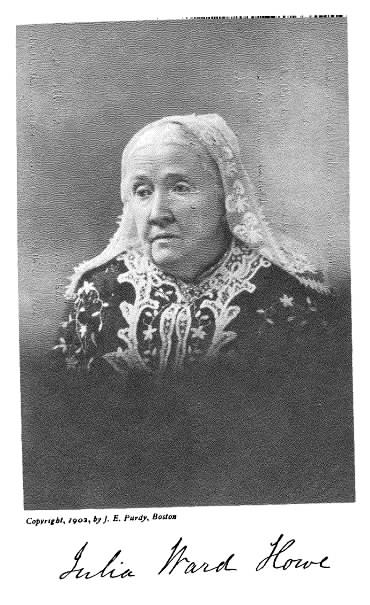
A COLLEGE EDUCATION AT HOME 771
What can give greater satisfaction than reading with a purpose, and that consciousness of a broadening mind that follows it, and growth, of expansion, of enriching the life, the consciousness that we are pushing ignorance, bigotry, and whatever clouds the mind and hampers progress a little further away from us? The kind of reading that counts, that makes mental fiber and stamina is that upon which the mind is concentrated; approaching a book with all one's soul intent upon its contents.
How few people ever learn to concentrate their attention. Most of us waste a vast amount of precious time dawdling and idling. We sit or stand over our work without thinking. Our minds are blank much of the time. Passive reading is even more harmful in its effects than desultory reading. It no more strengthens the brain than sitting down in a gymnasium develops the body. The mind remains inactive, in a sort of indolent revery, wandering here and there, without focusing anywhere. Such reading takes the spring and snap out of the mental faculties, weakens the intellect, and makes the brain torpid and incapable of grappling with great principles and difficult problems.
What you get out of a book is not necessarily what, the author puts into it, but what you bring to it. If the heart does not lead the head; if the thirst for knowledge, the hunger for a broader and deeper culture, are not the motives for reading, you will not get the most out of a book. But, if your thirsty soul drinks in the writer's thought as the parched soil absorbs rain, then your latent possibilities and the potency of your being, like delayed germs and seeds in the soil, will spring forth into new life.
772 PUSHING TO THE FRONT
When you read, read as Macaulay did, as Carlyle did, as Lincoln did - as did every great man who has profited by his reading - with your whole soul absorbed in what you read, with such intense concentration that you will be oblivious of everything else outside of your book. " Reading furnishes us only with the materials of knowledge," said John Locke; " it is thinking that makes what we read ours."
In order to get the most out of books, the reader must be a thinker. The mere acquisition of facts is not the acquisition of power. To fill the mind with knowledge that can not be made available is like filling our houses with furniture and bric-a-brac until we have no room to move about. Food does not become physical force, brain, or muscle until it has been thoroughly digested and assimilated, and has become an integral part of the blood, brain, and other tissues. Knowledge does not become power until digested and assimilated by the brain, until it has become a part of the mind itself.
If you wish to become intellectually strong, after reading with the closest attention, form this habit frequently close your book and sit and think, or stand and walk and think - but think, contemplate, reflect. Turn what you have read over and over in your mind. It is not yours until you have assimilated it by your thought. When you first read it, it belongs to the author. It is yours only when it becomes an integral part of you.
Many people have an idea that if they keep reading everlastingly, if they always have a book in their hands at every leisure moment, they will, of necessity, become full-rounded and well-educated. But they might just as well expect to become athletes by eating at every opportunity. It is even more necessary to think than to read.
A COLLEGE EDUCATION AT HOME 773
Thinking, contemplating what we have read, is what digestion and assimilation are to the food. Some of the biggest fools I know are always cramming themselves with knowledge. But they never think. When they get a few minutes' leisure they grab a book and go to reading. In other words, they are always eating intellectually, but never digesting their knowledge or assimilating it.
I know a young man who has formed such a habit of reading that he is almost never without a book, a magazine, or a paper. He is always reading at home, on the cars, at the railway stations, and he has acquired a vast amount of knowledge. He has a perfect passion for knowledge, and yet his mind seems to have been weakened by this perpetual brain stuffing.
By every reader let Milton's words be borne in mind :
"Who reads Incessantly, and to his reading brings not
A spirit and judgment equal or superior....
Uncertain and unsettled still remains,
Deep versed in books and shallow in himself,
Crude or intoxicate, collecting toys
And trifles for choice matters, worth a sponge,
As children gathering pebbles on the shore."
When Webster was a boy, books were scarce, and so precious that he never dreamed that they were to be read only once, but thought they ought to be committed to memory, or read and re-read until they became a part of his very life.
Elizabeth Barrett Browning says, " We err by reading too much, and out of proportion to what we think. I should be wiser, I am persuaded, if I had not read half as much; should have had stronger and better exercised faculties, and should stand higher in my own appreciation."
Those who live more quietly do not have so many distracting influences, and consequently think more deeply and reflect more than others. They do not read so much but they are better readers.
774 PUSHING TO THE FRONT
You should bring your mind to the reading of a book, or to the study of any subject, as you take an ax to the grindstone; not for what you get from the stone, but for the sharpening of the ax. The greatest advantage of books does not always come from what we remember of them, but from their suggestiveness, their character-building power. " It is not in the library, but in yourself," says Fr. Gregory, " in your self-respect and your consciousness of duty nobly done - that you are to find the `Fountain of Youth,' the `Elixir of Life,' and all the other things that tend to preserve life's freshness and bloom.
" It is a grand thing to read a good book - it is a grander thing to live a good life - and in the living of such life is generated the power that defies age and its decadence." It is not the ability, the education, the knowledge that one has that makes the difference between men. The mere possession of knowledge is not always the possession of power; knowledge which has not become a part of yourself, knowledge which can not swing into line in an emergency is of little use, and will not save you at the critical moment.
To be effective, a man's education must become a part of himself as he goes along. All of it must be worked up into power. A little practical education that has become a part of one's being and is always available, will accomplish more in the world than knowledge far more extensive that can not be utilized.
No one better illustrates what books will do for a man, and what a thinker will do with his books, than Gladstone, who was always far greater than his career. He rose above Parliament, reached out beyond politics, and was always growing. He had a passion for intellectual expansion.
A COLLEGE EDUCATION AT HOME 775
His peculiar gifts undoubtedly fitted him for the church, or he would have made a good professor at Oxford or Cambridge. But, circumstances led him into the political arena, and he adapted himself readily to his environment. He was an all round well read man, who thought his way through libraries and through life.
One great benefit of a taste for reading, and access to the book world, is the service it renders as a diversion and a solace. What a great thing to be able to get away from ourselves, to fly away from the harassing, humiliating, discouraging, depressing things about us, to go at will to a world of beauty, joy, and gladness!
If a person is discouraged or depressed by any great bereavement or suffering, the quickest and the most effective way of restoring the mind to its perfect balance, to its normal condition, is to immerse it in a sane atmosphere, an uplifting, encouraging, inspiring atmosphere, and the most good in the world is found in the best books. I have known people who were suffering under the most painful mental anguish, from losses and shocks which almost unbalanced their minds, to be completely revolutionized in their mental state by the suggestive power which came from becoming absorbed in a great book.
Everywhere we see rich old men sitting around the clubs, smoking, looking out of the windows, lounging around hotels, traveling about, uneasy, dissatisfied, not knowing what to do with themselves, because they had never prepared for this part of their lives. They put all their energy, ambition, everything into their vocation. I know an old gentleman who has been an exceedingly active business man. He has kept his finger upon the pulse of events. He has known what has been going on in the world during his whole active career.
776 PUSHING TO THE FRONT
And he is now as happy and as contented as a child in his retirement, because he has always been a great reader, a great lover of his kind.
People who keep their minds bent in one direction too long at a time soon lose their elasticity, their mental vigor, freshness, spontaneity. If I were to quote Mr. Dooley, it would be "Reading is not thinking; reading is the next thing this side of going to bed for resting the mind." To my own mind, however, I would rather cite that versatile Englishman, Lord Rosebery. In a speech at the opening of a Carnegie library at West Calder, Midlothian, he made a characteristic utterance upon the value of books, saying in substance
There is, however, one case in which books are certainly an end in themselves, and that is to refresh and to recruit after fatigue. When the object is to refresh and to exalt, to lose the cares of this world in the world of imagination, then the book is more than a means. It is an end in itself. It refreshes, exalts, and inspires the man. From any work, manual or intellectual, the man with a happy taste for books comes in tired and soured and falls into the arms of some great author, who raises him from the ground and takes him into a new heaven and a new earth, where he forgets his bruises and rests his limbs, and he returns to the world a fresh and happy man."
" Who," asks Professor Atkinson, " can overestimate the value of good books, those strips of thought, as Bacon so finely calls them, voyaging through seas of time, and carrying their precious freight so safely from generation to generation? Here are finest minds giving us the best wisdom of present and past ages; here are the intellects gifted far beyond ours, ready to give us the results of lifetimes of patient thought, imaginations open to the beauty of the universe."
The lover of good books can never be very lonely; and, no matter where he is, he can always find pleasant and profitable occupation and the best of society when he quits work.
A COLLEGE EDUCATION AT HOME 777
Who can ever be grateful enough for the art of printing; grateful enough to the famous authors who have put their best thoughts where we can enjoy them at will? There are some advantages of intercourse with great minds through their books over meeting them in person. The best of them live in their books, while their disagreeable peculiarities, their idiosyncrasies, their objectionable traits are eliminated. In their books we find the authors at their best. Their thoughts are selected, winnowed in their books. Book friends are always at our service, never annoy us, rasp or nettle us. No matter how nervous, tired, or discouraged one may be, they are always soothing, stimulating, uplifting.
We may call up the greatest writer in the middle of the night when we can not sleep, and he is just as glad to see us as at any other time. We are not excluded from any nook or corner in the great literary world; we can visit the most celebrated people that ever lived without an appointment, without influence, without the necessity of dressing or of observing any rules of etiquette. We can drop in upon a Milton, a Shakespeare, an Emerson, a Longfellow, a Whittier without a moment's notice and receive the warmest welcome.
" You get into society, in the widest sense," says Geikie, " in a great library, with the huge advantage of needing no introductions, and not dreading repulses. From that great crowd you can choose what companions you please, for in the silent levees of the immortals there is no pride, but the highest is at the service of the lowest, with a grand humility. You may speak freely with any, without a thought of your inferiority; for books are perfectly well bred, and hurt no one's feelings by any discriminations."
778 PUSHING TO THE FRONT
"It is not the number of books," says Professor William Mathews, "which a young man reads that makes him intelligent and well informed, but the number of well-chosen ones that he has mastered, so that every valuable thought in them is a familiar friend." It is only when books have been read and reread with ever deepening delight, that they are clasped to the heart, and become what Macaulay found them to be, the old friends who are never found with new faces, who are the same to us in our wealth and in our poverty, in our glory and in our obscurity. No one gets into the inmost heart of a beautiful poem, a great history, a book of delicate humor, or a volume of exquisite essays, by reading it once or twice. He must have its precious thoughts and illustrations stored in the treasure-house of memory, and brood over them in the hours of leisure.
" A book may be a perpetual companion. Friends come and go, but the book may beguile all experiences and enchant all hours."
"The first time," says Goldsmith, " that I read an excellent book, it is to me just as if I had gained a new friend; when I read over a book I have perused before, it resembles the meeting with an old one."
" No matter how poor I am," says William Ellery Channing, " no matter though the prosperous of my own time will not enter my obscure dwelling; if the sacred writers will enter and take up their abode under my roof - if Milton will cross my threshold to sing to me of Paradise; and Shakespeare to open to me the worlds of imagination and the workings of the human heart, - I shall not pine for want of intellectual companionship, though excluded from what is called the best society in the place where I live."
" Books," says Milton, " do preserve as in a violl, the purest efficacie and extraction of that living intellect that bred them.
A COLLEGE EDUCATION AT HOME 779
A good Booke is the pretious lifeblood of a master spirit, imbalm'd and treasur'd up on purpose to a Life beyond Life."
" A book is good company," said Henry Ward Beecher. " It comes to your longing with full instruction, but pursues you never. It is not offended at your absent-mindedness, nor jealous if you turn to other pleasures, of leaf, or dress, or mineral, or even of books. It silently serves the soul without recompense, not even for the hire of love. And yet more noble, it seems to pass from itself, and to enter the memory, and to hover in a silvery transformation there, until the outward book is but a body and its soul and spirit are flown to you, and possess your memory like a spirit.
CHAPTER LXIII
DISCRIMINATION IN READING
A few books well read, and an intelligent choice of those few, - these are the fundamentals for self-education by reading. If only a few well chosen, it is better to avail yourself of choices others have already made - old books, the standard works tested by many generations of readers. If only a few, let them be books of highest character and established fame. Such books are easily found even in small public libraries.
For the purpose of this chapter, which is to aid in forming a taste for reading, there should be no confusion of choice by naming too many books of one author. If you read one and like it, you can easily find another. It is a cardinal rule that if you do not like a book, do not read it. What another likes, you may not. Any book list is suggestive; it can be binding only on those who prize it. Like attracts like.
Did you ever think that the thing you are looking for is looking for you; that it is the very law of affinities to get together? If you are coarse in your tastes, vicious in your tendencies, you do not have to work very hard to find coarse vicious books; they are seeking you by the very law of attraction.
One's taste for reading is much like his taste for food. Dull books are to be avoided, as one refuses food disagreeable to him; to someone else the book may not be dull, nor the food disagreeable. Whole nations may eat cabbage, or stale fish, while I like neither.
780
DISCRIMINATION IN READING 781
Ultimately, therefore, every reader must make his own selection, and find the book that finds him. Any one not a random reader will soon select a short shelf of books that he may like better than a longer shelf that exactly suits some one else. Either will be a shelf of good books, neither a shelf of the best books, since if best for you or me, they may not be best for everybody.
A most learned man in India, in turning the leaves of a book, as he read, felt a little prick in his finger; a tiny snake dropped out and wriggled out of sight. The pundit's finger began to swell, then his arm; and in an hour, he was dead.
Who has not noticed in the home a snake in a book that has changed the character of a boy through its moral poison so that he was never quite the same again? How well did Carlyle divide books into sheep and goats. It is probable that the careers of the majority of criminals in our prisons today might have been vastly different if the character of their reading when young had been different; had it been uplifting, wholesome, instead of degrading.
" Christian Endeavor " Clark read a notice conspicuously posted in a large city : " All boys should read the wonderful story of the desperado brothers of the Western plains, whose strange and thrilling adventures of successful robbery and murder have never before been equaled. Price five cents." The next morning, Dr. Clark read in a newspaper of that city that seven boys had been arrested for burglary, and four stores broken into by the " gang." One of the ringleaders was only ten years old. At their trial, it appeared that each had invested five cents in the story of border crime.
782 PUSHING TO THE FRONT
" Red-eyed Dick, the Terror of the Rockies," or some such story has poisoned many a lad's life. A seductive, demoralizing book destroys the ambition, unless for vicious living. All that was sweet, beautiful, and wholesome in the character before seems to vanish, and everything changes after the reading of a single bad book. It has aroused the appetite for more forbidden pleasures, until it crowds out the desire for everything better, purer, healthier. Mental dissipation from this exciting literature, often dripping with suggestiveness of impurity, giving a passport to the prohibited; this is fatal to all soundness of mind.
A lad once showed to another a book full of words and pictures of impurity. He only had it in his hands a few moments. Later in life he held high office in the church, and years afterward told a friend that he would have given half he possessed had he never seen it. Light, flashy stories, with no intention in them, seriously injured the mind of a brilliant young lady, I once knew. Like the drug fiend whose brain has been stupefied, her brain became completely demoralized by constant mental dissipation. Familiarity with the bad, ruins the taste for the good. Her ambition and ideas of life became completely changed. Her only enjoyment was the excitement of her imagination through vicious books.
Nothing else will more quickly injure a good mind than familiarity with the frivolous, the superficial. Even though they may not be actually vicious, the reading of books which are not true to life, which carry home no great lesson, teach no sane or healthful philosophy, but are merely written to excite the passions, to stimulate a morbid curiosity, will ruin the best of minds in a very short time. It tends to destroy the ideals and to ruin the taste for all good reading.
DISCRIMINATION IN READING 783
Read, read, read all you can. But never read a bad book or a poor book. Life is too short, time too precious, to spend it in reading anything but the best. Any book is bad for you, the reading of which takes away your desire for a better one.
Many people still hold that it is a bad thing for the young to read works of fiction. They believe that young minds get a moral twist from reading that which they know is not true, the descriptions of mere imaginary heroes and heroines, and of things which never happened. Now, this is a very narrow, limited view of a big question. These people do not understand the office of the imagination; they do not realize that many of the fictitious heroes and heroines that live in our minds, even from childhood's days, are much more real in their influence on our lives than some of those that exist in flesh and blood.
Dickens' marvelous characters seem more real to us than any we have ever met. They have followed millions of people from childhood to old age, and influenced their whole lives for good. Many of us would look upon it as a great calamity to have these characters of fiction blotted out of our memory and their influence taken out of our lives.
Readers are sometimes so wrought up by a good work of fiction, their minds are raised to such a pitch of courage and daring, all their faculties so sharpened and braced, their whole nature so stimulated; that they can for the time being attempt and accomplish things which were impossible to them without the stimulus. This, it seems to me, is one of the great values of fiction. If it is good and elevating, it is a splendid exercise of all the mental and moral faculties; it increases courage; it rouses enthusiasm; it sweeps the brain-ash off the mind, and actually strengthens its ability to grasp new principles and to grapple with the difficulties of life.
784 PUSHING TO THE FRONT
Many a discouraged soul has been refreshened, reinvigorated, has taken on new life by the reading of a good romance. I recall a bit of fiction, called " The Magic Story," which has helped thousands of discouraged souls, given them new hope, new life, when they were ready to give up the struggle.
The reading of good fiction is a splendid imagination exerciser and builder. It stimulates it by suggestions, powerfully increases its picturing capacity, and keeps it fresh and vigorous and wholesome, and a wholesome imagination plays a very great part in every sane and worthy life. It makes it possible for us to shut out the most disagreeable past, to shut out at will all hideous memories of our mistakes, failures, and misfortunes; it helps us to forget our trouble and sorrows, and to slip at will into a new, fresh world of our own making, a world which we can make as beautiful, as sublime, as we wish. The imagination is a wonderful substitute for wealth, luxuries, and for material things. No matter how poor we may be, or how unfortunate, we may be bedridden even, we can by its aid travel round the world, visit its greatest cities, and create the most beautiful things for ourselves.
Sir John Herschel tells an amusing anecdote illustrating the pleasure derived from a book, not assuredly of the first order. In a certain village the blacksmith had got hold of Richardson's novel " Pamela, or Virtue Rewarded," and used to sit on his anvil in the long summer evenings and read it aloud to a large and attentive audience. It is by no means a short book, but they fairly listened to it all. " At length, when the happy turn of fortune arrived, which brings the hero and heroine together, and sets them living long and happily according to the most approved rules, the congregation were so delighted as to raise a great shout, and, procuring the church keys, actually set the parish bells ringing."
DISCRIMINATION IN READING 785
"It all comes back to us now," said the brilliant editor of the "Interior" not long ago, "that winter evening in the old home. The curtains are down, the fire is sending out a cheerful warmth and the shaded lamps diffusing a well-tempered radiance. The lad of fifteen is bent over a borrowed volume of sea tales. For hours he reads on, oblivious of all surroundings, until parental attention is drawn toward him by the unusual silence. The boy is seen to be trembling from head to foot with suppressed excitement. A fatherly hand is laid upon the volume, closing it firmly, and the edict is spoken, 'No more novels for five years.' And the lad goes off to bed, half glad, half grieved, wondering whether he has found fetters or achieved freedom.
" In truth he had received both; for that indiscriminating command forbade to him during a formative period of his life works which would have kindled his imagination, enriched his fancy, and heightened his power of expression; but if it closed to him the Garden of Hesperides, it also saved him from a possible descent to the Inferno; it made heroes of history, not demigods of mythology, his companions, and reserved to maturer years those excursions in the literature of the imagination which may lead a young man up to heaven or as easily drag him down to hell.
"The boy who is permitted to saturate his mind with stories of `battle, murder, and sudden death,' is fitting himself, as the records of our juvenile courts show, for the penitentiary or perhaps the gallows. No man can handle pitch without defilement. We may choose our books, but we can not choose their effects. We may plant the vine or sow the thistle, but we can not command what fruit each shall bear. We may loosely select our library, but by and by it will fit us close as a glove.
786 PUSHING TO THE FRONT
"There was never such a demand for fiction as now, and never larger opportunities for its usefulness. Nothing has such an attraction for life as life. But what the heart craves is not `life as it is.' It is life as it ought to be. We want not the feeble but the forceful; not the commonplace but the transcendent. Nobody objects to the `purpose novel' except those who object to the purpose. Dealing as it does in the hands of a great master, with the grandest passions, the most tender emotions, the divinest hopes, it can portray all these spiritual forces in their majestic sweep and uplift. And as a matter of history, we have seen the novel achieve in a single generation the task at which the homily had labored ineffectively for a hundred years. Realizing this, it is safe to say that there is not a theory of the philosopher, a hope of the reformer, or a prayer of the saint which does not eventually take form in a story. The novel has wings, while logic plods with a staff. In the hour it takes the metaphysician to define his premises, the storyteller has reached the goal-and after him tumbles the crowd tumultuous."
With the assistance of Rev. Dr. E. P. Tenney, I venture upon the following lists of books in various lines of reading;
Fiction
"The Arabian Nights Entertainment."
"Stories from the Arabian Nights" (Riverside School Library), contains many of the more famous stories. 5o c.Irving Bachelder's " Eben Holden," is a good book. 400,000 copies were sold
J. M. Barrie's "Little Minister," a story of Scottish life, is very bright reading.Bunyan's " Pilgrim's Progress," is one of the most famous of allegories.
Cervantes' " Don Quixote " is so widely known that any well read man should know it. Its humor never grows old.Ralph Connor's three books-" The Man from Glengarry," "Black Rock," and "The Sky Pilot,"-have sold 400,000 copies.
Of George W. Cable's books, "The Cavalier," and 2 pies. Creole Days " are among the best.Dinah Mulock Craik's " John Halifax, Gentleman," is of rare merit.
C. E. Craddock's (pseudonym), "In the Tennessee Mountains " is entertaining. A powerful story of mountain-life.DISCRIMINATION IN READING 787
Of F. Marion Crawford's stories, among the best are "Mr. Isaacs " and " A Roman Singer."
Alexander Dumas' "Count of Monte Christo " is a worldfamous romance.Of George Eliot, "Silas Marner" is the best of the short stories, and " Romola " the best of the long. " Adam Bede " ranks barely second to " Silas Marner."
Charlotte Brontes " Jane Eyre " remains a classic among earlier English novels.Edward Everett Hale's " Man without a Country " will be read as long as the American flag flies.
Hawthorne's "Mosses from an Old Manse" are stories of unique interest, and "The Scarlet Letter" is known to all wellread people.Of Rudvard Kipling, read "Kim," and "The Man Who Would be King."
Pierre Loti's " Iceland Fisherman" is translated by A. F. de Koven. McClurg, $1.00S. Weir Mitchell's "Hugh Wynne" sold 125,000 copies.
Thomas Nelson Page's "Gordon Keith" sold 2oo,ooo copies.If you read only one of Walter Scott's novels, take "Ivanhoe," or "The Talisman." Five more of those most read are likely to follow.
Henryk Sienkiewicz's "Quo Vadis" is most notable.Robert L. Stevenson's " Treasure Island," and " Doctor Jekyll and Mr. Hyde," and " The Merry Men and Other Tales," are fair examples of the charm and insight of this author.
He who reads Frank Stockton's " Rudder Grange" is likely to read more of this author's books.Mrs. H. B. Stowe's "Uncle Tom's Cabin" is still one of the great stories of the world.
Of Mark Twain, " Huckleberry Finn," " The Innocents Abroad," and the "Story of Joan of Arc" are representative volumes.Miss Warner's "Wide, Wide World" is unique in American fiction.
John Watson's " Beside the Bonnie Briar Bush," sold 2oo,ooo copies in America.Lew Wallace's " Ben Hur " is the greatest of scriptural romances.
Thirty-eight books by twenty-eight authors. It would have been easier to name a hundred authors and two hundred books.
788 PUSHING TO THE FRONT
I will add from " The Critic " a list whose sales have reached six figures:
| Books of Every-day Life | |
| "David Harum," by Westcott .......................................... | 727,000 |
| " Mrs. Wiggs of the Cabbage Patch," by Alice Hegan Rice . | 345,000 |
| "The Virginian," by Owen Wister .................................. | 250,000 |
| " Lovey Mary," by Alice Hegan Rice .............................. | 188,000 |
| "The Birds' Christmas Carol," by Mrs. Wiggin................. | 100,000 |
| The Story of Patsy, by Mrs. Wiggin .............................. | 100,000 |
| " The Leopard's Spots," by Thomas G. Dixon, Jr. ............ | 125,000 |
| Romantic | |
| " Richard Carvel," by Winston Churchill ....................... | 400,000 |
| " The Crisis," by Winston Churchill............................... | 400,000 |
| " Graustark," by G. B. McCutcheon .............................. | 300,000 |
| " The Eternal City," by Hall Caine ............................... | 175,000 |
| "Dorothy Vernon," by Charles Major ........................... | 150,000 |
| " The Manxman," by Hall Caine .................................. | 113,000 |
| " When Knighthood Was in Flower," by Charles Major.... | 400,000 |
| "To Have and to Hold," by Miss Johnston ..................... | 300,000 |
| " Audrey," by Miss Johnston "..................................... | 165,000 |
| The Helmet of Navarre," by Bertha Runkle ................... | 100,000 |
CHAPTER LXIV
READING A SPUR TO AMBITION
The great use in reading is for self-discovery. Inspirational, character-making, life-shaping books are the main thing. Cotton Mather's " Essay to Do Good " influenced the whole career of Benjamin Franklin.
There are books that have raised the ideals and materially influenced entire nations. Who can estimate the value of books that spur ambition, that awaken slumbering possibilities? Are we ambitious to associate with people who inspire us to nobler deeds? Let us then read uplifting books, which stir us to make the most of ourselves. We all know how completely changed we sometimes are after reading a book which has taken a strong, vigorous hold upon us.
Thousands of people have found themselves through the reading of some book, which has opened the door within them and given them the first glimpse of their possibilities. I know men and women whose whole lives have been molded, the entire trend of their careers completely changed, uplifted beyond their dreams by the books they have read.
When Senator Petters of Alabama went to California on horseback in 1849, he took with him a Bible, Shakespeare, and Burns's poems. He said that those books read and thought about, on the great plains, for ever after spoiled him for reading poorer books.
789
790 PUSHING TO THE FRONT
" The silence, the solitude," he said, " and the strange flickering light of the camp fire, seemed to bring out the tremendous significance of those great books; and I treasure them today as my choicest possessions."
Marshall Field and other proprietors of the great business houses of Chicago petitioned the school authorities for improved instruction along moral lines, affirming that the boys needed religious ideas to make them more reliable in business affairs.
It has been said by President White of Cornell that, "The great thing needed to be taught in this country is truth, simple ethics, the distinction between right and wrong. Stress should be laid upon what is best in biography, upon noble deeds and sacrifices, especially those which show that the greatest man is not the greatest orator, or the tricky politician. They are a curse; what we need is noble men. National loss comes as the penalty for frivolous boyhood and girlhood, that gains no moral stamina from wholesome books."
If youths learn to feed on the thoughts of the great men and women of all times, they will never again be satisfied with the common or low; they will never again be satisfied with mediocrity; they will aspire to something higher and nobler. A day which is passed without treasuring up some good thought is not well spent. Every day is a leaf in the book of life. Do not waste a day any more than you would tear out leaves from the book of life.
The Bible, such manuals as " Daily Strength for Daily Needs," such books as Professor C. C. Everett's " Ethics for Young People "; Lucy Elliott Keeler's " If I Were a Girl Again "; " Beauty through Hygiene," by Dr. Emma F. Walker, such essays as Robert L. Stevenson's " Gentlemen " (in his " Familiar Studies of Men and Books ") Munger's " On the Threshold "; John Ruskin's " Sesame and Lilies" - these are the books that make young men and maidens so trustworthy that the Marshall Fields and John Wanamakers want their aid in the conduct of great business concerns.
READING A SPUR TO AMBITION 791
Blessed are they who go much farther in later years, and who become familiar with those
"Olympian bards who sang Divine ideas below,
Which always find us young And always keep us so."
The readers who do not know the Concord philosopher Emerson, and the great names of antiquity, Marcus Aurelius, Epictetus and Plato, have yet great pleasures to come. Aside from reading fiction, books of travel are of the best for mental diversion; then there are Nature Studies, and Science and Poetry, - all affording wholesome recreation, all of an uplifting character, and some of them opening up study specialties of the highest order, as in the great range of books classified as Natural Science.
The reading and study of poetry is much like the interest one takes in the beauties of natural scenery. Much of the best poetry is indeed a poetic interpretation of nature. Whittier and Longfellow and Bryant lead their readers to look on nature with new eyes, as Ruskin opened the eyes of Henry Ward Beecher.
A great deal of the best prose is in style and sentiment of a true poetic character, lacking only the metrical form. To become familiar with Tennyson and Shakespeare, and the brilliant catalogue of British poets is in itself a liberal education. Rolfe's Shakespeare is in handy volumes, and so edited as to be of most service. Palgrave's " Golden Treasury" of the best songs and lyrical poems in the English language was edited with the advice and collaboration of Tennyson. His "Children's Treasury " of lyrical poetry is most attractive.
Emerson's Parnassus, and Whittier's "Three Centuries of Song" are excellent collections of the most famous poems of the ages.
792 PUSHING TO THE FRONT
Of Books of Travel, here are a dozen titles, where one might easily name twelve hundred.
Edmondo de Amicis, - ` Holland and Its People," and his " Constantinople."
Frank T. Bullen's " Cruise of the Cachelot Round the World After Sperm Wales."J. M. Hoppin's " Old England."
Clifton Johnson, "Among English Hedgerows."W. D. Howell's " Venetian Life "; " Italian Journeys.
" Irving's " Sketch Book," and the " Alhambra." Henry James, " Portraits of Places."
Arthur Smith's "Chinese Characteristics," and his " Village Life in China."
It would be impossible to list books more interesting and more useful than most fiction, which may be called Nature Studies. I will name a few books that will certainly incite the reader to search for more
Ernest Ingersoll's " Book of the Ocean."
Professor E. S. Holder's " The Sciences," a reading book for children.Jean Mace's "History of a Mouthful of Bread.
" E. A. Martin's " Story of a Piece of Coal."Professor Charles A. Young's "The Sun," revised edition 1895.
Serviss' " Astronomy with an Opera-Glass," " Pleasures of the Telescope," " The Skies and the Earth."Thoreau's " Walden ; or Life in the Woods."
Mrs. F. T. Parsons' (Smith) Dana. "According to Seasons"; talks about the flowers in the order of their appearance in the woods and fields. Describes wild flowers in order of blooming, with information about their haunts and habits. Also, by the same author, " How to Know the Wild Flowers. Describes briefly more than 400 varieties common east of Chicago, grouping them by color.Seton-Thompson's "Wild Animals I have Known"; of which 100,000 copies sold.
F. A. Lucas' "Animals of the Past."Bradford Towey's " Birds in the Bush," and "Everyday Birds."
READING A SPUR TO AMBITION 793
President D. S. Jordan's "True Tales of Birds and Beasts."
D. L. Sharp's " A Watcher in the Woods."W. H. Gibson's " Sharp Eyes."
M. W. Morley's " The Bee-people."
Never before was a practical substitute for a college education at home made so cheap, so easy, and so attractive. Knowledge of all kinds is placed before us in a most attractive and interesting manner. The best of the literature of the world is found today in thousands of American homes where fifty years ago it could only have been obtained by the rich.
What a shame it is that under such conditions as these an American should grow up ignorant, should be uneducated in the midst of such marvelous opportunities for self-improvement! Indeed, most of the best literature in every line today appears in the current periodicals, in the form of short articles. Many of our greatest writers spend a vast amount of time in the drudgery of travel and investigation in gathering material for these articles, and the magazine publishers pay thousands of dollars for what a reader can get for ten or fifteen cents. Thus the reader secures for a trifle in periodicals or books the results of months and often years of hard work and investigation of our greatest writers.
A New York millionaire, - a prince among merchants, took me over his palatial residence on Fifth Avenue, every room of which was a triumph of the architect's, of the decorator's, and of the upholsterer's art. I was told that the decorations of a single sleeping room had cost ten thousand dollars. On the walls were paintings secured at fabulous prices, and about the rooms were pieces of massive and costly furniture, and draperies representing a small fortune, and carpets on which it seemed almost sacrilege to tread covered the floors. But there was scarcely a book in the house.
794 PUSHING TO THE FRONT
He had expended a fortune for physical pleasures, comforts, luxury, and display. It was pitiful to think of the physical surfeit and mental starvation of the children of such a home as that. When I went out, he told me that he came to the city a poor boy, with all his worldly possessions done up in a little red bandana. " I am a millionaire," he said, " but I want to tell you that I would give half I have today for a decent education."
Many a rich man has confessed to confidential friends and his own heart that he would give much of his wealth, - all, if necessary, - to see his son a manly man, free from the habits which abundance has formed and fostered till they have culminated in sin and degradation and perhaps crime; and has realized that, in all his ample provision, he has failed to provide that which might have saved his son and himself from loss and torture, good books.
There is a wealth within the reach of the poorest mechanic and day-laborer in this country that kings in olden times could not possess, and that is the wealth of a well-read, cultured mind. In this newspaper age, this age of cheap books and periodicals, there is no excuse for ignorance, for a coarse, untrained mind. Today no one is so handicapped, if he have health and the use of his faculties, that he can not possess himself of wealth that will enrich his whole life, and enable him to converse and mingle with the most cultured people. No one is so poor but that it is possible for him to lay hold of that which will broaden his mind, which will inform and improve him, and lift him out of the brute stage of existence into their god-like realm of knowledge.
"No entertainment is so cheap as reading," says Mary Wortley Montague; "nor any pleasure so lasting." Good books elevate the character, purify the taste, take the attractiveness out o f low pleasures, and lift us upon a higher plane of thinking and living.
READING A SPUR TO AMBITION 795
" A great part of what the British spend on books," says Sir John Lubbock, " they save in prisons and police." It seems like a miracle that the poorest boy can converse freely with the greatest philosophers and scientists, statesmen, warriors, authors of all time with little expense, that the inmates of the humblest cabin may follow the stories of the nations, the epochs of history, the story of liberty, the romance of the world, and the course of human progress.
Have you just been to a well educated sharp-sighted employer to find work? You did not need to be at any trouble to tell him the names of the books you have read, because they have left their indelible mark upon your face and your speech. Your pinched, starved vocabulary, your lack of polish, your slang expressions, tell him of the trash you have given your precious time to. He knows that you have not rightly systemized your hours. He knows that thousands of young men and women whose lives are crowded to overflowing with routine work and duties, manage to find time to keep posted on what is going on in the world, and for systematic, useful reading.
Carlyle said that a collection of books is a university. What a pity that the thousands of ambitious, energetic men and women who missed their opportunities for an education at the school age, and feel crippled by their loss, fail to catch the significance of this, fail to realize the tremendous cumulative possibilities of that great life-improver that admirable substitute for a college or university education - reading.
" Of the things which man can do or make here below," it was said by the sage of Chelsea, " by far the most momentous, wonderful, and worthy, are the things we call Books! Those poor bits of rag-paper with black ink on them; from the Daily Newspaper to the sacred Hebrew Book, what have they not done, what are they not doing? "
796 PUSHING TO THE FRONT
President Schurmann of Cornell, points with pride to a few books in his library which he says he bought when a poor boy by going many a day without his dinner. The great German Professor Oken was not ashamed to ask Professor Agassiz to dine with him on potatoes and salt, that he might save money for books.
King George III, used to say that lawyers do not know so much more law than other people; but they know better where to find it. A practical working knowledge of how to find what is in the book world, relating to any given point, is worth a vast deal from a financial point of view. And by such knowledge, one forms first an acquaintance with books, then friendship.
" When I consider," says James Freeman Clarke, " what some books have done for the world, and what they are doing, how they keep up our hope, awaken new courage and faith, soothe pain, give an ideal of life to those whose homes are hard and cold, bind together distant ages and foreign lands, create new worlds of beauty, bring down truths from heaven, I give eternal blessings for this gift."
For the benefit of the younger readers we give below a list of forty juveniles.
Aesop's " Fables."
Louise M. Alcott's " Little Women," " Little Men," which stood at the top 0f a list of books chosen in eleven thousand elementary class-rooms in New York.T. B. Aldrich's " Story of a Bad Boy." Anderson's " Fairy Tales."
Amelia E. Barr's "The Bow of Orange Ribbon," a book for girls." Black Beauty."
E. S. Brooks, "True Story 0f General Grant."Bulfinch's "Children's Lives 0f Great Men," " Age 0f Chialry," and "Age of Fable."
Bullen's "Log of a Sea Waif."Burnett's " Little Lord Fauntleroy," and " Sara Crewe," the latter a book for girls.
Butterworth's " Zig-Zag journeys."Carleton Coffin's, "Boys' of '76'"'
Lovett Carson s "The Making 0f a Girl."Ralph Connor's "Gwent" a book for girls.
Louis Carroll's "Alice in Wonderland," and "Through the Looking Glass."Dana's " Two Years Before the Mast."
READING A SPUR TO AMBITION 797
De Amicin's Cuore," which has sold 200,000 in Italy.
DeFoe's " Robinson Crusoe."Mary Mapes Dodge, " Hans Brinker," or " The Silver Skates;' "Life in Holland."
Eugene Field's " A Little Book of Profitable Tales." It has sold 200,000 copies.Grimm's "Fairy Tales."
Habberton's " Helen's Babies."E. E. Hale's " Boy Heroes."
Chandler Harris' " Little Mr. Thimblefinger and His Queer Country; What the Children Saw and Heard There. Fantastic tale interweaving negro animal stories and other Georgia folklore with modern inventions. "Mr. Rabbit At Home"; sequel to " Little Mr. Thimblefinger and His Queer Country." Animal stories told to children.Charles Kingsley's " Water Babies."
Kipling's " jungle Books," which have sold 175,000 copies. Knox's ' Boy Travelers."Lanier's "Boy Froissart," and "Boy's King Arthur." Edward Lear's "Nonsense Books."
Mabie's " Norse Stories."Samuel's " From the Forecastle to the Cabin." The experiences of the author who ran away and shipped as cabin boy; points out dangers that of a seafaring life.
Mrs. A. D. T. Whitney's " Faith Gartney's Girlhood."Kate Douglas Wiggin's " Rebecca 0f Sunnybrook Farm."
Not long ago President Eliot of Harvard College aroused widespread controversy over his selection of a library of books, which might be contained on a five-foot shelf. We append his selections as indicative of the choice of a great scholar and educator.
The following sixteen titles may be had in Everyman's Library, cloth 35 c. net per volume; leather 70 c. net per volume
President Eliot's Five-Foot Shelf
Benjamin Franklin's Autobiography
Sir Thomas Browne's " Religio Medici.,' "Confessions of St. Augustine."Shelley's "The Cenci" (contained in volume two of the complete works).
798 PUSHING TO THE FRONT
Emerson's "English Traits," and "Representative Men." Emerson's Essays.
Chaucer's " Canterbury Tales." Bacon's Essays.Walton's " Complete Angler." Milton's Poems.
Goethe's "Faust" Marlowe's " Dr. Faustus." Marcus Aurelius' " Meditations."Browning's " Blot on the Scutcheon " (contained in volume one of the poems).
Dante's " Divine Comedy." Bunyan's ; ` Pilgrim's Progress."Thomas A. Kempis' "Imitation of Christ" Burns's "Tam O'Shanter."
Dryden's "Translation of the Aeneid." Walton's Lives of Donne, and Herbert Ben Johnson's " Volpone."Smith's "Wealth of Nations." Plutarch's "Lives."
Letters of Pliny. Cicero's Select Letters. Plato's " Phaedrus." Epictetus' Discourses. Socrates' "Apology and Crito."Beaumont and Fletcher's "Maid's Tragedy." Milton's Tractate on Education.
Bacon's "New Atlantis." Darwin's "Origin of Species."Webster's " Duchess of Malfi." Dryden's "All for Love."
Thomas Middleton's "The Changeling."John Woolman's Journal." Arabian Nights."
Tennyson's " Becket."Penn's " Fruits of Solitude."
Milton's "Areopagitica."
The following list of books is offered as suggestive of profitable lines of reading for all classes and tastes
Books on Nature
Thoreau's, "Cape Cod," "Maine Woods,' "Excursions."
Burroughs' "Ways of Nature," "Wake Robin," " Signs and Seasons," " Pepacton."Jefferies' "Life of the Fields," "Wild Life in a Southern Country," and "Idylls of Field and Hedgerow."
Lubbock's "Beauties of Nature." Maeterlinck's "Life of the Bee." Thompson's "My Winter Garden." Warner's "My Summer in a Garden."Van Dyke's "Little Rivers," "Fisherman's Luck." White's "The Forest"
Mrs. Wright's "Garden of a Commuter's Wife." Wordsworth's and Bryant's Poems.Novels Descriptive of American Life Simms' "The Partisan."
Cooper's "The Spy."READING A SPUR TO AMBITION 799
Hawthorne's "The House of the Seven Gables." Cable's "Old Creole Days," " The Grandissimes." Howells' "The Rise of Silas Lapham."
Howells' "A Hazard of New Fortunes." Eggleston's "A Hoosier Schoolmaster."Bret Harte's "Luck of Roaring Camp and Other Stories." Mary Hallock Foote's."The Led-Horse Claim."
Octave Thanet's "Heart of Toil," "Stories of a Western Town."Wister's "The Virginian," "Lady Baltimore."
E. Hopkinson Smith's "The Fortune of Oliver Horn."Thomas Nelson Page's "Short Stories," and "Red Rock."
Mrs. Delands' "Old Chester Tales."J. L.Allen's "Flute and Violin," "The Choir Invisible."
Frank Norris' "The Octopus," "The Pit"Garland's "Main Traveled Roads."
Miss Jewett's "Country of the Pointed Firs," "The Tory Lover."Miss Wilkins' "New England Nun," "Pembroke." Churchill's "The Crisis," " Coniston,' "Mr. Crewe's Career." Brander Matthews' "His Father's Son."
S. Weir Mitchell's "Hugh Wynne."Fox's "The Little Shepherd of Kingdom Come." Mrs. Wharton's "The House of Mirth."
Robert Grant's "Unleavened Bread."Robert Herrick's "The Common Lot," "The Memoirs of an American Citizen."
Grace E. King's " Balcony Stories."
Books Which Interpret American Ideals
Emerson's Addresses and Essays.
Lowell's Essay on Democracy. Lincoln's Inaugural Addresses.Booker T. Washington's "Up from Slavery."
Jacob Riis' "The Making of An American."Higginson's "The New World and the New Book."
Brander Matthews' "Introduction to American Literature."Whittier's " Snow-Bound."
Louise Manley's " Southern Literature."Thomas Nelson Page's " The Old South."
E. J. Turner's "The Rise of the New West."Churchill's " The Crossing."
James Bryce's " American Commonwealth."800 PUSHING TO THE FRONT
Some of the Best Biographies "
Life of Sir Walter Scott," Lockhart.
"Life of Frederick the Great," Carlyle."Alfred Lord Tennyson," by his son.
"Life and Letters of Thomas Henry Huxley," by his son.Plutarch's " Lives."
"Lives of Seventy of the Most Eminent Painters, Sculptors & Architects," Vasari." Cicero and His Friends," Boissier.
" Life of Samuel Johnson," Boswell.Autobiography of Leigh Hunt.
"Memoirs of My Life and Writings," Gibbon.Autobiography of Martineau.
"Life of John Sterling," Carlyle." Life and Times of Goethe," Grimm.
"Life and Letters of Macaulay," Trevelyan." Life of Charles James Fox," Trevelyan.
"Life of Carlyle," Froude.Benvenuto Cellini's Autobiography.
Boswell's "Johnson."Trevelyan s " Life of Macaulay."
Carlyle's, " Frederick the Great."Stanley's, " Thomas Arnold."
Hughes', "Alfred the Great."Mrs. Kingsley's, "Charles Kingsley."
Lounsbury's, "Cooper."Greenslet s, ` Lowell' and " Aldrich."
Mims', " Sidney Lanier."Wister's, " Seven Ages of Washington."
Grant's Autobiography.Morley's, " Chatham."
Harrison's, "Cromwell."W. Clark Russell's, " Nelson."
Morse's, " Benjamin Franklin."READING A SPUR TO AMBITION 801
Twenty-four American Biographies "
Abraham Lincoln," Schurz.
" Life of George Washington," Irving."Charles Eliot, Landscape Architect," Eliot.
"Nathaniel Hawthorne and His Wife," Hawthorne."Henry Wadsworth Longfellow," Higginson.
" James Russell Lowell," Greenslet." Life of Francis Parkman," Farnham. "
Edgar Allen Poe," Woodberry.Autobiography of Joseph Jefferson.
" Walt Whitman," Perry."Life and Letters of Whittier," Pickard.
" James Russell Lowell and His Friends," Hale."George Washington," Wilson.
Autobiography of Benjamin Franklin. "Story of My Life," Helen Keller.
"Autobiography of a Journalist," Stillman. "Autobiography of Seventy Years," Hoar.
"Life of Thomas Bailey Aldrich," Greenslet. "Life of Alice Freeman Palmer," Palmer. "
Personal Memoirs," Grant." Memoirs," Sherman.
" Memoirs of Ralph Waldo Emerson," Cabot." Sidney Lanier," Mims.
"Life of J. Fenimore Cooper," Lounsbury.
The books enumerated have been selected as examples of the best in their respective classes. Even those books of fiction chosen, primarily, for entertainment, are instructive and educational. Whether the reader's taste runs to history, biography, travel, nature study, or fiction, he may select any one of the books named in these respective classifications and be assured of possessing a volume worthy of reading and ownership.
It is the author's hope and desire that the list of books he has given, limited as it is, may prove of value to those seeking self-education, and that the books may encourage the disheartened, stimulate ambition, and serve as stepping stones to higher ideals and nobler purposes in life.
CHAPTER LXV
WHY SOME SUCCEED AND OTHERS FAIL
Life's highway is strewn with failures, just as the sea bed is strewn with wrecks. A large percentage of those who embark in commercial undertakings fail, according to the records of commercial agencies. Why do men fail? Why do adventures into business, happily launched, terminate in disastrous wreck? Why do the few succeed and the many fail? Some failures are relative and not absolute; a partial success is achieved; a success that goes limping along through life; but the goal of ambition is unreached, the heart's desire unattained.
There are so many elements that enter into business that it is impossible to more than indicate them. Health, natural aptitude, temperament, disposition, a right start and in the right place, hereditary traits, good judgment, common sense, level-headedness, etc., are all factors which enter into one's chance of success in life. The best we can do in one chapter is to hang out the red flag over the dangerous places; to chart the rocks and shoals, whereon multitudes of vessels, which left the port of youth with flying colors, favoring breezes and every promise of a successful voyage, have been wrecked and lost.
The lack of self-confidence and lack of faith in one's ideas in one's mission in life have caused innumerable failures.
802
WHY SOME SUCCEED 803
People who don't get on and who don't know why, do not realize the power of trifles to mar a career, what little things are killing their business or injuring their profession; do not realize how little things injure their credit; such as the lack of promptness in paying bills, or meeting a note at the bank.
Many men fail because they thought they had the field and were in no danger from competition, so that the heads of the firm took it easy, or because some enterprising up-to-date, progressive young man came to town, and, before they realized it, took their trade away from them, because they got into a rut, and didn't keep up-to-date stock and an attractive store. They don't realize what splendid salesmen, an attractive place of business, up-to-date methods, and courteous treatment of customers mean.
Men often fail because they do not realize that creeping paralysis, caused by dry rot, is gradually strangling their business. Many business men fail because they dare not look their business conditions in the face when things go wrong, and do not adopt heroic methods, but continue to use palliatives, until the conditions are beyond cure, even with a surgeon's knife. Lots of men fail because they don't know how to get rid of deadwood in their establishment, or retain non-productive employees, who with slip-shod methods, and indifference drive away more business than the proprietors can bring in by advertising.
Many other men fail because they tried bluff in place of capital, and proper training, or because they didn't keep up with the times. Lots of young people fail to get ahead and plod along in mediocrity because they never found their place. They are round pegs in square holes. Others are not capable of coping with antagonism. Favoritism of proprietors and managers has killed many a business. A multitude of men fail to get on because they take themselves too seriously, They deliver their goods in a hearse, employ surly, unaccommodating clerks.
804 PUSHING TO THE FRONT
Bad business manners have killed many a business. Slave-driving methods, inability to get along with others, lack of system, defective organizing ability, have cut short many a career.
A great many men are ruined by " side-lines " things outside their regular vocation. Success depends upon efficiency, and efficiency is impossible without intense, persistent concentration. Many traveling men think that they can pick up a little extra money and increase their income by taking up some " side-line."But it is always the small man, never the big one, who has a " side-line."Many of these men remain small, and are never able to rise to a big salaried position because they split up their endeavor, dissipate their energy. " Side-lines " are dangerous because they divert the mind, scatter effort, and nothing great can be accomplished without intense concentration.
Many people are always driving success away from them by their antagonistic manner, and their pessimistic thought. They work for one thing, but expect something else. They don't realize that their mental attitude must correspond with their ambition; that if they are working hard to get on, they must expect prosperity, and not kill their prospects by their adverse mental attitude-their doubts and fears.
Lots of men are ruined by " a sure thing," an inside tip, buying stocks on other people's judgment. Many people fail because they lose their grit after they fail, or when they get down, they don't know how to get up. Many are victims of their moods, slaves of despondency. Courage and an optimistic outlook upon life are imperative to the winner. Fear is fatal to success. Many a young man fails because he can not multiply himself in others, can not delegate his work, is lost in detail.
WHY SOME SUCCEED 805
Other men fail in an attempt to build up a big business; their minds are not trained to grasp large subjects, to generalize, to make combinations; they are not self-reliant, depending upon other people's judgment and advice.
Many a man who works hard himself, does not know how to handle men, and does not know how to use other people's brains. Thousands of youths fail to get on because they never fall in love with their work. Work that is drudgery never succeeds.
Fifty years ago, a stable-boy cleaned the horses of a prosperous hotel proprietor, who drove into Denver for supplies. That boy became Governor of Colorado, and later the hotel-keeper, with shattered fortunes, was glad to accept a place as watchman at the hand of the former stable-boy.
Life is made up of such contrasts. Every successful man, in whatever degree and in whatever line, has, at every step of his life, been on seemingly equal terms with hundreds of his fellows who, later, reached no such measure of success as he. Every miserable failure has had at some time as many chances, and at least as much possibility of cultivating the same qualities, as the successful people have had at some time in their lives.
Since humble birth and handicaps of every sort and degree have not prevented success in the determined man; since want has often spurred to needed action and obstacles but train to higher leaping, why should men fail? What causes the failures and half-successes that make up the generality of mankind?
The answer is manifold, but its lesson is plain. As one writer has expressed it, " Every mainspring o f success is a mainspring o f failure, when wound around the wrong way." Every opportunity for advancement, for climbing for success, is just as much an opportunity for failure. Every success quality can be turned to one's disadvantage through excessive development or wrong use.
806 PUSHING TO THE FRONT
No matter how broad and strong the dike may be, if a little hole lets the water through, ruin and disaster are sure. Possession of almost all the success-qualities may be absolutely nullified by one or two faults or vices. Sometimes one or two masterful traits of character will carry a person to success in spite of defects that are a serious clog.
The numerous failures who wish always to blame their misfortunes upon others, or upon external circumstances, find small comfort in statistics compiled by those who have investigated the subject. In analyzing the causes of business failure in a recent year Bradstreet's found that seven-tenths were due to faults of those failing, and only three-tenths to causes entirely beyond their control. Faults causing failure, with per cent. of failures caused by each, are given as follows: incompetence, 19 per cent.; inexperience, 7.8 per cent.; lack of capital, 30.3 per cent.; unwise granting of credit, 3.6 per cent.; speculation, 2.3 per cent. It may be explained that " lack of capital " really means attempting to do too much with inadequate capital. This is a purely commercial analysis of purely commercial success. Character delinquencies must be read between the lines.
Forty successful men were induced, not long ago, to answer in detail the question, " What, in your observation, are the chief causes of the failure in life of business or professional men? " The causes attributed by these representative men were as follows
Bad habits; bad judgment; bad luck; bad associates; carelessness of details; constant assuming of unjustifiable risks; desire to become rich too fast; drinking; dishonest dealings; desire of retrenchment; dislike to say no at the proper time; disregard of the Golden Rule; drifting with the tide; expensive habits of life; extravagance; envy; failure to appreciate one's surroundings; failure to grasp one's opportunities; frequent changes from one business to another; fooling away of time in pursuit of a so-called good time, gambling; inattention; incompetent assistants; incompetency; indolence; jealousy.
WHY SOME SUCCEED 807
Lack of attention to business; of application; of adaptation; of ambition; of business methods; of capital; of conservatism; of close attention to business; of confidence in self; of careful accounting; of careful observation; of definite purpose; of discipline in early life, of discernment of character; of enterprise; of energy; of economy; of faithfulness; of faith in one's calling; of industry; of integrity; of judgment; of knowledge of business requirements; of manly character; of natural ability; of perseverance; of pure principles; of proper courtesy toward people; of purpose; of. pluck; of promptness in meeting business engagements; of system. Late hours; living beyond one's income; leaving too much to one's employees; neglect of details; no inborn love for one's calling; over-confidence in the stability of existing conditions; procrastination; speculative mania; selfishness; self-indulgence in small vices; studying ease rather than vigilance; social demoralization; thoughtless marriages; trusting one's work to others; undesirable location; unwillingness to pay the price of success; unwillingness to bear early privations; waste; yielding too easily to discouragement.
Surely, here is material enough for a hundred sermons if one cared to preach them. Without attempting to discuss all these causes of failure, some few may be profitably examined. No youth can hope to succeed who is timid, who lacks faith in himself, who has not the courage of his convictions, and who always seeks for certainty before he ventures. " Self-distrust is the cause of most of our failures," said one. " In the assurance of strength there is strength, and they are the weakest, however strong, who have no faith in themselves or their powers."
808 PUSHING TO THE FRONT
"The ruin which overtakes so many merchants," said another, "is due, not so much to their lack of business talent, as to their lack of business nerve. How many lovable persons we see in trade, endowed with brilliant capacities, but cursed with yielding dispositions-who are resolute in no business habits and fixed in no business principles-who are prone to follow the instincts of a weak good nature, against the ominous hints of a clear intelligence; now obliging this friend by indorsing an unsafe note, and then pleasing that neighbor by sharing his risk in a hopeless speculation, and who, after all the capital they have earned by their industry and sagacity has been sunk in benevolent attempts to assist blundering or plundering incapacity, are doomed, in their bankruptcy, to be the mark of bitter taunts from growling creditors and insolent pity from a gossiping public."
Scattering one's forces has killed many a man's success. Withdrawal of the best of yourself from the work to be done is sure to bring final disaster. Every particle of a man's energy, intellect, courage, and enthusiasm is needed to win success in one line. Draw off part of the supply of any one or all of these, and there is danger that what is left will not suffice. A little inattention to one's business at a critical point is quite sufficient to cause shipwreck. The pilot who pays attention to a pretty passenger is not likely to bring his ship to port. Attractive side issues, great schemes, and flattering promises of large rewards, too often lure the business or professional man from the safe path in which he may plod on to sure success. Many a man fails to become a great man, by splitting into several small ones, choosing to be a tolerable Jack-at-all-trades, rather than to be an unrivalled specialist.
Lack of thoroughness is another great cause of
WHY SOME SUCCEED 809
failure. The world is overcrowded with men, young and old, who remain stationary, filling minor positions, and drawing meager salaries, simply because they have never thought it worth while to achieve mastery in the pursuits they have chosen to follow.
Lack of education has caused many failures; if a man has success qualities in him, he will not long lack such education as is absolutely necessary to his success. He will walk fifty miles if necessary to borrow a book, like Lincoln. He will hang by one arm to a street lamp, and hold his book with the other, like a certain Glasgow boy. He will study between anvil blows, like Elihu Burritt ; he will do some of the thousand things that other noble strugglers have done to fight against circumstances that would deprive them of what they hunger for.
"The five conditions of failure," said H. H. Vreeland, president of the Metropolitan Street Railway Company of New York, " may be roughly classified thus: first, laziness, and particularly mental laziness; second, lack of faith in the efficiency of work; third, reliance on the saving grace of luck; fourth, lack of courage, initiative and persistence : fifth, the belief that the young man's job affects his standing, instead of the young man's affecting the standing of his job."
Look where you will, ask of whom you will, and you will find that not circumstances, but personal qualities, defects and deficiencies, cause failures. This is strongly expressed by a wealthy manufacturer who said: " Nothing else influences a man's career in life so much as his disposition. He may have capacity, knowledge, social position, or money to back him at the start; but it is his disposition that will decide his place in the world at the end. Show me a man who is, according to popular prejudice, a victim of bad luck, and I will show you one who has some unfortunate, crooked twist of temperament that invites disaster, He is ill-tempered, or conceited, or trifling, or lacks enthusiasm."
810 PUSHING TO THE FRONT
There are some men whose failure to succeed in life is a problem to others, as well as to themselves. They are industrious, prudent, and economical; yet after a long life of striving, old age finds them still poor. They complain of ill luck, they say fate is against them. But the real truth is that their projects miscarry, because they mistake mere activity for energy. Confounding two things essentially different, they suppose that if they are always busy, they must of necessity be advancing their fortunes; forgetting that labor misdirected is but a waste of activity.
The worst of all foes to success is sheer, downright laziness. There is no polite synonym for laziness. Too many young men are afraid to work. They are lazy. They aim to find genteel occupations, so that they can dress well, and not soil their clothes, and handle things with the tips of their fingers. They do not like to get their shoulders under the wheel, and they prefer to give orders to others, or figure as masters, and let some one else do the drudgery. There is no place in this century for the lazy man. He will be pushed to the wall. Labor ever will be the inevitable price for everything that is valuable.
A metropolitan daily newspaper not long ago invited confessions by letter from those who felt that their lives had been failures. The newspaper agreed not to disclose the name or identity of any person making such a confession, and requested frank statements. Two questions were asked: "Has your life been a failure? Has your business been a failure?"
Some of the replies were pitiable in the extreme. Some attributed their failures to a cruel fate which seemed to pursue them and thwart all their efforts, some to hereditary weaknesses, deformities, and taints, some to a husband or a wife, others to " inhospitable surroundings," and " cruel circumstances."
WHY SOME SUCCEED 811
It is worthy of note that not one of these failures mentioned laziness as a cause. Here are some of the reasons they did give
"J. P. T." considered that his life was a failure from too much genius. He said he thought he could do anything, and therefore he couldn't wait to graduate from college, but left and began the practise of law, was principal of an academy, overworked himself, and had too many irons in the fire. He failed, he said, from dissipating his energies, and having too much confidence in men.
" Rutherford," said he had four chances to succeed in life, but lost them all. The first cause of his failure was lack of perseverance. He tired of the sameness and routine of his occupation. His second shortcoming was too great liberality, too much confidence in others. Third, economy was not in his dictionary. Fourth, " I had too much hope, even in the greatest extremities." Fifth, " I believed too much in friends and friendships. I couldn't read human nature, and did not make allowance enough for mistakes." Sixth, " I never struck my vocation." Seventh, " I had no one to care for, to spur me on to do something in the world. I am seventy years old, never drank, never had bad habits, always attended church. But I am as poor as when I started for myself."
" G. C. S." failed dismally. "My weakness was building air-castles. I had a burning desire to make a name in the world, and came to New York from the country. Rebuffed, discouraged, I drifted. I had no heart for work. I lacked ability and push, without which no life can be a success."
" Lacked ability and push." - Push is ability. Laziness is lack of push. Nothing can take the place of push. Push means industry and endurance and everlasting stick-to-it-ive-ness.
812 PUSHING TO THE FRONT
" A somewhat varied experience of men has led me, the longer I live," said a great man, " to set less value on mere cleverness; to attach more and more importance to industry and physical endurance." Goethe said that industry is nine-tenths of genius, and Franklin that diligence is the mother of good luck. A thousand other tongues and pens have lauded work, Idleness and shiftlessness may be set down as causing a large part of the failures of the world.
On every side we see persons who started out with good educations and great promise, but who have gradually " gone to seed." Their early ambition oozed out, their early ideals gradually dropped to lower standards. Ambition is a spring that sets the apparatus going. All the parts may be perfect, but the lack of a spring is a fatal defect. Without wish to rise, desire to accomplish and to attain, no life will succeed largely.
" Chief among the causes which bring positive failure or a disappointing portion of half success to thousands of honest strugglers is vacillation," said Thomas B. Bryan. Many a business man has made his fortune by promptly deciding at some nice juncture to expose himself to a considerable risk. Yet many failures are caused by ill-advised changes and causeless vacillation of purpose. The vacillating man, however strong in other respects, is always pushed aside in the race of life by the determined man, the decisive man, who knows what he wants to do and does it; even brains must give way to decision. One could almost say that no life ever failed that was steadfastly devoted to one aim, if that aim were not in itself unworthy.
WHY SOME SUCCEED 813
I am a great believer in a college education, but a great many college graduates have made failures of their lives who might have succeeded had they not gone to college, because they depended upon theoretical, impractical knowledge to help them on, and were not willing to begin at the bottom after graduation. On every hand we see men who did well in college, but who do very poorly in life. They stood high in their classes, were conscientious, hard workers, but somehow when they get out into life, they do not seem able to catch on. They are not practical.
It would be hard to tell why they never get ahead, but there seems to be something lacking in their make-up, some screw loose somewhere. These brilliant graduates, but in differently successful men, are often enigmas to themselves. They don't understand why they don't get on. There is no doubt that ill-health is often the cause of failure, but this is often due to a wrong mental attitude, wrong thinking. The pessimistic, discouraged mental attitude is very injurious to good health. Worry, fear, anxiety, jealousy, extreme selfishness, poison the system, so that it does not perform its functions perfectly, and will cause much ill-health.
A complete reversal of the mental attitude would bring robust health to multitudes of those who suffer from " poor health." If people would only think right, and live right, ill-health would be very rare. A wrong mental attitude is the cause of a large part of physical weakness, disease, and suffering.
It has been said that the two chief factors of success are industry and health. But the history of human triumphs over difficulties shows that the sick, the crippled, the deformed, have often outrun the tory of human triumphs over difficulties shows that the sick, the crippled, the deformed, have often outrun the strong and hale to the goal of success, in spite of tremendous physical handicaps. Many such instances are cited in other chapters of this volume.
814 PUSHING TO THE FRONT
Where men have built an abiding success, industry and perseverance have proven the foundation stones of their great achievements. Every man may lay this foundation and build on it for himself. Whatever a man's natural advantages may be, great or small, industry and perseverance are his, if he chooses. By the exercise of these qualities he may rise, as others have done, to success, if like Palissy he:
" Labors and endures and waits And what he can not find creates."
WHEN IS SUCCESS A FAILURE?
When you are doing the lower while the higher is possible.
When you are not a cleaner, finer, larger man on account of your life-work.When you live only to eat, drink, have a good time, and accumulate money.
When you do not carry a higher wealth in your character than in your pocketbook.When your highest brain cells have been crowded out of business by greed.
When it has made conscience an accuser, and shut the sunlight out of your life.When all sympathy has been crushed out by selfish devotion to your vocation.
When the attainment of your ambition has blighted the aspirations and crushed the hopes of others.When you plead that you never had time to cultivate your friendships, politeness, or good manners.
When you have lost on your way your self-respect, your courage, your self-control, or any other quality of manhood.When you do not overtop your vocation; when you are not greater as a man than as a lawyer, a merchant, a physician, or a scientist.
When you have lived a double life and practised double-dealing.WHY SOME SUCCEED 815
WHEN IS SUCCESS A FAILURE? cont'd
When it has made you a physical wreck-a victim of " nerves " and moods.
When the hunger for more money, more land, more houses and bonds has grown to be your dominant passion.When it has dwarfed you mentally and morally, and robbed you of the spontaneity and enthusiasm of youth. When it has hardened you to the needs and sufferings of others, and made you a scorner of the poor and unfortunate.
When there is a dishonest or a deceitful dollar in your possession; when your fortune spells the ruin of widows and orphans, or the crushing of the opportunities of others.When your absorption in your work has made you practically a stranger to your family.
When you go on the principle of getting all you can and giving as little as possible in return.When your greed for money has darkened and cramped your wife's life, and deprived her of self expression, of needed rest and recreation, or amusement of any kind.
When the nervous irritability engendered by constant work, without relaxation, has made you a brute in your home and a nuisance to those who work for you.When you rob those who work for you of what is justly their due, and then pose as a philanthropist by contributing a small fraction of your unjust gains to some charity or to the endowment of some public institution.
CHAPTER LXVI
RICH WITHOUT MONEY
Let others plead for pensions; I can be rich without money, by endeavoring to be superior to everything poor. I would have my services to my country unstained by any interested motive. - LORD COLLINGWOOD.
I ought not to allow any man, because he has broad lands, to feel that he is rich in my presence. I ought to make him feel that I can do without his riches, that I can not be bought, neither by comfort, neither by pride, - and although I be utterly penniless, and receiving bread from him, that he is the poor man beside me. - EMERSON.
He is richest who is content with the least, for content is the wealth of nature. - SOCRATES.
My crown is in my heart, not on my head, Nor decked with diamonds and Indian stones, Nor to be seen: my crown is called content; A crown it is, that seldom kings enjoy. - SHAKESPEARE.
MANY a man is rich without money. Thousands of men with nothing in their pockets are rich. A man born with a good, sound constitution, a good stomach, a good heart and good limbs, and a pretty good head-piece is rich.
Good bones are better than gold, tough muscles than silver, and nerves that carry energy to every function are better than houses and land.
" Heart-life, soul-life, hope, joy, and love, are true riches," said Beecher.
Why should I scramble and struggle to get possession of a little portion of this earth? This is my world now; why should I envy others its mere legal possession?
816
RICH WITHOUT MONEY 817
It belongs to him who can see it, enjoy it. I need not envy. the so-called owners of estates in Boston or New York. They are merely taking care of my property and keeping it in excellent condition for me. For a few pennies for railroad fare whenever I wish I can see and possess the best of it all. It has cost me no effort, it gives me no care; yet the green grass, the shrubbery, and the statues on the lawns, the finer sculptures and the paintings within, are always ready for me whenever I feel a desire to look upon them. I do not wish to carry them home with me, for I could not give them half the care they now receive; besides, it would take too much of my valuable time, and I should be worrying continually lest they be spoiled or stolen. I have much of the wealth of the world now. It is all prepared for me with out any pains on my part. All around me are working hard to get things that will please me, and competing to see who can give them the cheapest.
The little that I pay for the use of libraries, railroads, galleries, parks, is less than it would cost to care for the least of all I use. Life and landscape are mine, the stars and flowers, the sea and air, the birds and trees. What more do I want? All the ages have been working for me; all mankind are my servants. I am only required to feed and clothe myself, an easy task in this land of opportunity.
A millionaire pays a big fortune for a gallery of paintings, and some poor boy or girl comes in, with open mind and poetic fancy, and carries away a treasure of beauty which the owner never saw. A collector bought at public auction in London, for one hundred and fifty-seven guineas, an autograph of Shakespeare; but for nothing a schoolboy can read and absorb the riches of " Hamlet."
" Want is a growing giant whom the coat of Have was never large enough to cover." " A man may as soon fill a chest with grace, or a vessel with virtue," says Phillips Brooks, " as a heart with wealth."
818 PUSHING TO THE FRONT
Shall we seek happiness through the sense of taste or of touch? Shall we idolize our stomachs and our backs? Have we no higher missions, no nobler destinies? Shall we " disgrace the fair day by a pusillanimous preference of our bread to our freedom "? What does your money say to you: what message does it bring to you? Does it say to you, " Eat, drink, and be merry, for tomorrow we die "? Does it bring a message of comfort, of education, of culture, of travel, of books, of an opportunity to help your fellowmen or is the message " More land, more thousands and millions "? What message does it bring you? Clothes for the naked, bread for the starving, schools for the ignorant, hospitals for the sick, asylums for the orphans, or of more for yourself and none for others? Is it a message of generosity or of meanness, breadth or narrowness? Does it speak to you of character? Does it mean a broader manhood, a larger aim, a nobler ambition, or does it cry, " More, more, more "?
Are you an animal loaded with ingots, or a man filled with a purpose? He is rich whose mind is rich, whose thought enriches the intellect of the world.
A sailor on a sinking vessel in the Caribbean Sea eagerly filled his pockets with Spanish dollars from a barrel on board while his companions, about to leave in the only boat, begged him to seek safety with them. But he could not leave the bright metal which he had so longed for and idolized, and when the vessel went down he was prevented by his very riches from reaching shore.
" Who is the richest of men? " asked Socrates. " He who is content with the least, for contentment is nature's riches."
RICH WITHOUT MONEY 819
In More's " Utopia " gold was despised. Criminals were forced to wear heavy chains of it, and to have rings of it in their ears; it was put to the vilest uses to keep up the scorn of it. Bad characters were compelled to wear gold head-bands. Diamonds and pearls were used to decorate infants, so that the youth would discard and despise them.
" Ah, if the rich were as rich as the poor fancy riches! " exclaims Emerson.
In excavating Pompeii a skeleton was found with the fingers clenched round a quantity of gold. A man of business in the town of Hull, England, when dying, pulled a bag of money from under his pillow, which he held between his clenched fingers with a grasp so firm as scarcely to relax under the agonies of death.
" Oh! blind and wanting wit to choose,
Who house the chaff and burn the grain;
Who hug the wealth ye cannot use.
And lack the riches all may gain."
Poverty is the want of much, avarice the want of everything.
A poor man while scoffing at the wealthy for not enjoying themselves was met by a stranger who gave him a purse, in which he was always to find a ducat. As fast as he took one out another was to drop in, but he was not to begin to spend his fortune until he had thrown away the purse. He took ducat after ducat out, but continually procrastinated and put off the hour of enjoyment until he had got " a little more," and died at last counting his millions.
A beggar was once met by Fortune, who promised to fill his wallet with gold, as much as he might desire, on condition that whatever touched the ground should turn at once to dust. The beggar opened his wallet, asked for more and yet more, until the bag burst. The gold fell to the ground, and all was lost.
820 PUSHING TO THE FROM
When the steamer Central America was about to sink, the stewardess, having collected all the gold she could from the staterooms, and tied it in her apron, jumped for the last boat leaving the steamer. She missed her aim, fell into the water and the gold carried her down head first.
Franklin said money never made a man happy yet; there is nothing in its nature to produce happiness. The more a man has, the more he wants. Instead of filling a vacuum, it makes one. A great bank account can never make a man rich. It is the mind that makes the body rich. No man is rich, however much money or land he may possess, who has a poor heart. If that is poor, he is poor indeed, though he own and rule kingdoms. He is rich or poor according to what he is, not according to what he has.
Some men are rich in health, in constant cheerfulness, in a mercurial temperament which floats them over troubles and trials enough to sink a shipload of ordinary men. Others are rich in disposition, family, and friends. There are some men so amiable that everybody loves them; so cheerful that they carry an atmosphere of jollity about them.
The human body is packed full of marvelous devices, of wonderful contrivances, of infinite possibilities for the happiness and enrichment of the individual. No physiologist, inventor, nor scientist has ever been able to point out a single improvement, even in the minutest detail, in the mechanism of the human body. No chemist has ever been able to suggest a superior combination in any one of the elements which make up the human structure.
One of the first great lessons of life is to learn the true estimate of values. As the youth starts out in his career all sorts of wares will be imposed upon him and all kinds of temptations will be used to induce him to buy. His success will depend very largely upon his ability to estimate properly, not the apparent but the real value of everything presented to him.
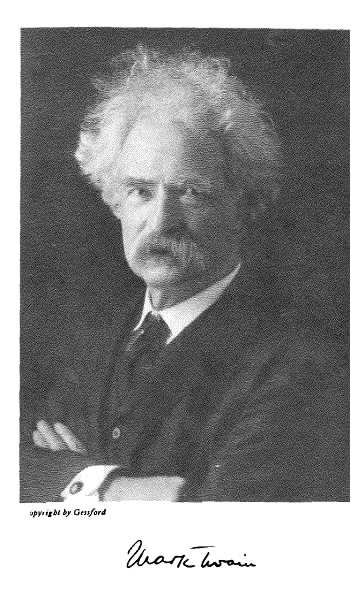
RICH WITHOUT MONEY 821
Vulgar Wealth will flaunt her banner before his eyes, and claim supremacy over everything else. A thousand different schemes will be thrust into his face with their claims for superiority. Every occupation and vocation will present its charms and offer its inducements in turn. The youth who would succeed must not allow himself to be deceived by appearance, but must place the emphasis of life upon the right thing.
Raphael was rich without money. All doors opened to him, and he was more than welcome everywhere. His sweet spirit radiated sunshine wherever he went.
Henry Wilson, the sworn friend of the oppressed, whose one question, as to measures or acts, was ever " Is it right; will it do good? " was rich without money. So scrupulous had this Natick cobbler been not to make his exalted position a means of worldly gain, that when he came to be inaugurated as Vice-President of the country, he was obliged to borrow of his fellow-senator, Charles Sumner, one hundred dollars to meet the necessary expenses of the occasion.
Mozart, the great composer of the " Requiem," left barely enough money to bury him, but he has made the world richer.
A rich mind and noble spirit will cast over the humblest home a radiance of beauty which the upholsterer and decorator can never approach. Who would not prefer to be a millionaire of character, of contentment, rather than possess nothing but the vulgar coins of a Croesus? Whoever uplifts civilization, though he die penniless, is rich, and future generations will erect his monument.
An Asiatic traveler tells us that one day he found the bodies of two men laid upon the desert sand beside the carcass of a camel. They had evidently died from thirst, and yet around the waist of each was a large store of jewels of different kinds, which they had doubtless been crossing the desert to sell in the markets of Persia.
822 PUSHING TO THE FRONT
The man who has no money is poor, but one who has nothing but money is poorer. He only is rich who can enjoy without owning; he is poor who though he have millions is covetous. There are riches of intellect, and no man with an intellectual taste can be called poor. He is rich as well as brave who can face compulsory poverty and misfortune with cheerfulness and courage.
We can so educate the will power that it will focus the thoughts upon the bright side of things, and upon objects which elevate the soul, thus forming a habit of happiness and goodness which will make us rich. The habit of making the best of everything and of always looking on the bright side is a fortune in itself. He is rich who values a good name above gold. Among the ancient Greeks and Romans honor was more sought after than wealth. Rome was imperial Rome no more when the imperial purple became an article of traffic.
Diogenes was captured by pirates and sold as a slave. His purchaser released him, giving him charge of his household and of the education of his children. Diogenes despised wealth and affectation, and lived in a tub. " Do you want anything? " asked Alexander the Great, greatly impressed by the abounding cheerfulness of the philosopher under such circumstances. " Yes," replied Diogenes, " I want you to stand out of my sunshine and not take from me what you can not give me." " Were I not Alexander," exclaimed the great conqueror, " I would be Diogenes."
"Do you know, sir," said a devotee of Mammon to John Bright, - " that I am worth a million sterling? " " Yes," said the irritated but calm-spirited respondent, " I do; and I know that it is all you are worth."
RICH WITHOUT MONEY 823
What power can poverty have over a home where loving hearts are beating with a consciousness of untold riches of the head and heart?
St. Paul was never so great as when he occupied a prison cell under the streets of Rome; and Jesus Christ reached the height of His success when, smitten, spat upon, tormented, and crucified, He cried in agony, and yet with triumphant satisfaction, " It is finished."
Don't start out in life with a false standard; a truly great man makes official position and money and houses and estates look so tawdry, so mean and poor, that we feel like sinking out of sight with our cheap laurels and our gold. One of the great lessons to teach in this century of sharp competition and the survival of the fittest is how to be rich without money and to learn how to live without success according to the popular standard.
In the poem, "The Changed Cross," a weary woman is represented as dreaming that she was led to a place where many crosses lay, crosses of divers shapes and sizes. The most beautiful one was set in jewels of gold. It was so tiny and exquisite that she changed her own plain cross for it, thinking she was fortunate in finding one so much lighter and lovelier. But soon her back began to ache under the glittering burden, and she changed it for another, very beautiful and entwined with flowers. But she soon found that underneath the flowers were piercing thorns which tore her flesh. At last she came to a very plain cross without jewels, without carving, and with only the word, " Love," inscribed upon it. She took this one up and it proved the easiest and best of all. - She was amazed, however, to find that it was her old cross which she had discarded.
It is easy to see the jewels and the flowers in other people's crosses, but the thorns and heavy weight are known only to the bearers. How easy other people's burdens seem to us compared with our own!
824 PUSHING TO THE FRONT
We do not realize the secret burdens which almost crush the heart, nor the years of weary waiting for delayed success - the aching hearts longing for sympathy, the hidden poverty, the suppressed emotion in other. lives.
William Pitt, the Great Commoner, considered money as dirt beneath his feet compared with the public interest and public esteem. His hands were clean.
The object for which we strive tells the story of our lives. Men and women should be judged by the happiness they create in those around them. Noble deeds always enrich, but millions of mere dollars may impoverish. Character is perpetual wealth, and by the side of him who possesses it the millionaire who has it not seems a pauper.
Invest in yourself, and you will never be poor. Floods can not carry your wealth away, fire can not burn it, rust can not consume it.
" If a man empties his purse into his head," says Franklin, " no man can take it from him. An investment in knowledge always pays the best interest."
Howe'er it be, it seems to me,
'Tis only noble to be good.
Kind hearts are more than coronets,
And simple faith than Norman blood. - TENNYSON
THE END